
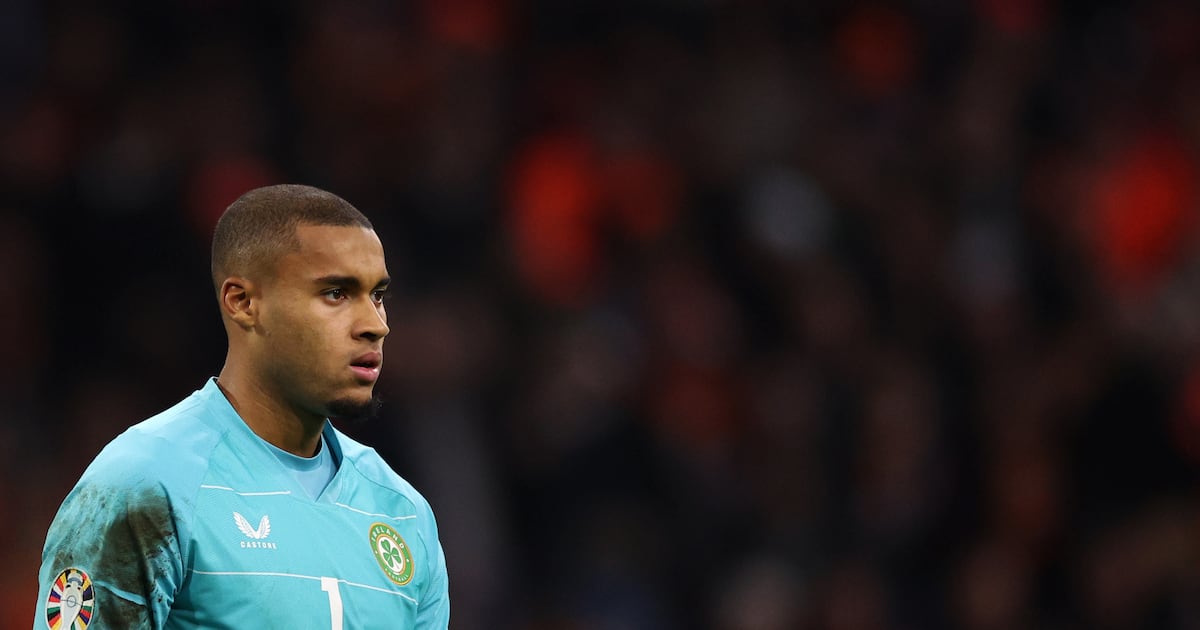
Growing up, Gavin Bazunu wanted to score goals, not save them. Shamrock Rovers forced his hand with Stephen Bradley to blame more than anyone else, having given Bazunu his debut against Bray Wanderers at age 16 in June 2018.
By then, it was too late.
“I hated it to be honest. I first went in goal at Shamrock Rovers when our goalie was sick. Drew the short straw and had to go in.”
When was this, under-14? “I was eight or nine. Managed to fend it off for another four years before I had to go in permanently. I’d play anywhere else. After a season at Leicester Celtic, one half in goal, one half outfield, when I scored 10 goals, I returned to Rovers and realised if I wanted to go higher, goalkeeper was my best chance.”
Training is about to start at Stoke City’s Clayton Wood training base. Bazunu is stuck inside, rehabbing a thigh injury he picked up after his debut against Queens Park Rangers earlier this month. A six-week recovery, one week into a six-month loan, prompts him to pay tribute to long-time agent Graham Barrett and the Potters’ sporting director Jon Walters.
Southampton was not working out for the 23-year-old. And so, on his return from 10 months recuperating from a ruptured Achilles’ tendon, the two men who have played for the Republic of Ireland internationals had a conversation that could lead to a permanent move this summer.
Most goalkeepers patiently hone their craft until an opportunity arrives. It can take years to become the number one. Caoimhín Kelleher waited behind Alisson Becker at Liverpool until he turned 26. Mark Travers, who in almost every other era would be Ireland’s first choice, warms the bench at Everton behind England’s Jordan Pickford.
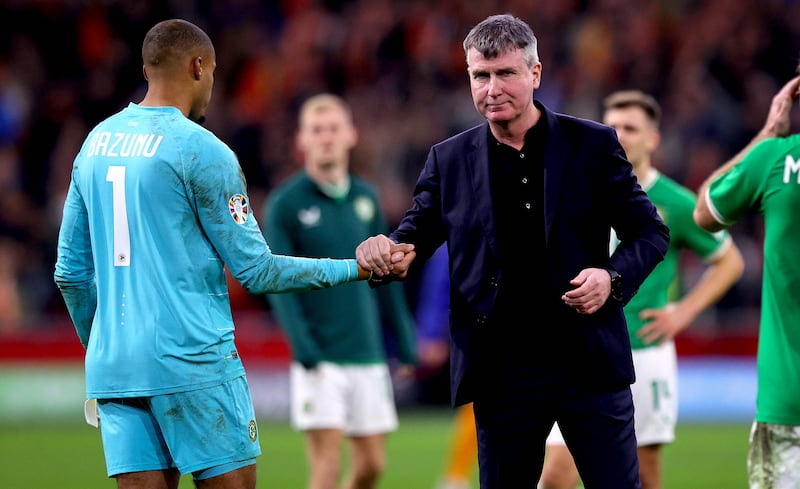 Gavin Bazunu has won 22 senior international caps for Ireland. Photograph: Ryan Byrne/Inpho
Not Bazunu. Three years at Manchester City were largely spent on loan to Rochdale and Portsmouth. Unforgiving baptisms of fire in the English lower leagues were soothed by continual guidance from City’s goalkeeping coach Xabi Mancisidor. It’s an informal arrangement that continues to this day.
“I think Xabi is the pinnacle when it comes to goalkeeper coaches. You don’t stay at Man City for 10 years, working with Pep, without being brilliant at what you do. Even now he watches games and gives me feedback. He is very generous with his time despite being so busy.”
When the Achilles’ finally began to heal last year, instead of telling his client to sit tight at Southampton, Barrett approached Standard Liège director of football Fergal Harkin [the Donegal man has since taken over at Bolton Wanderers] to get Bazunu some minutes in Belgian football before a knee issue cut the loan short.
“It just comes from playing first team football at Shamrock Rovers so early in my career. Having that taste and exposure, I don’t really want to wait around, or bide my time, I want to go out and play. That is what I enjoy doing.”
Walters wanted him at Stoke. That became clear when Bazunu pulled up following the clean sheet against QPR.
“Jonathan, the gaffer [Mark Robins] and the goalkeeping coach [Darren Behcet] spoke to me in a way that made it clear that Stoke is a really good project. All going well over the next six months there is a possibility of something more permanent. It looks really promising.”
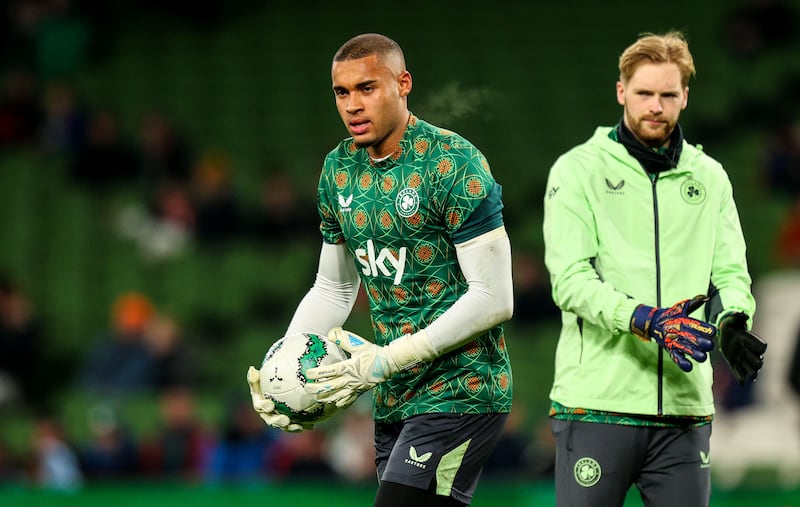 For a while Caoimhín Kelleher was behind Gavin Bazunu in the Republic of Ireland’s pecking order. Not any more. Photograph: Ryan Byrne/Inpho
And Barrett? “Graham has had a massive influence on my career. More so as a mentor than a business point of view. He has always been there for advice and support, and he looks after my brother [Todd, 18] as well at Shamrock Rovers. He is a family friend now.”
Todd Bazunu might be on the Rovers bench on Saturday evening as James McClean’s second coming at Derry City spices up the President’s Cup.
“Todd just needs a loan now, and a chance to understand what men’s football is about.”
And McClean? “I was around his house a couple of times in the last week before he headed off. Passing ships and that. We won’t get to spend much time together now, but it was great to see him. I hope it goes well for him but not too well on Saturday.”
Bazunu’s family still live in Firhouse, near Tallaght Stadium, and he remains a Rovers man to his fingertips. The loyalty comes from small things, like how the club covered his fees at Ashfield College so he could complete his Leaving Cert after moving to Manchester.
Bazunu was one of the last teenagers to leave Ireland before Brexit law prohibited foreign players from joining an English or Scottish club until they turn 18. What advice would he give a 16-year-old in 2026 when the choices are a European club – when an Irish player has yet to graduate from a German, Italian, Spanish or Portuguese academy to first team regular – or two seasons in the League of Ireland?
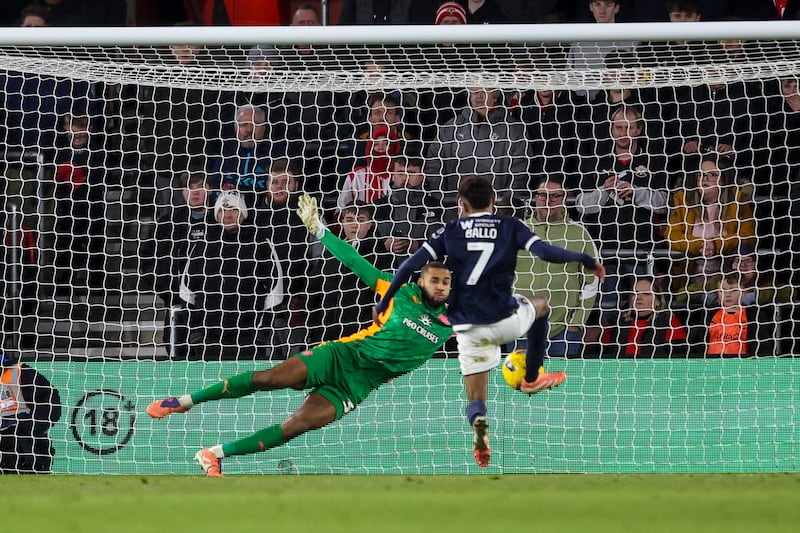 Gavin Bazunu saves a penalty from Millwall’s Thierno Ballo while playing for Southampton. Photograph: Robin Jones/Getty Images
“Go and play in the League of Ireland. Look at Mason Melia, Michael Noonan and Victor [Ozhiavuna]. These are all players that would have made 10 appearances in the league and they would have been snapped up. Now their quality is making the league more competitive. Their transfer fees are higher, which brings in more revenue for the clubs. All that should build the league and convince more people to back it financially.”
The 17-year-old Ozhiavuna will make a €2 million transfer from Rovers to Arsenal in January 2027.
“I’ve been coaching Victor since he was eight, along with Graham’s son Thomas. I would have done a few summers coaching that team alongside Luke Byrne.”
In 2023, Bazunu attempted to put his own money into a FAI scholarship scheme for academy prospects trying to balance football and education by providing €30,000 annually to a teenage girl and boy. Despite the backing of senior internationals, including McClean and Séamus Coleman, the association failed to get it off the ground.
“Maybe it was the right idea at the wrong time,” says Bazunu. “Maybe we can come back to it.”
For now, Bazunu exists at Stoke as the epitome of resilience, returning unbroken from Achilles’, knee and thigh injuries, all inside 24 months.
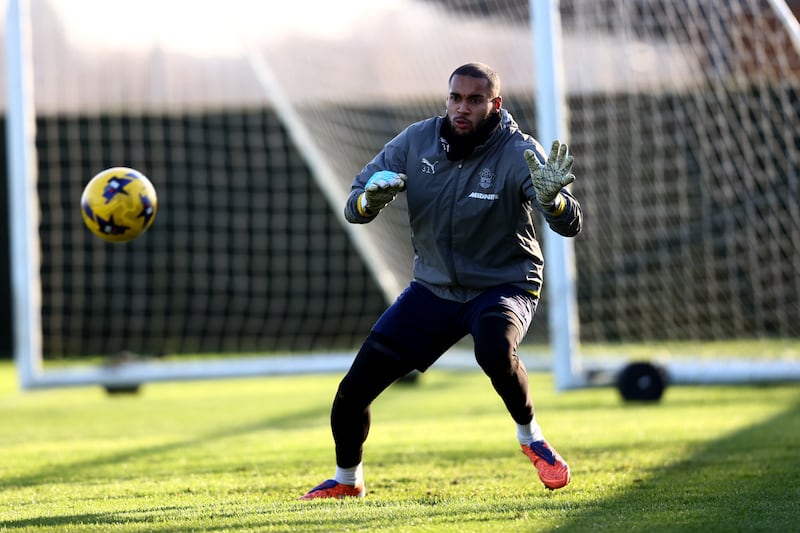 Gavin Bazunu: ‘There is always light at the end of the tunnel.’ Photograph: Matt Watson/Southampton FC via Getty Images
“You have to break the recovery down,” he explains. “The Achilles’ is too long to see it as one block. Set small achievable goals. Get off the crutches. Learn to walk again. Learn to run. Learn to play football again. You have to break it down because, when you look at one big picture it is daunting, depressing even, to think you won’t be able to do what you love for such a long time. Even when you are back, you have to build the foundations. There is always light at the end of the tunnel.”
Not long into his rehabilitation, Bazunu’s Ireland team-mate Chiedozie Ogbene’s career was jolted by the same ruptured tendon.
“I knew to reach out to Chieo straight away, to tell him what I learned, and to point him in the right direction. You come back full of energy, having been out for so long. It is hard to maintain that. He picked up the hamstring against Hungary. That is the most difficult part of coming back from an Achilles’. Maintaining.”
Ogbene was not thinking about his own wellbeing in Budapest though, was he? “No, he was not. It was a special day. All of us that were there will never forget it.”
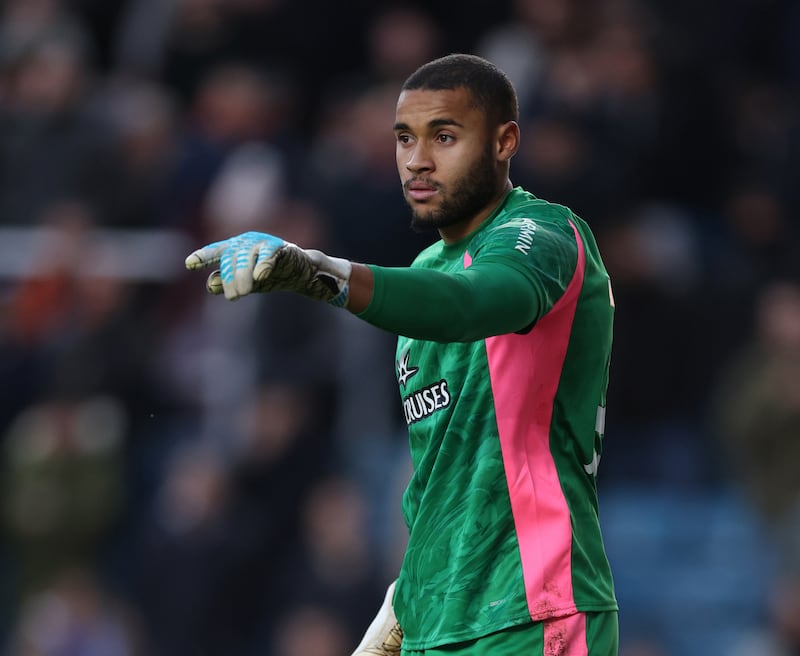 Gavin Bazunu made nearly 100 league appearances for Southampton before joining Stoke on loan. Photograph: Richard Pelham/Getty Images
Bazunu previously established himself as Ireland’s first-choice goalkeeper, compiling 22 caps before injury gave Kelleher his opportunity. The Corkman has locked up the jersey for the foreseeable future. Being so close to the joyous scenes inside the Puskas Arena last November, without getting on the pitch, must have been bittersweet.
“It was bittersweet, but for us as a group it was incredible to finally put two back-to-back results together. The performance encapsulates the last five, six years of work. And the change in Irish football. I think the group deserved the wins after all the close calls when we played well in big matches but didn’t get the results that we wanted.”
From Yerevan to Budapest, from the depths of despair to pure ecstasy, Bazunu offers a clear-eyed perspective.
“The difficulty in international football is the expectations. It is so competitive now. Too many people wrote off Armenia in the same way Portugal wrote us off. We showed resilience to block out all the noise and come back and do what we did.
“Under Heimir [Hallgrímsson] we are setting up to be very, very difficult to beat, which is what every successful Irish team has been.”