

January 31, 2026 — 5:00am
Save
You have reached your maximum number of saved items.
Remove items from your saved list to add more.
Save this article for later
Add articles to your saved list and come back to them anytime.
Got it
AAA
Authorities have placed temporary water stations in Wyperfeld National Park in the Mallee district, amid concerns wildfires that have torn through more than 435,000 hectares in Victoria are driving parched dingoes onto private farms.
Fresh figures released by Agriculture Victoria show that about 8000 kilometres of fencing has been destroyed by fires this month, in addition to 76,160 hectares of grazing pasture and 110,107 hectares of farming area.
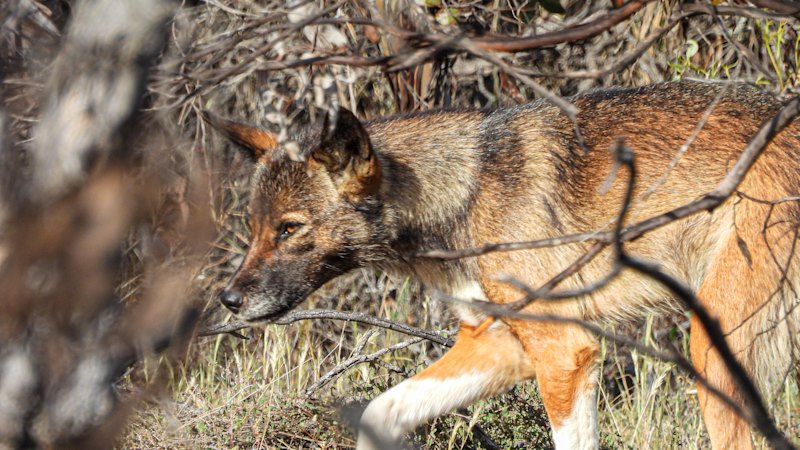
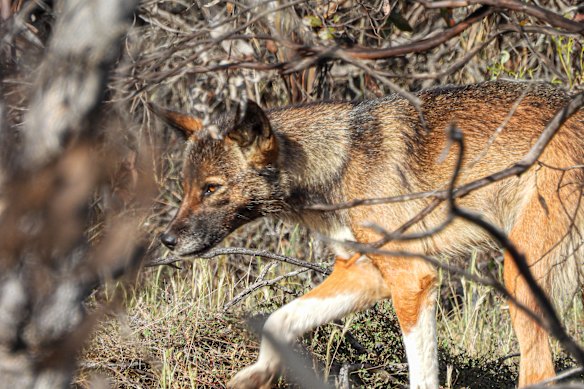 Wilkerr, found in the Big Desert region, are a genetically distinct group of dingoes.Ellisha Martion
The loss of fencing, and the fires on Crown land, are driving fears dingoes and “wild dogs” will increasingly seek water and feed on neighbouring properties.
The national park and surrounding Big Desert Wilderness Area are home to Wilkerr, a genetically distinct group of dingoes, which have been described as gripped in an “extinction vortex”.
Bushfires have torn through almost 60,000 hectares in the national park since they broke out in the first week of January.
Announcing the recovery measure, a Department of Energy, Environment and Climate Action spokesperson said it was part of recovery efforts to help native animals affected by bushfires.
“The water points will help wildlife survive in fire-affected areas where water is scarce,” a spokesperson said.
“It will also discourage animals from moving onto private property to seek water.”
A 2023 government declaration cited scientific research that showed Big Desert dingoes were a “discrete population that is now small, isolated, has very limited genetic diversity and has most likely entered an extinction vortex”.
Related Article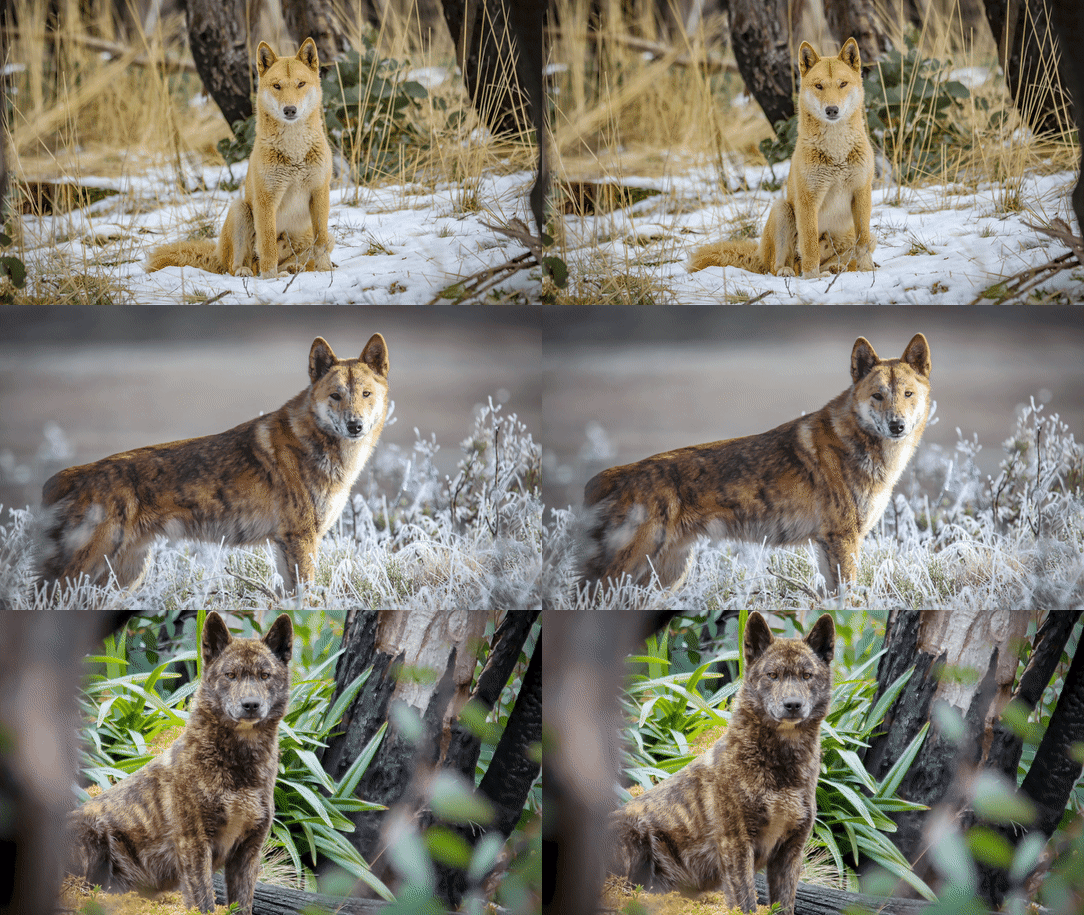
Ecologists describe species as being in an extinction vortex when a declining population becomes vulnerable to extinction due to inbreeding and environmental challenges.
Amid the destruction of fences, private farmland and Crown land, there is renewed debate about the treatment of dingoes, their protection, and the wild dog question.
“Wild dogs” is a catch-all phrase used to describe dingoes, feral dogs and dog-dingo hybrids, but dingo advocates are concerned it is used to justify the killing of native dingoes.
Victorian Farmers Federation vice president Peter Star, who runs livestock in the north-east of the state, said farmers were reporting to him increased sightings of “wild dogs” entering private properties.
He said most farmers he spoke with did not consider the animals to be dingoes, but wild dogs that predated upon livestock – predominantly sheep – and which should be controlled.
“It’s just adding to the trauma, it’s like a post-traumatic scenario. Some of these people are like soldiers returning from war, they’re that traumatised. And with exclusion fences down it’s a real worry.”
Big Desert Dingo Research founder Ellisha Martion has been studying and monitoring Wilkerr for years.
She expressed concern dingoes might be coming and going from the park after the fires, which “is a concern for everyone”, conservationists and farmers alike.
“Especially when there’s a livestock in the area.”
Agriculture Victoria reports that in the north-east and west of the state, 31,710 sheep have been reported killed, as well as 2742 beef cattle, 6246 poultry birds, and 535 bee hives.
Start the day with a summary of the day’s most important and interesting stories, analysis and insights. Sign up for our Morning Edition newsletter.
Save
You have reached your maximum number of saved items.
Remove items from your saved list to add more.
 Bianca Hall is The Age’s environment and climate reporter, and has worked in a range of roles including as a senior writer, city editor, and in the federal politics bureau in Canberra.Connect via X, Facebook or email.From our partners