
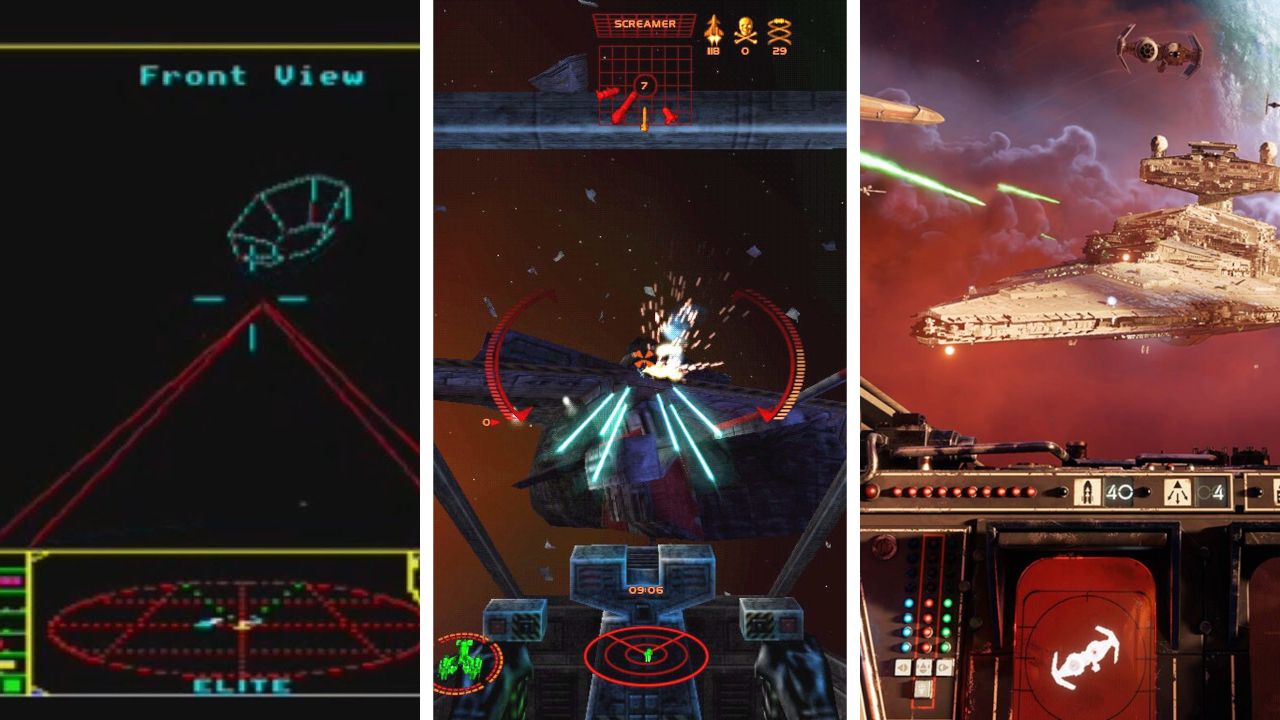
The concept of dogfighting amongst the stars has been around far longer than video games set in space, but it’s been a linchpin of some of the most seminal games ever developed.
From the earliest days of game development, when creators with visions of X-Wings blasting TIE Fighters to dust on the silver screen first got the chance to bring those sci-fi fantasies to interactive life, the idea of sleek fighters battling against a background of starscapes and shimmering moons has been a mainstay of the space game zeitgeist. Now, with over 50 years of digital space combat under our belts, we’re looking back on the gaming genre that took us to the stars and boldly asked, “Wouldn’t it be cool if we blasted fools with lasers from our spaceship?”
You may like
The Vector Era (Late 1970s to the 1980s)
(Image credit: Atari)
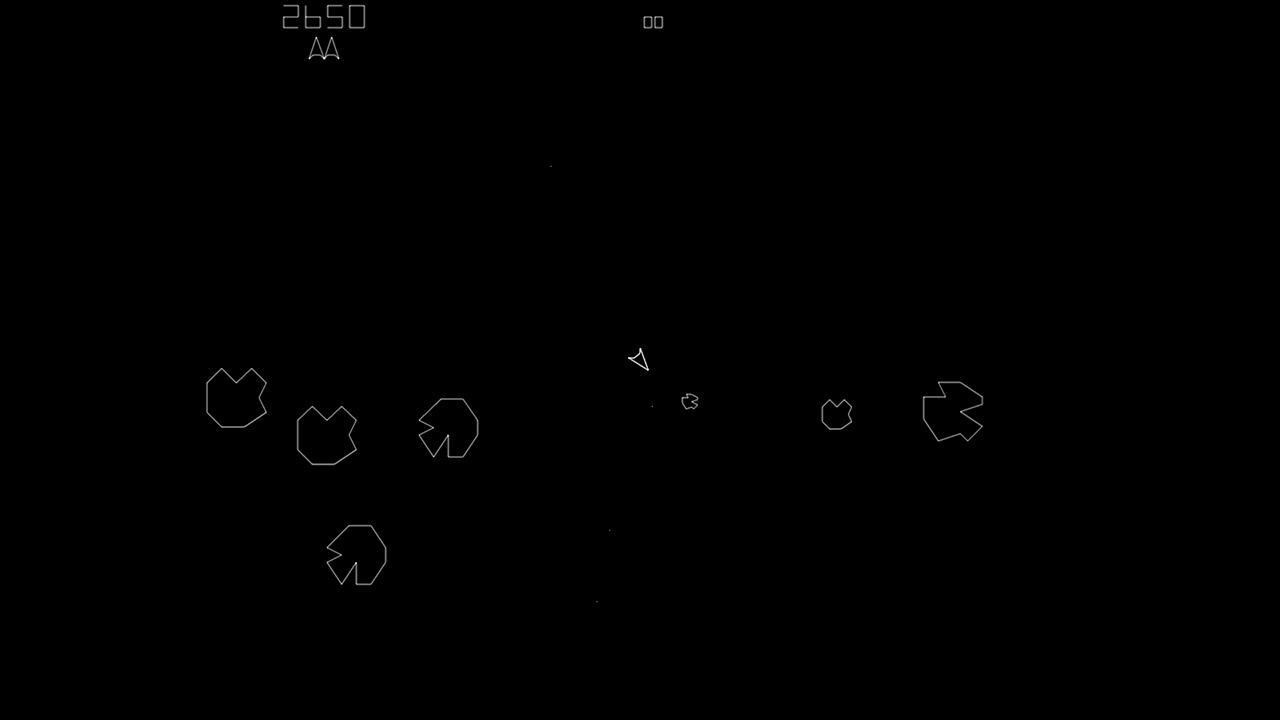
The core idea of space dogfighting in video games has its roots in arcade classics like “Asteroids”, first released in arcades way back in 1979.
Looking back now, “Asteroids” feels like a tech demo or proof of concept for some of the games that would later define dogfighting in later space sims. It was all about tight physics, good reflexes, and spatial awareness — cornerstones of what would later define the genre. It also introduced the crucial tension that defines dogfighting in any environment — the need to shoot down an agile enemy before they can destroy you.
“Asteroids” was quickly followed by early experiments with proper piloting and dogfighting, and later that year, “Star Raiders” brought that frenetic action gameplay home on Atari consoles. While it retained the reflexive gameplay of “Asteroids”, it introduced a first-person “cockpit” point of view and a strategy layer that added some depth and meaning to all the space rock blasting.
(Image credit: Acornsoft)
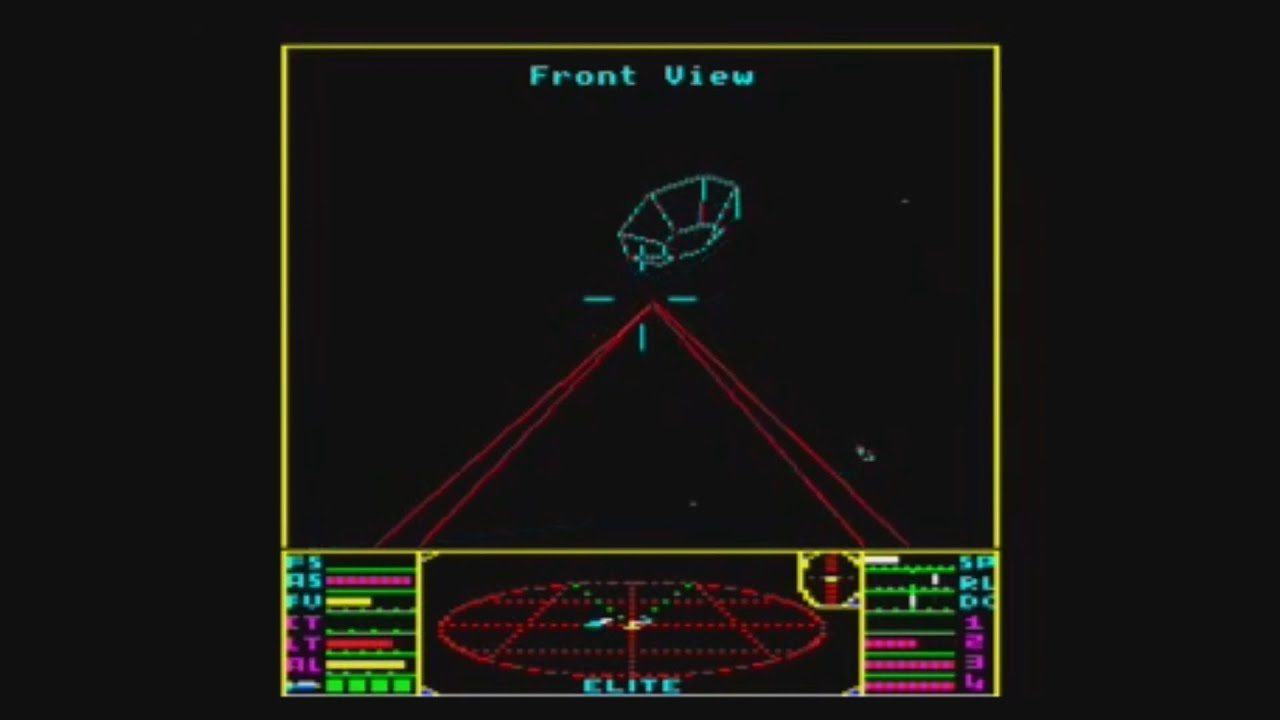
These early concepts were blown away in the next decade, when the original Elite was released in 1984. “Elite” took those core systems of piloting a powerful fighter craft through space and massively expanded on them.
It added trading, fighter-on-fighter combat, and procedurally generated worlds, laying the groundwork for the space sims and space dogfighting games that would become so wildly popular in the 90s and beyond. Elite didn’t just create a new genre; it demonstrated what was possible in an open world that put player agency above carefully curated, pre-generated content.
And for a while, “Elite” reigned supreme. While a handful of games followed in Elite’s wake, like 1985’s “The Halley Project: A Mission In Our Solar System”, it wasn’t until the space sim boom of the 90s that the promise of the space flight simulator was truly realized and, with it, the dream of sprawling, cinematic, action-packed dogfights between the stars.
Cinematic Simulation (The 1990s)
(Image credit: Origin Systems)
From humble roots, the 90s became the golden age of space simulation and dogfighting in video games. As technology advanced and investment increased, developers took the groundwork laid by games like Elite and expanded it into some of the most ambitious and compelling video games ever created.
You may like
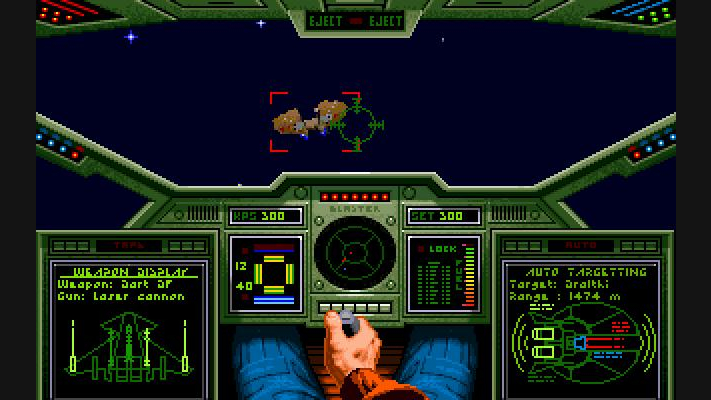
Leading the vanguard were games like “Wing Commander”, which landed in 1990 and was immediately lauded as the video gaming equivalent of “Star Wars“. Wing Commander wasn’t notable for its systems, but rather its context. It immersed players in a cinematic universe driven by FMV performances and an overarching narrative, dropping them in the heart of a brutal war — the outcome of which would determine the fate of humanity. It added stakes and drama while refining dogfighting mechanics to a razor’s edge.
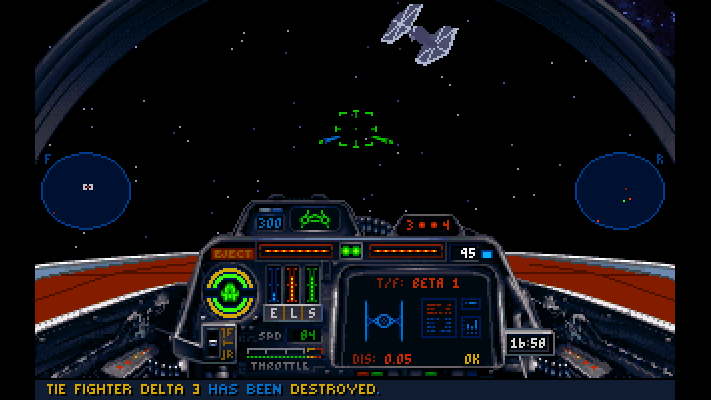
Not to be outdone by a property clearly inspired by George Lucas’ space opera, LucasArts launched its own ambitious (and wildly successful) series of space sims. X-Wing dropped in 1993, followed quickly by its sequel, TIE Fighter, the following year, finally fulfilling science fiction fans’ long-held fantasies of stepping into the cockpit of the most famous starfighters ever created.
(Image credit: LucasArts)
Beyond the famous spaceships, X-Wing and TIE Fighter also brought compelling stories set in the Star Wars universe, alongside technical advancements like fully 3D graphics in place of the bitmap sprites of previous titles.
These Star Wars games also standardized joystick controls in space sims — something that can still be felt in modern space sims to this day — and included precision flight physics and innovative mission design to keep players immersed in its impressive recreation of the Star Wars universe.
While grand cinematic simulators with deep systems and flight models dominated the early part of the decade, the late ’90s saw the emergence of more arcade-style dogfighting games like Rogue Squadron and Colony Wars.
In lieu of complicated controls and systems, these games seized on the high-energy gameplay of intense dogfighting moments, boiling it down into arcadey combat that was more accessible to the masses.
The Long Decline (The 2000s)
(Image credit: Warthog Games / Digital Anvil)
Despite the emergence of arcade titles, the steep learning curve — paired with joystick fatigue and the dominance of other genres (like FPS and RPGs) — led to a decline in the popularity of space sims and dogfighting games in the 2000s. After more than a decade of success, the 2000s saw a recession that some thought might spell the end of the space sim genre.
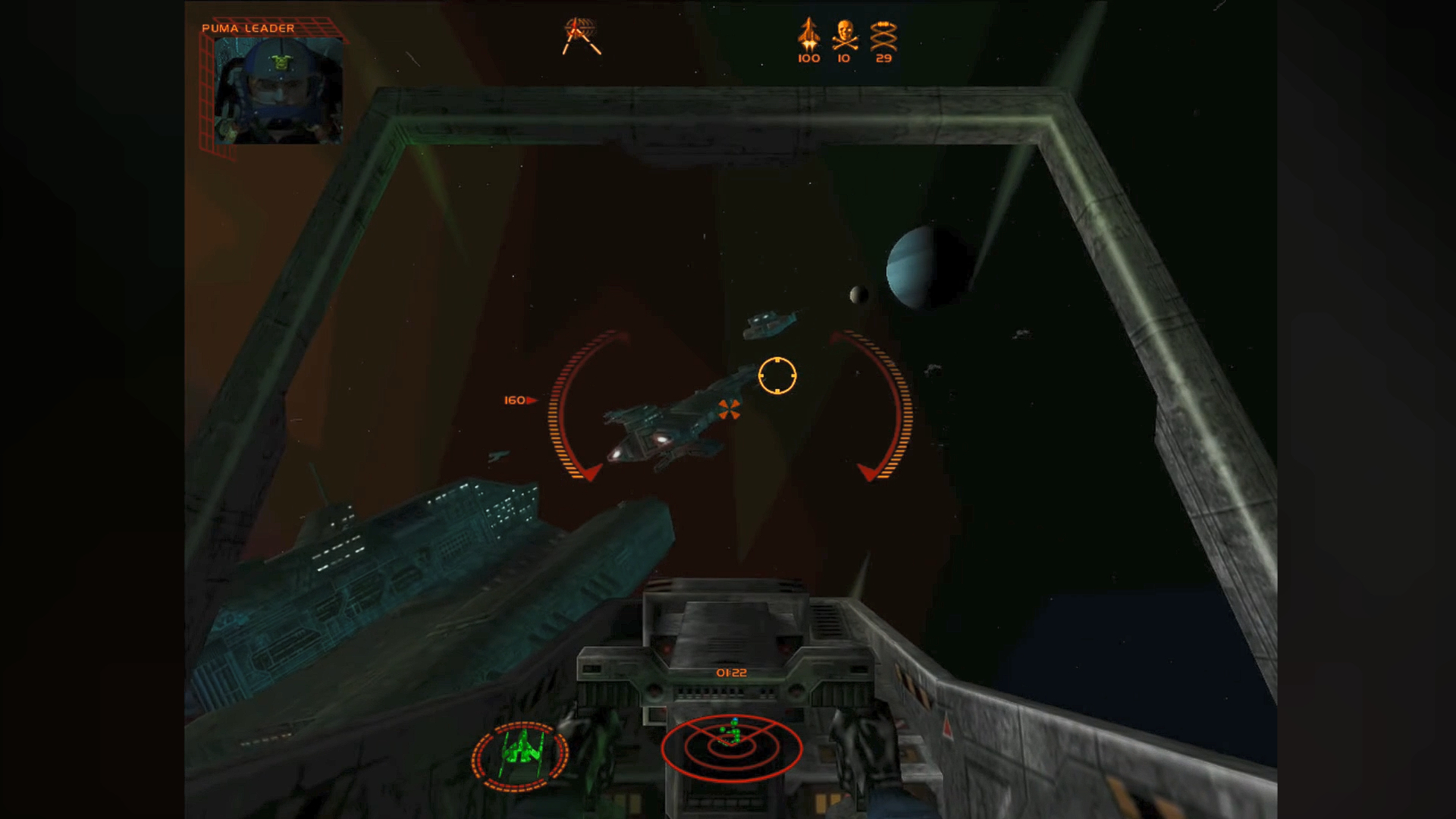
During these dark times, the spark was kept alive in this grim era by titles like Starlancer (2000) and its excellent sequel Freelancer (2003). Starlancer was a narrower simulator in the vein of Wing Commander or X-Wing, following a linear narrative about alliances of Earth’s nations battling in the void of space.
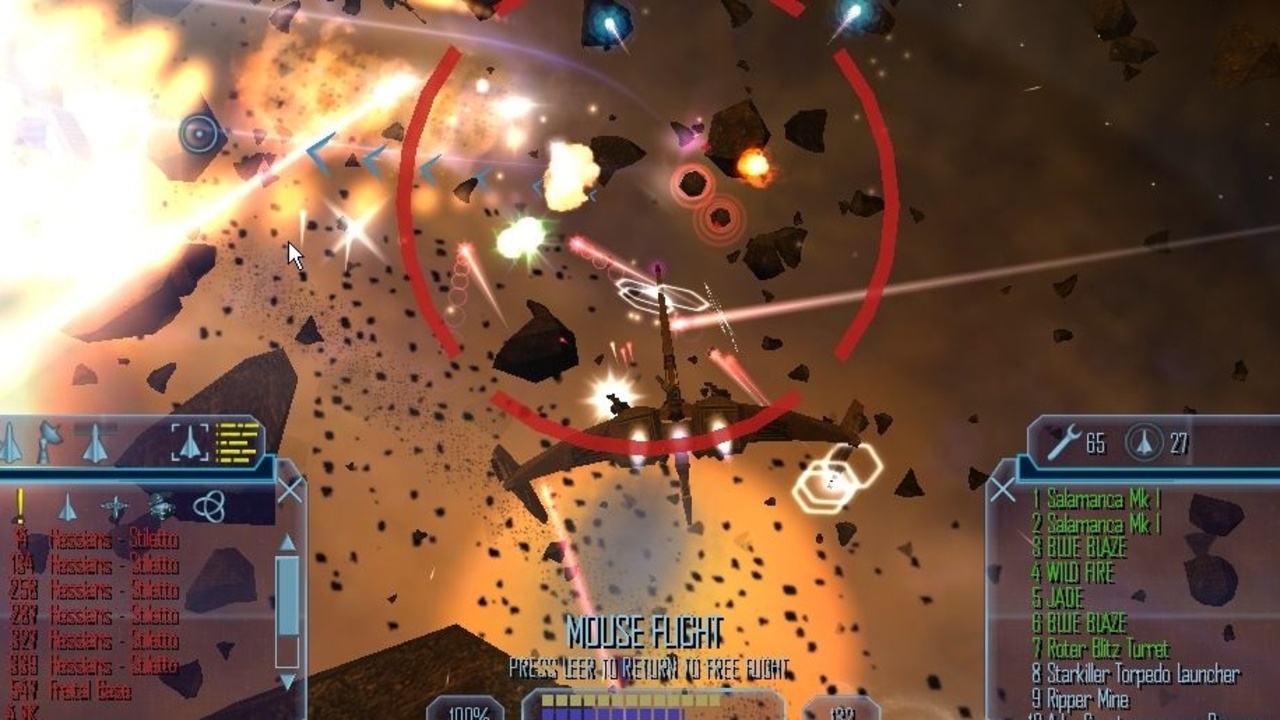
Freelancer, however, harkened back to the open concept introduced by Elite, giving players 48 star systems to explore and the freedom to pursue their own destiny as traders, miners, or bounty hunters. It was a bright spot in a dark time and showed a way forward for space sims as open-universe games where player choice and emergent gameplay define the game’s narrative rather than a rigid, linear story structure.
(Image credit: Microsoft Game Studios / Digital Anvil)
Freelancer’s dogfighting represented a move away from the joystick revolution that had defined the space in the 90s, instead relying on a simplified flight model where the spacecraft followed the movement of the mouse. Weapons would fire in the direction of the mouse cursor, and targeting UI and radar were minimized to make the action the focus.
The game did incorporate some realistic mechanics, though, including the conservation of momentum — a concept that would influence many subsequent titles — where a ship would continue to drift along in its original direction while a player could pivot it to face elsewhere.
(Image credit: CCP Games)
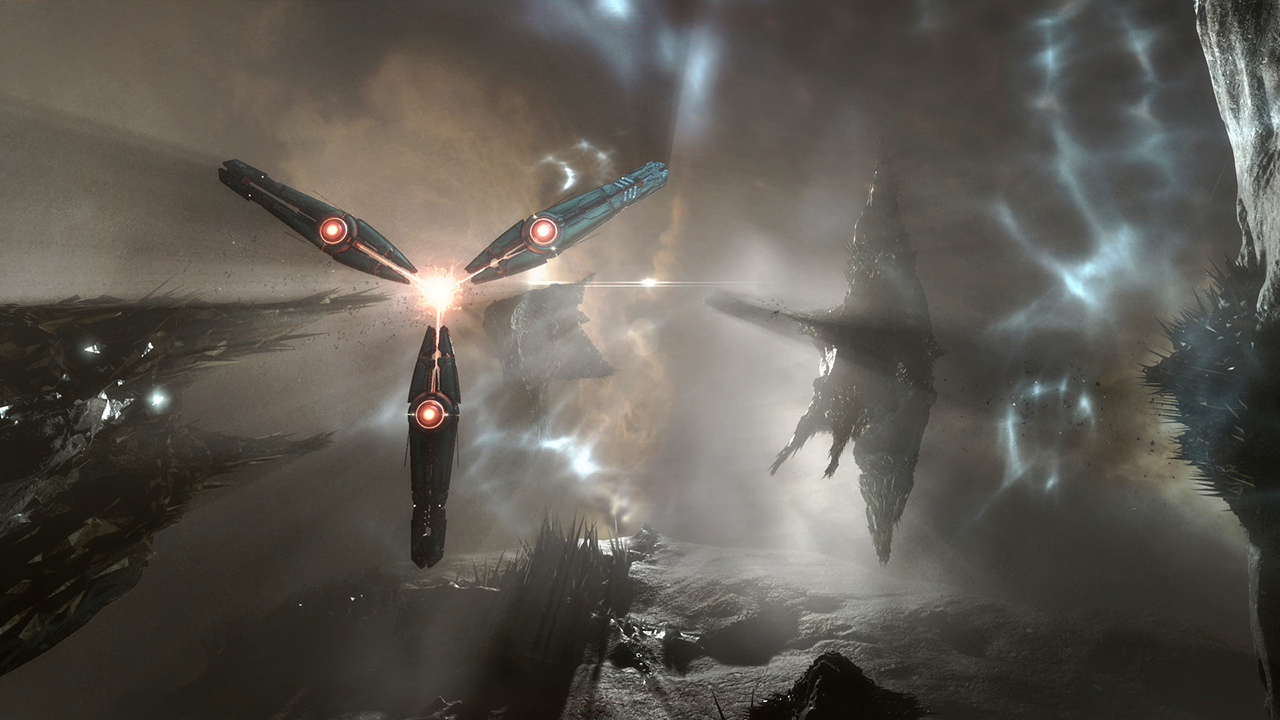
2003 also saw the release of EVE Online, a niche but enduring space MMO for hardcore space sim players to chase their starfighter fantasies. EVE Online is host to a staggering 7,800 star systems, and — despite it being over 20 years old — it continues to produce some of the most fascinating and complicated player-driven stories in video games.
As it has evolved, EVE has continued to refine and develop one of the most complicated dogfighting models ever seen in a game, including concepts like weapon falloff over distance, turret tracking speed, projectile velocity, target painting, electronic countermeasures, and many other wrinkles that add an unprecedented layer of realism and strategy.
It’s not for the timid, but EVE is a beacon of what can be achieved when developers put their minds to it.
The Modern Renaissance (The 2010s)
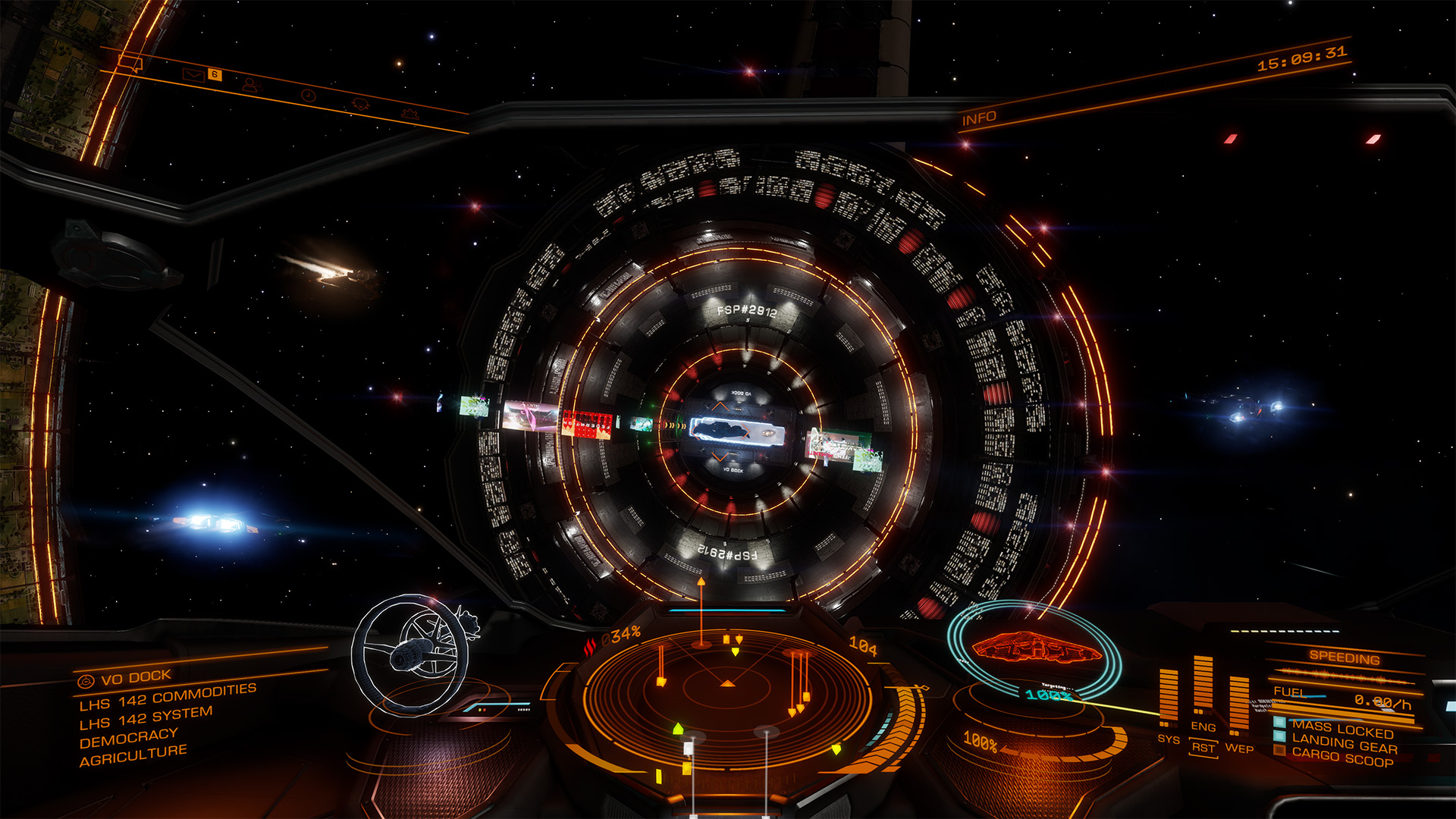
(Image credit: Frontier Developments)
Games like Freelancer and EVE Online kept the spark alive after the turn of the millennium, but it was the 2010s that saw a resurgence in the popularity (and availability) of quality space sims and dogfighting games.
Elite Dangerous continues the lineage of the 1984 original in grand fashion and is one of the most open-ended and ambitious video games ever created. Creators Frontier Developments have launched space sims into a new generation of scale and technology, building 1:1 star systems and adding VR and HOTAS compatibility. The game’s flight model is incredibly complicated, with a focus on realistic modeling and some notoriously finicky landing mechanics.
These translate to the dogfighting in some crucial ways, yielding a potent mix of physics, precision, situational awareness, and raw nerve. Ships have real inertia and Newtonian physics, and pilots can choose to toggle flight assistance on to help stabilize their often unpredictable craft, or off to perform mind-bending maneuvers that can be the edge between life and death in high-skill player versus player shootouts. There’s also a vital element of resource management that plays a role in every encounter, forcing players to juggle power distribution between shields, weapons, and engines while also managing heat levels within their craft.
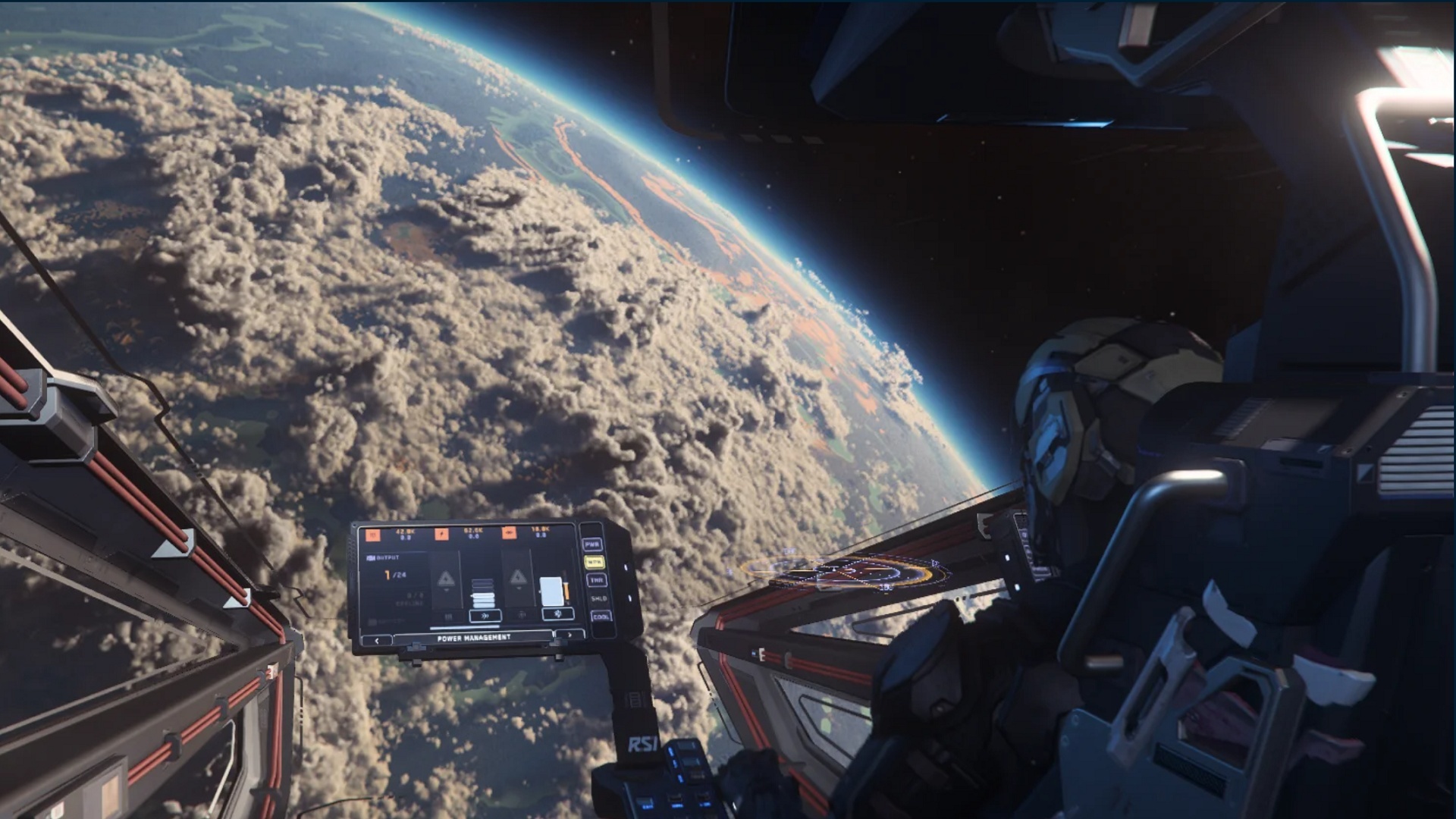
(Image credit: Cloud Imperium Games)
There’s also the continuing Star Citizen saga. The brainchild of Chris Roberts, the mind behind Wing Commander and Freelancer, Star Citizen is probably the most ambitious ongoing project in video games, having raised nearly one billion dollars in funding as of this writing. The final project aims to blend elements from space sims, first-person shooters, MMOs, and more into a massive amalgamation set in a huge, persistent universe. Will it ever be finished? Who can say, but it’s hard to fault their ambition.
The similarly hyped, ambitious, and controversial No Man’s Sky has crafted a redemption arc for the ages. Despite a disappointing launch back in 2016, the developers stuck with it and have crafted a wildly successful and long-running space sim that feels like a greatest hits montage of all the games that came before it.
No Man’s Sky’s dogfighting model is notable for its shift from the simple, arcade combat present at launch to the more advanced systems in the game now. They take full advantage of the wide range of weapons, ship classes, upgrades, and mods to make ship-to-ship combat feel fluid, dynamic, and cinematic.
The Indie Revolution (The 2020s)
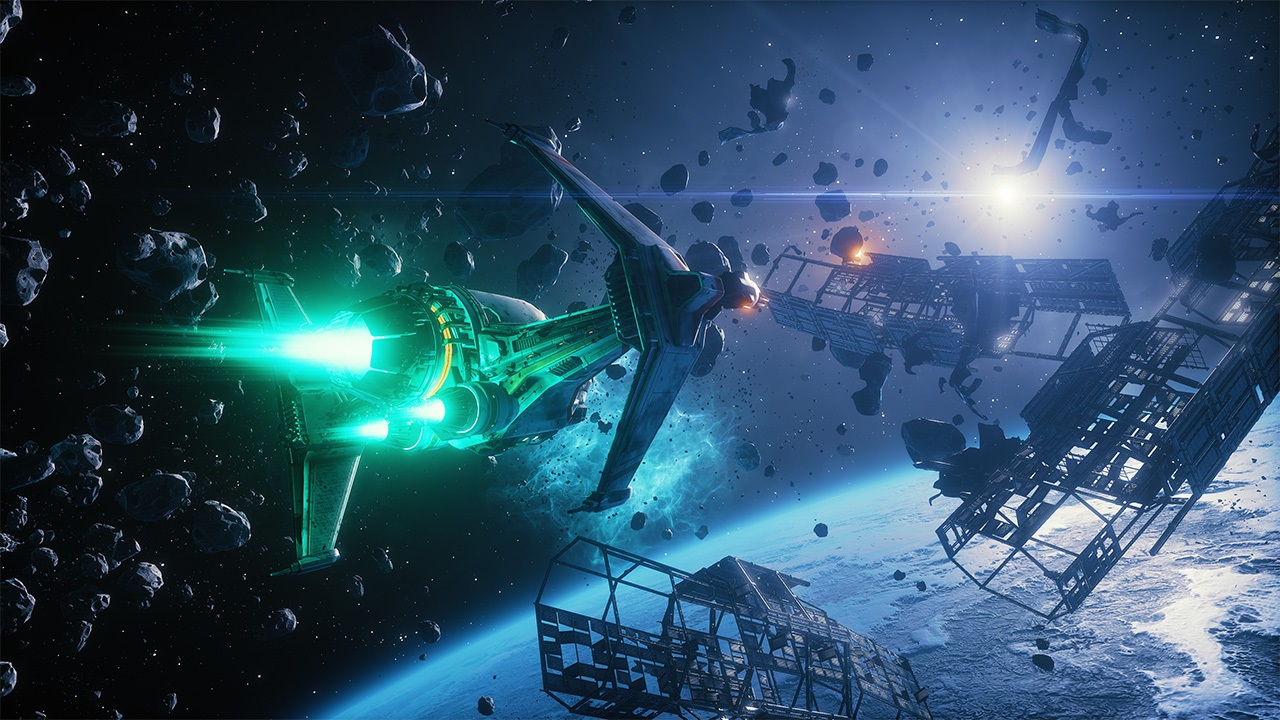
(Image credit: Rockfish Games)
Beyond the big names, there has been an explosion of other dogfighting games and space flight simulators that have pushed the envelope of what’s possible for the genre.
These include roguelite interpretations like the original Everspace, successors to the arcade action of Rogue Squadron like 2021’s Chorus, and the well-received return to Star Wars dogfighting of Star Wars: Squadrons.
There’s also Starfighter: Infinity, an impressive indie-MMO that’s carrying the torch for online PvP dogfighting, and games like Rebel Galaxy Outlaw that explore different interpretations of the open concept Elite first delivered in the mid-80s.
While the 90s may have represented the golden age of space dogfighting, the current renaissance proves that we’ve only begun to scratch the surface of the potential of space sims and the electric combat that makes them so compelling. It’s been a hell of a ride so far, and we can’t wait to see what the future holds in store for space dogfighting fans.