
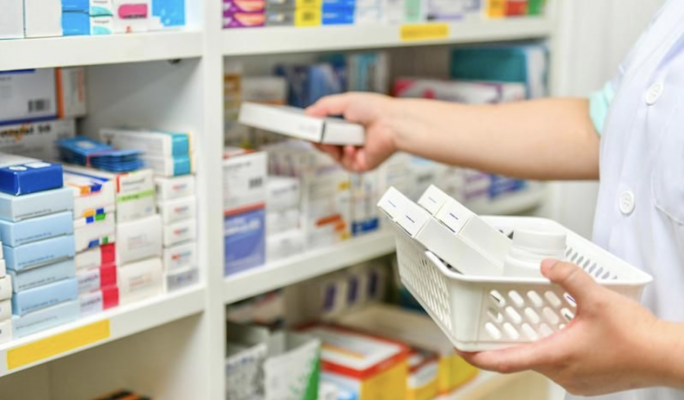
A broad range of medicines have seen their prices go up by significant margins with one eye drops increasing by as much as 233%, MaltaToday has learnt.
Flarex eye drops, used to treat eye inflammation, increased from €5.31 to an eyewatering €17.10 over the span of a few months. Similarly, Otosporin ear drops, used to treat ear infections, increased from €4.61 to an ear-bursting €13.95—a 200% increase.
But other more popular medicines such as Buscopan tablets, used in the treatment of muscle spasms, Sudocrem, used to treat skin redness in babies, and Ventolin inhaler, used to treat asthma, are also leaving a bigger dent in consumers’ wallets.
A 250g tub of Sudocrem cream shot up by 72%, from €7.34 to €12.65, while Buscopan tablets now retail at €19.90, double what they used to cost. Meanwhile, asthma sufferers would have noticed that the Ventolin inhaler now sets them back €7.49, an increase of €4.34 or 137%.
The medicines list was independently compiled by a pharmacist over the span of 18 months. The pharmacist, who was granted anonymity to be able to speak freely, shared the data with MaltaToday. The same list was tabled in parliament by Opposition MP Stephen Spiteri last week.
The list includes around 100 medicines ranging from over-the-counter treatments to prescription drugs.
“The price increases are wide-ranging and the result of multiple factors but the fact is that patients are paying much higher prices,” the pharmacist told MaltaToday.
The exercise shows that common pain relievers, also exhibited significant price increases—a box of 20 Parcoten tablets now retails at €8.95, an 18% increase; a box of 48 Panadols retails at €5.32, a 33% hike; and a box of 60 Brufen tablets sells at €11.96, a 34% increase.
Fertility medication was not spared from the savage increases. A box of 30 Clomid 50mg tablets retails at €39, a 19% increase, while a box of seven 25mg Pleyris vials now sells at €78.90, up from €57.90 some months ago—a 36% increase.
Overall, the price increases in this list range from a few cents to tens of euros—from a mere 2% increase to over 200%, within a span of 18 months. Not all increases can be justified on the basis of yearly inflation.
2023 price reductions reversed
Of interest are two particular medicines—Septrin Forte, an antibiotic, and Anthisan, a cream to reduce itching—which formed part of a list of 66 medicines that had their prices reduced in 2023 following discussions between the Medicines Authority, the Health Ministry and medicine importers.
Back in 2023, a packet of 100 tablets of Septrin Forte 960mg had its price reduced to €45.50 from €56.78—a 20% reduction. Today, the same dosage of Septrin Forte but sold in packets of 50 tablets, retails at €29.28, which is 29% more expensive than the lower price negotiated in 2023.
Similarly, a 25g tube of Anthisan cream had its price reduced from €6.95 to €5.95 in 2023—a 14% saving. Nonetheless, the same medication is today retailing at €6.95 once again.
According to National Statistics Office data obtained from the Retail Price Index (RPI) of December 2025, medical services and medicines exhibited an annual inflation rate of 2.9%, a relatively moderate increase. Medicines-specific data is not publicly available.
Nonetheless, operators in the field insist overall inflation may not be indicative of what patients experience on the ground since they hardly shop around for cheaper alternatives. Patients may also be taking specific medication for which no alternatives exist, which renders them price-takers irrespective of the cost.
“If a patient is prescribed a particular branded antibiotic for an ailment, they expect the pharmacy to give them that medicine irrespective of the cost. This is not like buying ham from the deli counter at a supermarket; a patient trusts what the doctor or the pharmacist says,” a family doctor, who spoke to MaltaToday on condition of anonymity, said.
They added that some doctors do take note of price sensitivity when prescribing medicine but others prescribe brands suggested to them by importers. It is a known practice that importers offer doctors incentives to promote their products.
In other instances, pharmacies may have a financial incentive from importers to push certain over-the-counter medicines that are more expensive than others.
This means that although cheaper alternatives may exist, unless these are prescribed or suggested to patients, they often end up paying the higher prices.
Small market, high cost
But a pharmaceutical importer, who spoke on condition of anonymity, said the Maltese market was at the mercy of international forces, especially after the UK exited the EU.
“Malta is a small market and after Brexit happened, importing medicines from other EU countries became more expensive since manufacturers would have to produce smaller batches with product literature translated in English, specifically for the Maltese market,” the importer told MaltaToday, adding that this has escalated costs.
Importing from Ireland is an option but medicines tend to be much higher than the UK, where the purchasing power of the national health service helps keep prices more stable.
Malta has a Brexit exemption to import medicines from the UK, however this will expire at the end of 2026, the importer warned.
“We have been applying pressure on the government to negotiate an extension of this exemption to avoid unnecessary price hikes,” the importer said.
Higher registration fees
But there is another ticking time bomb that could push medicine prices even higher over the coming weeks and months. In October last year, the Medicines Authority introduced higher registration fees for medicines and pharmaceutical operators.
None of the higher prices on the list received by MaltaToday were the result of the new registration fees, according to industry sources, but unless the increases are reversed importers would have no option but to transmit the cost to the consumer.
“The largest impact of the new fees would be on medicines used by a few patients, which tend to be among the most expensive. It could result in significantly higher prices for these medicines or a complete stop to their importation,” the importer said. The new licence and registration fees, they added, were unlikely to have a significant impact on fast-moving medicines.
However, they said talks were underway with the authorities over a less punitive fee structure for licensing in view of Malta’s unique reality.
“So far, importers have held back from passing on the cost of the higher fees to consumers and we are in discussions with the authorities to find the best way forward; I am confident we can achieve progress,” the importer said, acknowledging that registration fees have remained untouched for many years.
High spenders
Meanwhile, speaking in parliament last week, PN MP Stephen Spiteri said the list of price hikes was indicative of an unstable medicines market that was having a negative impact on consumers, especially pensioners.
Health Minister Jo Etienne Abela insisted in his reply that most of the medicines on the list were offered for free through the Pharmacy of Your Choice scheme. He also added that government and the Medicines Authority were in talks with importers to reduce the prices of 33 medicines over the coming weeks. He also claimed that none of the 66 medicines that had their price reduced in 2023 had experienced price increases.
Nonetheless, according to a recent study, Malta stands out within the European Union for its unusually high spending by individuals on retail pharmaceuticals.
Retail medicines accounted for 18% of Malta’s total health expenditure in 2023, well above the EU average of 13%. On a per capita basis, spending reached €648, the second highest in the bloc after Germany. Around 90% of this expenditure was on prescribed medicines, with the remainder spent on over-the-counter products.
The figures emerge from the State Of Health In The EU: Malta – Country Health Profile 2025, issued in December by the Organisation for Economic Co-operation and Development (OECD) and the European Observatory on Health Systems and Policies.
This means that despite the availability of free medicines on the POYC scheme, Maltese families are still the second highest spenders on medicines in the EU, a pattern that places a significant financial burden on households.