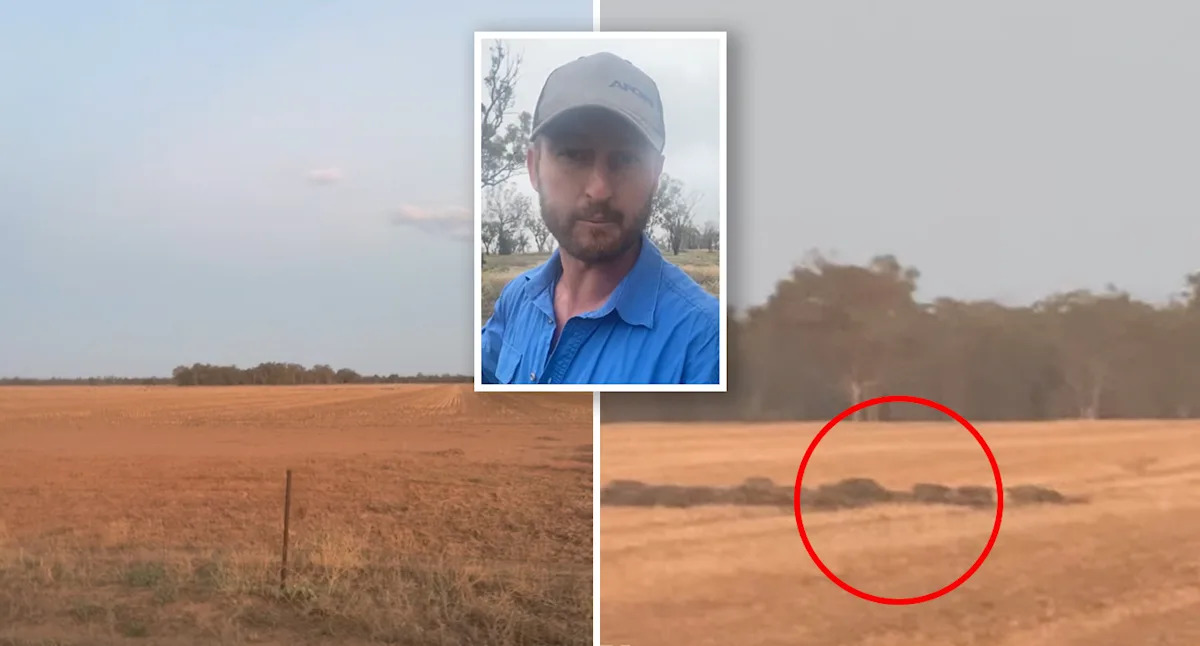
A third-generation Aussie farmer has captured “mind-blowing” footage of one of the country’s worst introduced species in action. In recent years, feral pigs have become a massive burden for Josh Borowski, as they have for many who work in the agricultural sector.
With the animals costing him an estimated $200,000 to $300,000 in crop losses every year, the 38-year-old is forced to defend his 17,000-acre property near NSW’s Pilliga National Park on a daily basis. However, footage of the pests stomping through one of his paddocks captured just last week has revealed just how steep his battle is.
In the clip, a large mob of feral pigs storm through a field used to grow barley.
“I’ve always known that the pigs have been there, but to see them in broad daylight and be actually able to capture the scale of the numbers that are affecting us…was bit rarer,” he told Yahoo News Australia.
The animals have been causing chaos on Josh’s property for years, but the “numbers have become stronger and stronger year in, and year out”.
“What we’re experiencing now is quite mind-blowing,” Josh said.
“When I was younger, you would go hunting for pigs, because pigs were a bit more of a novelty, and every now and again, you might have a large mob that would do a bit of damage here and there.
“Now we have population that’s just exploded and we just can’t get on top of them.”
Are you being impacted by invasive animals? Contact newsroomau@yahoonews.comFeral pigs destroying large percentage of farmer’s crops
The farmer said he’s losing anywhere between 40 to 80 per cent of his crops annually.
The animals “rip up the ground”, sometimes within days of seeds being sown, forcing the 38-year-old and his wife, Stephanie, to start over again.
“We’re just one farm of many, many thousands that are being impacted like this,” he told Yahoo.
The scale of the problem is even more daunting from the air.
When riding along in contractors’ helicopters, you get to see a bird’s eye view, Josh said.
“[It’s] just a reality check of the kind of the kind of numbers that are up there. They are like mice, in all shapes, sizes and colours, and they are very well established,” he explained.
While farmers can plan and prepare for wild weather and droughts, the “added strain and stress of constantly going out every night to shoot pigs that just seem to be endless in number” adds to their already hefty workload, Josh said, calling on authorities to provide more support.
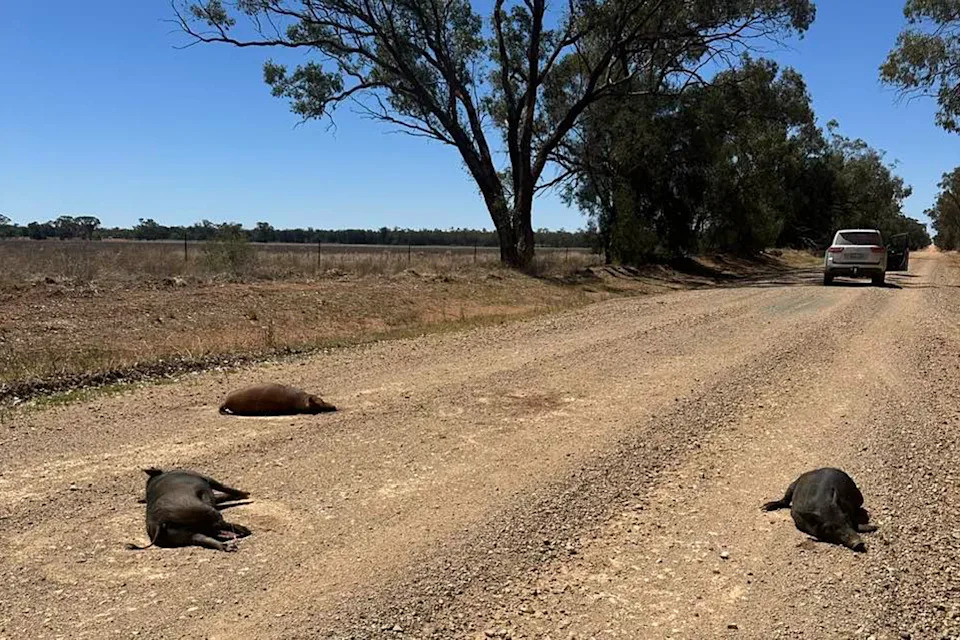
Feral pigs, which were introduced in the 1800s, now roam across 45 per cent of Australia’s land mass. Source: Helen Dalton
Farmer urges authorities to provide more support
Feral pigs, which were introduced in the 1800s, now roam across 45 per cent of Australia’s land mass, causing widespread environmental and agricultural damage.
According to the Australian Bureau of Agricultural and Resource Economics and Sciences (ABARES), the annual cost to Australia’s agricultural sector from feral pigs, including management expenditure and residual production losses, is estimated at more than A$156 million.
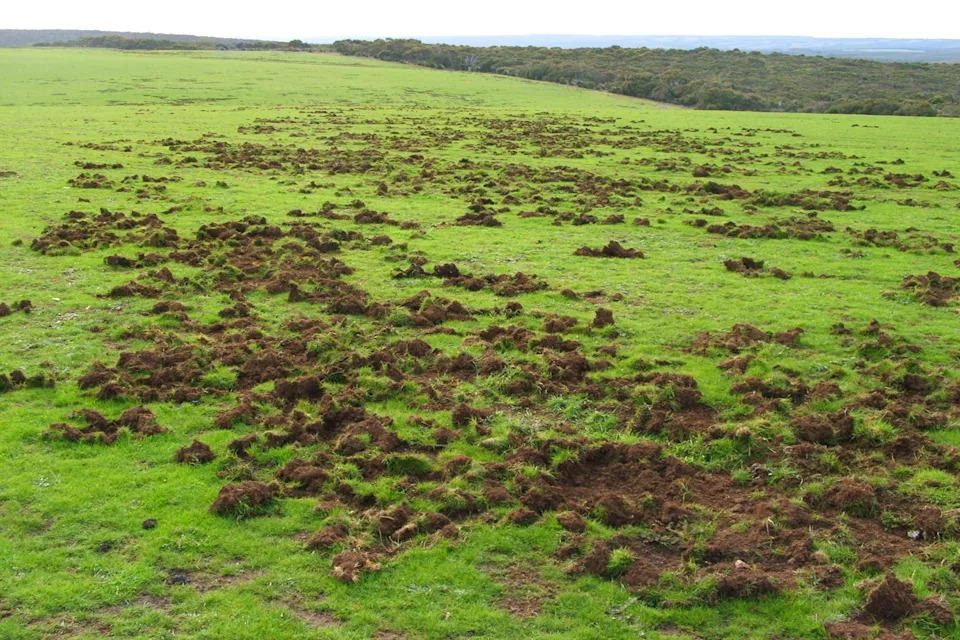
Feral pigs destroy natural landscapes, prey on native wildlife, and breed extremely quickly. Source: South Australian Government
Josh told Yahoo he would like to see farmers receive more help from the government, including subsidised helicopter shoots and easier access to “pig poison”.
Authorities should also consider subsidies for exclusion fencing, which Josh noted was “extremely expensive”.
“Don’t put more restrictions on the tools that are necessary to help address issues like this,” he continued.
Dr Heather Channon, who is leading the implementation of the National Feral Pig Action Plan, previously told Yahoo News that Australia’s feral pig response needs stronger coordination, better data, and longer-term commitment.
She said more support is needed for communication between private and public land managers so control efforts can be better timed and more effective.
Do you have a story tip? Email: newsroomau@yahoonews.com.
You can also follow us on Facebook, Instagram, TikTok, Twitter and YouTube.