

More than a decade ago, when the national team were dumped out of their home World Cup and England were at sixes and sevens over their six-and-a-halves — Chris Robshaw, Tom Wood and James Haskell — there seemed to be only a trickling pipeline of back-row talent. Now, the trickle is a torrent.
Across the Gallagher Prem and through the England pathway system, there are plenty of in-form back-row forwards. Count across the ten club squads and you find 60 Englishmen capable of wearing No6, 7 or 8, and 47 of them have either made an England squad, won a cap or represented a pathway team.
And they keep on coming. In the senior side, Steve Borthwick has a surfeit of options between Tom Curry, Chandler Cunningham-South, Ben Earl, Greg Fisilau, Jack Kenningham, Guy Pepper, Henry Pollock and, at only 29, the oldest, Sam Underhill.

Ilione, 23, a medical student who plays for Leicester Tigers, is regaining fitness
MICHAEL POWELL FOR THE TIMES
This list does not include Emeka Ilione, who is regaining his fitness, Ben Curry, who is injured, and Tom and Jack Willis, who have chosen to play in France.
So what is happening here, and how do England keep greasing the wheels of this conveyor belt of talent? Let’s go inside the back-row factory.
Covid, caps . . . and a conveyor belt
It is hard to say whether this boom would have happened without the Covid pandemic, whether the talent was there already, or if it took the cutting of the Prem salary cap — from £6.4million to £5million, before it returned to the previous level for the 2024-25 season — for coaches to start trusting their youth systems.
But what is true is that the league employs far fewer non-English back-row forwards. There are only 32 across the ten top-flight teams, some of whom were born in England but have committed to other countries, such as Andy Onyeama-Christie at Saracens, or those who may become qualified in future — but not many.

Safe pair of hands: Mata is doing well at Bristol, the only team in the Gallagher Prem that could not field a fully English back row
CRAIG WATSON FOR THE TIMES
There is the odd star signing — Viliame Mata at Bristol Bears, for example — but looking across the league there is only one team that could not field a fully English back row: Bristol Bears.
Squads have to average 15 English-qualified players per season, which helps, but at the same time, the Prem has ceased to be the preferred destination for overseas journeymen. So the unintended consequences of financial strains have helped, but there has been a lot of hard graft too.
Identification, tracking and super-strengths
Creating a back-row forward ready for Test rugby is a mammoth task. Largely, the most talented schoolchildren play fly half or No8, because they will always find the ball, and largely, they do not dream of becoming props. But thousands of them want to be a back-row player, so spotting the best of them, and honing their skills, is a huge undertaking.
Nathan Catt, the former Bath prop, is a pivotal cog in the England pathway system. Primarily, his role is to create the front-row stars of the future, but this expands to the forwards more generally. Others below him do the talent identification of mid-teens, via clubs, academies and schools, but he is often the man who has to catapult the chosen ones forward.
It was Catt who convinced new England tight-head Billy Sela, for example, to move from back-row forward to prop. Sela, 20, is one who took the message on, but many boys, or their parents who yearn for the flank, have to be dismissed if they are not adaptable.
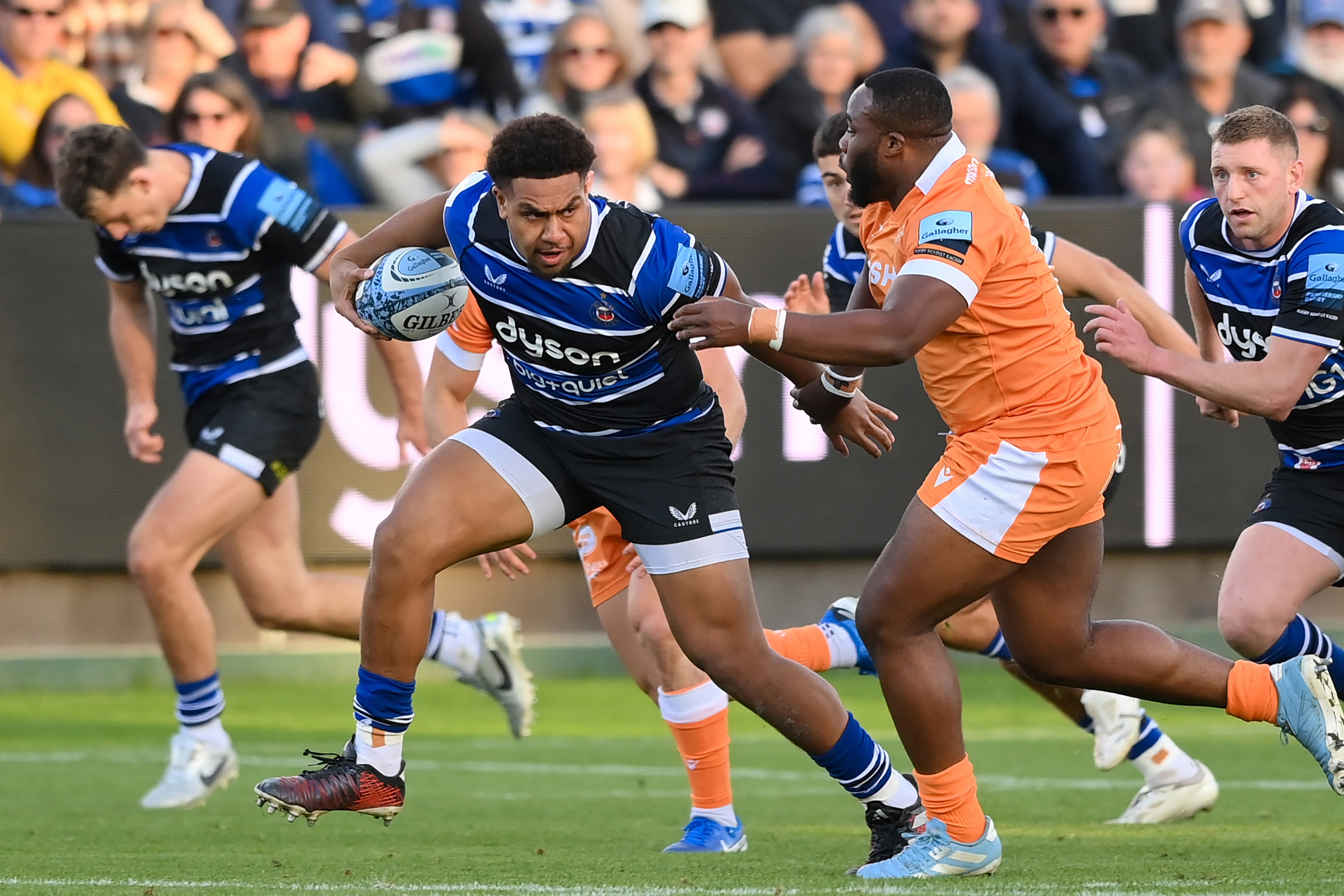
Sela, left, 20, could have a chance of starting England’s Six Nations opening game against Wales
PATRICK KHACHFE/GETTY IMAGES
“You get some guys that go, ‘No, I’m not interested in moving position,’ ” Catt says. “You’ll go, ‘Fair enough. OK, we’ll come back in a year or two if you feel any differently.’ Others go, ‘If you think that’s the best opportunity for me to go and play international or Prem rugby, then I’m all in.’ ”
Whatever position they settle into, honesty is the best policy from the start. Catt has to tell many that they will not make it — just look at who is ahead of you — and some love the challenge, like Fisilau.
Others will just enjoy the ride. “Even if you end up starting 50 times for England, at some point, you’re going to get replaced, so be prepared for that, give yourself the best opportunity and put all into it,” Catt says. “And whether you end up playing 100 times for England, or you play level five with your mates, you’ll probably still have a pretty good time.”
All players will have their ceiling, but it is the job of Catt and others to push that up. Tracking who is where across the country is just one stage of the development plan.
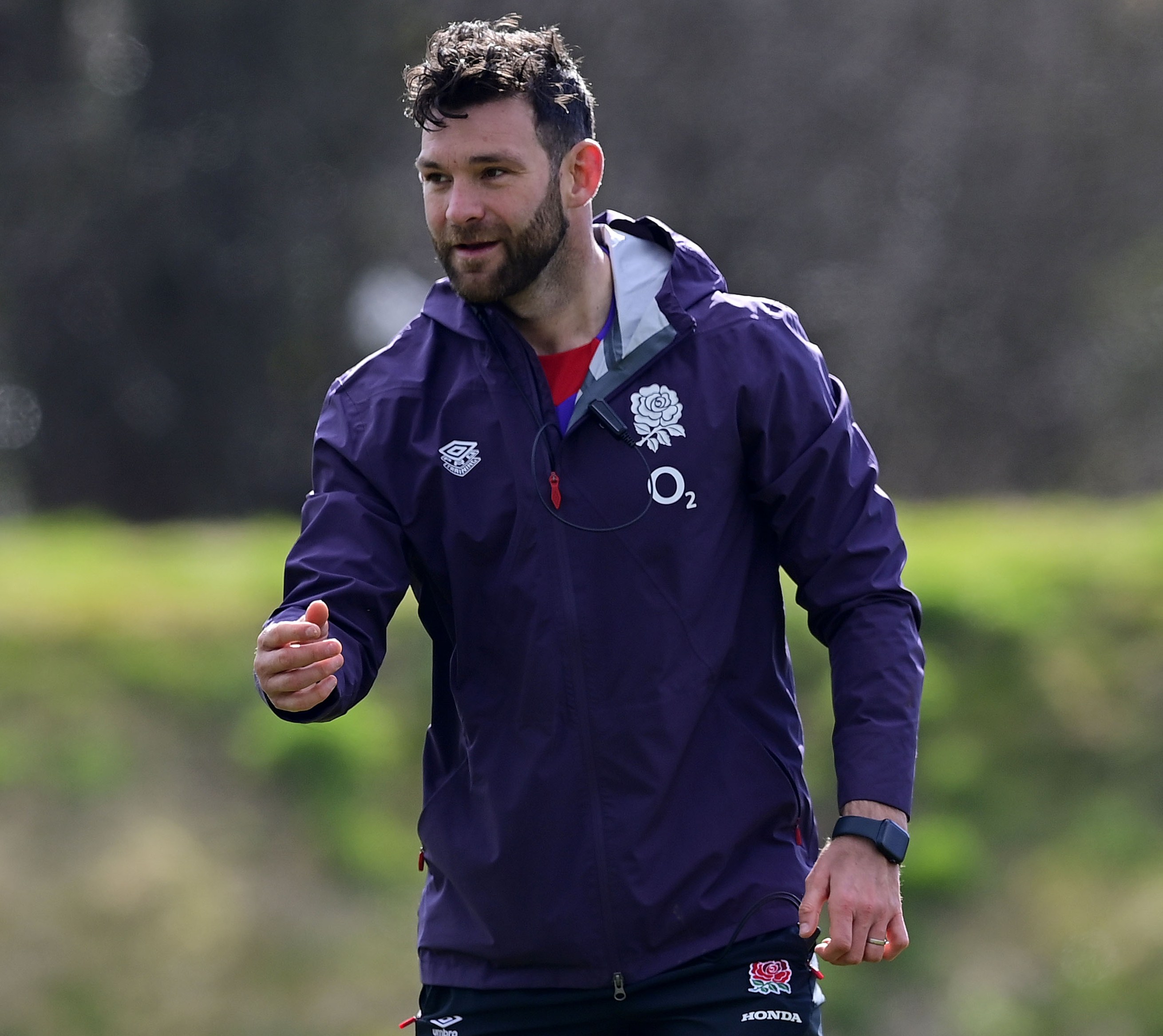
Catt, the former Bath prop, is a pivotal cog in the England pathway system
TOM SANDBERG/PPAUK/SHUTTERSTOCK
He and the others who work in the England Under-16 to Under-20 sides — “the pathway” — have access to an enormous spreadsheet, alongside the senior coaches, right up to Borthwick. Tom Harrison, the national team scrum coach, has a depth-chart of props down to level seven of English rugby (just in case) and similar stock-checks are made for back-row forwards.
It helps highlight deficits and spot talent. “There are many eyes,” Catt says. “Once at clubs, players are given IDPs [individual development programmes], and the England pathway coaches spend their time outside of camps driving around the country making sure messaging is aligned. There is no point in a club coach telling a kid to work on their passing when England think he needs a block of strength work.”
Players need matches too, at an appropriate level, so the key is to find their “challenge point”. Pollock, for example, became too good for school rugby at Stowe when he was 17, and then too good for Bedford Blues, where he spent time on loan from Northampton Saints, and then too good for England Under-20. He had to advance quickly. Others take longer, or have quite varied schedules to find their level.
Ethan Staddon, the 23-year-old from Bath, is a case in point. Last season, he faced Clermont in the Champions Cup one week in January, then played for Bath United, their second string, against England Under-20 the next.
Coaches encourage players to dial up a “super-strength”. Do not just try to be an all-rounder, but an outlier — whether that is jackalling or tackling, speed, or size. Eventually, that should mean that Borthwick has a variety of options to pick from, not just identikits.

Staddon, 23, faced Clermont in the Champions Cup one week last season, then played for Bath United, their second string, against England Under-20 the next
PATRICK KHACHFE/GETTY IMAGES
Connor Treacey is another good case study. The 19-year-old Bath back-row forward is the new under-20 captain, having come through Beechen Cliff School and the under-18 set-up.
At 6ft 2in and 105kg, he plays across the back row, but has identified his work rate as his super-strength.
Catt, who shares this view, was delighted that Treacey identified that indefatigability, when he coached him with Bath’s academy.
“How do we make that so it’s a proper USP against the other back-rowers, who are really quite talented?” Catt asks.
The answer? Giving players a two or three-month block of training focused particularly on their super-strength — whether footwork, offloading, tackle technique, fitness or ball-carrying, to name a few. These extra sessions, completed at club and national camps, are recorded and monitored, so scores can be measured and tweaks made.
“It’s giving them one or two areas to focus on rather than trying to chase ten rabbits and catching none,” Catt says.

Treacey, 19, right, is a former centre who still works on his speed in the wider channels
RYAN HISCOTT/GETTY IMAGES
Jackals, tackles and extras
Once on the cusp of pushing through, like Treacey, a young back row has to be diligent. They are told to go steady on their weight gain, because a young body can break if bulked up too quickly.
Both in skill and size, the gap between forwards and backs is not so great in the modern game, embodied in the hybrid potential of Earl, a back-row who has featured in the centre in Tests.
“At the end of the day, we’re rugby players,” says Treacey, a former centre who still works on his speed in the wider channels, as well as his physicality. “We just want to get the ball in our hands and play what’s in front of us, no matter what number’s on your back.”
To hone his handling, Treacey will stand behind one post, and ask a scrum half to pass him the ball from the other side of it, so he is unsighted. He has to react quickly to catch the ball coming across him. The goal is to train your brain’s peripheral vision, and to anticipate where the ball will be, to replicate catching it in “traffic” on the field.
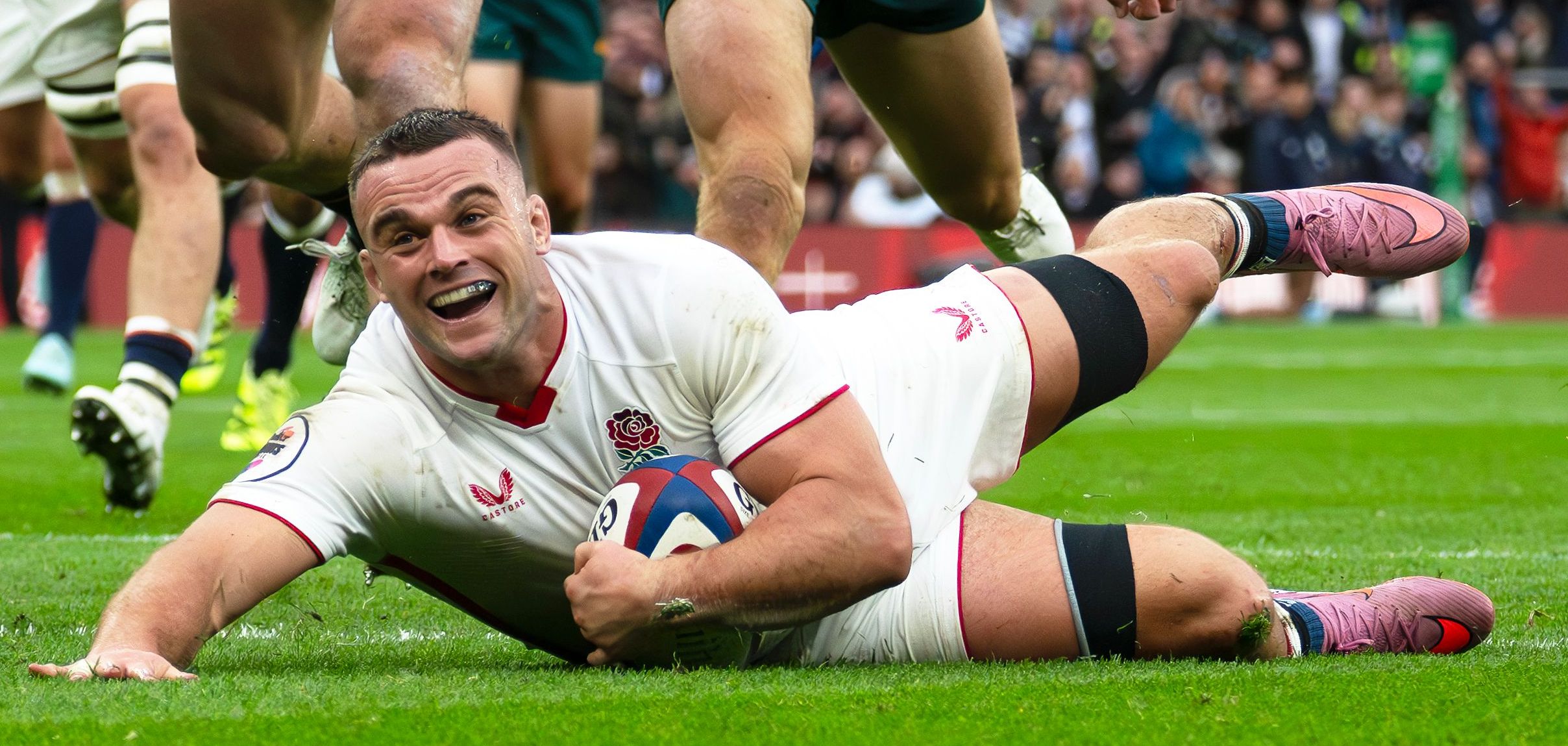
Earl is one of the primary back-row options for Borthwick in the senior England side
SANDRA MAILER/SHUTTERSTOCK
Some skills are specific to the back row. Jackalling — pilfering the ball at the breakdown — is one. At under-20 level they have a special “rapid rucks” drill to improve this ability. This is a game of three-on-three, with one defender earmarked as the jackaller.
The game is simple: at each breakdown, the jackaller must decide whether to dip in for the ball or not, and if they do, the challenge is to emerge with it as quickly as possible. This is an extension of challenging players to get off the floor within three seconds, as Eddie Jones did with England, or for scrum halves to have the quickest service, as Alex Mitchell is picked for.
“How quickly can we get in over the ball?” says Treacey. “A lot of the time people just stick their hands anywhere, but can we be specific? Bang, go for the ball. And how quick can you get it rather than just holding on?”
This trains a back-rower’s “shot selection” — when to go, and when not to — as well as the counter-ruckers on the other side, attempting to stop the jackaller.
Tackling is all about footwork. Either to make them or avoid them. To improve himself on both sides of the ball, Treacey will line up in a five-metre box with another player. In defence, he will drill placing his foot as close as possible to the attacker, so he can “punch” his shoulder through the tackle. Then in attack, it is the opposite: can his movement just before impact help him find a soft shoulder?
Treacey will build up these micro, muscle-memory training movements into full hits on to crash mats. At Bath, when he is with the seniors at Farleigh House, he watches how Pepper and Underhill cleverly anticipate their involvements before they happen — whether it is a game-breaking steal, or a line-bust.

Pepper, 22, has the ability to anticipate involvements, like a game-breaking steal, before they happen
ALEX DAVIDSON – RFU/THE RFU COLLECTION VIA GETTY IMAGES
“Guy especially has scored quite a few tries like that this season,” Treacey says. “He’s popping up on the end of things rather than just setting for a midfield carry by following the ball, tracking, predicting players like Henry Arundell, Santi Carreras to make a line break and getting on the end of those.”
Sometimes, there is no substitute for hard work — but England finally seem to have an all-in system that breeds top-class back rowers. “There is a path,” Treacey says. “Pollock is a prime example, who has really been slingshotted recently, but it’s from his own work.”
And if Treacey can learn from Underhill and Pepper, Pollock can push Earl, Fisilau wants to beat both of them to the No8 shirt, and more boys are being well trained below that, the hope is that quality breeds quality, and never again will England have to be content with yeomen six-and-a-halves.
The back rowers across the Gallagher Prem…English back rowers in the Gallagher Prem (60 named in wider squads)England pathway/senior recognition squad (47)Bath: A Barbeary, T Hill, G Pepper, M Reid, E Richards, E Staddon, C Treacey, S UnderhillBristol: F Harding, K CrippsExeter: A Bell, R Capstick, G Fisilau, J Forsythe, K James, L Pearson, E Roots, R Tuima, F Worley-BradyGloucester: J Basham, J Clement, L Ludlow, W Trenholm Harlequins: J Chisholm, C Cunningham-South, A Dombrandt, W Evans, J Kenningham, T LawdayLeicester: F Carnduff, O Chessum, E Ilione, T Manz, H WellsNewcastle: G Bolam, O Leatherbarrow, J Hawkins, R ParsonsNorthampton: A Ainsworth-Cave, A Benson, F Brown, C Chick, A Coles, S Graham, H Pollock, T Pearson Sale: J Gilmore, S Kelly, F Chatterton, T Curry, B Curry, R BirchSaracens: B Merrett, B Earl, M Itoje, M Eke, N Michelow, N Isiekwe, T Knight, T WillisBath: J Bayliss, J Coetzee, T CowanBristol: B Grondona, S Grondona, V Mata, L Ivanishvili, S LuatuaExeter: T Hooper, M Moloney, C Tshiunza, R VintcentGloucester: H Bokenham, J Mann, F ThomasLeicester: O Cracknell, H Liebenberg, J Moro, T ReffellNewcastle: T Christie, T Gordon, F Lee-Warner, A Mafi Northampton: J Kemeny, S WaltaSale: R Logan, E van Rhyn, H Davies, J Vermeulen, D Du PreezSaracens: A Onyeama-Christie, JM González, T McFarland