
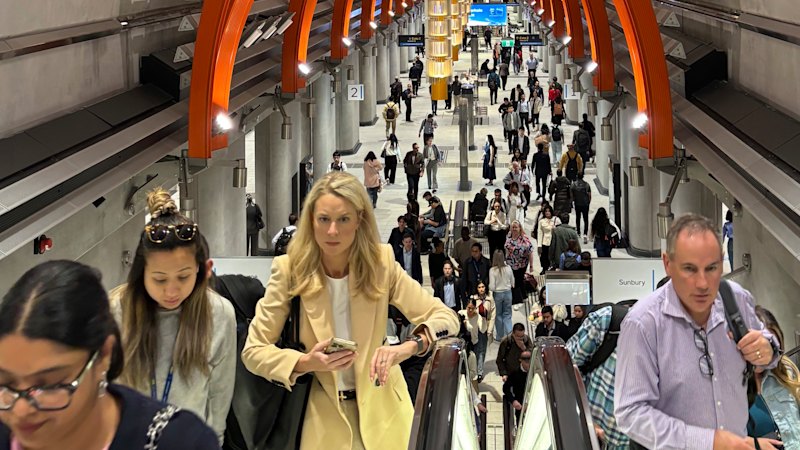

February 2, 2026 — 11:30am
Save
You have reached your maximum number of saved items.
Remove items from your saved list to add more.
Save this article for later
Add articles to your saved list and come back to them anytime.
Got it
AAA
There were early winners and losers as commuters navigated the first morning peak on the Metro Tunnel timetable, adjusting on the go to new commuting patterns.
Most services ran on time, Metro Trains reported, although a train door fault forced one service to leave Arden station without stopping.
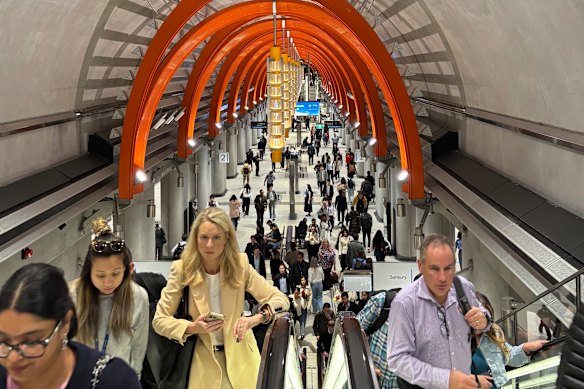 Commuters file out of Town Hall station on the first Monday morning for the new Metro Tunnel timetable.Adam Carey
One traveller bound for Parkville from her home in Caulfield told The Age the more direct journey would shave 15 minutes off her commute, while others were less fortunate.
One harried commuter, heading for Collingwood from his home in Cranbourne, now faces a three-train journey, which adds an estimated 25 minutes to his morning travel.
At Caulfield station on Monday morning, there was plenty of congestion and confusion as passengers darted between platforms, but a strong contingent of station staff provided guidance for commuters.
The crush at the platform gates caused a number of frustrated passengers to miss their trains, but the time penalty was modest, as city-bound trains pulled up with metronomic frequency every three to four minutes.
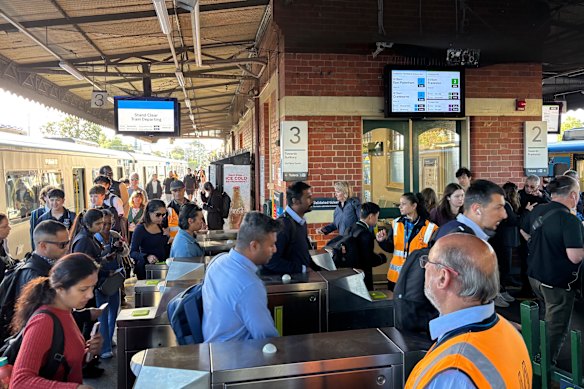 There was a two-way rush for the myki gates at Caulfield station, causing some city-bound travellers to miss a train. Adam Carey
The launch of a full timetable through the Metro Tunnel this week has changed travel patterns that have been baked in for decades.
Passengers on the Sunbury, Cranbourne and Pakenham lines no longer travel through the City Loop, nor to busy inner-city stations Richmond, North Melbourne and South Yarra.
Announced in 2016 at a cost of $10.9 billion, building the Metro Tunnel and its five underground stations ultimately cost more than $15 billion, and the project marks the biggest upgrade to Melbourne’s public transport system since the City Loop was opened in 1981.
The Metro Tunnel opened to passengers in November, with some trains travelling through the new tunnels, but on a reduced timetable.
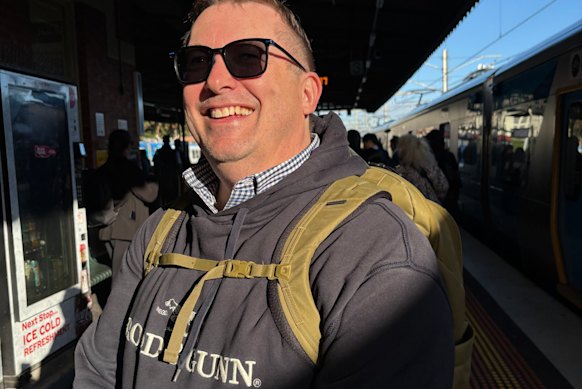 Andreas Groell navigating a new commute on Monday morning.Adam Carey
Trains on three lines will now travel through the nine-kilometre twin tunnel instead of the Loop, and will have to interchange to reach Loop stations Southern Cross, Parliament and Flagstaff.
Among those adapting to the change was Andreas Groell, who stepped off at Caulfield, trying to find his way to South Yarra.
“I have to change trains. I wasn’t really aware of that, but I just realised that I have to get out and go over to the other platform,” he said.
Groell estimated the transfer would add five minutes to his morning trip, but said he was unfazed.
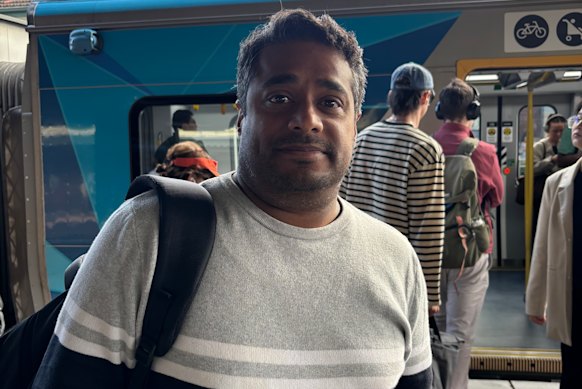 Cranbourne resident Manoj Mathew estimates his commute will be 25 minutes longer.Adam Carey
“I was under the impression I’m not actually affected by it. That’s all good,” he said.
But flustered traveller Manoj Mathew had just discovered he would pay a much heavier time penalty.
He jumped off a Metro Tunnel-bound train at Malvern station – the last stop in the east where commuters can swap trains – clutching a phone with a travel app open and searching for a customer service person to direct him.
He was searching for a Frankston line train to take him to Parliament, where he would then catch another train to Collingwood.
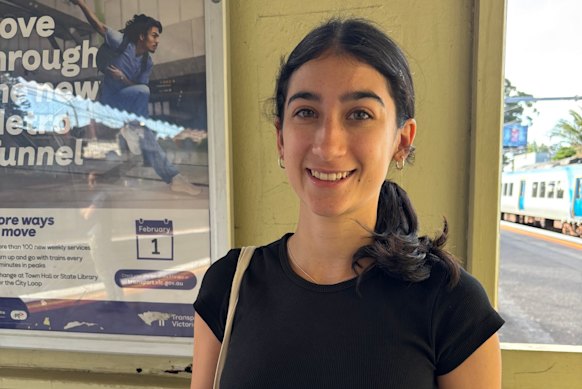 University student Sara Pisacane says the new timetable will save her 15 minutes on her journey.Adam Carey
“It adds 25 minutes to my time. It is stressful,” Mathew said.
Medical student Sara Pisacane was in the opposite camp. Bound for the University of Melbourne for her first day of classes, she guessed her more direct journey would save her 15 minutes.
Related Article
“Rather than having to get off a train, wait for a tram, take the tram, this is just one train directly up to the uni, so it actually makes a good difference,” Pisacane said.
A Metro Trains spokesman said services through the tunnel performed well on Monday morning with 99 per cent of trains running on time.
Public Transport Users Association spokesman Daniel Bowen said Monday would be the tunnel’s “first really big test”, although it is also one of the quietest days of the week for train patronage.
“I get the feeling there’s some people that are well aware of the change and there’s others who may be a bit surprised come Monday morning that they don’t end up at Parliament station or wherever,” Bowen said.
At the new Town Hall station, there were scores of first-time Metro Tunnel passengers seeking directions from staff decked in hi-vis vests.
Diem Chau had just caught a train from Noble Park and travelled into the tunnel for the first time. She said she wasn’t expecting to find herself inside the new underground station, and had thought she would have a choice between catching a Metro Tunnel train or a service through the City Loop.
 Diem Chau didn’t expect to find herself in the Metro Tunnel on Monday, but is happy with her new commute.Adam Carey
“I thought there would be two alternatives and when I got on I was like, should I get off and maybe wait for the other train? But there is actually no alternative train,” Chau said.
“I thought it might add more time, but it actually felt faster than my normal train, which would go through Richmond, Parliament and then Melbourne Central.”
Even staff on the project appear to be adapting to the new order. When The Age asked for directions to the State Library station concourse, a customer service officer sporting a purple “Team Tunnel” badge initially pointed us back towards Melbourne Central.
“We’re all getting used to it,” he said.
Start the day with a summary of the day’s most important and interesting stories, analysis and insights. Sign up for our Morning Edition newsletter.
Save
You have reached your maximum number of saved items.
Remove items from your saved list to add more.
 Adam Carey is senior city reporter (suburban). He has held previous roles including education editor, state political correspondent and transport reporter. He joined The Age in 2007.Connect via X or email.From our partners