

The FIA reportedly received complaints from several engine manufacturers over a supposed compression ratio trick.
Under the new engine regulations, a 16:1 engine compression ratio is prescribed. That’s down from the 18:1 ratio under the previous regulations.
The caveat is that the compression ratio is measured at ambient temperature when the power unit is off, meaning thermal expansion when the power unit is running is not accounted for.
Mercedes and Ford, via Red Bull Powertrains, are believed to have employed the trick, which the likes of Audi have taken umbrage with.
“We have to, as we do, trust the FIA with making the right decisions here,” said Audi technical director James Key.
“It’s new regs. You’ve got to have a level playing field.
“If someone came up with a clever diffuser and you said it’s not the right thing to do, no one else can have it, but you can have it for the rest of the year.
“It doesn’t make sense. We’d never accept that.”
There are fears that Mercedes-powered and Ford-powered teams will walk away from their rivals.
Wolff says, it is what it is, and that the likes of Ferrari, Honda, and Audi just have to react accordingly.
“I just don’t understand that some teams concentrate more on the others and keep arguing a case that is very clear and transparent,” Wolff explained.
“Communication with the FIA was very positive all along and it’s not only on compression ratio, but on other things too.
“Specifically in that area, it’s very clear what the regulations say.
“It’s very clear what the standard procedures are on any motors, even outside of Formula 1, so just get your shit together.
“The power unit is legal. The power unit corresponds to how the regulations are written. The power unit corresponds to how the checks are being done.”
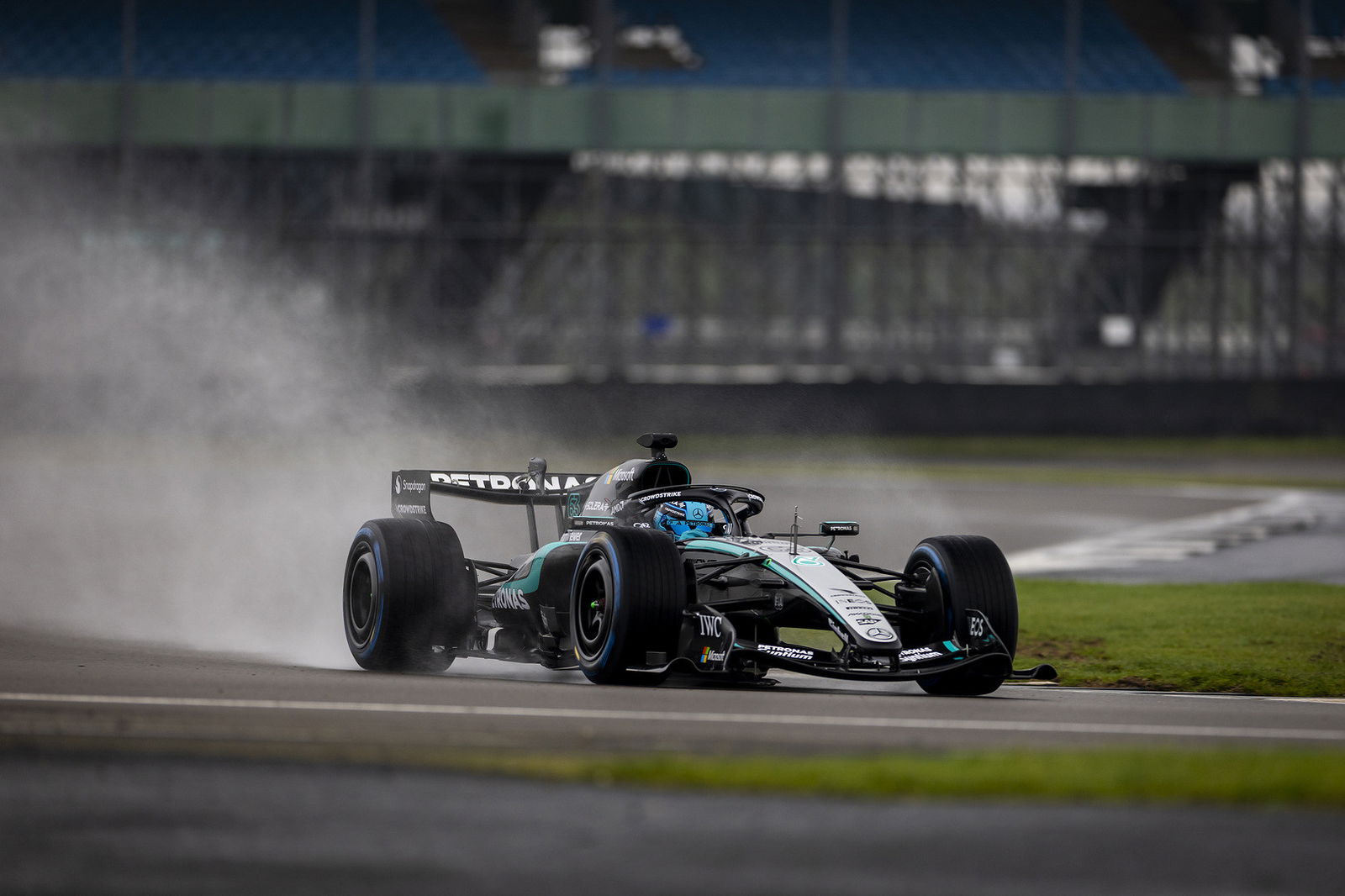 Kimi Antonelli hits the track at Silverstone. Image: Mercedes
Although there has been little said from the likes of Ferrari or Honda, Audi has been vocal in its frustration with the hack.
There have been suggestions that teams would like the compression ratio measured with the engine running.
That process, however, would need to be ratified by F1 Power Unit Advisory Committee and then via a vote through the F1 Commission.
Wolff expressed his frustration at “secret meetings and secret letters” to add engine checks, despite what he said is an industry standard.
“I feel like I can just say at least from us here, we are trying to minimise distractions, looking more at ourselves than at everybody else when it’s pretty clear what the regs say and also pretty clear what the FIA has said to us and has said to them so far,” said Wolff.
“But maybe we’re all different. Maybe you want to find excuses before you even started for why things are not good. If somebody wants to entertain themselves by distraction, then everybody’s free to do this.”