
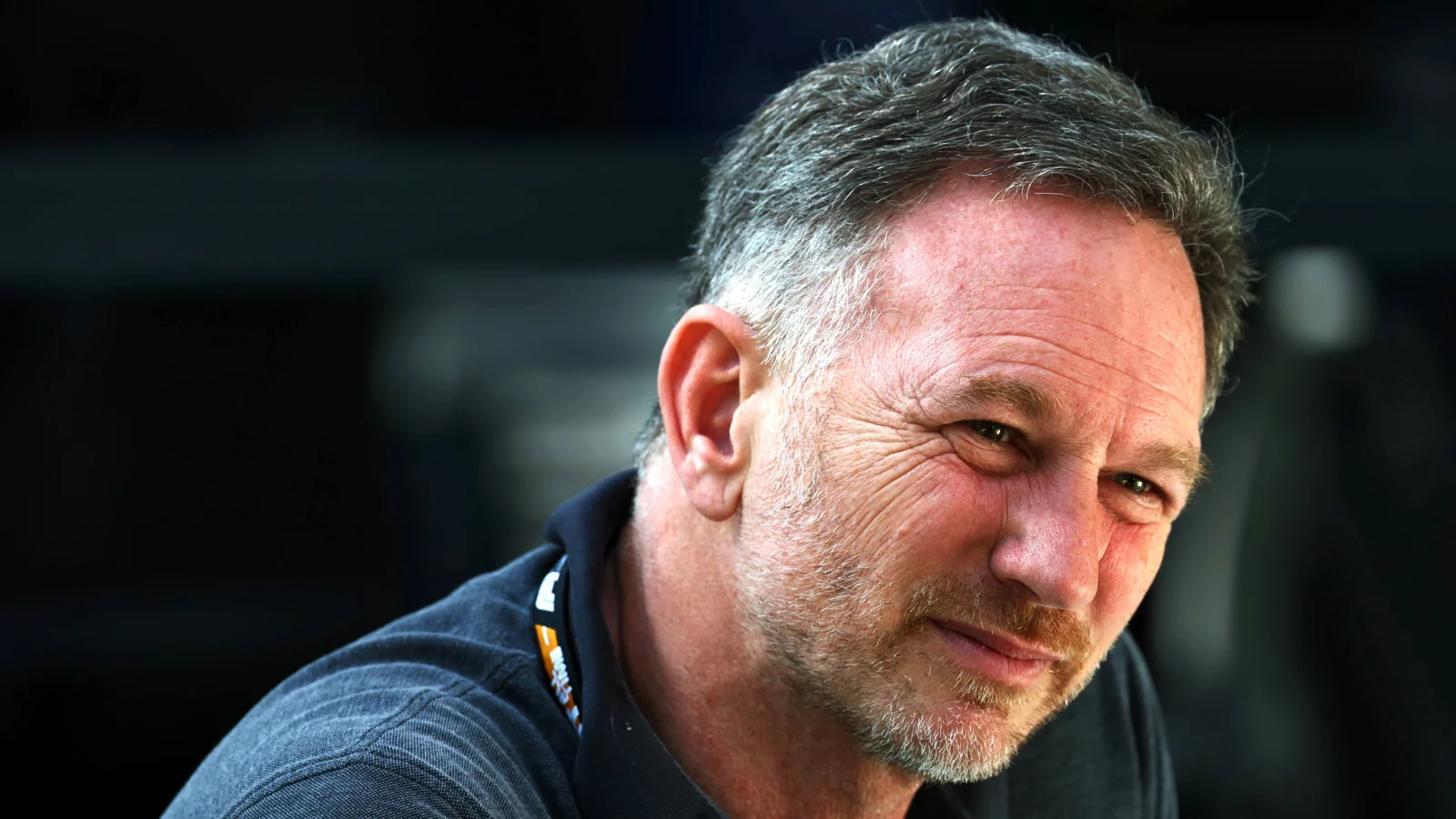
The confirmation from Christian Horner that he has unfinished business in Formula 1 is remarkably similar to one of the world’s famous and iconic cinematic operas.
Horner is, without question, one of F1’s most successful and iconic Team Principals. Prior to his departure from Red Bull in July 2025, he was the only remaining team boss to hold his role dating back to 2005.
His stats speak for themselves – 124 Grand Prix wins, 287 podiums, and 107 pole positions, leading to six World Constructors’ Championships, eight World Drivers’ Championships. This was accomplished in just 20 years in the sport.
Dominance is a key element of his success. In 2023, he led Red Bull to become the first team since McLaren in 1988 to win all bar one race, with 21 out of 22 races being won by the Milton Keynes marque.
This level of success was not achieved overnight. It took years of guiding Red Bull through tough growing years from its inception in 2005 to 2008. Quietly, built his empire around him, operating under the radar for years.
But for all his success, Horner is one of F1’s most divisive characters. A quick search of social media illustrates this and showcases the many Star Wars-related memes. Emperor Horner, as he became known in certain circles, was the dark lord of F1.
After his defeat following the 2025 British GP, seemingly vanquished, his return appears almost inevitable. Like an inevitable sequel to the famous space franchise, Horner has re-entered the scene in a cloak, with dramatic music to match.
His destination is, at last known. The question of what he can do remains to be seen.
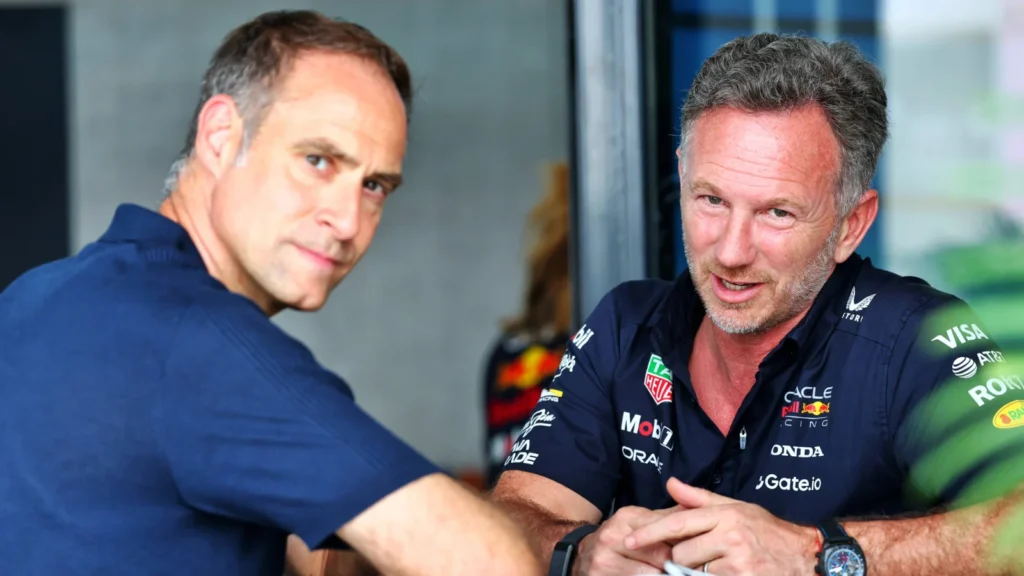 Christian Horner fell out with Red Bull management
How did we get here?
The internal battle between Horner and Red Bull last season was fierce. Rumours of an impending battle surfaced as far back as the opening race as the fallout from the saga the previous year rumbled on.
His defeat and firing were the result of years of political buildup, leaving the Briton out in the cold. Conversations with just about every team on the grid are rumoured to have taken place, but to no avail.
Aston Martin looked to be a promising option, a reunion with long-time friend Adrian Newey a potential golden ticket. The two have now buried the hatchet following the Red Bull saga, but discussions led to nothing. The reason soon became clear: Newey now has control of Aston Martin, taking on the role of Team Principal from April.
But the lost opportunity hides the real reason for Horner’s struggle to return to the F1 grid. He believes that absolute control is necessary to run a team, with all decisions taken by one individual.
At Red Bull, he oversaw the team, including its communications, headed the now fledgling powertrain division, and was a shareholder in the business. A basic Team Principal role will very clearly not be enough for Horner.
One option was to gather a consortium of investors to launch his own fully fledged team, but substance to this pathway was lacking. Instead, it looks like purchasing a stake in a team is the way forward he has chosen.
While limiting his options, this would give him the control over a team he craves. The team in question is somewhat surprising and yet prophetic in equal measure. His plotting behind the scenes could now pay off handsomely.
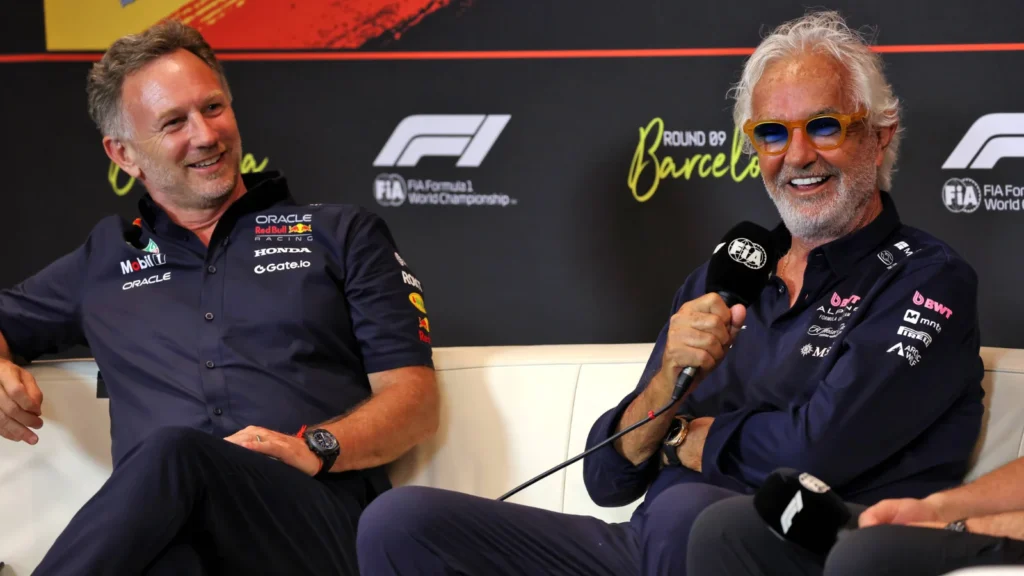 Christian Horner is a close friend of Flavio Briatore
Christian Horner striking back after a critical blow with Alpine?
Horner has now emerged from the shadows following speculation that he is in active negotiations to buy out Otro Capital’s stake in Alpine. Stating he has “unfinished business” in F1, the Briton will only come back to a role in which he can win.
On the surface, Alpine looks to be a poor move. He certainly cannot currently win with the beleaguered Enstone squad. The team is in a disastrous state, having just finished the bottom of the standings for the first time in his history, and also abandoned its own engine programme, now a customer of Mercedes. In short, Alpine has a long way back to the top of F1.
But this story does have a familiar ring to it. Ford owned Cosworth and the Jaguar team back in 2004, jettisoning both following four disastrous years of inept management and internal political infighting. Horner came in at the behest of the late Dietrich Mateschitz, who began to pick the team up from its nadir state.
21 years on from that transaction, Horner seems about to embark on another familiar path. While he will not own a majority stake in Alpine if he buys in successfully, given that it is just a 24 per cent stake, he will have a seat at the table. A seat that he can expand on over time if and when Renault finally decides to call time on F1.
The added element is that he is a good friend of Alpine Executive Advisor Flavio Briatore. The duo together could turn around the team at a pace that suits the needs of the team and shareholders.
Striking back with Alpine would be reminiscent of the Emperor arriving on the Death Star commanding Lord Vader [in this case Alpine] to rise. It is all quite prophetic, and would be a shrewd move.
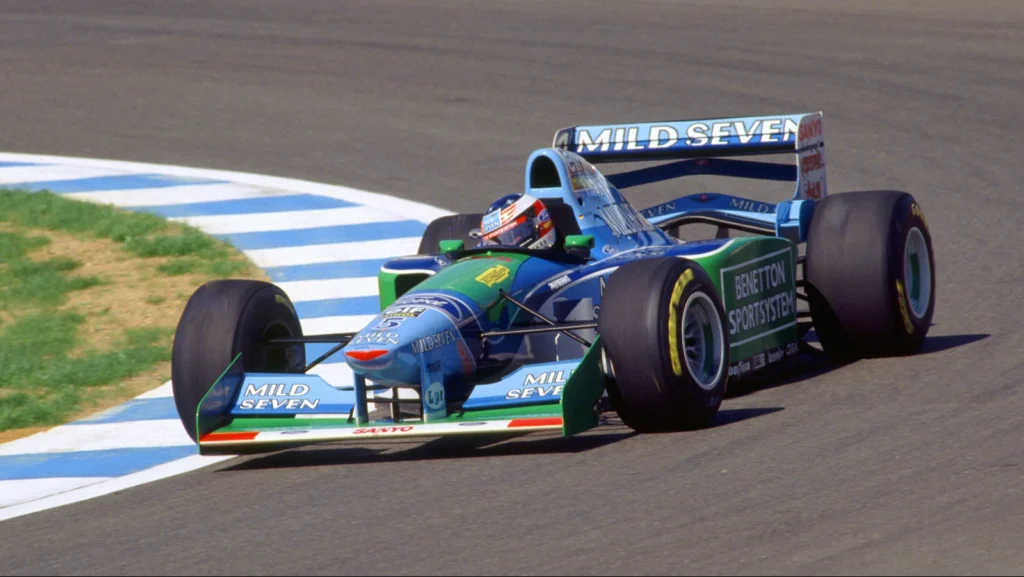 The Benetton team remains one of F1’s most iconic
The hunt for Red Bull – in a blast from the past?
The question, of course, then arises of what Horner can actually do with Alpine, should he buy in. Renault’s commitment to F1 now looks as stable as the Titanic after sinking an iceberg, and the team has a fiercely independent history.
The answer can be found in that illustrious past. Renault as a brand in F1 is dead and needs a complete reset of the rules for it to even consider returning. One name stands out immediately as a new identity: Benetton.
Fans still rightly admire the early-to-mid-1990s liveries of this team; few have captured the fans’ imagination or encapsulated the sport. Today, Benetton gear is all over vintage F1 sites for fans, young and old, to enjoy.
Benetton was a brand that entered the sport and shook up the order, not unlike Red Bull. The established order took issue with Benetton’s arrival and troubling them within a few seasons. But good investment, and the right personnel ensured the team would win championships in 1994 and 1995. Alpine still operates out of the same factory as it did during the Benetton days, another aspect Horner could play into if chasing this dream.
Commercially, Benetton would be a no-brainer. The Italian fashion giant is still as popular today as it was back in the 1990s, and in today’s world of blockbuster F1 team valuations, the benefit to the team and brand would be spectacular. Convincing the Alpine board of this will be difficult.
Horner will come for Red Bull, in the same way the Emperor came for the Star Wars galaxy. He will demand nothing but perfection in his quest. While he wants to win, he will have no issue in playing the long game in order to achieve it.
Bringing back Benetton would be the perfect revenge. Having built Red Bull, he could oversee its decline by managing a team with momentum. It is not a question of the dark vs the light. It is ambition vs determination.
READ MORE: Liam Lawson advice hopes dashed by Formula E star’s F1 driver role