
More inflation, lower real wages growth, businesses able to swell their profits at the expense of consumers and higher interest rates – the Reserve Bank’s outlook is bad news for Jim Chalmers and Anthony Albanese.
Justifying its decision to lift the official cash rate by a quarter percentage point to 3.85 per cent, the Reserve has today painted a picture of the Australian economy that wants to grow faster, but simply can’t without unleashing more inflation pain.
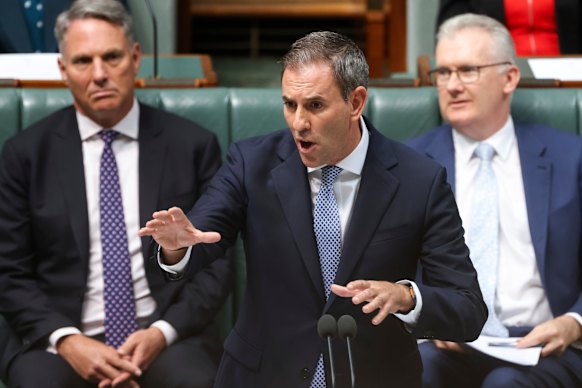 Treasurer Jim Chalmers during question time at Parliament House after the announcement of the interest rate hike.Alex Ellinghausen
Through the final six months of 2025, the economy – driven by consumers and businesses – expanded faster than expected.
But that lift in growth was akin to a balloon in a box. The air was pumped in, and the fragile balloon bulged within its confines, putting enormous stress on every side.
Without a rate rise, it could easily burst.
That stress is most evident in inflation which is expected to hit 4.2 per cent by the middle of this year and not be back within the RBA’s 2-3 per cent target band by mid-2027. That’s 17 months away, an eternity in political terms.
The higher inflation means real wages, after a two-year lift, will start contracting. After inflation, wages are tipped to slip by 0.9 per cent by the middle of this year. Through all of 2026, wages will fail to keep up with inflation.
The lift in inflation is partly due, the bank says, to businesses being able to increase their prices. Strong demand in the housing construction sector means businesses have ditched the deep discounts they needed to entice people through the door just a few months ago.
Businesses are also increasing their investment plans. The surge in data centres across the United States is playing out across Asia and also in Australia, which is the world’s fifth-largest market.
Put all this together with ongoing poor productivity growth, and the Reserve found itself with no option but to lift the cash rate with the chance of more to come.
Without some major reforms from Chalmers and Albanese in the May budget, the threat of two or three or even four rate rises over the coming year can’t be discounted.