
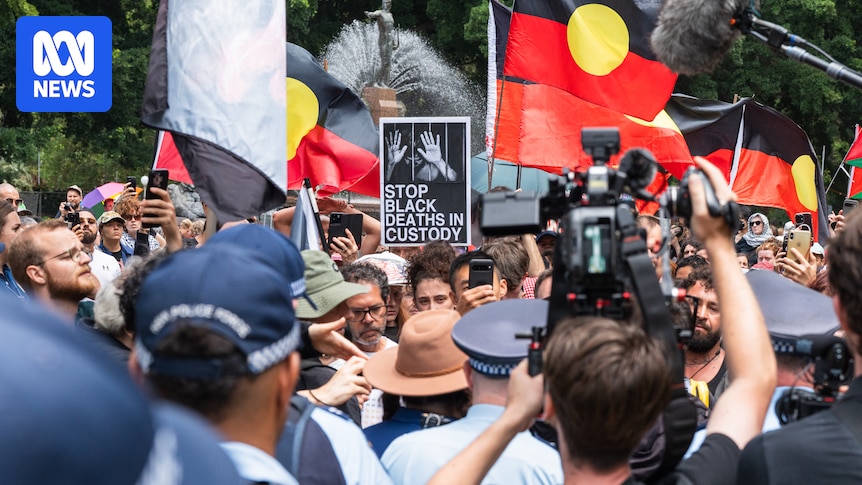
The NSW Police commissioner has announced restrictions on protests will be extended, ahead of planned demonstrations against the upcoming Sydney visit of Israel’s president.
The Albanese government invited President Isaac Herzog to Australia after the Bondi Beach terror attack on a Hanukkah festival on December 14, which left 15 victims dead.
Nationwide protests have been planned against the visit.
The laws enabling police to refuse authorisation for all protests in the wake of a terror attack were rushed through state parliament in December.
“We are still less than two months from what is the worst terrorist incident in New South Wales’s history,” NSW Police Commissioner Mal Lanyon said.
“Today I have considered that there remains a significant risk to community safety by public assemblies and I have extended that declaration for a further 14 days.”
The 14 days could be changed if the order was rescinded or revoked, which could happen at any time.
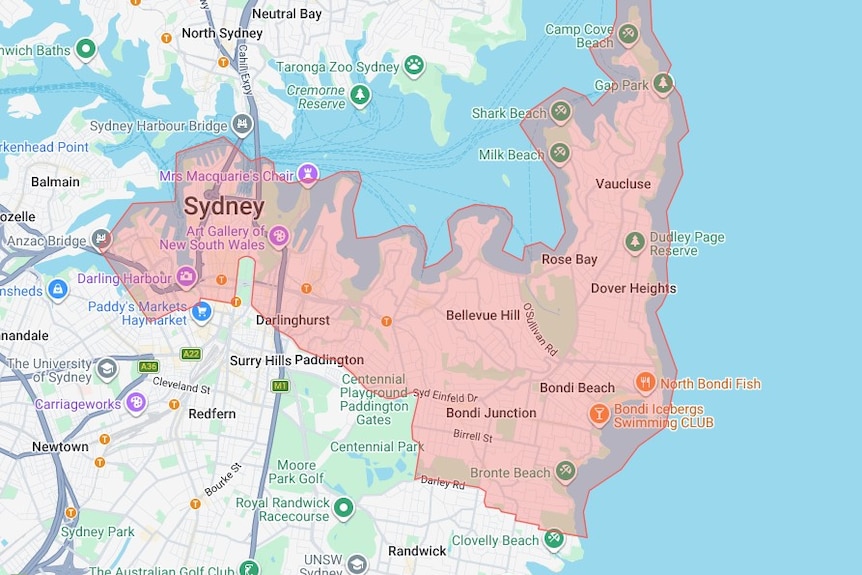
Public Assembly Restriction Declaration covers parts of Sydney’s CBD.
For the next 14 days, public assemblies will only be restricted in the Eastern Suburbs Police Area Command and in parts of Sydney’s CBD, excluding Hyde Park.
The declaration can be extended in two-week increments for up to three months.
Commissioner Lanyon also said police were investigating 10 acts of antisemitic incidents from the past two weeks, and that Jewish people have been subjected to threatening phone calls.
Israel president’s visit
Mr Herzog is expected to land in Sydney on February 8 for a four-day visit.
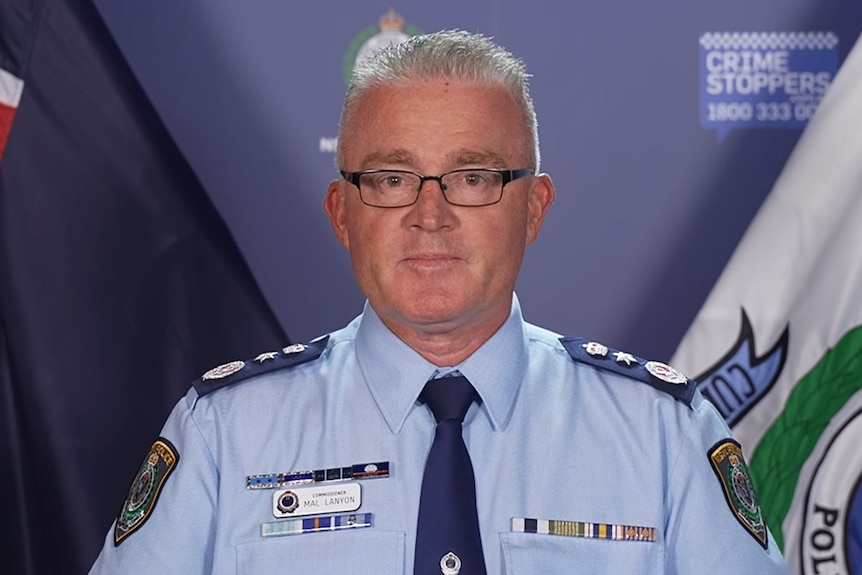
Commissioner Lanyon confirmed the protest restrictions would be extended. (ABC News)
Commissioner Lanyon said there was “significant animosity” surrounding the visit.
“Obviously, what I fear is a large-scale public assembly with so much animosity could present a risk to community safety,” he said.
“We want to ensure that free speech is enshrined but we need to make sure that is balanced by community safety.”
He said “3,000 police shifts” would be deployed as part of the protection provided to Mr Herzog during his visit.
A coalition of pro-Palestinian and First Nations groups have launched a challenge against the Minns government in court, arguing the protest laws are unconstitutional and violate the right to freedom of political communication.
The state government has argued the laws were necessary to ensure calm in the wake of the Bondi attack.
Conflicting views of Herzog’s visit
Prime Minister Anthony Albanese last week defended his invitation to the president after Multicultural Affairs Minister Anne Aly declined to endorse the visit.
“I certainly welcome him coming and I look forward to visiting,” Mr Albanese said.
“I note that Anne Aly has made appropriate comments as well, welcoming the fact, welcoming anything that leads to a greater sense of unity. We need to build social cohesion in this country.”
Last year, a United Nations Commission of Inquiry concluded that Israel was committing genocide in Gaza and found that Mr Herzog, Prime Minister Benjamin Netanyahu and then Defence Minister Yoav Gallant incited the commission of genocide.
The president’s comments are included in South Africa’s genocide case against Israel, which is before the International Court of Justice.
The allegation of genocide is rejected by Israel and Mr Herzog denied the allegations and maintained his comments were taken out of context.
Josh Lees from Palestine Action Group Sydney said a planned protest would still go ahead despite restrictions being extended, as it was still a legal right to gather for public assembly.
“They invite someone accused of war crimes and then accuse us of being the ones breaching social cohesion when we’re the ones just trying to uphold the basic tenets of morality and humanity and international law,” Mr Lees said.
Mr Lees said the restrictions were “trying to silence opposition” to Mr Herzog’s visit.
Alex Ryvchin from the Executive Council of Australian Jewry, Australia’s peak body for Jewish organisations, last month said the visit would “lift the spirits” of survivors and families of those killed in the Bondi attack.
“Australia and Israel have been historic allies, and as Jewish Australians we want to see a strong relationship between the two countries,” he said.
“Sometimes it takes a catastrophe, a tragedy, to bring a sense of perspective and clarity and bring two feuding partners together.”
While the restrictions do not ban protests outright, it removes additional legal protections for groups marching through the streets.
The restricted area was reduced last month to accommodate the planned Invasion Day march on January 26.
Look back at how ABC readers and other Australians responded to this live
moment.
2h agoTue 3 Feb 2026 at 2:53am
Update wraps up
That’s it from NSW Police Commissioner Mal Lanyon.
For more on this story head to the ABC News website.
2h agoTue 3 Feb 2026 at 2:49am
Commissioner: ‘Trying to challenge the law … is inappropriate’
Commissioner Lanyon said groups protesting geo-political issues cannot come before community safety.
“We are very happy to facilitate a protest in Hyde Park, and then a march that goes outside of the declared areas,” he said.
“Trying to challenge the law, trying to infringe on community safety at this time is inappropriate.
“And I would just ask people to act responsibly.”
2h agoTue 3 Feb 2026 at 2:46am
Phone call threats made to Jewish community
While not elaborating further on his comments that “10 acts of antisemitism” were being investigated by police, Commissioner Lanyon said members of the Jewish community have been subjected to threatening phone calls in recent weeks.
Show more