
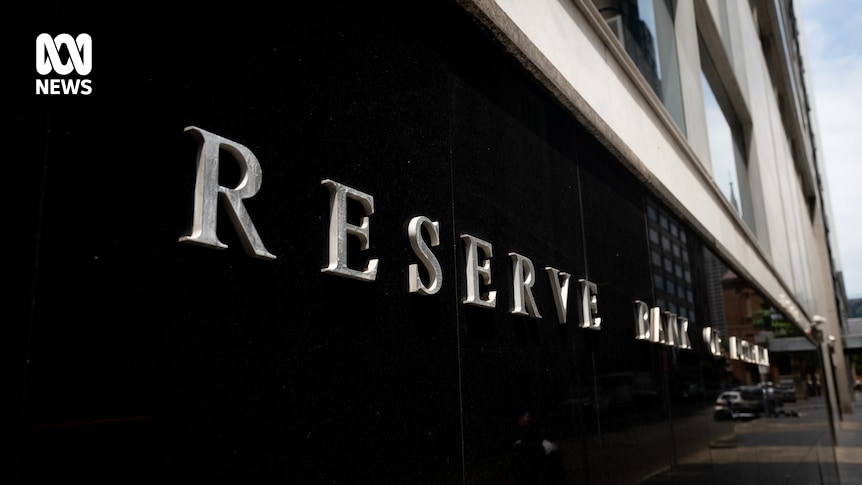
The Reserve Bank has lifted interest rates by 0.25 percentage points, as had been widely forecast.
The new cash rate is 3.85 per cent, up from 3.6 per cent.
“While inflation has fallen substantially since its peak in 2022, it picked up materially in the second half of 2025,” the RBA Board said in a statement.
“The Board has been closely monitoring the economy and judges that some of the increase in inflation reflects greater capacity pressures. As a result, the Board considers that inflation is likely to remain above target for some time.
If RBA hikes, you can’t say it didn’t warn us
“Capacity pressures reflect, in part, the greater momentum in demand seen in recent months. Growth in private demand has strengthened substantially more than expected, driven by both household spending and investment.
“Activity and prices in the housing market are also continuing to pick up,” it said.
It said conditions in the labour market were also “a little tight” and had stabilised in recent months, in line with the pick-up in momentum in economic activity.
The RBA had cut interest rates three times last year as inflation declined. Its last rate cut occurred in August.
This is the RBA’s first monetary policy meeting of 2026.
Treasurer says it will be ‘difficult news’ for households
Treasurer Jim Chalmers said the rate rise would be “difficult news for millions of Australians with a mortgage” and the government understood the pressure it would put on people.
The Albanese government’s political opponents, and several media outlets, have put a lot of pressure on the government over the summer break about the concerning pick-up in inflation in the back half of 2025.
Chalmers has pointed out that the RBA Board’s statement does not mention government spending.
“It makes it very clear the pressure on inflation is coming from private demand,” he said.
Unnecessary interest rate cuts derailed the national housing affordability project
The RBA also released its new official forecasts on Tuesday, in its latest quarterly Statement on Monetary Policy.
It is now forecasting consumer price index (CPI) inflation to peak at 4.2 per cent in the middle of this year, up from 3.7 per cent in its November forecasts.
It is forecasting “trimmed mean” inflation (its preferred measure of underlying inflation) to peak at 3.7 per cent in the middle of this year, up from its previous forecast of 3.2 per cent.
The RBA wants inflation to be sitting around 2.5 per cent.
It is also forecasting economic growth to be stronger than expected at the start of this year, but weaker than expected by the middle of next year.
“The near-term upward revision is driven by private demand, which looks to have been stronger than expected in the second half of 2025 due to both fundamental factors supporting growth as well as some temporary factors,” the RBA said in its new forecasts.
“We expect that some of this unanticipated strength in private demand will continue into 2026.
“From late 2026 onwards, GDP growth is expected to ease to below potential, reflecting the higher cash rate path and the waning boost from the factors that have supported growth recently.
“The unemployment rate is expected to be broadly stable in the near term, before rising gradually to 4.6 per cent by mid-2028 because of a period of GDP growing below its potential rate,” it said.
Economists expect more rate rises
Several economists are now tipping the RBA to lift rates again this year.
Some say the RBA Board’s statement had a noticeably “hawkish” tone, which suggests that Australia may be at the start of a new rate-hiking cycle.
But in her post-meeting press conference, RBA governor Michele Bullock did not seem particularly hawkish.
Wee Khoon Chong, APAC Macro Strategist at BNY, said the RBA would probably hike rates by another 0.5 percentage points this year.
Inflation hotter than forecast at end of 2025
Abhijit Surya from Capital Economics said another rate hike was likely, and a third could be a possibility.
Callam Pickering, APAC economist at global job site Indeed, said it was unlikely that the RBA would hike rates only once, and he expected another hike in May.
“A lengthy hiking cycle, though, appears unlikely, with inflation set to moderate somewhat even without RBA action,” he said.
David Bassanese, chief economist at BetaShares, said he was currently not expecting another rate hike.
“Much will depend on the degree to which temporary versus demand-led factors account for the recent pick-up in inflation,” he said.
“If it turns out that temporary factors have played a greater role than the RBA currently assesses, inflation may drop by more than the RBA expects in coming months, and this may well be a case of ‘one and done’.
“This is currently my base case expectation, namely, a greater slowing in underlying inflation in the March quarter, removing the pressure on the RBA to raise rates in May.
“However, at this stage, it’s hard to avoid the conclusion that the RBA has in mind at least one more rate hike — consistent with current market pricing — because even under this scenario inflation is expected to remain uncomfortably high for the foreseeable future,” he said.