
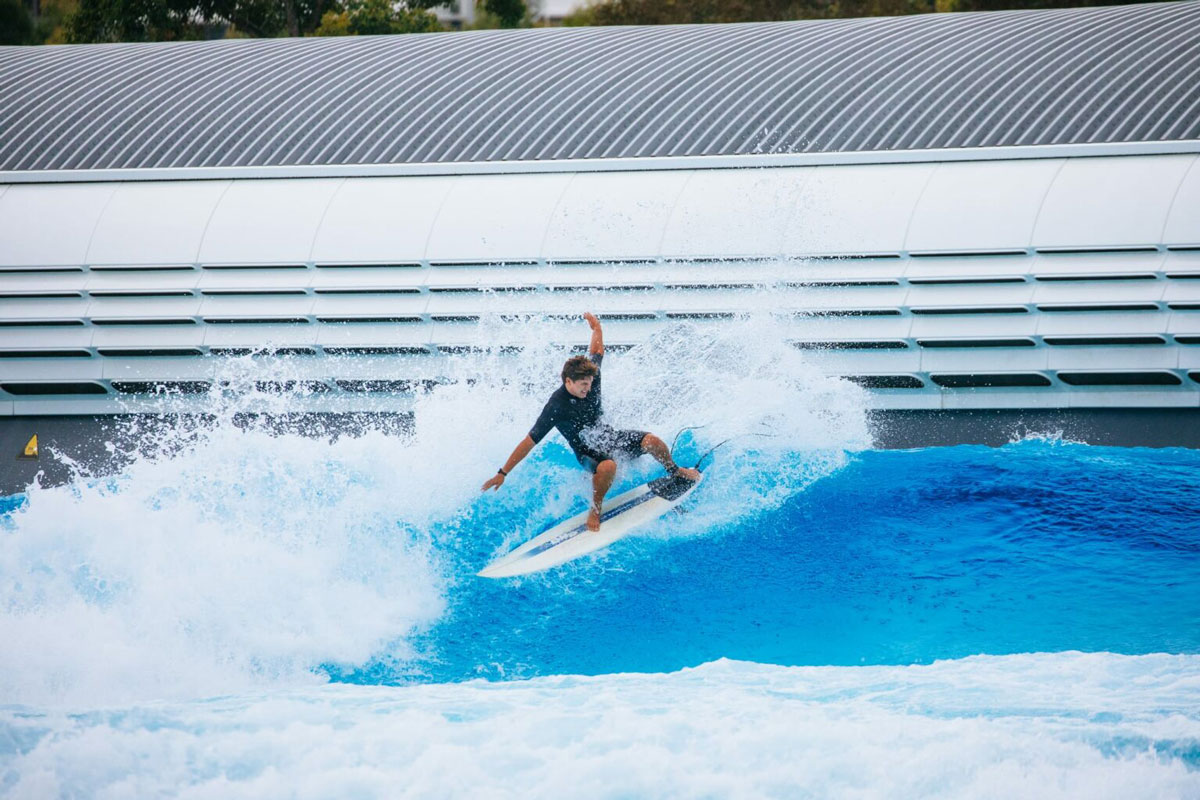
Surfing has always lived at the intersection of timing, feel and flow. In recent years, technology has ridden shotgun, from smartphones capturing clips to GPS-equipped surfboards logging sessions. Now, Artificial Intelligence is both recording and analysing your rides. At the forefront of this shift is Flowstate, leading a transformation that extends far beyond simple video capture into deep, data-driven performance analysis. For surfers who know their cutbacks from their carves, this is the next frontier.
The Evolution of Surf Cinematography
Back in the day, if you wanted to document your surf, you’d need a buddy on a jet ski, a shore-based GoPro or a drone. Those came with issues of cost, logistics, limited angles and a narrow window of coverage. On down days or at crowded lineups, many of your rides simply went undocumented.
Enter Flowstate, an AI photo and video capture platform that can be used in wave parks, natural beaches and more environments. Its multiple cinema-grade cameras automatically capture your sessions. With synchronised angles covering both front-on and behind-the-peak perspectives, even a single wave is captured from multiple vantage points.
The tech can recognise and track individual bodies, providing each surfer with a rich visual record of every takeoff, carve, snap or barrel run. Rather than dumping hundreds of raw clips, the AI auto-crops, groups and edits them all by the time you are out of the water, giving you polished, usable footage from every wave.
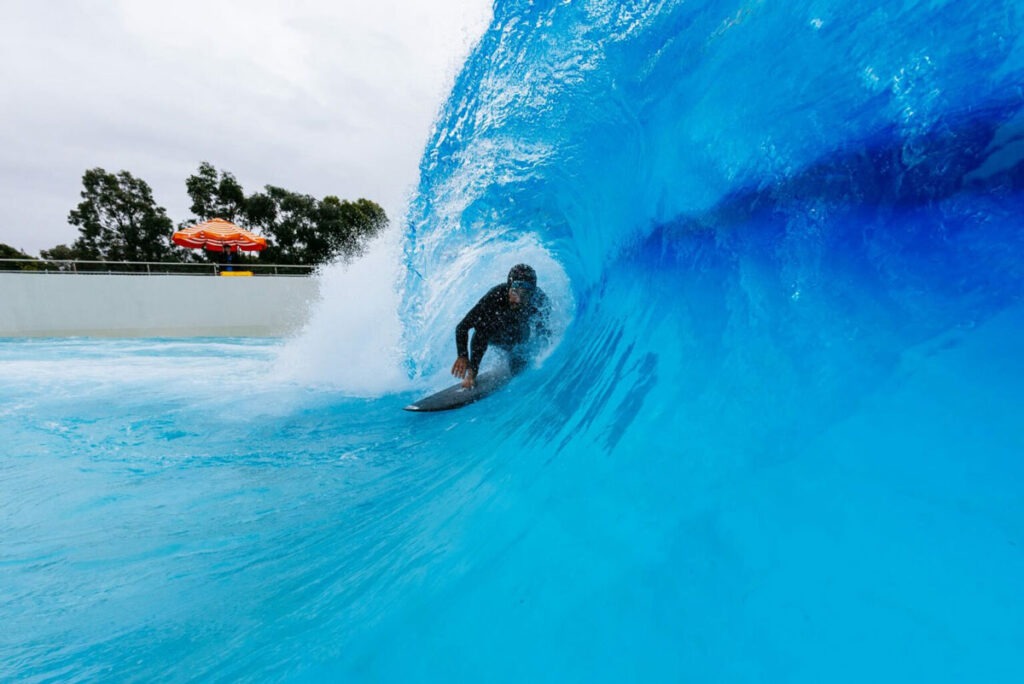 Former World Champ Tom Carroll has lived and surfed through each era of surf cinematography. Photo: Matt Dunbar.
How Flowstate’s AI Works
At the core of Flowstate’s system lies a suite of computer vision and machine learning models built specifically for surfing and ideal for use in surf pools. As footage comes in from the pool’s multiple cameras, the AI scans each frame, detects surfers using a mix of visual cues like body posture, wetsuit and board shape, and tracks them across frames. This ‘surfer fingerprint’ system organises all clips belonging to a given rider into a single album, eliminating the need for wristbands or wearables.
At a beach, the AI compensates for the lack of a multi-camera infrastructure through high-resolution tracking and algorithmic syncing. Instead of requiring a human operator to follow the action, a surfer can mount a single device on a tripod. The AI then performs a digital pan and zoom tracking effect, identifying the rider and automatically cropping the 4K feed to keep the action centered and tight, similar to a manned camera.
While a beach setup makes it more difficult to capture multiple angles the way a surf pool can, the platform can use automated time-alignment to sync disparate feeds, such as a drone and a shore-based iPhone, into a single multi-cam session. The unique breaks and white-water patterns of a wave create signatures that the app can sync together without any costly manual labor. Furthermore, filmers can feed a ‘reference clip’ into the system; the AI then performs a feature search to instantly locate similar rides across hours of footage, removing the need for manual searching.
Flowstate also uses what it calls ‘move recognition.’ Through training on a massive dataset of millions of surf park waves, the AI learns to identify specific maneuvers like snaps, cutbacks, barrels and other turns. Once it recognizes a move, it automatically tags it in the clip, making it easy to pull up every instance you’ve landed that turn during a session. This autonomous editing and metadata enrichment transforms raw footage into a meaningful performance log, something surfers and coaches can actually learn from.
Data-Driven Performance Insights
As Luke Wallace, CEO of Flowstate, notes, ‘One of the barriers at the moment in coaching is it’s time-consuming and expensive. Being able to automate feedback, making it fast and affordable, is the key to scalability and making coaching accessible to everyone.’ Flowstate makes it possible to conduct a rapid analysis of your turns and tubes. For surfers serious about progression, that kind of feedback is gold.
In a way, this is democratizing the coaching process. Coaches and surfers can use Flowstate data to spot trends. Maybe you’re catching plenty of waves but only sticking a fraction of the turns, or perhaps ride length is improving, but your speed or angle on the rail feels flat. With that insight, targeted feedback becomes more precise and training becomes smarter.
AI in Surf Judging and Competition
With Flowstate having introduced automated comps for wavepools, you can now submit your best waves directly for judging. No live judges on the beach, no need for human scorers on jet skis. ‘As we train our AI to better understand what makes a winning ride, we’re paving the way toward fully automated scoring — driven by both human insight and machine intelligence,’ comments Wallace.
Thanks to move recognition and performance analytics, AI-assisted judging can theoretically score based on objectivity: counting maneuvers, assessing execution, measuring ride length and variety. In controlled wave park environments, contests could scale globally, across different parks, with a standardised scoring algorithm.
That could lead to increased accessibility, with more surfers entering comps, more frequent heats and even remote contests. Judging would no longer be a bottleneck. The potential efficiency gains for the surf park industry are huge.
Human Subjectivity vs. AI Objectivity
However, with all this progress comes inevitable tension. Where does the soul of surfing live, if it’s all reduced to data overlays and algorithmic scores? Some argue the sport is about feel, style and spontaneity, not about counting snaps or quantifying ride length. The role of AI in gymnastics judging has raised similar concerns.
While Flowstate’s AI is powerful, it remains a ‘black box’ in many ways, with limited clarity over the criteria by which it judges style, fluidity or effort. Does a turn look good because of deep rail or because the AI registered a cutback? What about flow or subtle weight shifts beyond the algorithm’s scope?
That said, the real strength of AI in surfing lies in its ability to augment, not replace, the human experience. Used wisely, tools like Flowstate can help you improve, refine and document progression, without taking away the unpredictability, the soul or the joy of catching waves.
The Next Wave
Just as surfboards evolved and enabled new styles, AI can become another tool in the quiver. Ultimately, surfing will always be a dance with the water and a quest for flow. AI doesn’t replace that flow. It simply helps you remember it, analyse it and maybe ride it better next time.