
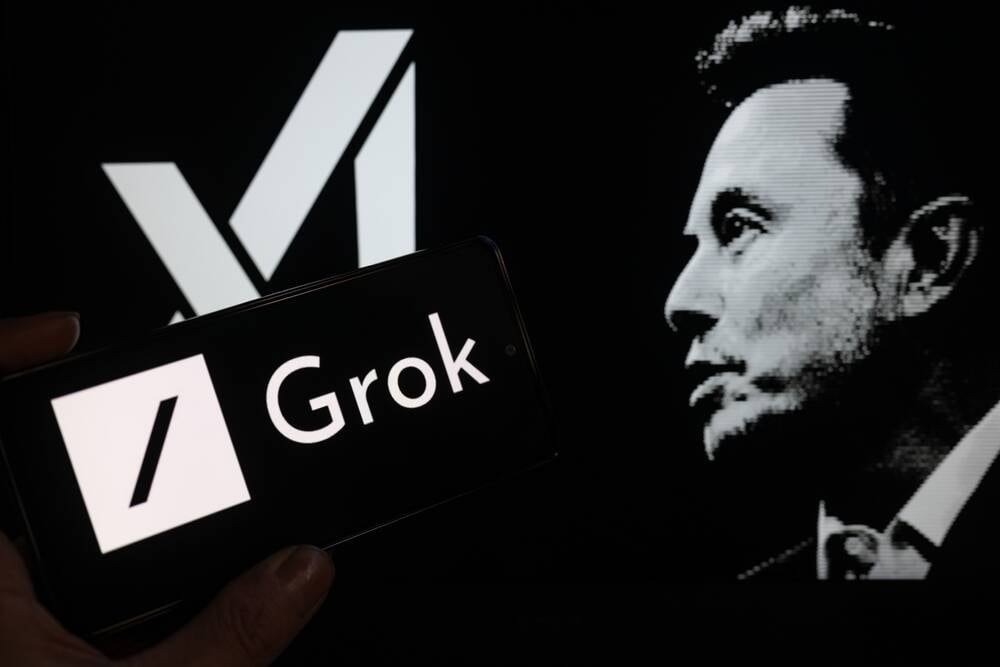
Elon Musk on Monday revealed his space company SpaceX has acquired his AI outfit xAI, and that the two will work together to escape the surly bonds of Earthly powers by tapping the sun’s enduring glow.
“This marks not just the next chapter, but the next book in SpaceX and xAI’s mission: scaling to make a sentient sun to understand the Universe and extend the light of consciousness to the stars,” Musk wrote in a bizarre blog post published to SpaceX’s website on Monday.
Musk argues that demand for AI cannot be satisfied with terrestrial resources, that building datacenters in space is therefore necessary as only limitless solar energy can power all the AI humans want to work with, and that SpaceX’s Starship can do the job of getting this all into orbit.
“My estimate is that within two to three years, the lowest cost way to generate AI compute will be in space,” Musk contends in his post. “Long term space-based AI is obviously the only way to scale.”
Never mind that Starship has only completed test flights so far. Musk nonetheless contends that SpaceX will one day be capable of launching the rocket on an hourly schedule and carry a 200-ton payload on each flight.
“The basic math is that launching a million tons per year of satellites generating 100kW of compute power per ton will add 100 gigawatts of AI compute capacity annually, with no ongoing operational or maintenance needs. Ultimately, there is a path to launching a terawatt per year from Earth,” he wrote.
Musk seems not to have noticed that computers fail and need human oversight.
But don’t worry, Musk hasn’t forgotten about his commitment to returning man to the Moon and eventually Mars. From where else is he supposed to launch petawatts of AI datacenters into deep space if not the moon?
“Factories on the Moon can take advantage of lunar resources to manufacture satellites and deploy them further into space,” Musk rambled. “By using an electromagnetic mass driver and lunar manufacturing, it is possible to put 500 to 1,000 terawatts a year of AI satellites into deep space.”
While totally on brand for Musk, he isn’t the first to suggest that space is the only place AI can scale unimpeded by Earth’s supply of fossil fuels. Both Amazon founder Jeff Bezos and Google have made similar claims. Back in November, Google launched Project Suncatcher, a moonshot which also aims to establish a network of orbital AI datacenters packed with TPUs.
Musk’s post doesn’t discuss the ethics of his ideas, a point The Register notes as AI services his companies provide have expressed sympathy for Nazism and churned out deep fake smut. Giant datacenters in the sky, an uncertain jurisdiction, could power all sorts of mischief down here. ®