
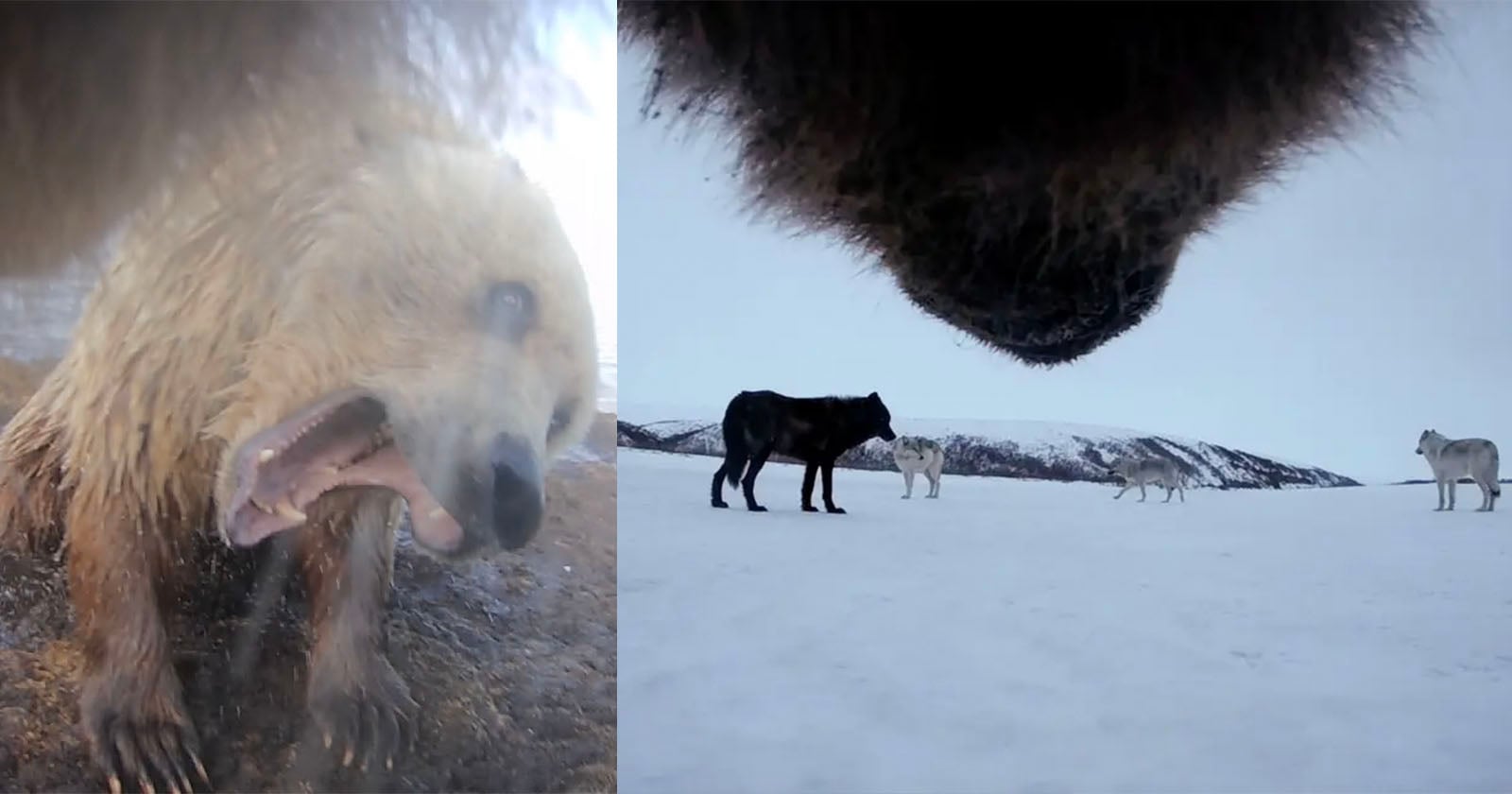
 The bears filmed an encounter with wolves, which went off without a hitch.
On Alaska’s North Slope, some of the planet’s most isolated grizzlies are documenting their own lives.
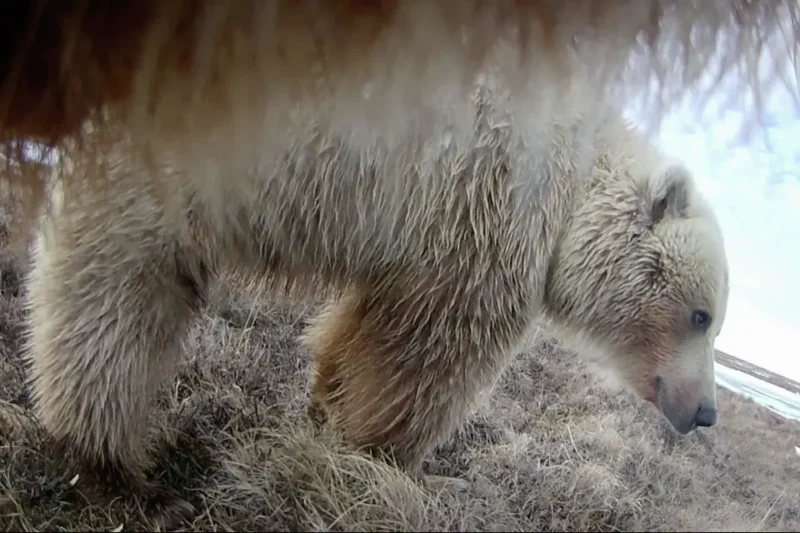
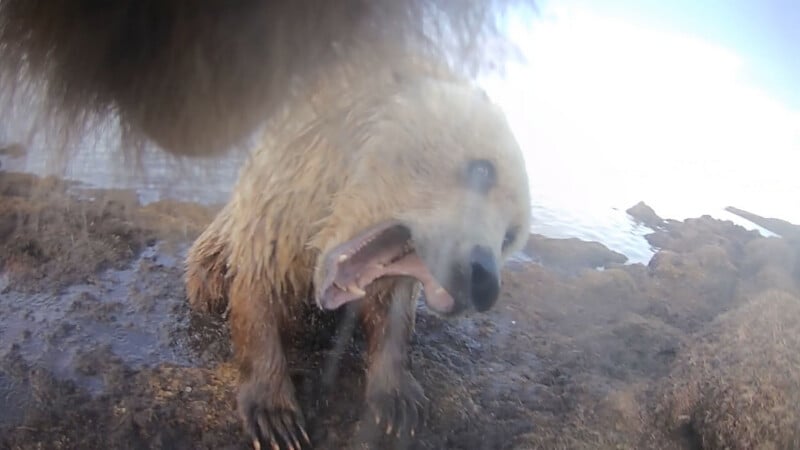
Wearing cameras attached to their collars, the bears are capturing how they are able to survive in a harsh Arctic environment.
“We are interested in understanding how Arctic grizzly bears are making a living in this extreme environment,” Ellery Vincent from Washington State University tells AP.
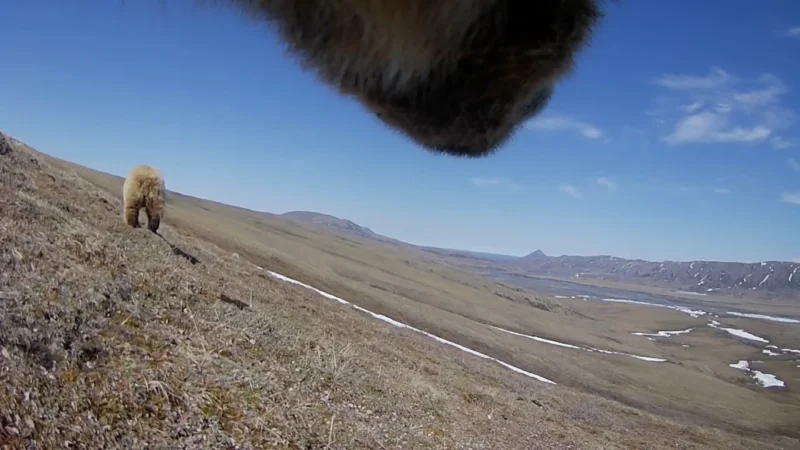
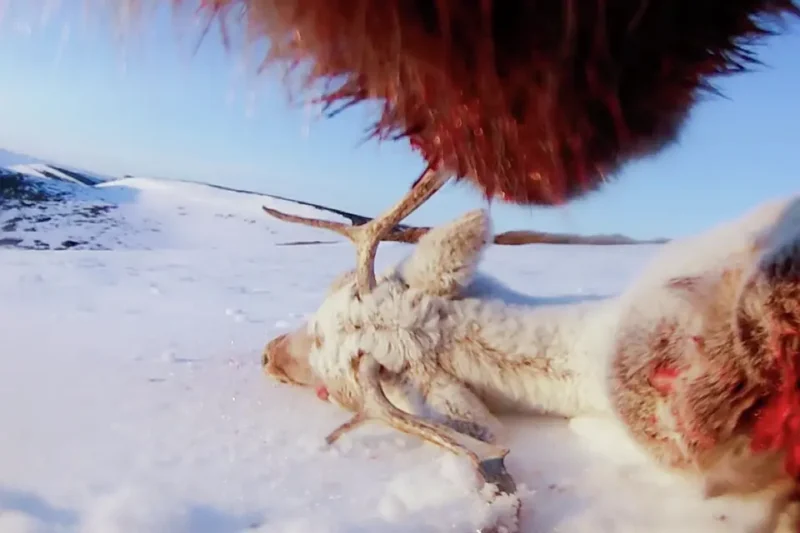 When the bears come out from hibernation, they look for carcasses.
The research project conducted by the university follows 12 bears as they interact with wolves, feed on caribou carcasses, eat berries, and chill out on the tundra.
“These bears can hibernate for up to eight months of the year, they have a really short window to obtain enough food resources to pack on enough fat to survive that period,” adds Vincent.
The first year of the project showed the bears emerging from hibernation, seeking out caribou or musk ox that died over the winter. It also caught them hunting caribou calves. But as the tundra turns green, the bears turn their attention to berries.
“As soon as green up happens, it seems like most of them are starting to shift towards vegetation and berries,” says Vincent.
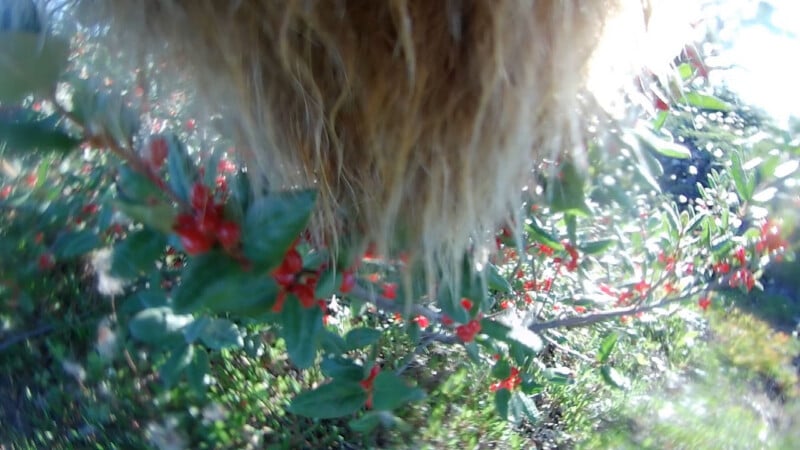 Foraging for berries.
 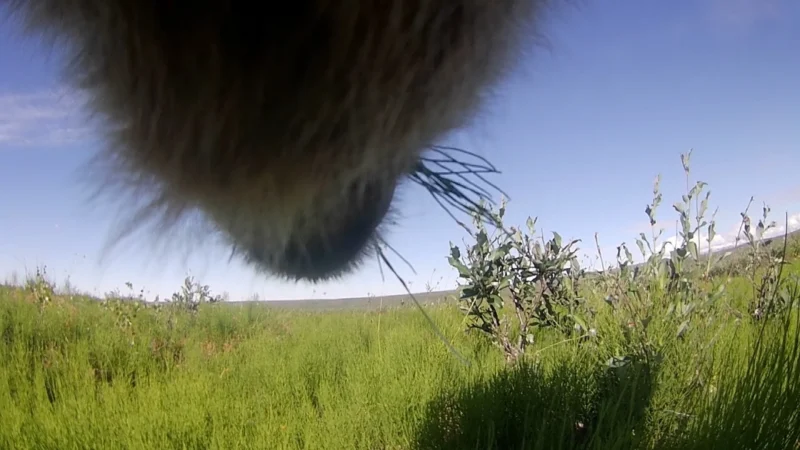 The green turns the bears vegetarian.
Because of the harsh environment, Arctic grizzlies don’t fatten up to the same weight as their salmon-eating relatives do.
Turning a Grizzly into a Photographer
Phys.org reports that the researchers fired tranquilizer darts from helicopters at the bears below in May to fit them with cameras.
After ensuring the collars were fitted loose enough so they could still pack on weight without suffocating, but not so loose they would fall off, the bears awoke and began filming.
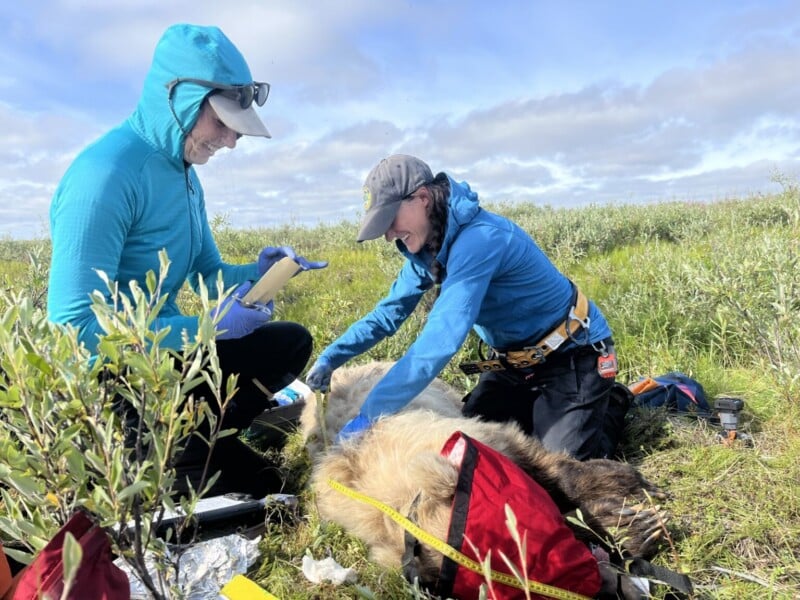 Attaching one of the collar cameras.
Later in 2025, the bears were tranquilized once again so that the collars could be replaced with GPS tags and so the researchers could download the data.
The cameras were equipped to capture 17 hours of video. They would record short clips of four to six seconds every 10 minutes, but only when the Sun was out.
“One thing that’s really nice about these bears is that when they’re foraging on a particular food they tend to do that one thing for a long period of time, so these bears will spend pretty much their entire day eating, so the chances of us actually seeing what they’re doing are pretty high,” Vincent tells Phys.org.
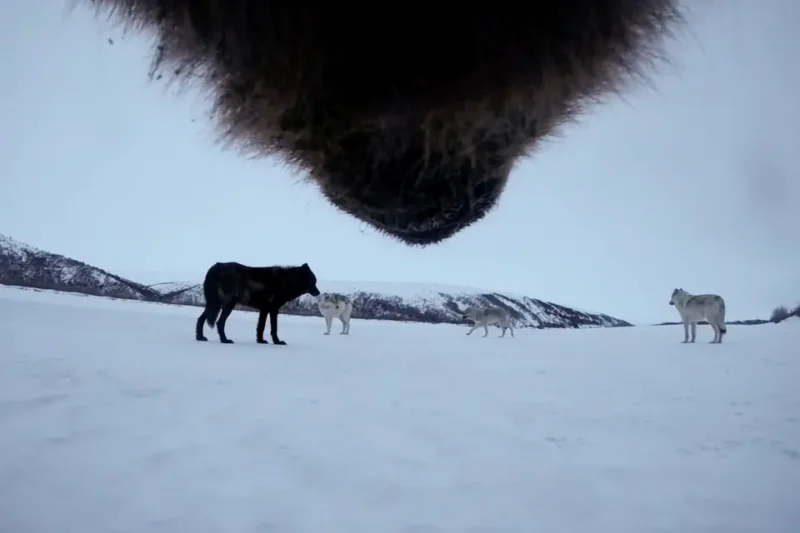
Of the wolf encounter, Vincent says that it was a peaceful meeting. “I think they both decided that it wasn’t worth it, so they just looked at each other, then moved on,” Vincent adds.
The study is expected to last for a further two years, and researchers hope to double the number of filming bears.
Image credits: WSU Bear Center