
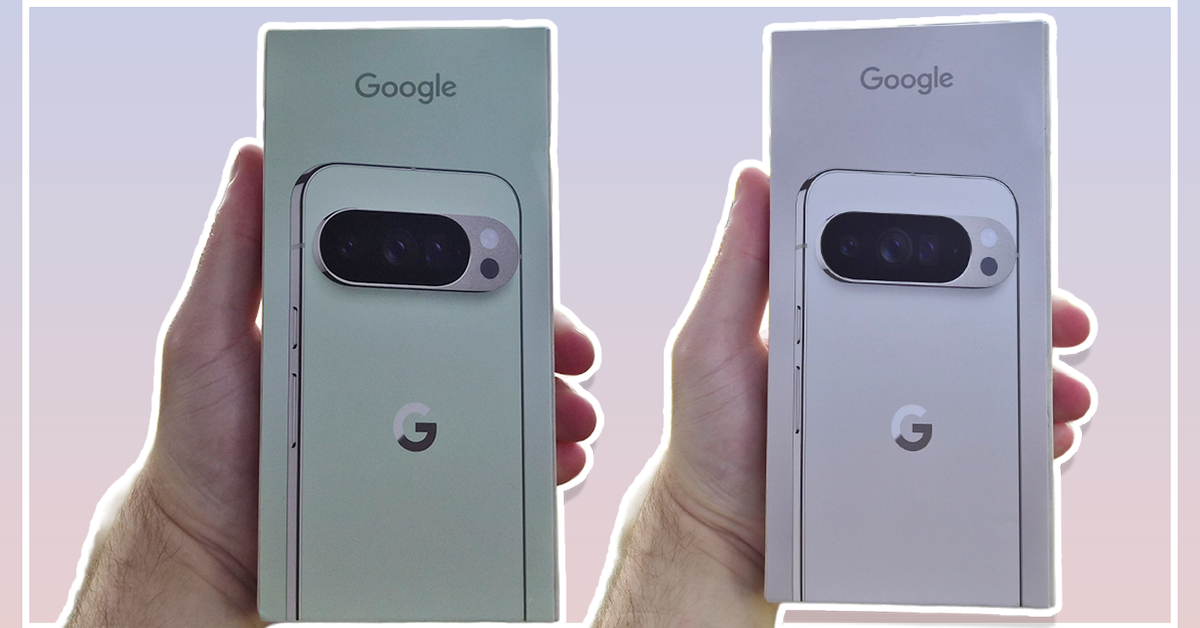
Smartphone releases are starting to feel like Groundhog Day. Every major brand is in a race to cram more AI into a thinner phone – and Google is on a similar AI race.
Here’s my confession: I’ve never actually used a Google Pixel as my daily driver. So when the opportunity came to review the Google Pixel 10 Pro and its larger sibling, the Pixel 10 Pro XL, I was more than ready to give it a try.
But my review journey didn’t start with a fancy unboxing; it was out of sheer necessity. I was rushing out the door, and my current review phone was nearly out of battery. So instead, I grabbed the Pixel 10 Pro, swapped my SIM card out, and ran out the door.
Little did I know that a hurried decision would completely change my perspective on what a smartphone camera could do.
NOTE: Prices are accurate at the time of publishing.
Google Pixel 10 series at a glance….
What is it?: Google’s latest smartphone powered by the Tensor G5
Pros: Fantastic cameras, good AI integration, a near-perfect Android experience, even has AirDrop compatibility
Cons: Processor performance is occasionally jittery compared to other competitors
Verdict: Most intuitive Android phone available, built to last with up to seven years of updates, perfect for someone looking for a safe, but enjoyable phone experience
What’s new? Google’s big selling points Both the Pro and Pro XL felt great to use. (9Product Reviews / Joshua Buchwald)
As someone new to the Pixel series, I quickly learned what they’re all about: a pure Android experience that’s now being built around intuitive AI features. While the Pixel 10 looks familiar to the previous generation, the new Tensor G5 chip gives it about a 60 per cent jump in AI speed and performance.
For all models, the brightness of the Super Actua display is fantastic, with Pro models peaking at 3300 nits – meaning it’s visible even under harsh sunlight. Every model now also comes with Pixel Snap, which is Google’s version of wireless charging that’s even compatible with MagSafe.
Another fantastic feature that just dropped to the Pixel 10 series is AirDrop compatibility, and I can’t explain enough how much this is a game-changer for someone like me. Using the quick share function, I can share from the Pixel to an Apple device, and vice versa.
Why is this a big deal? I love MacBooks, but also Android. So, this makes the compatibility a whole lot easier.
Of course, I can’t forget to mention the new AI features. The 100x Pro Res Zoom certainly is a standout, and I’ll talk more about that later. Google has also introduced Magic Cue, which is a proactive feature that works across all your apps to provide relevant information on demand.
Say someone asks you what time a party is, it’ll automatically prompt a message in response with the time, address, etc. I didn’t see this in action much, but that’s only because I use social media as my main platform for messaging.
What I liked about the Google Pixel 10 seriesA safe user experience From left to right: Pro XL lock screen and drop-down menu, Google Pixel Widgets and the My Pixel app. (9Product Reviews / Joshua Buchwald)
I didn’t know what to expect, and at first the UI felt claustrophobic. After a little setting up, it gradually became a really intuitive, snappy and customisable experience.
It’s also clearly integrated with all your Google needs and loaded with Google apps. Another great detail is the pre-installed My Pixel app acting as your personal guide, offering great resources and tips on how to use your phone and the new features.
All of this, without a question, makes it an undeniably safe Android experience.
Great design, hardware, and longevity
From the moment you pick it up, the Pixel 10 Pro and Pro XL feel premium with their silky matte glass back, polished metal frame and beautiful display. Love the attention to detail here as well; the colourways of the phones match the UI, making the whole experience feel unified. Even the haptics and sounds of the phone match this quality.
And look, while the Pro XL’s 6.8-inch screen is fantastic for media consumption, I personally preferred the sleek, more manageable 6.3-inch screen of the Pro.
The phone is built to last with its IP68 dust and water resistance, and Google’s promise of seven years of software updates.
A fantastic camera system that turned me from sceptic to believer
This has become a hill I’ll die on. The camera system in both Pro models is beautiful, and I went from a total sceptic of AI-assisted photography to a believer. Trust me, it works pretty damn well.
Let me explain.
 The Camera Coach in action on the left and the final photo on the right. (9Product Reviews / Joshua Buchwald)
The Pro and Pro XL share the same flagship optics, built around a powerful pro triple rear camera system: a 50MP wide lens, a 48MP ultrawide with macro focus, and a 48MP 5x telephoto lens.
This hardware is fantastic, and I was able to take high-quality sunsets, views, night photography and more. The colour profile of the photos always turned out to be exactly what I wanted: true to life, but punchy and clear.
 Google Pixel Magic Eraser in action removing a fence from the frame. (9Product Reviews / Joshua Buchwald)
The software is great too, with the camera app itself being easy to use (although a bit jittery at times). The Camera Coach is new to the app, and it’s powered by Gemini and was surprisingly useful. It provides inspiration from your real-time environment and helps you find the best angle, lighting, and composition with a step-by-step guide.
Alongside that is the Magic Eraser AI tool that effortlessly rids any inconsistencies or obstructions in your photo. For example, I removed sun glares and fence posts, and it was just damn-near perfect.
 A comparison between the original photo and a 100x zoom. (9Product Reviews / Joshua Buchwald)
As I mentioned, the real magic is the 100x Pro Res Zoom, and it’s exclusive to the Pro models. I have an interest in film, so these things excite me. Usually, you’d need a crazy lens to achieve this quality, but the camera is powered by the Tensor’s G5 muscles to deliver an AI-enhanced 100x zoom photo that’s been pretty spot-on, albeit with a few hallucinations.
It’s a bit of an odd situation here, since Google’s cameras are now becoming the Theseus’ Ship of photography: how much AI assistance can you use before it becomes an AI-generated photo? If this ethical dilemma troubles you, don’t bother with the phone. But even if you just want to know what’s in the distance, this camera function can be extremely helpful.
I have to conclude by saying the camera system has definitely blown me away. It’s just objectively good.
Where the Pixels fall short Overall, I really enjoyed using the Google Pixel 10 phones, but there were clear downsides. (Google)
The Pixel 10 makes a clear trade-off by betting on AI over raw power. If you demand the absolute fastest processor for benchmark scores or high-end gaming, this isn’t the phone for you. The Tensor G5 is a powerful AI chip, but it doesn’t compete on raw speeds with the Snapdragon 8 Elite and its next iteration.
As a moderate phone user, the chip worked perfectly well for me. The battery on the Pro XL as well easily managed to push two days, but don’t expect incredibly long playback time if you’re an intensive user.
Final verdict: a safe phone, full stop
The Google Pixel 10 Pro and Pro XL won over a sceptic this time. The combination of its easy user experience, flagship cameras, and great hardware all made the testing enjoyable and reliable. If you’re after a safe Android experience, the Google Pixel 10 series will be your best bet.
For those wanting the absolute best in the line-up, the choice comes down to the Pro models. For me, the standard Pro was the clear winner due to its smaller size. However, if your priority is a larger screen for watching videos and you want the best battery life in the series, the Pro XL is the obvious choice.
Shop here:Shop the most popular phone plans:
READ MORE: Everything you need to know about the Google Pixel 10 series