
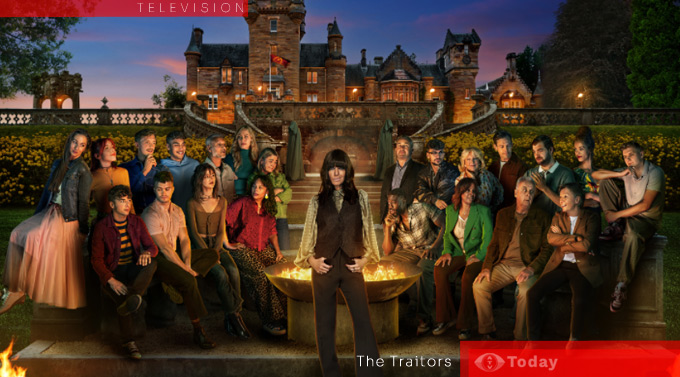
The Traitors has got people questioning whether they’re a good judge of character
From Macbeth to manipulation, the clues to surviving The Traitors may be hiding in plain sight — and in the pages of classic literature.
According to an English language expert, critical thinking skills, rather than alliances and popularity, could be the real secret to success on the hit BBC show.
Douglas O’Neil, an English teacher at Kelvinside Academy, believes the drama unfolding around The Traitors’ Round Table mirrors themes found in school-set texts such as Macbeth and Lord of the Flies, where charismatic leaders exploit fear, loyalty and group pressure to gain power.
 The Traitors is overseen by Claudia Winkleman
Charisma, Cliques and Control
O’Neil explains that many of the show’s most successful players rely on social influence rather than strategy alone.
“Books like Macbeth and Lord of the Flies show how dominant, charismatic figures take control over quieter individuals,” he said.
“They build cliques around themselves and use those groups to influence others. The cleverest traitors are the ones who hide behind this support system. Having people on your side is the key ingredient to winning.”
Much like in classic literature, those who fail to question popular figures often become vulnerable to manipulation.
Why Independent Thinking Matters
One of the biggest mistakes players make, according to O’Neil, is falling into herd mentality.
“You need to think for yourself, and most people don’t naturally do that,” he said.
“As an English teacher, I see it as one of our most important jobs to teach students how to be critical and independent thinkers.”
He believes contestants who blindly follow dominant voices are easily misled.
“To win, the Faithful have to question everything. People can lead you through charisma, but also through rhetoric — persuasive language designed to influence your thinking.”
Understanding how language is used to shape opinions, he adds, is similar to learning “a defence against the dark arts” in real life.

Beware Emotional Manipulation
Another major warning sign is the use of emotive language — words designed to trigger feelings rather than logical thinking.
“What good Traitors do is appeal to emotions instead of reason,” O’Neil explained. “That’s the easiest way to persuade people.”
Viewers will often hear players say things like, “I just feel he’s a traitor” without any solid evidence.
“That feeling might be based on something tiny — a smile, a friendly tone, or a positive word you associate with someone — rather than facts,” he said.
“These emotional reactions aren’t rational, but they’re powerful.”
Lessons from the Classroom to the Castle
O’Neil argues that the skills taught in English lessons — analysing language, questioning motives, and challenging assumptions — are directly transferable to the game.
Recognising persuasive tactics, resisting peer pressure and focusing on evidence could help Faithful players avoid being misled by confident liars.
“Critical thinking isn’t just useful in exams,” he added. “It could be the ultimate weapon in The Traitors.”
Think Like a Detective, Not a Follower
For anyone dreaming of applying to the show, O’Neil’s advice is clear: don’t be dazzled by charm, don’t follow the crowd, and don’t trust your instincts alone.
Instead, analyse what people say, why they say it, and who benefits.
Because in The Traitors, as in great literature, the most dangerous villains are often hiding in plain sight.
Catch up with episodes on the iPlayer including The Traitors Ireland