
Normal text sizeLarger text sizeVery large text size
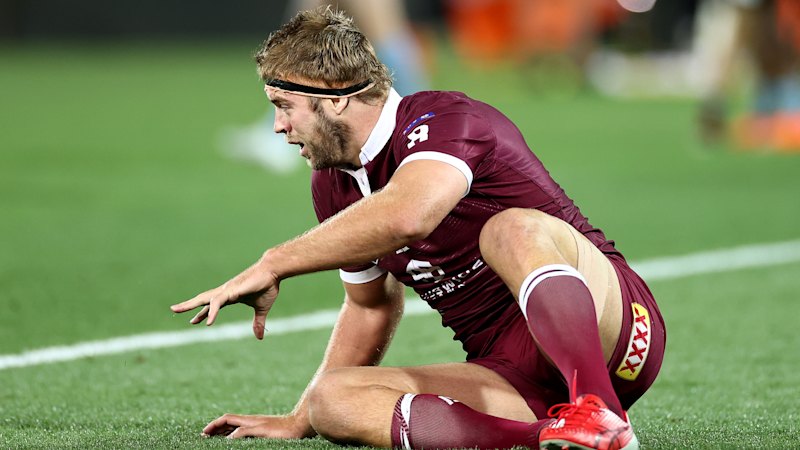
If any of Christian Welch’s eight concussions triggered his mindset shift around head trauma, it was the one he suffered during a fateful State of Origin encounter.
Determined to make an impression, he produced a bone-crunching tackle on New South Wales rival Jack Wighton in game one of the 2020 campaign in Adelaide – his head making contact with the centre’s hip bone.
“That really rattled me. That was probably the worst concussion I’ve had,” Welch tells this masthead.
“The symptoms lingered a lot longer than what I’d been used to.”
The Maroons enforcer was ruled out for the rest of the clash and informed then-Queensland coach Wayne Bennett he was withdrawing from game two, despite passing the NRL’s concussion protocols.
It is a moment the now-retired Melbourne Storm prop reflects on as one of his proudest.
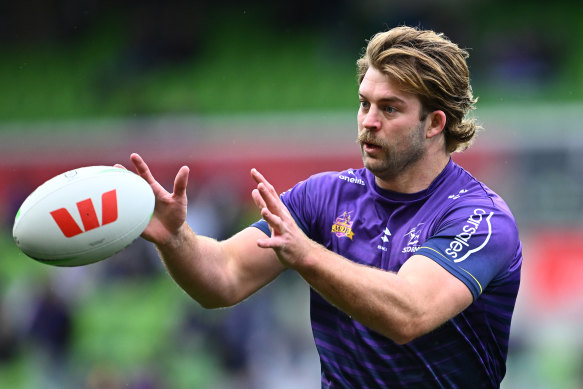
Christian Welch called time on his career at the age of 30 after eight head knocks.Credit: Getty Images
“I was – two or three days post that – feeling really drowsy and lethargic. It’s hard to explain, but you just don’t feel back to yourself,” Welch says.
“You’re just a bit dazed, so I withdrew. I remember telling Wayne after some running during the week, ‘I can’t play this weekend, I’m just not there yet, even though I’ve passed’.
“You never know how many Origins you’re going to play or if you’ll get back out there. That was pleasing that I had the maturity late in my career to say I need to prioritise recovery and not play through it.”
Loading
Welch returned to the Queensland fold a year later, only to sustain another concussion in the series launch in Townsville.
“Brian To’o has a very hard head to confirm,” he laughs.
He would eventually call time on his career before the 2025 season, having suffered another head knock in the pre-season, while also managing back issues at the age of just 30.
Since then, Welch has backpacked around Europe and undergone operations on his back, hips and nose – curing battle scars from a career spanning 163 NRL appearance, including the 2019 premiership and six Maroons caps.
While he has no lingering symptoms from the head knocks, he admits they were more daunting than the setbacks that placed him under the knife.
“It’s definitely the scariest thing about all the injuries. I’ve done my left and right ACL, my right Achilles, and they’re the big season-enders,” Welch says.
“But I’m not worried about a bung knee or calf muscle. It’s concerning when you’ve had multiple concussions over your career, and you see some of your heroes of the game who are struggling in older age.”
Welch’s desire to improve concussion awareness has led to his support of a first-of-its-kind study, with Monash University teaming up with GameGear to launch revolutionary headgear in community football and rugby.
In partnership with non-profit Connectivity Traumatic Brain Injury Australia, the study will involve 600 players aged 16 and older from Victoria, NSW and Queensland, who will test the headgear.
It was developed to help manage specific head-impact forces without restricting performance, with Manly forward Jake Trbojevic to don the equipment.
“Independent lab testing has shown this headgear can significantly reduce the forces transmitted to the head during impacts, which gives us strong reason to think it might lower the risk of brain injury in collision sports such as Australian football and rugby league,” lead researcher Stuart McDonald said.
“The crucial question now is whether those lab findings translate to real games,” the associate professor added.
Welch described the headgear as “a different look”, but said “we need to keep evolving”.
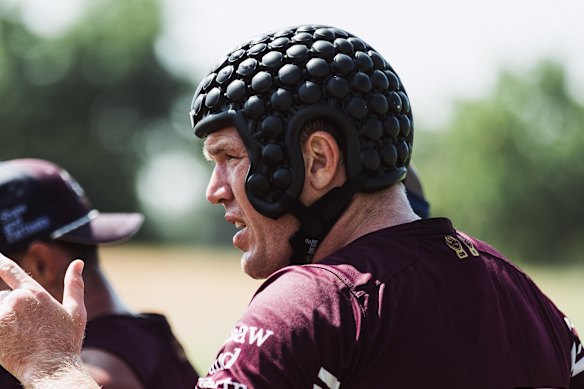
Manly’s Jake Trbojevic trials the GameGear helmet during the pre-season.Credit: Joel Seeto, Manly Media
He believed the horrifying incident involving Storm forward Eliesa Katoa would inspire a game-wide shift in mentality among players to better report their health, after a Rugby League Players Association survey last year found one-third of players were not reporting concussion symptoms suffered at training.
Katoa was ruled out of the 2026 season after suffering three blows before and after Tonga’s Pacific Championships clash with New Zealand, which led to a brain bleed.
Melbourne teammate Ryan Papenhuyzen also revealed he may never play rugby league professionally again, after detailing the distress he felt following a head knock last year.
“His salary this year would have been incredibly big, so to walk away from that and put his health first, I have so much respect for him,” Welch says.
Loading
“Hopefully, the younger guys see a guy like Paps walk away at the peak of his powers and prioritise his health. I know the salary is great, but if you have a great career you get to 30 … you still have so much life to live, and you’re so much more than a footballer.
“I think we’re going to start seeing those earlier retirements.”
While Welch did everything he could to prepare for life after rugby league – earning a commerce degree and a Master of Business Administration while studying at Harvard, in Stockholm and Berlin – he says his struggles didn’t end.
He recalls being in the sheds after the Storm’s 2025 qualifying final triumph of the Bulldogs and telling his partner he needed to leave after being overcome with emotions.
Welch believes while that reality will make it difficult for younger athletes to end their careers, they need to make those tough decisions.
“It’s very hard to prepare for that loss of identity. When you’re out of the bubble, you feel really isolated and pretty lonely,” Welch says.
“I was lucky and won a premiership, played for Queensland, so I couldn’t imagine how hard this decision would be if you’re 21 and have 10 years left, haven’t achieved anything but can feel it. To get that taken away must be incredibly hard.
“Winning a premiership or Origin series, the euphoria and ecstasy you get is hard to beat. I don’t think I’ll get that feeling again, and I think I’m at peace with that, but it’s rewiring and making sure you’re staying close to your network.”
Start the day with a summary of the day’s most important and interesting stories, analysis and insights. Sign up for our Morning Edition newsletter.