
Labor’s major reform to its $5 billion Net Zero Fund has been labelled “reckless (and) inflationary spending” as the government concedes it may cop losses on publicly-funded green energy projects.
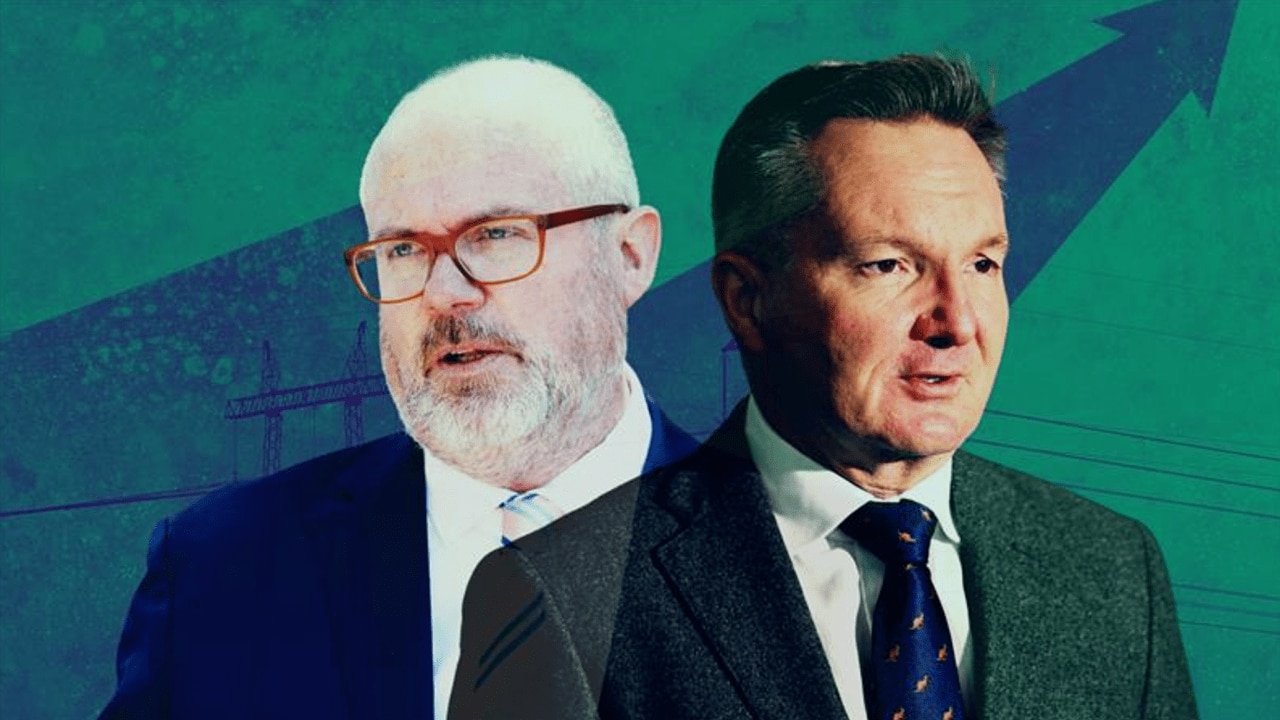
Energy Minister Chris Bowen and Industry Minister Tim Ayres said Labor’s Net Zero Fund will no longer maintain an investment return mandate of 2-3 per cent above the five-year government bond rate.
Labor has dropped this to one per cent below the bond rate – or about 3.3 per cent.
“That means the fund can take on more risk than commercial finance and help Australian industry adopt the technologies that cut industrial emissions, and crowd in private capital,” Mr Bowen and Mr Ayres said in a statement.
The Net Zero Fund is financed by government bonds, meaning Labor will be content with losing money on these projects.
Shadow industry and innovation minister Alex Hawke said Labor lowering this target showed the poor returns on renewables projects.
“By setting a return target below the bond rate, they are admitting these green projects cannot stand on their own two feet,” Mr Hawke said in a statement.
“Labor is borrowing money at roughly 4.3 per cent interest to invest in projects targeting a return of just 3.3 per cent. That is a guaranteed, structural loss on every dollar spent.”
Labor created the Net Zero Fund last year with a third of the money from the $15b National Reconstruction Fund (NRF) – a government arm which has recently invested in the companies behind Tim Tams and Four’N Twenty meat pies.
Mr Ayres stressed the NRF was crucial for bolstering Australia’s “economic resilience”, but Mr Hawke tore into this claim.
“The claim that the NRF would make a profit for taxpayers was based on a false premise from day one. Now that the spin has collided with reality, Labor is rewriting the rules to hide their failure,” Mr Hawke said.
“This is reckless, inflationary spending. Instead of driving productivity, this decision by Labor is using money we don’t have to gamble on investments that won’t make a return.
“You don’t fix a productivity crisis by subsidising failure. You fix it by getting the fundamentals right—something this government has proven they are unable to do.”
Criticisms of Labor’s “inflationary spending” come after the Reserve Bank of Australia was forced to hike the cash rate on Tuesday.
Many economists and political figures called out large government spending for the rise, a point Treasurer Jim Chalmers has defended against.
Government spending as a percentage of GDP has sat at an average of 22 per cent since the 1960s but ballooned to about 28 per cent since the high levels of government spending during the pandemic.
Inflation lifted to 3.8 per cent in the 12 months to December, as AMP’s chief economist Shane Oliver argued public spending was crowding out the private sector.
“Private demand has been quite constrained for many years now. The strength has actually come from public spending … and that has meant more demand in the economy than would otherwise be the case,” Mr Oliver said.
Meanwhile, Labor has been warned by its climate advisers that it’s trailing behind its 2035 emissions reduction target of between 62 and 70 per cent on 2005 levels.
The nation will likely only cut emissions by 48 per cent under its current trajectory, according to the Climate Change Authority.