

Xiaomi rarely skimps in the display department, and the Redmi Note 15 5G is no exception. It is equipped with a spacious 6.77-inch AMOLED display. While it is far from the best class of display Xiaomi currently has in circulation, it has a lot going for it, like an impressive advertised peak brightness of 3,200 nits, a 120Hz refresh rate and HDR10+ support.
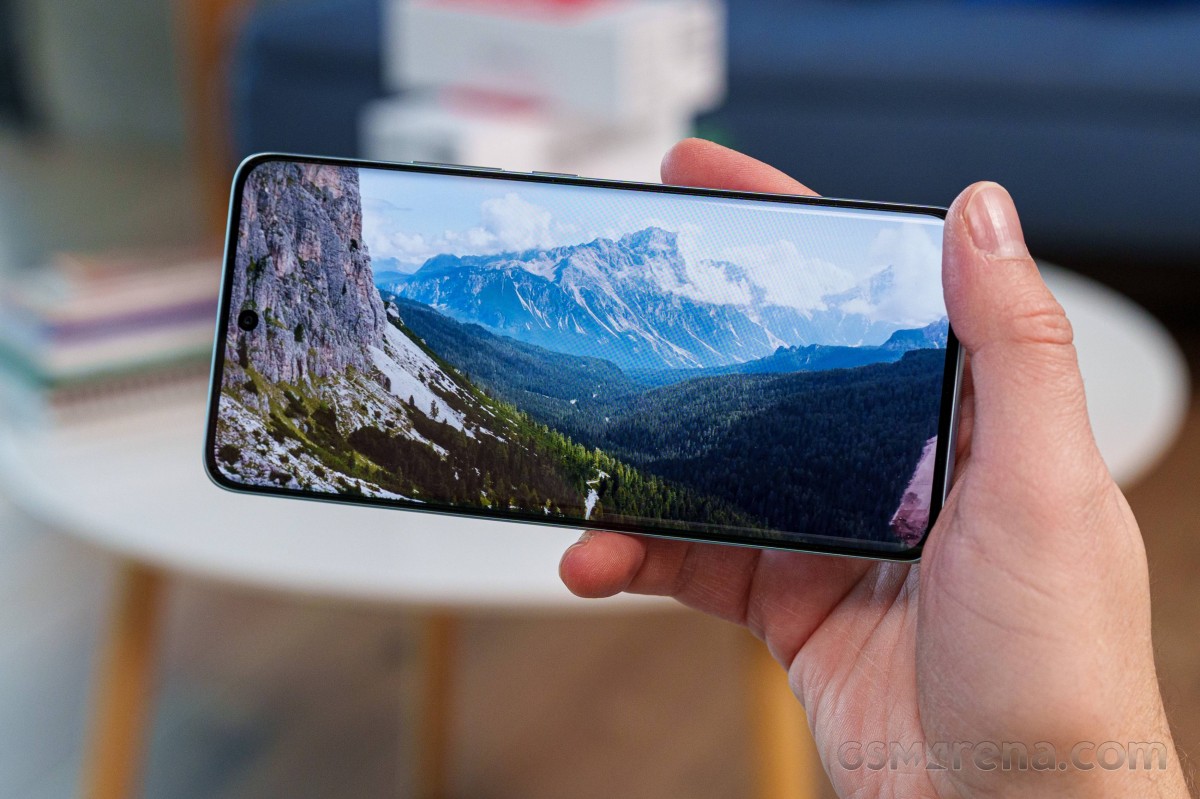
You do only get a FullHD+ resolution of 1080 x 2392 pixels, but that still works out to a very sharp 388 ppi at this display diagonal, so we can’t complain.
We ran our standard array of tests, and indeed, the display on the Redmi Note 15 5G puts out some impressive numbers. We measured a maximum brightness of around 605 nits by maxing out the manual slider and an auto maximum of 1,524 nits in bright conditions. The true peak we measured in a 10% window is a whopping 3,317 nits. This all makes the Redmi Note 15 5G perfectly viewable and usable even in the sunniest of conditions and HDR video scenarios.
The panel Xiaomi has chosen looks truly great in person. Thanks to its 12-bit color depth, it has practically no color banding, and it also has great DCI-P3 color support.
As already noted, the display supports a 120Hz refresh rate, and there are two refresh rate modes available. The default, adaptive mode dynamically adjusts the refresh rate depending on on-screen content and app support, switching between 30Hz, 60Hz, 90Hz, and 120Hz as needed. That said, since this is an LTPS panel, the adaptive behavior is limited to these fixed steps rather than true fine-grained, continuous refresh rate scaling.
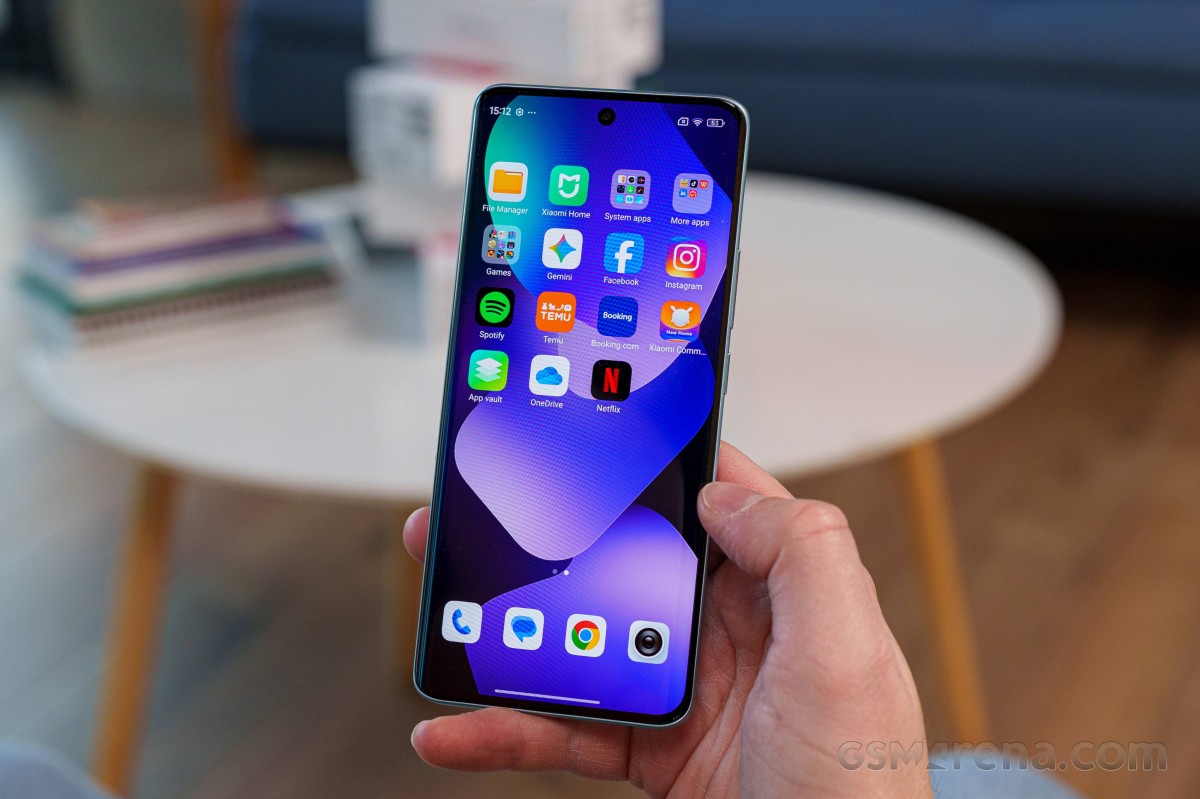
Alternatively, there is a “Custom” refresh rate mode that lets you either lock the panel at 60Hz or manually select which apps are allowed to run at up to 120Hz on a per-app basis. It’s a notably flexible and user-friendly implementation.
On the HDR front, the display carries an HDR10+ certification. The Dolby Vision support of its Redi Note 15 Pro 5G sibling is absent, though not necessarily a big loss. On the software side, the phone can decode all the widely used HDR formats, including HDR10, HDR10+, HLG, and Dolby Vision.
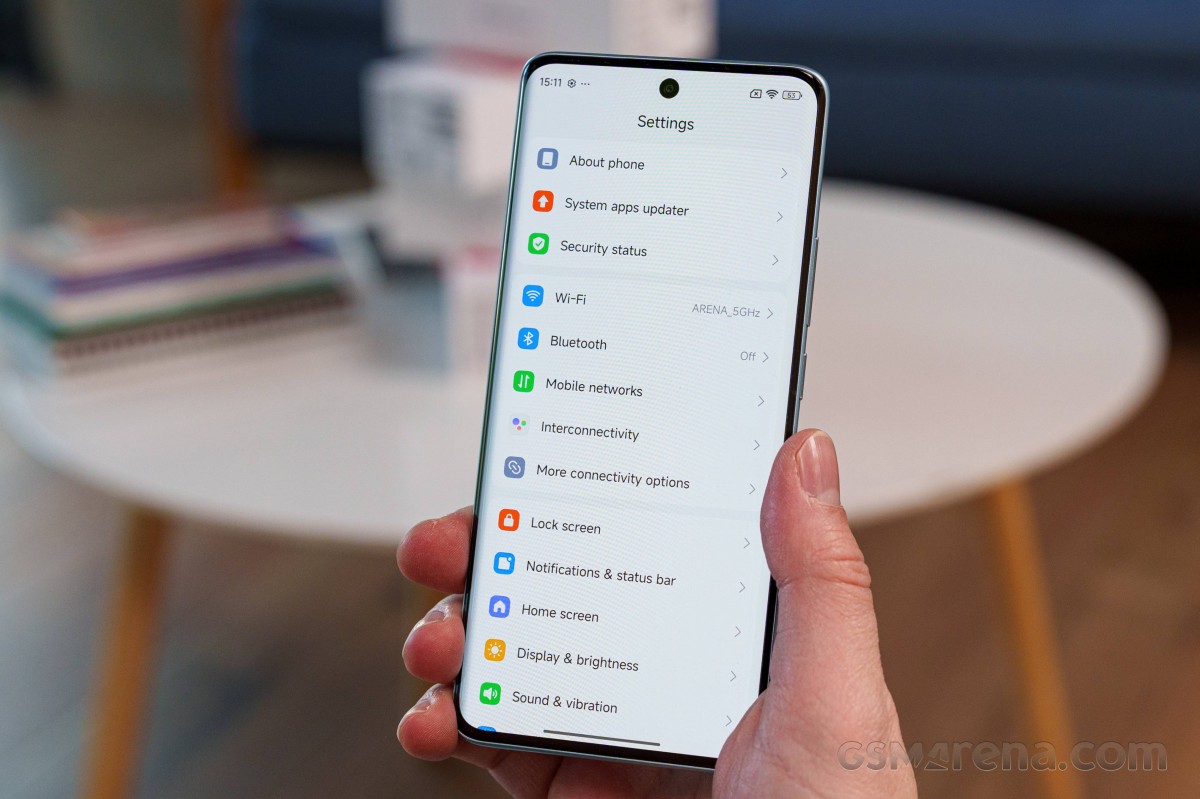
As expected, the Redmi Note 15 5G also comes with Widevine L1 DRM certification, enabling streaming services such as Netflix to deliver high-resolution content and fully take advantage of the panel’s native resolution.
The Redmi Note 15 5G has a pretty large 5,520 mAh battery. Not exactly the largest of the Redmi lineup, but still quite substantial. In any case, the phone has excellent battery life.
As per our standardized testing, it managed over 14 hours of Active Use Score. The Redmi Note 15 5G does great in all tests, pretty much across the board, perhaps with the exception of the gaming test, where the phone did rather poorly.
The Redmi Note 15 5G supports 45W wired fast charging. While that is far from the fastest charging available out there, it is still quite serviceable in our books. Fifteen minutes on the charger got us from empty to 32%, and thirty minutes resulted in 55%. A full charge took an hour and seven minutes.
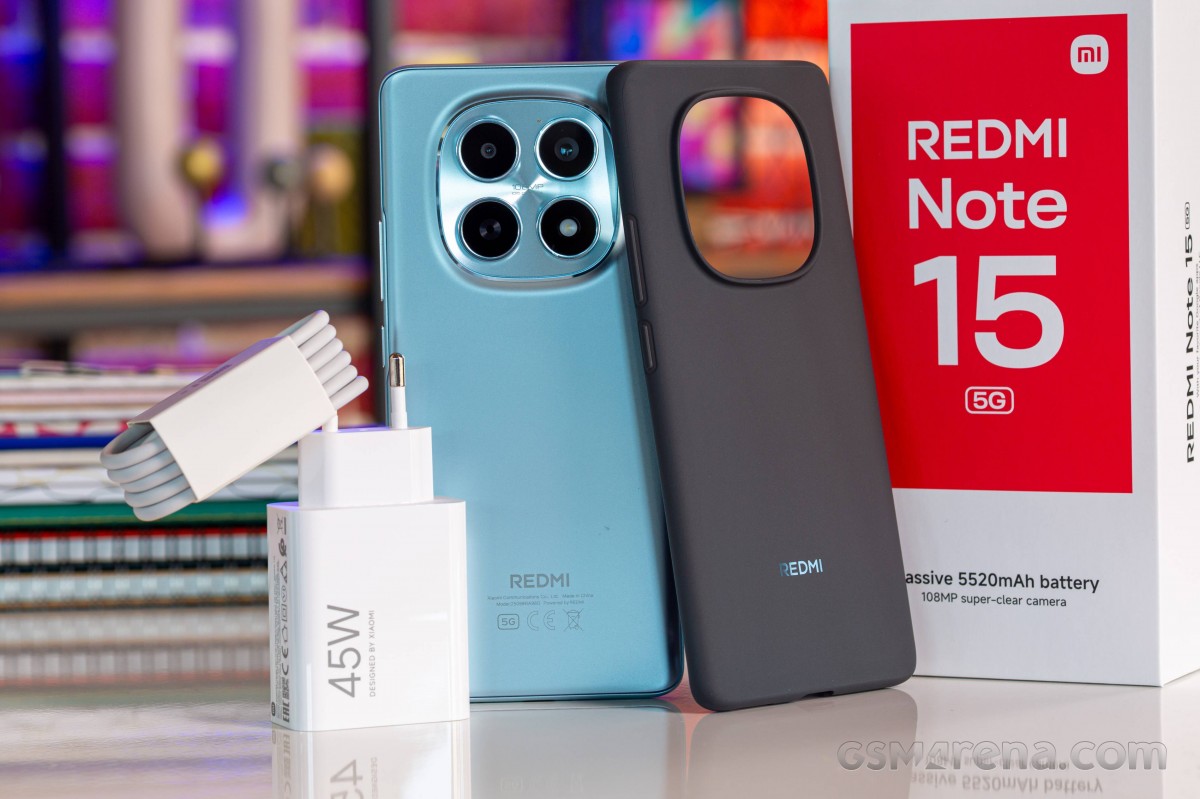
The Redmi Note 15 5G can also be used as a power bank in a pinch, thanks to its 18W reverse wired charging support. That’s a bit below the 22.5W some other Redmi Note 15 devices are capable of providing.
The Redmi Note 15 5G offers a couple of battery protection features for charging. You can either set a fixed 80% charge limit or opt for the “Smart Charging” mode, which is supposed to learn your usage habits and intelligently cap charging at 80% when it makes sense.
Speakers – loudness and quality
The Redmi Note 15 5G features a stereo speaker setup, consisting of a bottom-firing speaker paired with a top-firing unit. The two don’t appear to be identical in size, and that asymmetry is clearly reflected in their real-world sound output as well.
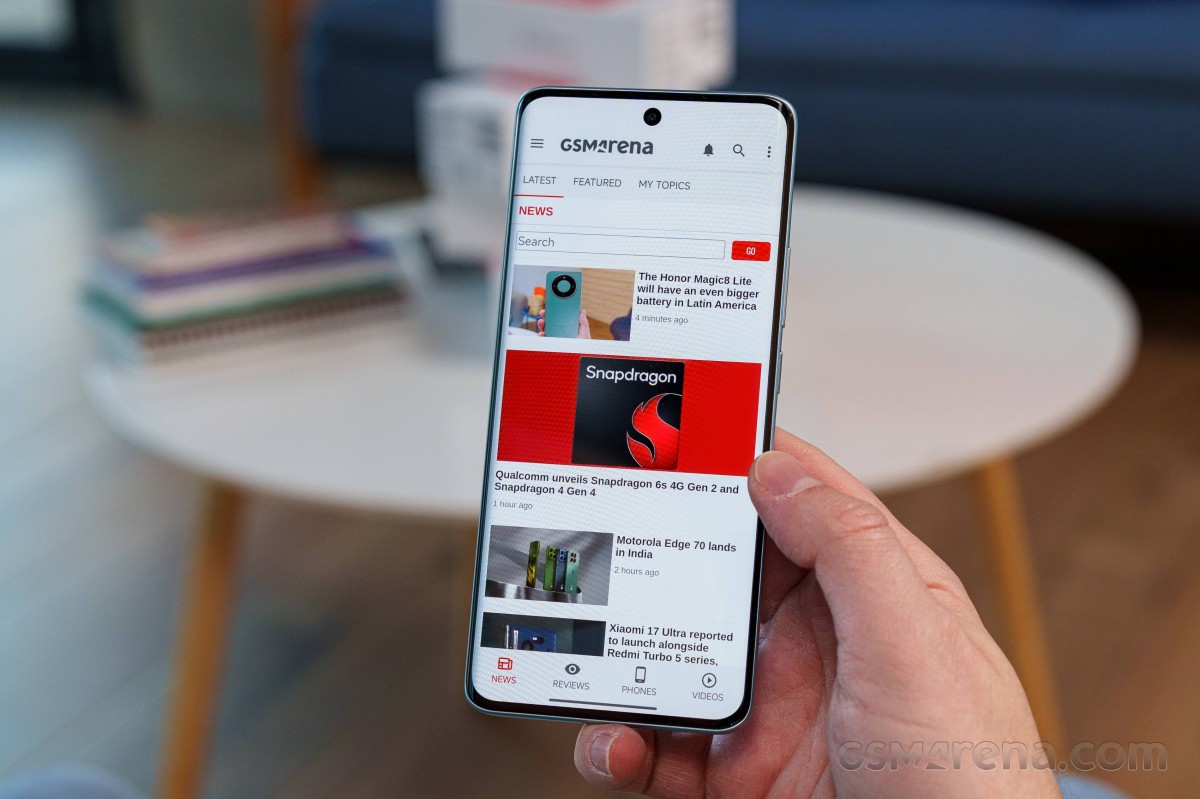
That said, the channel balance is quite good, and overall audio quality is respectable, with a pleasantly wide soundstage and fairly rich mids. Bass is essentially absent, which is hardly surprising, while pushing the volume towards the top of the scale introduces noticeable high-frequency distortion, resulting in a somewhat screechy character.
It seems Xiaomi has opted to prioritize sheer loudness over absolute sound fidelity. The volume slider can be pushed all the way up to a rather extreme 300%. Interestingly enough, the Redmi Note 15 Pro 5G and 4G go up to 400% for what that’s worth.
For the cleanest output, we’d recommend staying at or below 100%. At maximum, the phone does get undeniably loud, but the listening experience is far from enjoyable.
Our recorded music playback sample is at 100% volume, while the posted loudness number was achieved at the boosted 300% setting.
On the software side, the Redmi Note 15 5G offers Dolby Atmos support, complete with a full graphic equalizer and a selection of presets. Alternatively, users can rely on Xiaomi’s own audio tuning engine if they prefer a different flavor of sound processing.
Use the Playback controls to listen to the phone sample recordings (best use headphones). We measure the average loudness of the speakers in LUFS. A lower absolute value means a louder sound. A look at the frequency response chart will tell you how far off the ideal “0db” flat line is the reproduction of the bass, treble, and mid frequencies. You can add more phones to compare how they differ. The scores and ratings are not comparable with our older loudspeaker test. Learn more about how we test here.
Connectivity
The Redmi Note 15 5G is a dual Nano-SIM device, with SA/NSA 5G support on both of its SIM slots simultaneously. It does not support eSIM just like the Redmi Note 15 Pro 4G doesn’t. And the two have microSD slots as well. Another important thing to keep in mind is that they use hybrid slots, so you either get to use a second Nano-SIM or a storage card.
Positioning includes GPS, GLONASS, BDS and GALILEO support. Surprisingly, local connectivity capabilities on the Redmi Note 15 5G are a step below the Pro 5G’s. You only get dual-band Wi-Fi ac/5, so not even Wi-Fi 6, let alone 6GHz.
There is Bluetooth 5.3 on our unit with LE support. Some markets get NFC as well, but you have to check with your retailer of choice for that.
There is no 3.5 mm audio jack and no FM radio receiver. You do, however, get an IR blaster located on the top frame, rather than in the camera island, which is the latest trend.
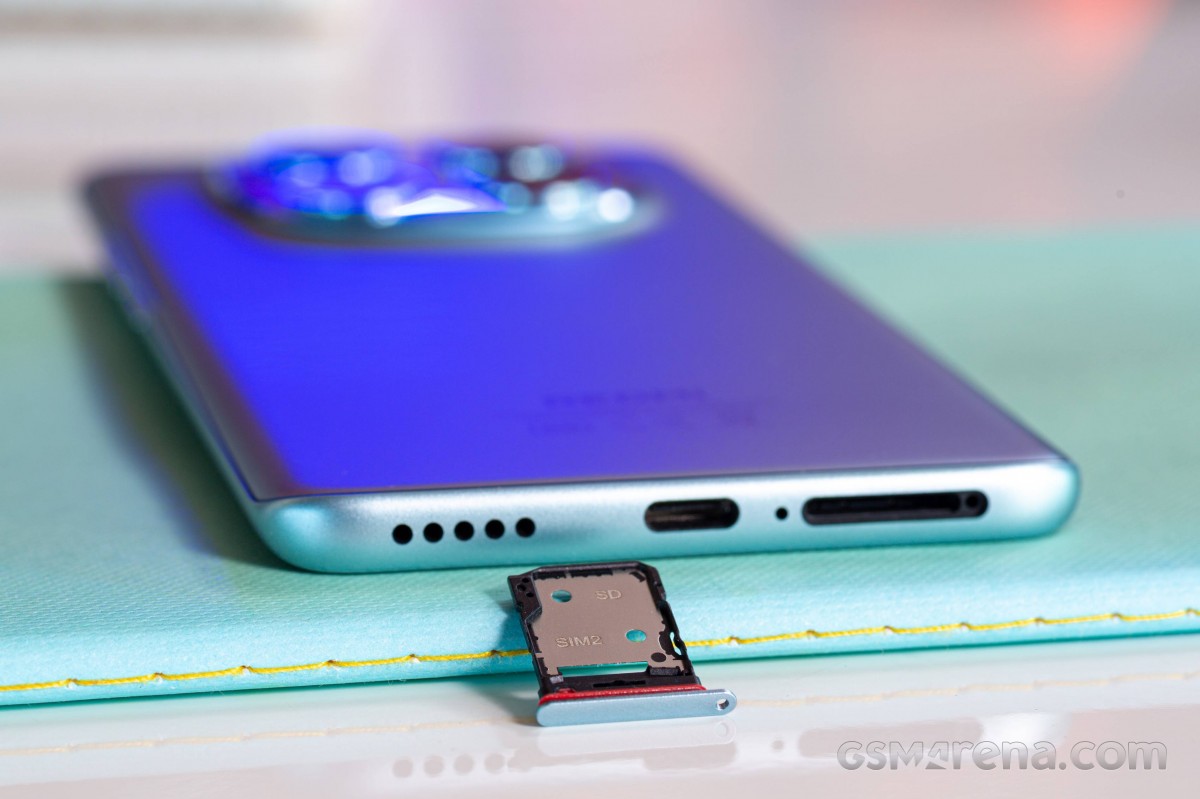
The Type-C port is backed up by a basic USB 2.0 data connection, which means a maximum theoretical data throughput of 480 Mbps. USB OTG/Host Mode is supported, but there are no really fancy features like video output over USB Alt mode.
For sensors, the Redmi Note 15 5G gets an STMicro lsm6dsv accelerometer and gyroscope combo, a QST qmc630x magnetometer and compass combo and an SI sip1328 light sensor positioned in the frame right above the display.
Unfortunately, there is no on-board barometer or a hardware proximity sensor; you get a Xiaomi-branded virtual one. Still, it appears to be reliable enough for turning off the display during calls. .