
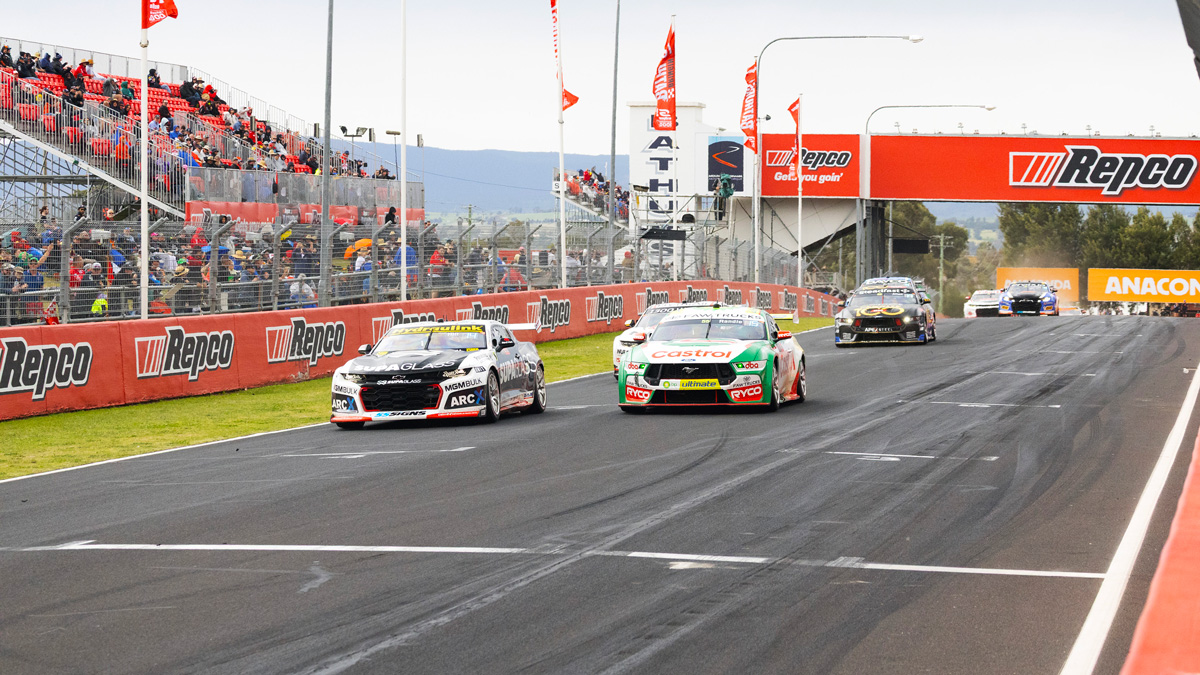
SUPERCARS chief motorsport officer Tim Edwards has revealed an update to the championship’s engine parity pillars in a move that should reduce parity chatter at this year’s Repco Bathurst 1000.
Parity has proven a talking point in all three editions of the Great Race run under Gen3 regulations, largely pertaining to the Mustang’s ability to keep up with the Camaro up and down the circuit’s long straights.
The impact of altitude on engine performance emerged as a key theory for the Blue Oval’s woes, and subsequent barometric pressure testing supported that, leading to the recommendation of a one-off change to the restrictor size in the Coyote at Mount Panorama.
However, the ability to pass such change ended up being problematic given the restrictions attached to modifying the Engine Specification Document after an event’s Supplementary Regulations have been issued.
The consequences involved extraordinary circumstances whereby Brodie Kostecki lashed out at the situation even after claiming provisional pole and his Dick Johnson Racing team lodged an official protest.
The early stages of race day were dominated by Chevrolet before rain came to Ford’s rescue, and Grove Racing’s Matt Payne/Garth Tander went on to win a thriller.
Anyhow, there should be no repeat of that particular saga come October 2026.
“We’ve developed a new set of parity regulations for this year,” Edwards told V8 Sleuth.
“The barometric testing, that will be one of the pillars moving forward.”
There remains work to round out the relevant process, first.
“The system for doing the inlet, which let’s just call it 90 percent of the job, is relatively easy – not easy, but we’ve achieved that part of it,” said Edwards.
“To do the exhaust, well, you’re trying to create barometric pressure in a sealed room where the exhaust is flowing to. That is a much harder task.
“We have got a way of doing it, but we’ve been having some challenges with the exhaust fan to achieve it.”
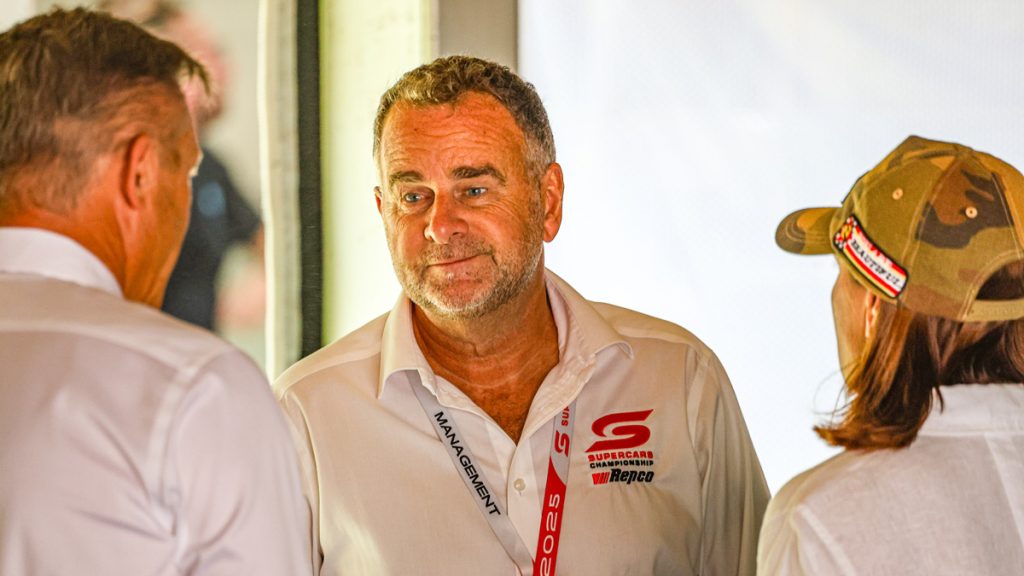 Tim Edwards. Pic: Mark Walker
That’s temporarily taken a backseat amid off-season efforts to bring Toyota in on equal footing, which has included wind tunnel testing at Windshear and upcoming on-track comparative work at Queensland Raceway and Bathurst.
On the topic of the newfound three-way manufacturer battle, all parties trumpeted the reaching of aero parity after Windshear, but there has not been any such public promises on the engine front as yet.
A mooted mid-2026 visit to AVL’s Austria facility is expected to be delayed to allow Walkinshaw TWG Racing to further develop the 5.2-litre 2UR-GSE V8 package before venturing abroad.
In the interim, Edwards is confident in the ability to achieve engine parity using domestic resources.
“AVL is a very good tool for us to actually correlate and understand our own capabilities, and since we’ve gone to AVL, that’s given us a far greater degree of confidence in our own equipment that we’ve got here in Australia,” he said.
“So yeah, we’re very confident that we can get it very close with the tools we’ve got at our disposal here.”