
The average expenditure per overnight stay in Greece recorded an increase of 20.6% in the period 2015-2024, reaching €89.1 last year from €73.9 in 2015. This increase, however, did not lead to a corresponding improvement in total revenue per visitor.
On the contrary, the average per capita expenditure of foreign tourists decreased by 1.2% (to €572.8 in 2024), a development that is exclusively attributed to the reduction in the average length of stay by 1.4 nights, to 6.4 nights.
According to a study by the Institute of the Greek Tourism Confederation (INSETE), the duration of trips in 2024 was at its lowest point since the start of the Bank of Greece Border Survey in 2005. It is noted that 2024 is the last year for which there are detailed official data on daily expenditure.
This trend is linked to inflationary pressures affecting the disposable income of households internationally, leading to choices to limit vacation days. At the same time, a change is recorded in the composition of incoming flows. The share of traditional Western European markets (Germany, United Kingdom, France) is decreasing, while that of Balkan countries characterized by lower spending is increasing.
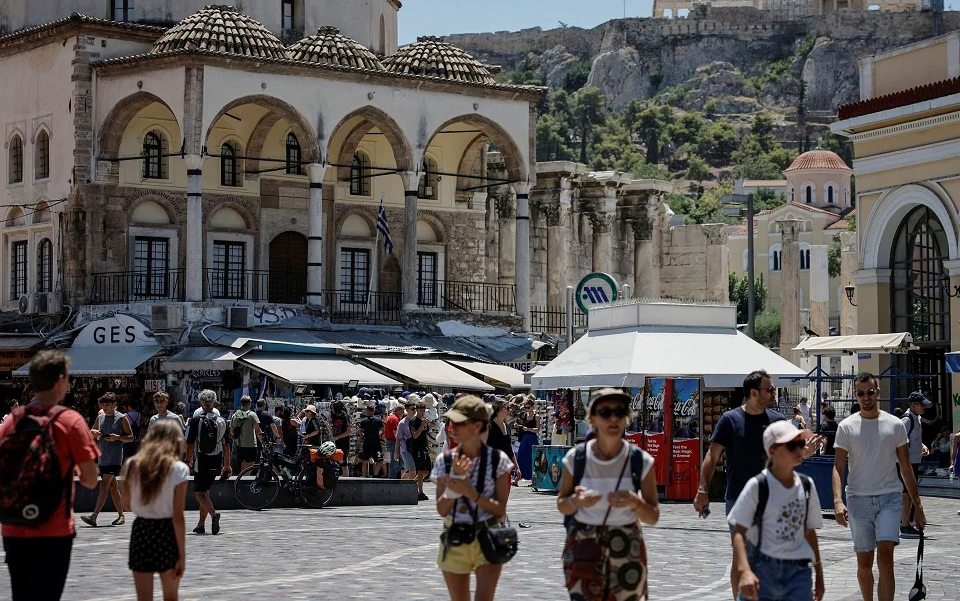
In addition, the strengthening of the share of city-break trips, which are shorter in duration, compared to summer holidays, affects the indicators. It is indicative that the Attica Region increased its share of visits from 16% to 22% between 2019 and 2024, while showing an increase in the average expenditure per visit.
At the level of competition, the comparison with Spain based on adjusted data shows a widening of the difference in 2024. The adjusted average per capita spending in Spain stood at €738 (an increase of 5% compared to 2023), while in Greece it fell to €624 (a decrease of 4.6%).
The deviation is due to the maintenance of the length of stay in Spain at levels above seven nights, and to the lower growth rate of daily expenditure in Greece (+3%) compared to Spain (+5%). In addition, Spain records a greater penetration in markets outside Europe with higher expenditure, in contrast to Greece which receives a volume of visitors by road from neighboring countries.