
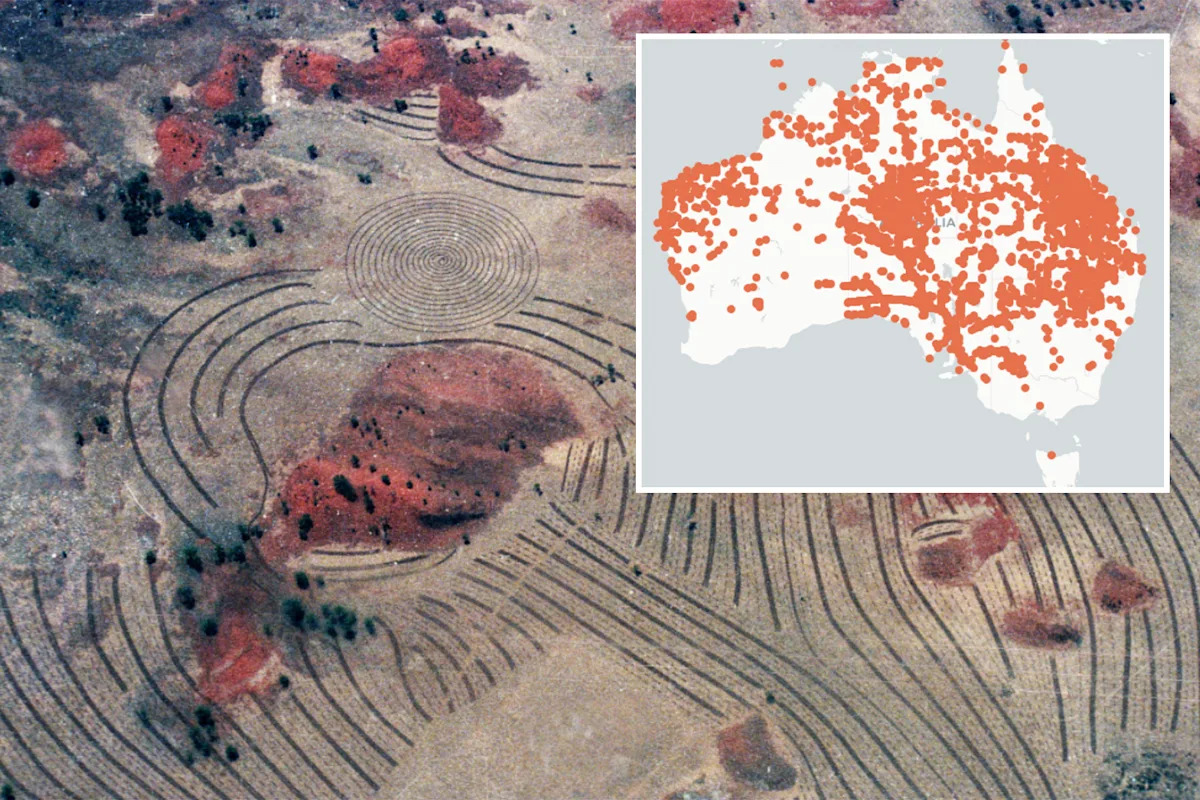
Conservationists have unleashed on what they describe as an “absurd” plan that would see farmers continue planting one of the country’s “biggest environmental threats”. Buffel grass is responsible for decimating native wildlife and contributing to bushfires that burned millions of hectares of land.
It was declared a weed in the Northern Territory in 2024, and in December, the government released its draft Buffel Grass Weed Management Plan for 2026-2036.
The plan established obligations for landholders, including requiring pastoralists to obtain a permit for “high-risk” activities such as bringing buffel grass into the NT, and propagating or scattering the weed.
The Environment Centre NT is urging the Finocchiaro Government to slam the brakes on any buffel grass planting across the Territory, warning the draft plan could turbocharge the spread of what is already one of Australia’s most dangerous invaders.
While some farmers support the use of the grass due to its resilience and value as a drought-tolerant pasture for livestock, the Environment Centre believes this is only a small minority.
They said that speaking directly with communities hit hardest by the weed has revealed almost no appetite for it among residents.
Dr Kirsty Howey, Executive Director at the Environment Centre NT, said it “seems pretty obvious” that a weed management plan should do one thing — “stop a weed from spreading”.
“But this plan does the opposite,” she told Yahoo News Australia, accusing the government of “appeasing” pastoralists — whose land makes up 45 per cent of the territory — to continue planting buffel as cattle feed.
“You’d think the Finocchario Government would want to protect our iconic desert country like Uluru, Katajuta, and the West MacDonnell ranges.”
What is the Buffel Grass Weed Management Plan?
The draft Buffel Grass Weed Management Plan is aimed at stopping the invasive grass from spreading further across the Northern Territory.
It introduces protections for high-value areas such as national parks and sacred sites, where buffel grass increases fire risk and drives biodiversity loss, while still allowing cattle producers to use it as feed in designated zones.
Landholders who already have buffel grass are permitted to retain and graze it under the proposal, provided they take responsibility for preventing its spread into neighbouring properties and public areas such as roadsides.
Pastoralists can obtain permits for up to 10 years to continue to use the grass.
Do you have an invasive species story? Contact newsroomau@yahoonews.com
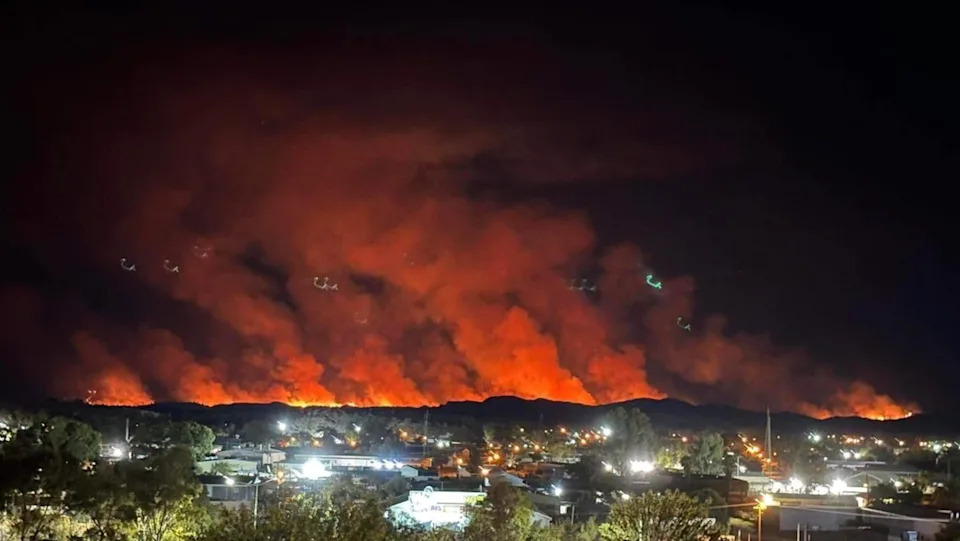
Fire fuelled by buffel grass in Alice Springs, Northern Territory. Source: Environment Centre NT
Buffel grass is ‘all anyone can talk about’ in the Arid Lands
Howey argues that buffel is the biggest environmental threat to the Arid Lands.
“It’s all anyone talks about in the Red Centre because it’s destroying what we love about these precious landscapes,” she said.
“Fuelling hotter fires, smothering native plants and damaging sacred sites, it’s been spreading like wildfire in recent years, leaving devastation in its wake.”
Native to Africa and Asia, buffel grass was introduced to Australia as cattle feed in the 1870s, but has since been declared a weed in South Australia and now the NT.
The Invasive Species Council’s Dr Carol Booth branded buffel one of Australia’s “most devastating invaders”, known for taking over vast areas and fuelling “fierce tree-killing fires”.
“It is an ecosystem transformer — turning diverse Australian plant communities into buffel monocultures, including in national parks and Indigenous protected areas,” Booth had earlier told Yahoo.
In 2023, the weed fuelled major bushfires in the Northern Territory that engulfed more than 13 million hectares of land and it fuelled one of the largest bushfires in US history on the Hawaiian island of Maui.
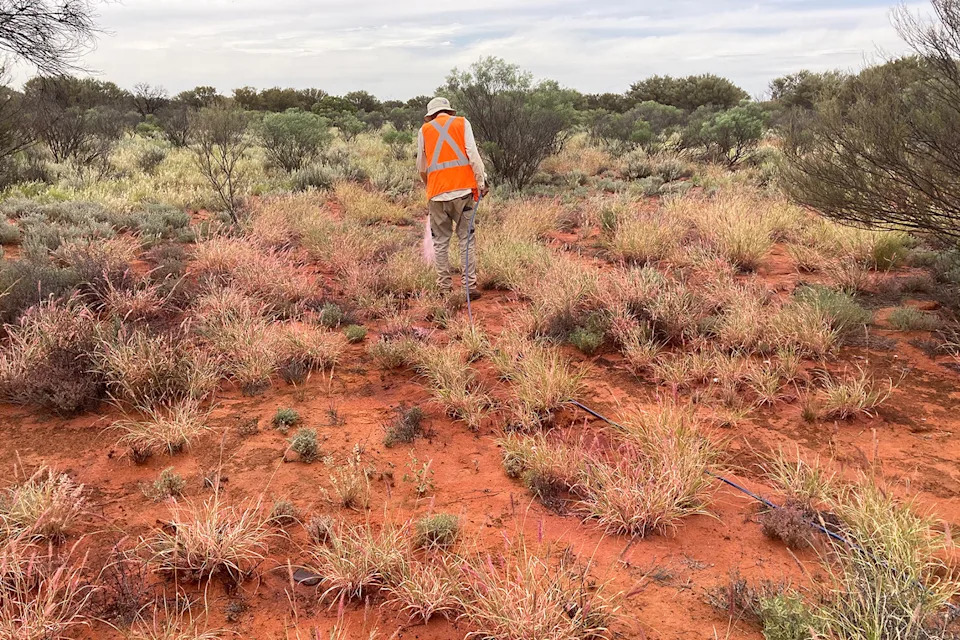
Treating buffel in remote areas is tough work. Source: Alinytjara Wilurara Landscape Board
Glaring contradiction in NT government’s plan
The NT Government officially committed $750,000 in ongoing annual funding for the management of buffel grass starting in 2024.
Howey said this exposes a glaring contradiction.
“We have a situation where one arm of government says you can plant an invasive weed, while another says, let’s spend money managing its spread,” she said.
Kathleen Herbert, Policy and Advocacy Officer with the Arid Land Environment Centre, agreed, describing the plan as “absurd.
She accused the Environment Minister Joshua Burgoyne of “ignoring the enormous concern from the community” by proposing the plan, which would see buffel planted “well into the future”.
“The proposed plan will exempt the entire pastoral industry from all ‘high-risk’ buffel activities,” she told Yahoo News.
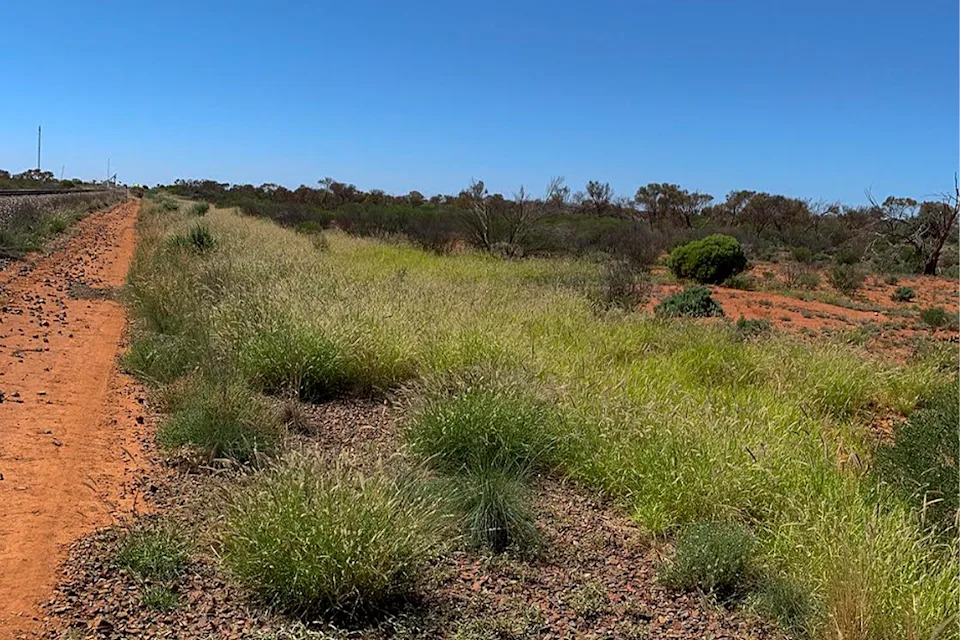
Buffel grass’s aggressive growth outcompetes native vegetation, leading to biodiversity loss. Source: Alinytjara Wilurara Landscape Board
Herbert believes the plan gives the pastoral industry “a free pass”, exposing Central Australia to worsening impacts of wildfires, ecological collapse and cultural heritage destruction.
“We need to draw a line in the sand and stop making the problem worse than it already is,” she said.
Yahoo News Australia has sought comment from the NT Government in relation to the concerns, but it did not respond to questions.
The public is invited to give feedback on the draft plan, and the public consultation period remains open until February 12. People can have their say here.
Why is buffel grass so destructive, and why do farmers use it?
The species’ aggressive growth outcompetes native vegetation, leading to the loss of biodiversity and threatening the survival of native plant species and wildlife.
The weed’s spread has also hindered access to cultural sites and reduced the availability of plants that Indigenous communities rely on for food and healing.
The National Farmers’ Federation (NFF), Angus Atkinson said buffel provides essential feed in arid regions where few other grasses can thrive.
He said it helps to sustain grazing operations during dry conditions.
Love Australia’s weird and wonderful environment? 🐊🦘😳 Get our new newsletter showcasing the week’s best stories.
