
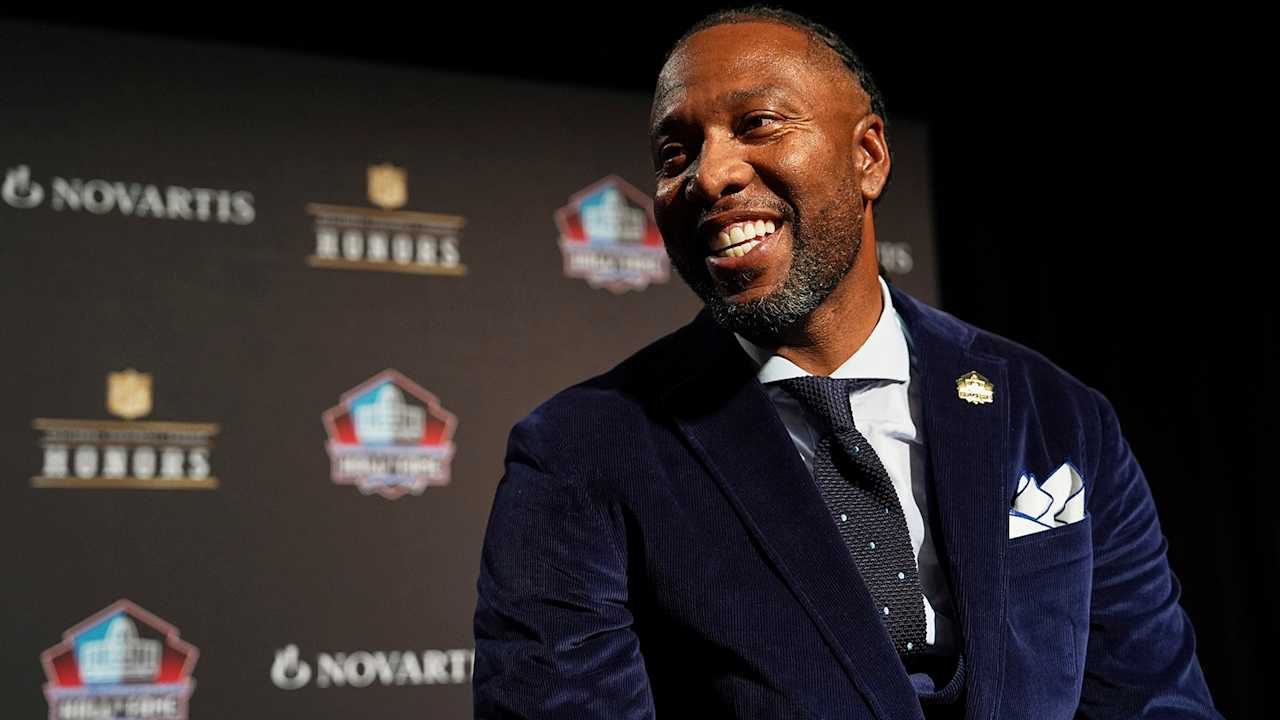
The numbers made it impossible not to immediately vote Fitzgerald in. At the top of the resumé were his receptions – 1,432 of them – and yards receiving – 17, 492 – that put him second in NFL history, both behind Rice.
There are more stats and reasons. Many more. Including:
A member of the NFL 100 team, made up of the 100 best players in the league’s history;
A member of the 2010s All-Decade team;
11 Pro Bowls;
NFL record eight seasons of at least 90 receptions;
NFL record of 17 seasons of at least 50 receptions;
Sixth all-time in touchdown catches (121);
His 1,432 catches were the most with a single team;
Led NFL in receptions twice and TD receptions twice
Most games (263) as a wide receiver with one team
His 546 receiving yards and seven receiving TD in 2008 Playoffs are both the most in a single postseason in NFL history;
Delivered the “Hail Larry” two huge overtime catches to beat the Packers in the 2015 Divisional playoff game.
It was that Super Bowl run in 2008 that Warner said changed everything for Fitzgerald.
“I thought for a long time he didn’t get the respect he deserved,” Warner said. “Until we went to the playoffs I think he was missed in the desert. No one really knew how good this kid was until they saw him on the big stage and it was like ‘Wow.’
“Those playoffs those couple of years really elevated him, and then (in 2015) he did it again.”
That was all on the field. Off it, Fitzgerald shunned the ability to move to a different franchise, spending all 17 years of his career with the Cardinals as the face of the franchise.
“As both a person and a player, Larry Fitzgerald is in a class by himself,” Cardinals owner Michael Bidwill said. “No one has represented the National Football League with greater consistency or distinction, on the field or off it. His selection to the Pro Football Hall of Fame in his first year of eligibility is a fitting reflection of that legacy. In Arizona, we were fortunate to have a front-row seat for all 17 of his remarkable seasons, and we are enormously proud to see him take his permanent place among the game’s all-time greats.”
Fitzgerald’s path wasn’t always smooth. He arrived as a hyped No. 3 overall pick in 2004, had his first 1,000-yard season in 2005. But it took time for Fitzgerald to evolve into the player he became.
That, as was found out Thursday night, was Hall of Fame-worthy.
“As a rookie you knew he had the talent to play the game and play it at a high level on a consistent basis, said Hall of Fame running back Emmitt Smith, a teammate during Fitzgerald’s first season. “His work ethic, he learned how to become a pro. He grew up around pros. He saw how pros should act and how pros should train and prepare to play week in and week out. I saw the potential.
“The one thing about potential, everybody has it, but not many people are willing to nurture it. He grew that potential, he developed it, he matured it, and he took advantage of it.”
That turned into 17 seasons with one team, connecting a kid who grew up in Minnesota and went to college in Pittsburgh permanently to the Valley of the Sun. It’s a connection Fitzgerald cherishes after carving out his Hall of Fame career.
“The reward is going to a restaurant in town and some person comes up to you and says ‘My father passed away five years ago and some of the best memories was watching Cardinals games with you.’
“That means more, that you were able to bring joy to people’s lives. They were on this journey with you.”