
Support CleanTechnica’s work through a Substack subscription or on Stripe.
Or support our Kickstarter campaign!

Lies about climate and renewable energy permeate the internet. The fact that our planet is warming has been proven in hundreds of different ways. Burning oil and gas, which are the deposits of ancient plants and animals, heats the planet and is destroying the unity of the Earth’s biosphere. But it’s difficult to convince others of this reality for a variety of reasons, including the new acceptance of alternative truths — that collision of facts derived from intensive scientific study in opposition to opinions widely disseminated that question climate science.
Some people’s adherence to these alternative truths about climate and renewables are based in personal satisfaction about today’s modern living standards, which they believe is a result of incremental industrial progress and its necessary engineering infrastructure.
Perhaps they see humanity’s place in the hierarchy of life on the planet as elite and unyielding — nature be damned, in other words.
It could be that they ascribe to cultural norms translated literally from ancient texts.
For some climate deniers, their misunderstandings emerge from social media algorithms designed by self-serving tech companies.
Renewable energies are also sometimes framed as a tool for social control, and people — especially in the US — hold dearly to their (perceived) independence.
To explain this in another way, we all hold certain values and work to ensure they’re met. To set aside these beliefs and look at them objectively means we would have to acknowledge that tech tools in our lives optimize more of the values we want. Whatever the reason, many people succumb to lies and continue to express disbelief in the relationship between burning fossil fuels and the omnipresent climate crisis that presses down on us.
What can we do to refute those alternative truths? Let’s debunk some of the most common misinformation that continues to permeate conversations in our current populist era.
“Your renewables are increasing my utility bill!”
Why is this point of view (POV) so prevalent? From CEOs to stockholders and politicians who need campaign donations, arguments have proliferated about the perils of renewable energy. Frank Carini writes in ecoRI News, for example, that Rhode Island’s “shortsighted governor, who is running for reelection” blames renewable energy incentives, programs, and mandates for high utility prices. Until polluters pay and the cost of oil and gas products reflects their actual price for degrading the planet, subsidies will continue to prop up burning fossil fuels while the public and environment suffer.
What can you say to debunk this POV? A growing body of research shows that the artificial intelligence (AI) boom in the US is the real source that is driving up electricity bills for everyday US consumers and could have unintended health and environmental impacts as well. Senator Sheldon Whitehouse (D-RI) explains that the average residential electricity price increased 13% in the first nine months of 2025 alone. Although some cost increases are associated with aging infrastructure, Whitehouse agrees, data centers have driven steep regional demand growth, leading to higher prices both in wholesale and retail electricity markets.
Calls for tech companies — not consumers — to pay for their own impacts on utility loads are becoming common. In the meantime, if we rethink our utility bills as a long-term investment rather than an isolated monthly expense, renewable energy wins out. It offers a cleaner and less expensive path as a return on investment (ROI).
“All this new electrification is damaging the grid!”
Why is this POV so prevalent? Blatant hypocrisy is taking place even as our world is on a precipice where a single degree more of average warming will be devastating to humanity and ecosystems. It’s become clear: core social media narratives shaping discourse around the climate crisis have persistent “stickiness” of mis- and dis-information, influencing people to disregard the danger of fossil fuels. Such narratives become even more mainstream, more violent, and more impactful through repetition. The grid that electrifies communities is a complex network, and no single technology innovation can be held to blame.
What can you say to debunk this POV? For much of the past two decades, the US power grid was defined by flat electricity demand, declining coal generation, and fewer carbon emissions, as Michael Thomas writes in his newsletter that focuses on reporting about the politics of climate change. Rapid demand growth resulting from data centers is the single greatest threat to the reliability of the electric grid — not electric vehicles or heat pumps.
The share of electricity serving data centers is expected to triple from 2023 levels, accounting for 11.7% of US power demand. Such data center growth will drive up energy costs and degrade reliability. Calls for tech companies — not US consumers — to pay for their own impacts on utility loads are becoming common.
Renewables are persuading consumers and energy industry leaders to reconsider and redesign wholesale markets, because renewables reduce the revenues paid to fossil fuel power plants. Consistent with this thinking, we need to decarbonize the power grid with expediency. It must be done with caution, forethought, and consumers in mind. It can start with local, state, and federal government structures that focus on consumers over special interests, on ethical policies over tech greed, and on consistent standards for renewable energy and fossil fuels.
“Electric vehicles catch fire and are dangerous.”
Why is this POV so prevalent? Often, rushes to judgment about electric vehicle (EV) battery fires arise from isolated cases. The primary fear expressed is that EV batteries will explode during an accident, impact, or extreme weather conditions and erupt into fire, which might require several different approaches to extinguish.
What can you say to debunk this POV? For anyone concerned about EV safety, it’s important to know that commercially available electric drive vehicles must meet the Federal Motor Vehicle Safety Standards and undergo the same rigorous safety testing as conventional vehicles sold in the US. In the EU, EVs must be inspected every two years to ensure they are roadworthy. They must have specific safety features, such as a high-voltage interlock and a fail-safe mode. Electric vehicle misinformation is designed to hide the benefits of EVs: when drivers adopt an EV, they help clean the air, fight rising electricity prices, and sell more EVs, which creates a positive cycle, over and over. Also, research has consistently shown that electric vehicles are typically safer overall than non-electric vehicles.
It must be stated and restated that EVs are greener than gas- or diesel-powered vehicles. That’s because electric vehicles have zero emissions. Period. And electricity used by electric vehicles is becoming greener over time as coal and natural gas power plants are phased out and replaced with solar power, wind power, geothermal power, and battery storage. Fossil fuel vehicles can’t get any cleaner — they can become more fuel efficient, but they will always be tied to excessive carbon and methane and benzene emissions, among other harmful emissions.
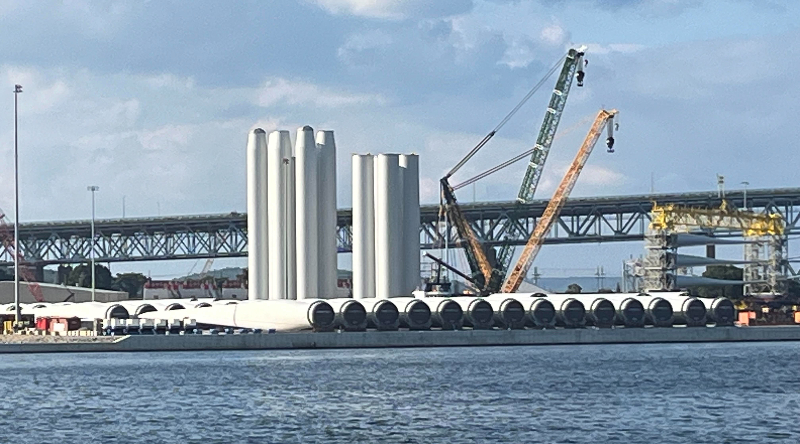
“Windmills kill birds! And they ruin views from the shoreline.”
Why is this POV so prevalent? Opposition to offshore wind projects along the coast — and the arguments used — can be traced back to Robert F. Kennedy Jr.’s fight against wind turbines in the Nantucket Sound near his family’s Cape Cod estate. And then there’s Trump’s grudge about his golf course view. Five years before he first became US president, it was one of his earliest interventions on renewable energy, according to BBC News. Since then his opposition to them has grown to become government policy in the world’s biggest economy. He was objecting to eleven turbines which were planned – and ultimately constructed – alongside his Aberdeenshire golf course. On his latest visit to Scotland, he described those turbines as “some of the ugliest you’ve ever seen”.
Alternative truths about renewables like wind turbines are a product of digital climate deception. Cleverly designed, nuanced, and visually appealing graphics that look a lot like real scientific figures and charts depict bird deaths from wind turbines. These misrepresentations are so realistic that their underlying content is difficult for viewers to assess for authenticity. Those viewers are more likely to then dismiss scientific evidence of human-caused climate change.
Top shared social media posts frequently use short videos of alleged incidents involving renewable energy equipment, especially wind turbines. Decontextualized footage featuring alleged accidents often spreads rapidly and requires time-intensive fact-checking. In many cases the accusations cannot be sourced using standard tools (e.g. reverse image search). This means social media users have little recourse to verify claims.
What can you say to debunk this POV? First of all, use the term “wind turbines” in discussions of onshore and offshore wind power. The alternative truths about “windmills” are throwbacks to the quaint Dutch countryside but have little actual relation to today’s complex wind installations.
Then talk about the attributes of offshore wind, which:
tends to generate the most power on winter evenings, when methane demand and power prices are at their highest, such as in New England;
reduces electricity customers’ bills by about $630 million annually;
cuts the amount of money US states in the proximity of offshore wind turbines spend on methane (ie. “natural gas”) for power generation;
improves energy security by reducing a region’s reliance on methane pipelines, which often reach their maximum capacities during cold weather;
reduces carbon dioxide emissions from electricity generation; and,
provides annual public health benefits by avoiding nitrogen oxide, sulfur dioxide, and fine particulate matter emissions.
Keep in mind that, if there is one blatant disconnect in the Trump administration’s dismissal of wind energy, it’s the fact that moves to stall progress on offshore wind lead to higher electricity prices. For example, the State of Connecticut estimated that the Trump Administration’s plan to cancel Revolution Wind, which is already 80% completed, would cost electricity customers across New England, including Maine, $500 million per year in higher supply costs.
Oh, yeah. And no top corporations that receive government subsidies have a direct link to offshore wind. That’s a really important talking point.
Final Thoughts: Alternative Truths Threaten our World
The prevalence and nature of online climate and renewable energy dis- and misinformation continues to rage on unabated. Talking points that dismiss the clean energy revolution continue to generate high audience engagement. They falsely claim renewable technologies are inefficient, unreliable, dangerous, prohibitively expensive, or do more harm than good to wildlife and natural habitats. Increasingly, renewable energies are also framed in line with wider conspiracy theories.
In an attempt toward shaping discourse that reflects actual climate reality, 55 climate information integrity groups and 42 leading climate scientists and experts have signed an open letter that urges countries to counter the risk of false and misleading claims that are wrecking efforts to mitigate climate change and get us to a net zero world.
Resources
“Don’t blame renewable energy for escalating electricity costs.” Frank Carini. ecoRI News. January 29, 2026.
“How Trump’s loathing for wind turbines started with a Scottish court battle.” Kevin Keane. BBC News. July 29, 2025.
“Reed & Whitehouse seek answers about how new regional data centers could drive up energy, health, & environmental costs for consumers.” Sheldon Whitehouse, US Senator for Rhode Island. January 29, 2026.
Support CleanTechnica via Kickstarter
Sign up for CleanTechnica’s Weekly Substack for Zach and Scott’s in-depth analyses and high level summaries, sign up for our daily newsletter, and follow us on Google News!
Advertisement
Have a tip for CleanTechnica? Want to advertise? Want to suggest a guest for our CleanTech Talk podcast? Contact us here.
Sign up for our daily newsletter for 15 new cleantech stories a day. Or sign up for our weekly one on top stories of the week if daily is too frequent.
CleanTechnica uses affiliate links. See our policy here.