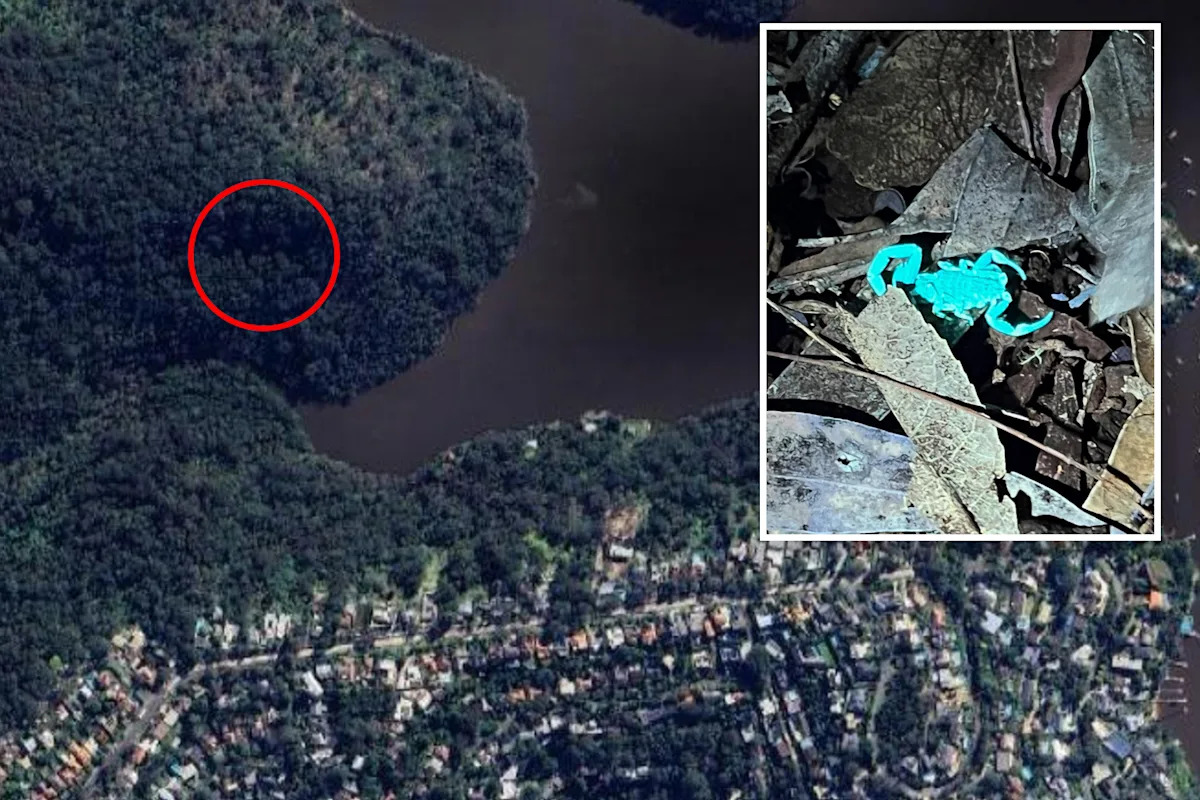
A council worker and his son made an “exciting” discovery while enjoying a night walk through a suburban reserve. Keen to take advantage of his day off from work, the man and his child headed to the Harold Reid Reserve, on Sydney’s Lower North Shore, for a wander.
But the casual stroll got a little more thrilling when the pair spotted a bright blue little marbled scorpion trying to conceal itself in a pile of leaf litter on the ground.
While the glowing creatures can be found across much of southern mainland Australia, this incident is especially thrilling as it’s the “very first time” the species has officially been recorded in the Willoughby council area.
The council told Yahoo News Australia the surprise find is expanding authorities’ understanding of the area’s biodiversity, and “suggests that the reserve is becoming a more welcoming habitat for native species”.
Discoveries such as this “highlight the quiet successes of ongoing ecological management”, Willoughby City Council said, adding it has more than 270 bushcare volunteers.
Important regeneration work in the area, such as improving ground cover and reducing disturbance, creates the ideal conditions for native animals to survive.
“Finds like this highlight the hidden biodiversity in our local bushland and show how much there still is to learn, even in well-visited reserves,” the council said while revealing the find online.
“Nighttime discoveries like this can reveal species we rarely see during the day.”
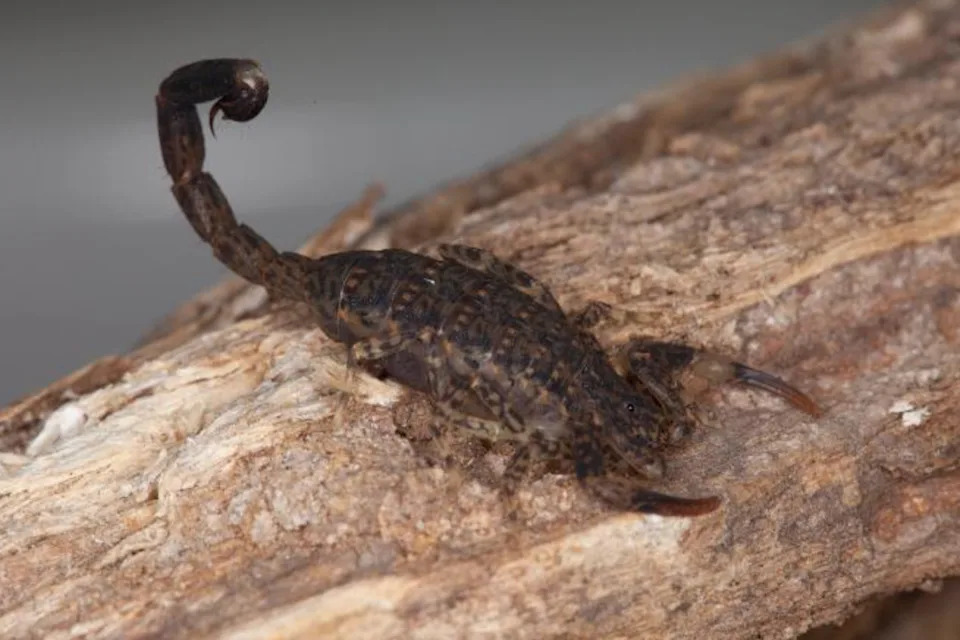
Little marbled scorpions have a brown-yellow body but, like most scorpions, they fluoresce under UV light. Source: Museums Victoria/Atlas of Living Australia
What are little marbled scorpions?
Little marbled scorpions (Lychas marmoreus) have a brown-yellow body but, like most scorpions, they fluoresce under UV light.
The species glows a vibrant blue-green, grows up to 40mm in length, and is generally shy.
“While they may sting if handled or threatened, their sting is usually mild, comparable to a bee sting. The best approach is to admire them from a distance and leave them undisturbed,” the council said online.
Marbled scorpions feed on small invertebrates and prefer cooler, wetter climates, but unlike other species, they may form groups of 10 or more under bark on eucalypt trees, according to the Atlas of Living Australia.
The recent sighting has been recorded on iNaturalist. Others lucky enough to spot one themselves are encouraged to add their own encounters.
Do you have a story tip? Email: newsroomau@yahoonews.com.
You can also follow us on Facebook, Instagram, TikTok, Twitter and YouTube.