
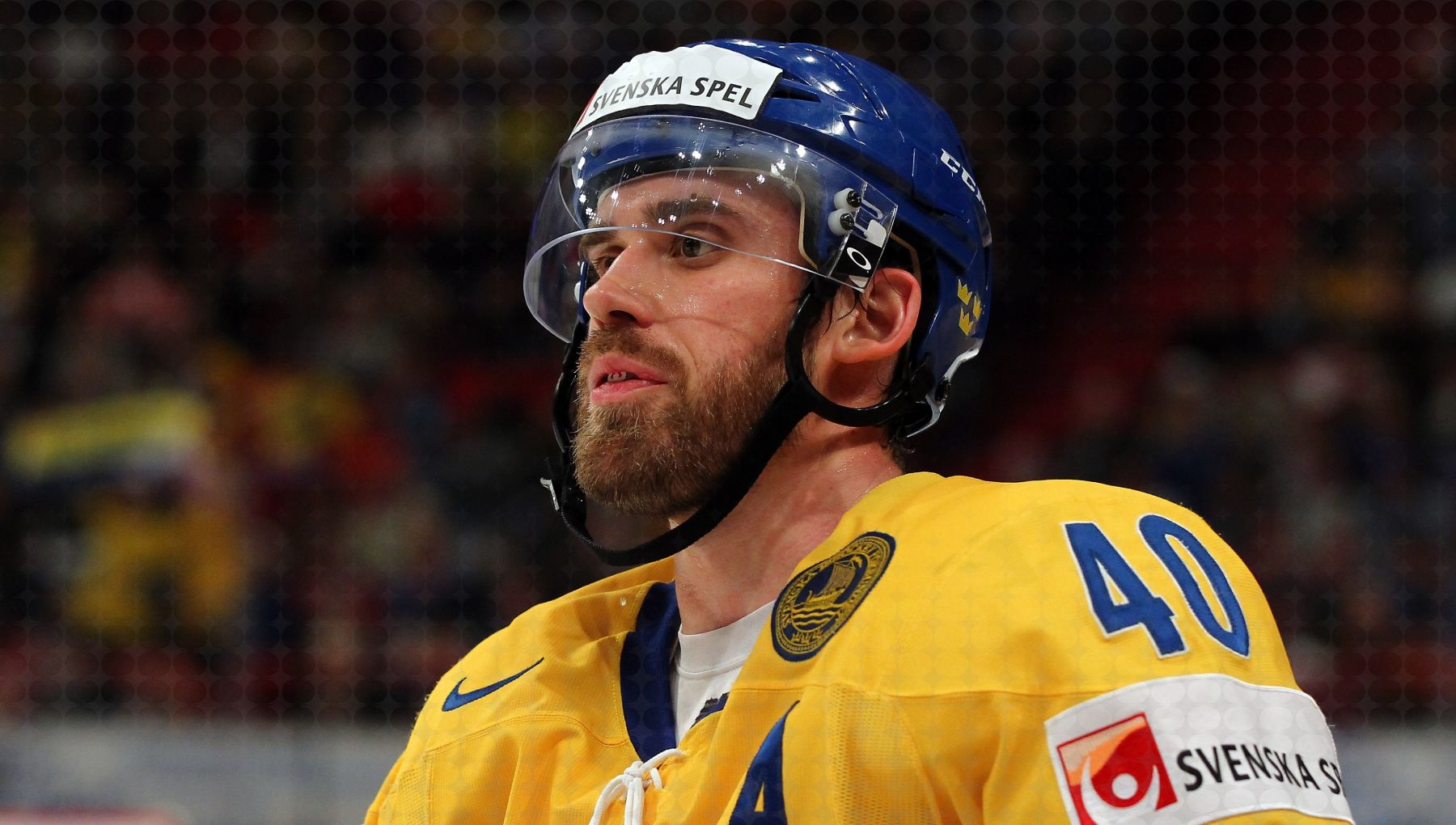
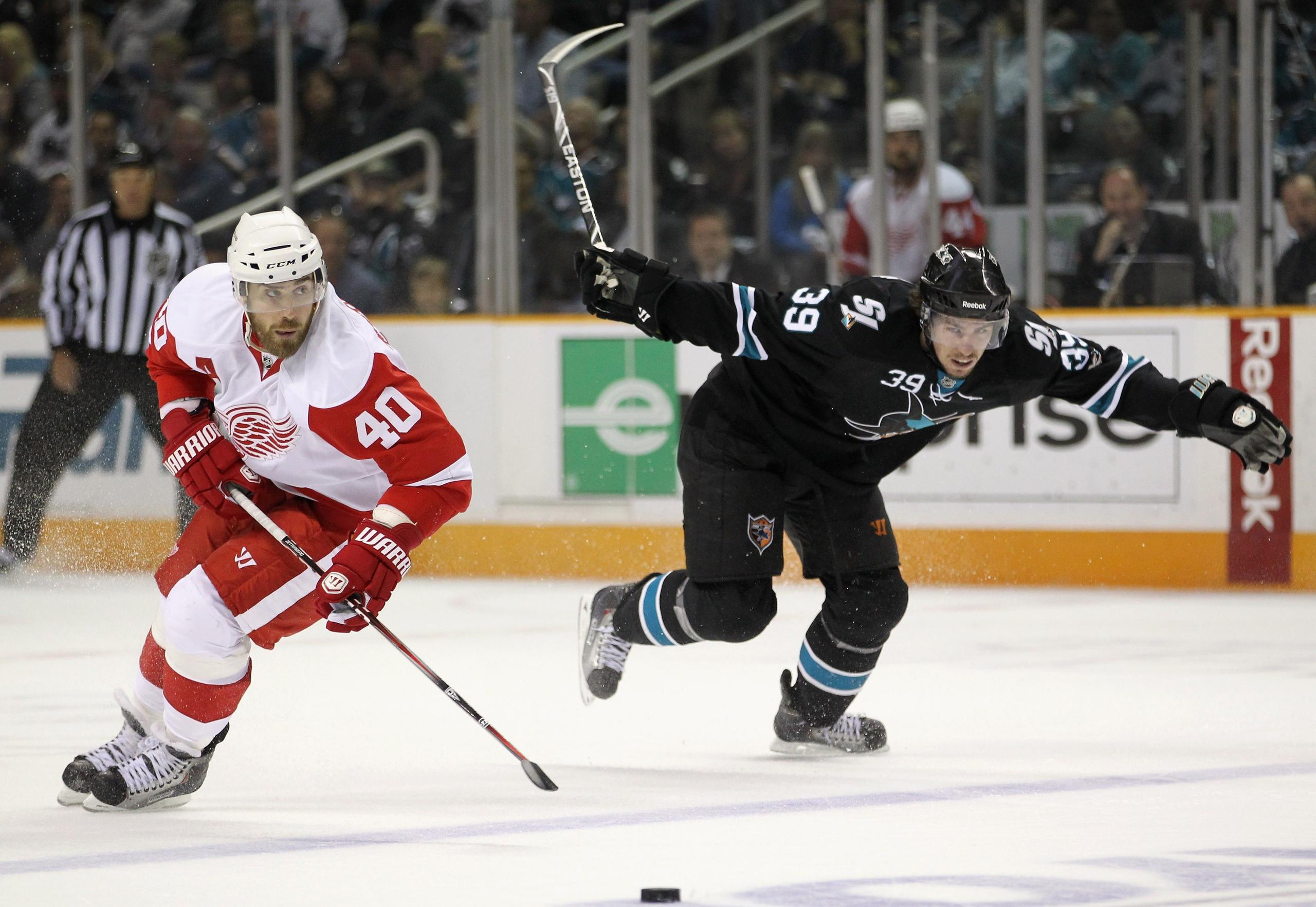
Henrik Zetterberg (Photo by Ezra Shaw/Getty Images)
Henrik Zetterberg spent his entire NHL career in one place, but these days he’s spread across continents, leagues, sports, and his many endeavors. Always insightful but never seeking the spotlight, Zetterberg spoke exclusively and extensively with RG Media about his life after retirement, the Detroit Red Wings, Team Sweden, and the modern NHL.
Career Highlights That Still Stand Out
Zetterberg joined the defending champion Wings in 2002, winning the Stanley Cup in 2008 and coming within an eyelash of repeating in 2009. In between, he completed his Triple Gold conquest with World Championship and Olympic triumphs in 2006, having already prevailed at the World Juniors.
“To go all the way and win the Cup, it’s hard to highlight anything else. To do that in that way with that group, it tops my list. And going through that against the Penguins, it’s crazy that it was that long ago. When I think about it, it feels like it was a couple of years ago. But that’s how it goes when you get older,” Zetterberg said.
“I must say that, and then the Olympics, obviously, too. It’s such a hard tournament to go all the way,” he added.
“Also, when we made it up to the Elitserien, the highest Swedish league, with Timrå in 1999–2000. That was my first real thing that we won as a player, and to do that and make it to the highest league with Timrå and all the fans and all that was very, very special, too.”
Life After Retirement
Today, Zetterberg works closely with Timrå and its general manager, Kent Norberg, while also keeping a watchful eye on the Wings, staying in touch with his former teammates, including vice president of hockey operations Nicklas Lidström and Zetterberg’s business partner, Niklas Kronwall. Zetterberg said he had been involved with Timrå “in the background” since his retirement in 2018 but has moved more toward the foreground of an organization that has been “close to his heart” since his prospect days, when Norberg was an assistant coach and later an executive with the franchise.
Zetterberg also studies the contemporary NHL from afar, living in southern Sweden and traveling several times a year to the United States. Some of his former adversaries, including the Penguins’ core of Sidney Crosby, Evgeni Malkin, and Kris Letang, are still absorbing the bumps and bruises at ice level.
“When I see these guys that I fought with during my career who are still playing, it’s amazing. Hats off to them that they can, first of all, stay healthy. You have to put your time in, and it’s not just on the ice, it’s off the ice – not just during the season but during the offseason,” Zetterberg said. “I know how much time I had to put in just to be relevant for the last couple of years. These guys are not just playing; they are actually doing something good on the ice, too.”
“Everything goes faster now, and it’s incredible having these guys from my era that still play – and not just play, but they are still good. They can play with these young guys night in and night out,” he continued. “But also it’s just about their hockey minds. You have to be smart. The thing that they have the upper hand on, maybe, is the way that they can slow the game down.”
The Modern Game and Olympic Outlook
Zetterberg’s complete skill set and methodical approach made him a two-way force in the land of flying octopi, as he adapted his game across eras and through numerous injuries. The pro game changes noticeably every year, and those shifts can add up quickly, as they have in the eight years since his departure from the top level. Gone are many of the precise, intentional plays; here are area passes, flicks to the net, and other hopeful maneuvers. Zetterberg, however, sees that elite attackers are still able to freeze time for an instant and create something more purposeful.
“In my mind, Connor McDavid is outstanding at this. He has super, super speed, but he can also slow the game down, and that is a skill that is unique. Leon Draisaitl, the same – he can slow the game down a little bit, and that’s something that I wish we had more of because you can do stuff at full speed, but also control the game,” Zetterberg said, also mentioning Detroit veteran Patrick Kane. “They can take control of the puck when they have it, and they can dictate whatever happens.”
Naturally, Zetterberg is looking forward to the best-on-best clash in Milan this month, where Sweden will take to the Olympic ice looking to bounce back from a tepid showing at last year’s 4 Nations Face-Off and a bronze medal as the host of the World Championships.
“Sweden, Finland – let’s say all nations except the U.S. and Canada – we’re not as deep as the North American teams.
We have to be lucky with injuries; we’ve got to be healthy in terms of the key guys. That’s the biggest difference,” Zetterberg said. “With Sweden, Finland, the Czechs, etc., if everyone is healthy, then they can win one game against the U.S. and Canada, the main favorites. You just have to make sure you play your best hockey and have as much luck as you can have. There are a few teams that could bring home the gold.”
Part II of RG’s interview with Zetterberg will run on February 18 and focus on the state of the Detroit Red Wings.
From February 2–8, Bet99 offers Futures Boosts across NBA, NHL, and NFL — get profit boosts on select Major Awards and futures markets with minimum odds of +200 (3.0).