
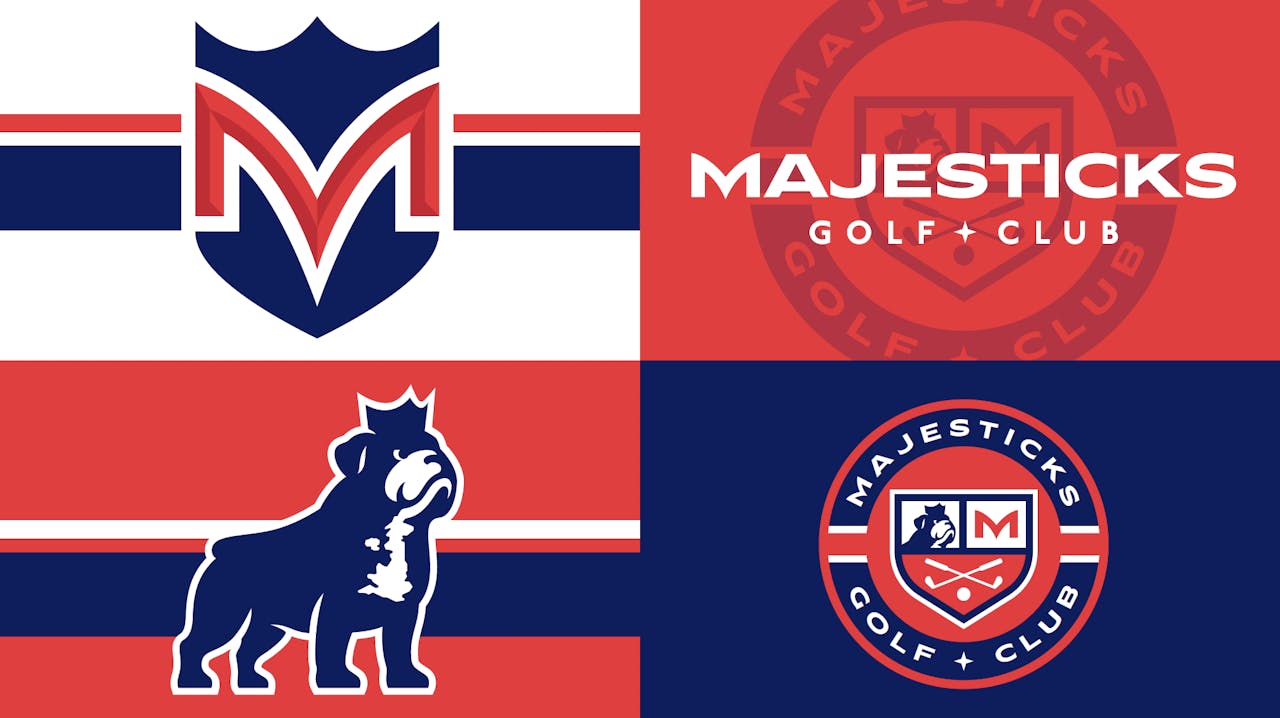
As the new LIV Golf season tees off in Riyadh, the all-Brit franchise has unveiled a new brand that, its team principal tells The Drum, is bold and brave and will help LIV become a leader in growing the next generation of sports fandom.
There was a time when golf brands were built like their clubhouses – oak-panelled, steeped in tradition and largely immune to change. That time, increasingly, is over, as LIV Golf proved when it launched its assault on the PGA’s monopoly four years ago.
As sport fragments into faster formats, creator-led content and always-on fandom, the teams that thrive aren’t just competing on courses, courts and pitches. Today, they’re all ultimately competing for culture. And that’s the lens through which LIV Golf’s Majesticks Golf Club has unveiled its new identity for 2026 – an identity that swaps generic team aesthetics for something sharper, prouder and deliberately more recognisable.
Classic red, white and blue. A modern shield. A bulldog motif. And an all-British playing line-up.
For Majesticks GC team principal James Dunkley, it’s less refresh and more declaration of intent. And, as he tells The Drum, the move wasn’t sparked by a desire to simply look different. It started with a harder question: who are we, really?
“We kind of embarked on this piece of work to identify who we were,” he explains. “The common themes were about being pioneers, being defiant, being brave. One of the quotes from the research was: ‘Tell me ‘no’ and we can be motivated.’ That gave us a really clear brand identity.”
From logo to logic
In other words, the logo came last. After three seasons in the league, Majesticks had equity, but not genuine clarity. The original brand was recognizable but, in Dunkley’s view, didn’t fully express the mindset of a team that had jumped early into a challenging and often controversial new golf format and helped build a startup sports property from scratch.
“This evolution of the brand is about authenticity and purpose,” he says. “Aligning our visual identity with our roots, our values and the makeup of our team allows us to tell a clearer, more powerful story.”
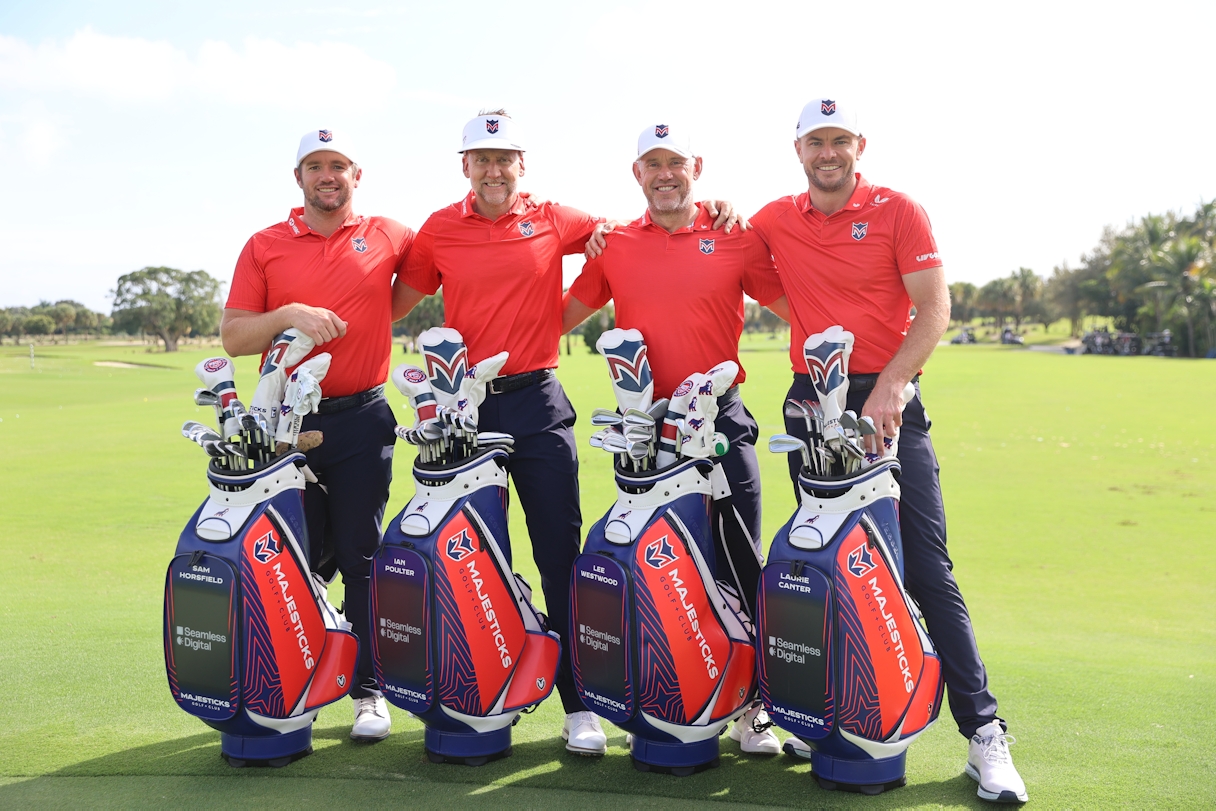
That story now leans into British sporting heritage without tipping into pastiche. The shield nods to tradition, but is stripped back and modern. The colour palette echoes the Union Jack and the talent line-up – former world number one Lee Westwood, Europe’s Ryder Cup hero Ian Poulter, exciting young pro Laurie Canter and three-time DP Tour winner Sam Horsfield – balances experience with emerging talent.
And in a league built on teams (Legion XIII, Crushers GC, Fireballs GC and 4 Aces to name a few) rather than individuals, distinctiveness matters. Dunkley is blunt about the commercial rationale. For him, it’s about instant recognition on the practice range, stronger recall in research and, ultimately, stronger merchandise sales and memberships.
“I think one of the measures of the rebrand’s success will simply be: are we instantly recognizable when the team is out there?” he says. “If you walk across the driving range, you’ll know instantly it’s Majesticks hitting balls.”
Want to go deeper? Ask The Drum
 The bigger shift – sport as entertainment property
But this isn’t just a golf story. It’s part of a broader recalibration across sport. Traditional formats still matter, but they’re no longer the only show in town. Newer properties are experimenting with pace, presentation and personality – from the short-form theater of pro snooker shootouts, where players are on the clock, to the influencer-fuelled energy of football’s Baller League, which is taking Europe and the US by storm.
Each is chasing the same prize – younger audiences who expect sport to feel closer, louder and more shareable. Dunkley sees LIV playing a similar role for golf.
“The LIV Golf live experience is extremely different from the traditional live golf experience,” he says. “There’s music playing, it’s far less intimidating and much more festival-like. It’s just more accessible for families and for people who are newer to the game.”
It’s the Twenty20 cricket analogy all over again: shorter, punchier formats that act as an on-ramp, not a replacement. Hook people in with entertainment, deepen the relationship through content and then monetize it through commercial partnerships and sponsorships, which go full circle to fund the whole show.
For brands, this seismic shift in sport opens new doors. A franchise team with a defined identity, a content engine and a membership base starts to look less like a tournament sponsor and more like a media platform.
Content first, broadcast second
That’s where Majesticks’ strategy gets interesting. The tournament is just one touchpoint. The real battle is for attention between the actual events.
“Just having live broadcast of the tournaments and not being able to lift the curtain and show people who you are is simply not enough any more,” Dunkley says. “Content is massive for us.”
Social introduces the team. Longer-form video builds fandom. Behind-the-scenes access, preparation rituals and raw reactions become the connective tissue. In other words, it’s personality over polish.
For commercial partners, that’s gold dust. A challenger AI brand or tech player can plug into an ongoing narrative rather than a single logo placement.
“I think the bigger thing is having a clear identity that people want to be associated with,” Dunkley adds. “Brands that are pioneering or challenger-minded align naturally with us.”
Building a golf club without a course
Perhaps the most telling metric isn’t broadcast reach or even trophies. It’s community. Majesticks talks about itself as a “golf club without a golf course,” with around 50,000 members and regular physical and digital events. That language feels less PGA, more startup.
It’s also a clue to where sports brands are heading – away from one-way spectatorship and towards belonging. Fans don’t just watch. They join, interact, buy, comment, show up. The rebrand, then, is less about aesthetics and more about giving that community a flag to rally around. A moment that makes sense
With LIV entering its fourth full season, broadcast deals expanding (LIV Golf is now available on TNT and Discovery+ in the UK and Ireland) and with the early turbulence settling, this feels like the point where teams can move from ‘new’ to ‘established.’ From insurgent to institution. Majesticks’ identity – proud, defiant, unmistakably British – mirrors that transition.
It’s a signal that the franchise doesn’t just want to exist inside a disruptive league. It wants to outlast it. In the end, that’s the bigger takeaway for marketers watching from the sidelines. Sport isn’t just rights and reach any more. It’s story, symbolism and community architecture.
Get those right and the badge becomes more than decoration. It becomes shorthand for everything a fan – or a sponsor – wants to belong to. For Dunkley’s Majesticks, the shield is just the start.