
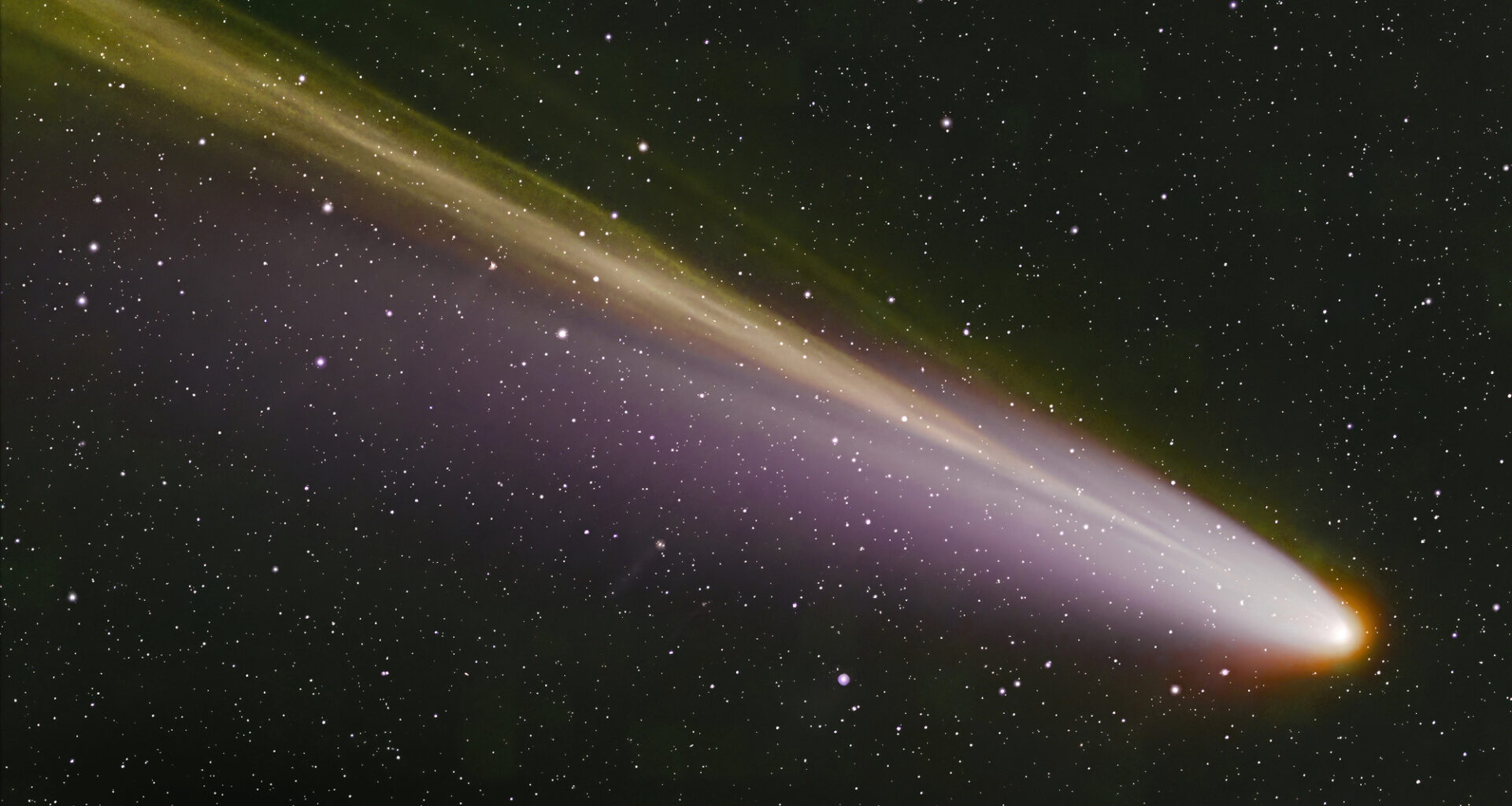
A newly discovered comet is racing towards an extremely close encounter with the Sun, and while the odds are stacked against it, astronomers are watching closely. The object, known as Comet C/2026 A1 (MAPS), could either vanish without fuss or briefly become one of the most striking sights in the sky this decade.
A Discovery That Changed Expectations
What makes this comet unusual is not its current appearance, which is faint and unimpressive, but how early it was found.
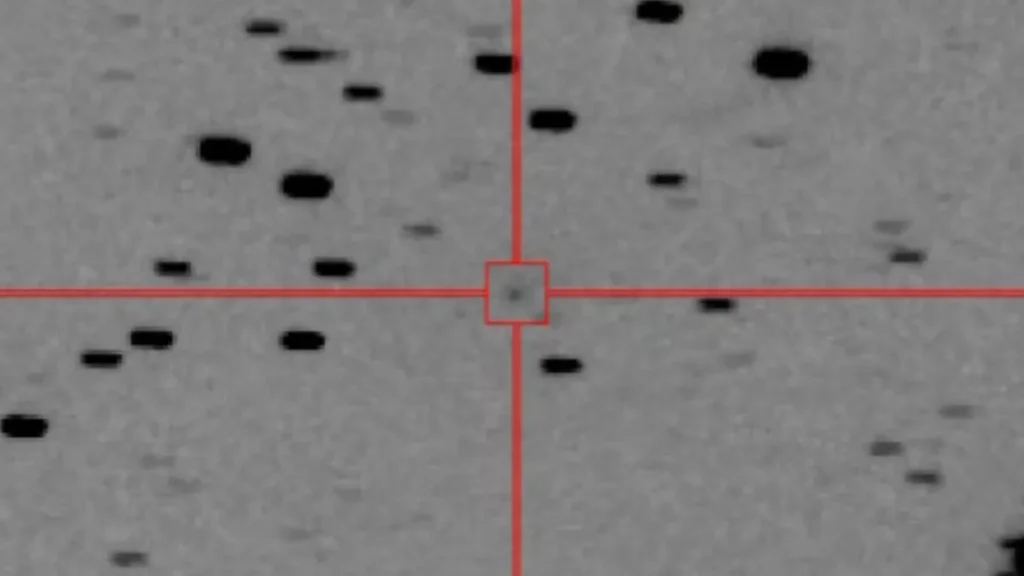
Most comets on similar paths are only detected days or weeks before destruction. C/2026 A1 was spotted in mid-January from Chile, more than two months before its closest solar approach. That long lead time immediately raised eyebrows.
 Credit: Denis Huber/Wikimedia Commons/CC BY-SA 4.0)
Early detection often hints at a larger nucleus. Size matters. For comets that skim the Sun’s surface, being big can mean the difference between total disintegration and a fleeting burst of brilliance.
A Dangerous Solar Fly-By
In early April, the comet will swing to within roughly 160,000 kilometres of the Sun’s surface. At that distance, temperatures soar into the thousands of degrees, while intense tidal forces attempt to tear the comet apart. Many such objects are destroyed completely, leaving behind nothing more than a streak of dust.
This extreme orbit places the comet in the Kreutz sungrazer family, a group infamous for both spectacular successes and quiet failures. Some members have produced daylight-visible displays in the past. Most never survive.
Why Opinions Are Split
Not all astronomers agree on what will happen next. Some point to the comet’s faint intrinsic brightness as a warning sign, suggesting it may be too small or fragile to endure the encounter. From this perspective, survival beyond perihelion would be unlikely.
Others are more optimistic. Sungrazers behave differently from typical comets, and their brightness can increase rapidly as they near the Sun. A mid-sized object could shed material dramatically, creating a bright tail even if the nucleus itself is doomed.
When We’ll Know More
The next few weeks are crucial. By early March, astronomers should see whether the comet’s activity is increasing at a promising rate. If it does brighten significantly and survives its solar fly-by, it may become visible to the naked eye in mid-April, low in the western sky after sunset.
That outcome is far from guaranteed. But in comet-watching, uncertainty is part of the appeal!
 Published by Kerry Harrison
Kerry’s been writing professionally for over 14 years, after graduating with a First Class Honours Degree in Multimedia Journalism from Canterbury Christ Church University. She joined Orbital Today in 2022. She covers everything from UK launch updates to how the wider space ecosystem is evolving. She enjoys digging into the detail and explaining complex topics in a way that feels straightforward. Before writing about space, Kerry spent years working with cybersecurity companies. She’s written a lot about threat intelligence, data protection, and how cyber and space are increasingly overlapping, whether that’s satellite security or national defence. With a strong background in tech writing, she’s used to making tricky, technical subjects more approachable. That mix of innovation, complexity, and real-world impact is what keeps her interested in the space sector.