Games expert Nicole Jeffery is at the high-altitude ski resort of Livigno in the Italian Alps to report on the Olympic freestyle and snowboarding events where the majority of Australia’s medal chances lie. Nicole rates Australia’s top eleven contenders.
Every Olympic Games begins in hope.
The Australian team has arrived at the Milano-Cortina Games as the biggest and best-credentialed Australia has sent to the Winter Olympics – 53-strong and boasting more medal chances than ever.
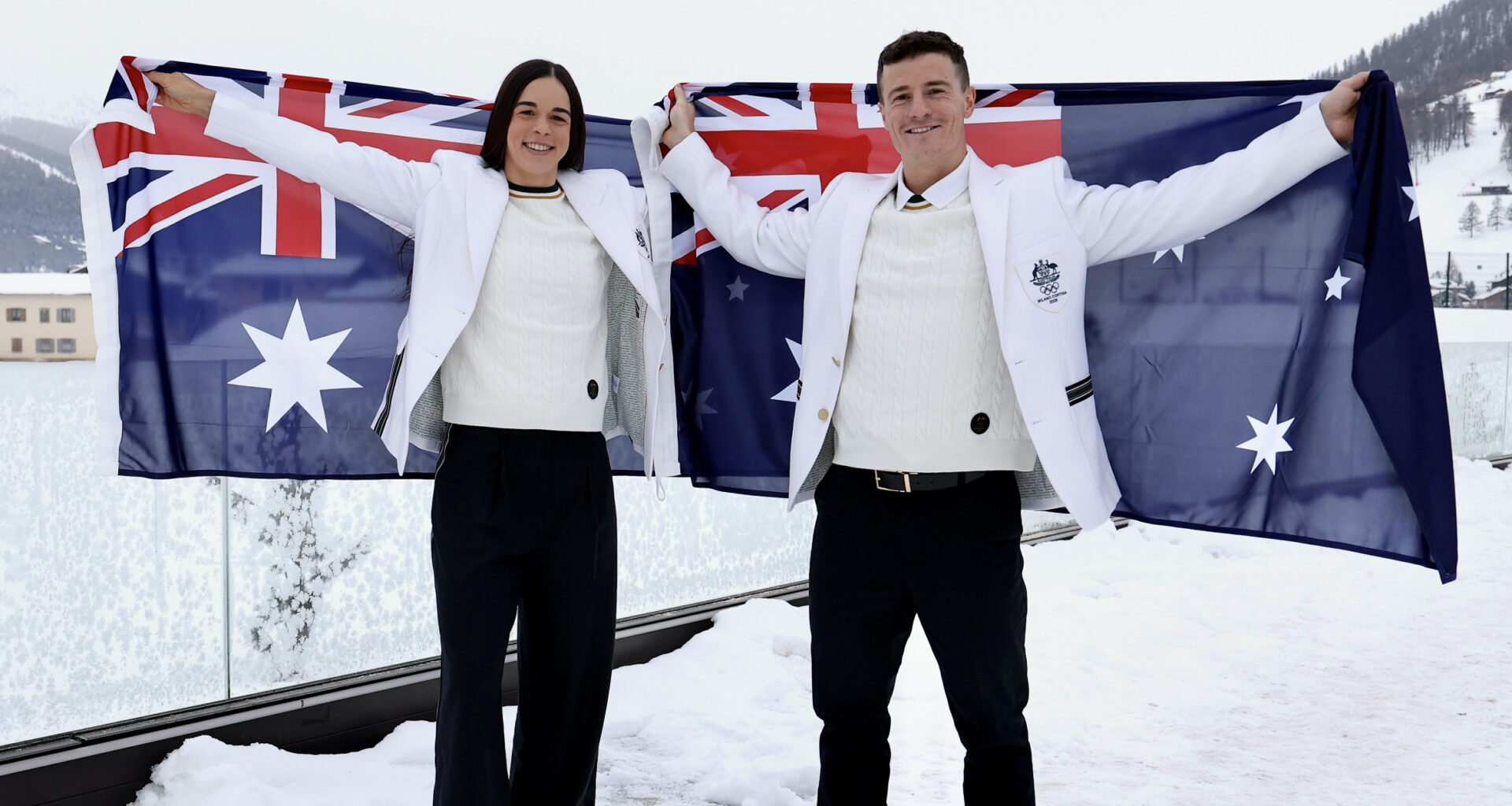
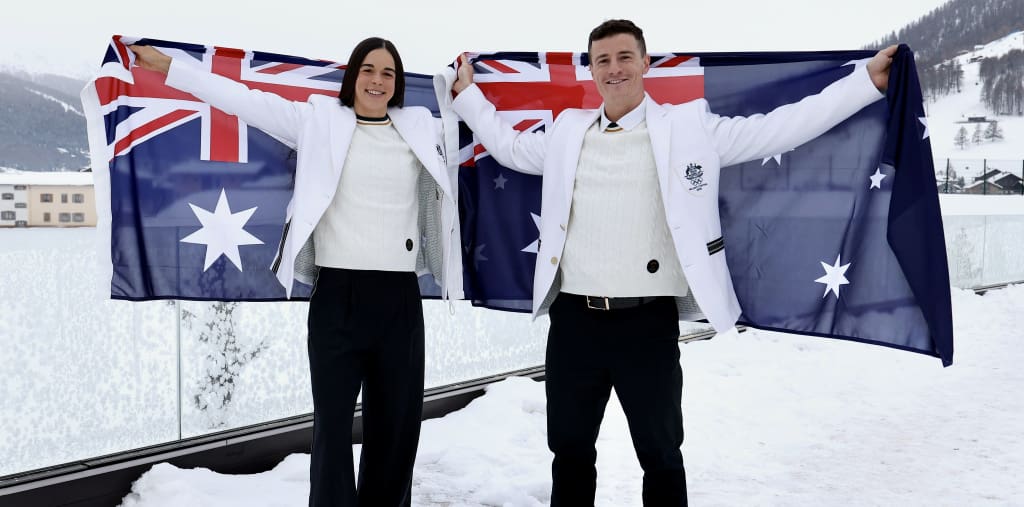 Australia’s Winter Olympics flag bearers Jakara Anthony and Matt Graham are both strong gold medal hopes. Image: Cameron Spencer/Getty
Chef de Mission Alisa Camplin describes it as “a once in a generational team because we’ve never had such breadth and depth”.
The leading athletes, led by four-time world halfpipe champion and X Games supremo Scotty James and defending Olympic moguls champion Jakara Anthony, have carved up the competition in the World Cup season that preceded the Games.
Eleven different athletes have combined to claim 26 World Cup medals, including 13 gold across eight disciplines – aerial and moguls skiing, big air, slopestyle and halfpipe snowboarding, halfpipe skiing, monobob and snowboard cross.
At the last 2022 Beijing Winter Games, Australia won a record four medals – Anthony’s gold in moguls, silver for James in snowboard halfpipe and the now-retired Jackie Narracott in skeleton, and bronze for Tess Coady in snowboard slopestyle.
Each northern winter since then, Australia’s winter athletes have been building momentum on the World Cup circuit, and there are prospects of another record tally in Italy.
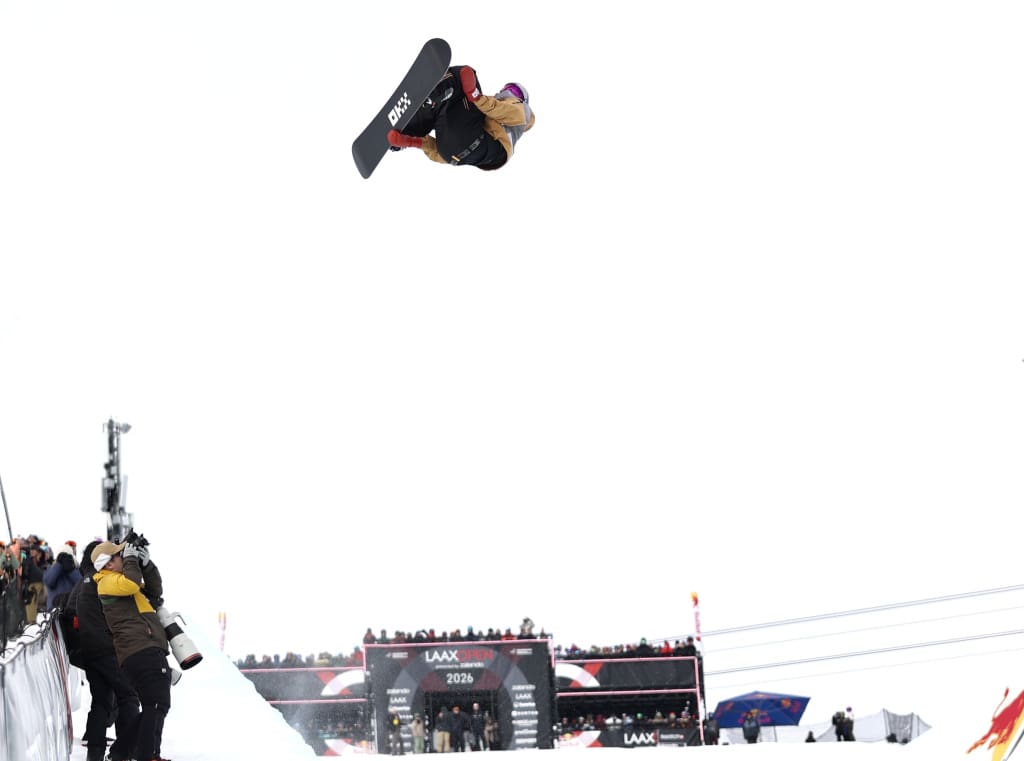 Four-time world halfpipe champion Scotty James at the Laax Snowboard World Cup earlier this year. Image: David Tributsch/FIS Snowboard
Camplin won’t make predictions but she does point to the progress made since Beijing (more than 145 World Cup and World Championship medals between Games).
“The experience and performance breadth that we have is something we’ve never gone into a Games with before,’’ she says. “It doesn’t mean it’s going to be easy for conversion, because we know at the Olympics on any given day, anything can happen.”
The conversion from promise to podium is the key to success for every team. And winter adds a whole new layer of unpredictability to Olympic sport, due the extreme nature of most outdoor events. The Winter Olympics was extreme sport before the term was even coined.
Camplin, Australia’s first aerial skiing gold medallist at the 2002 Salt Lake City Games, knows the terrain as well as anyone. She says the key to converting hope into precious metal for the medal contenders is to stay calm and carry on.
“One of the things that makes the Winter Olympics so thrilling is the unpredictable nature of the outdoor environment, and sometimes you can just be a little bit lucky or unlucky in a winter sport,’’ she says.
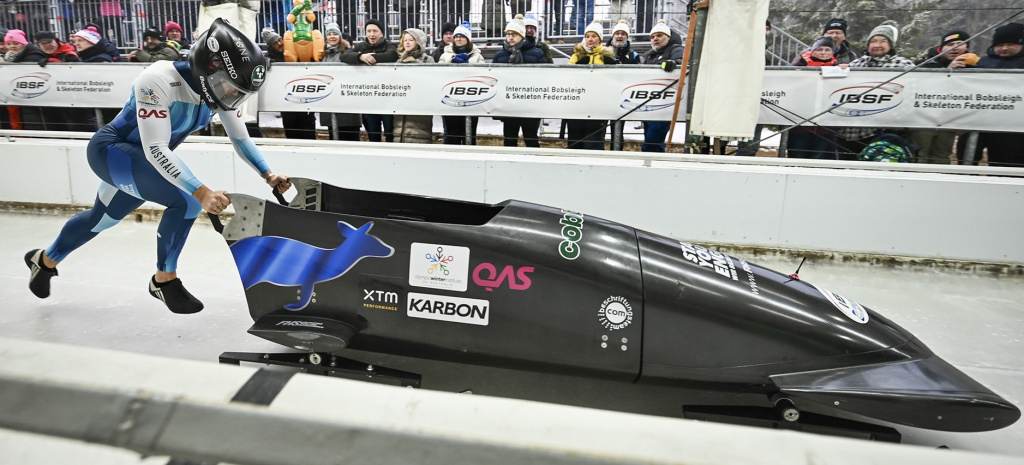 Former 400m hurdler Bree Walker makes a fast start in the bobsleigh at Altenberg. Image: Viesturs Lacis/IBSF
“What you can control is your own performance and, at the end of the Games you want to be able to look back as an athlete and think, well, I did everything I could, and I can only be satisfied with that, and that is what you hope for every athlete.
“Coming into the Games, they know what they’re doing. We wouldn’t have those sorts of results as a team, they’re not fluked results, and there’s a huge amount of consistency. So, they just need to know and do what they’ve been doing in the lead up.
“The Olympics, even though it’s big, doesn’t necessarily require more or different. The courage is to take onboard everything that occurs with the magnitude of the Olympics and still trust in the process and the work that you’ve put in to get there and to allow that to happen, in a simple and calm way.”
Australia’s “First Eleven” – the athletes most likely to win medals in Milano-Cortina – range from James, a dual Olympic medallist who is contesting his fifth Games, to Indra Brown, who turned 16 last week, and has shaken up the standings in freeski halfpipe this season by winning medals in her first three World Cup appearances, including gold in her last outing before the Games.
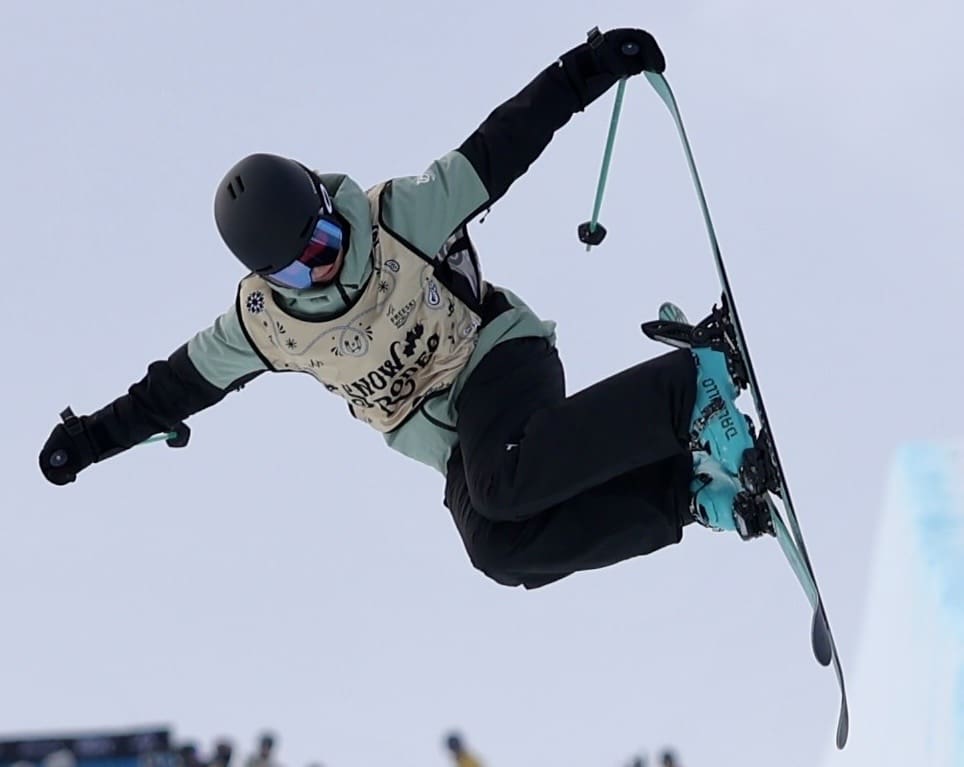 Sixteen-year-old Indra Brown claims her first World Cup gold in Calgary. Image: Preston Peterson/FIS
These Olympics are the most spread out in history stretching across northern Italy. But Australia’s hopes will rise and fall in one Alpine village, nestled just below the Swiss border. Ten of our top eleven prospects will compete in Livigno, which will host the freestyle and snowboarding events.
Here are the contenders (in order of competition):
Tess Coady (Snowboard Big Air – Tuesday, 10 February, 5.30am AEDT & Snowboard Slopestyle – Tuesday, 17 February, 11pm AEDT)
Coady blew out her knee on her Olympic debut in 2018 but the then-teenager showed that she was made of tough stuff when she returned to climb the Beijing podium in 2022, winning bronze on the slopestyle course. She hasn’t quite shown that form this season, with a best World Cup placing of fourth in Big Air, but she is capable of performing when it counts.
Jakara Anthony (Moguls – Wednesday, February 11, 9pm AEDT; Dual Moguls – Saturday, February 14, 8.30pm AEDT)
Australia’s female flag-bearer, Anthony will defend the moguls title she won in Beijing. She has been the dominant force in her event through most of the last Olympiad, until a broken collarbone sidelined her a year ago. She has returned to normal transmission this season, dominating the final three World Cup competitions leading into the Games. Anthony has the chance to become the first Australian to win multiple winter gold medals, with both moguls and dual moguls.
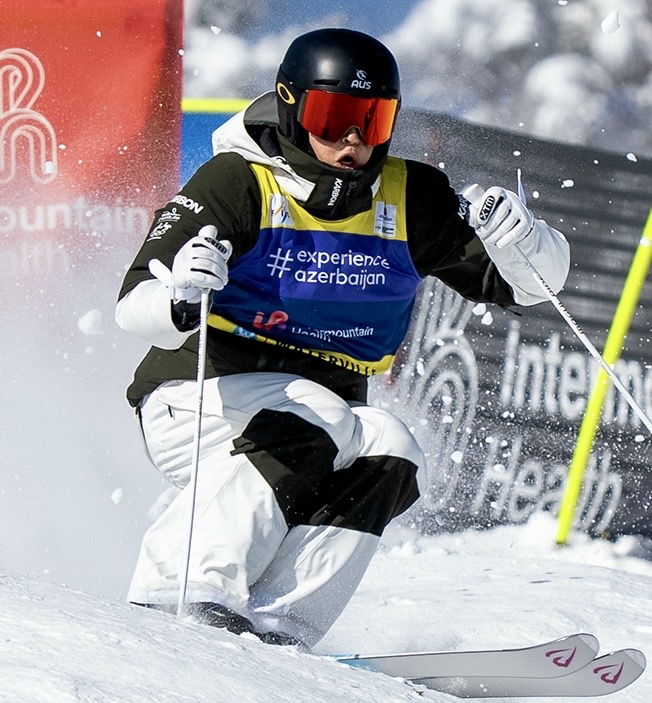 Beijing gold medallist Jakara Anthony hopes to defend her moguls title in Milano. Image: Chris Hocking
Matt Graham (Moguls – Thursday, February 12, 10.15pm AEST; Dual Moguls – Sunday, February 15, 8.30pm AEDT)
Australia’s male flag-bearer and a silver medallist in the moguls in 2018, Graham’s last Olympic campaign was disrupted by an untimely broken collarbone in the lead-up to Beijing, which left him short of his best. However, he has bounced back for his fourth Games, and won the opening World Cup of the season in Finland. The moguls GOAT, Canada’s Mikael Kingsbury stands in his way, but Kingsbury has struggled with injury this season and looks vulnerable. Graham has the ability to take advantage.
Adam Lambert (Snowboard Cross – Thursday, 12 February, 11.45pm AEDT; Mixed Team – Sunday, 15 February, 11.45pm AEDT)
Australia has produced a string of world-class snowboard cross racers in the wake of the late world champion Alex “Chumpy” Pullin. This season 28-year-old Lambert has emerged as the top contender, winning his first World Cup event in China on his way to the Games. Snowboard cross is arguably the least predictable of all winter sports, but Lambert has the form and experience to navigate through the inevitable chaos of the multi-race format and contend for the medals.
Josie Baff (Snowboard Cross – Friday, February 13, 11.30pm AEDT; Mixed Team – Sunday, 15 February, 11.45pm AEDT)
Baff, 22, is Australia’s leading female racer following the retirement of Belle Brockhoff. She has medal credentials in her own right, with more than a dozen World Cup podiums since her debut in Beijing, including two this season. But she and Lambert also combined to win a World Cup in the mixed team event last year, and that gives both another string to their bow in Milano-Cortina.
Scotty James (Snowboard Halfpipe – Saturday, February 14, 5.30am AEDT)
There is only one prize missing from James’ trophy cabinet after a storied career that began with his Olympic debut aged 15 in Vancouver in 2010. In the following 16 years at the highest level he has dominated everywhere but at the Olympics, where his best results were bronze in PyeongChang in 2018 and silver in Beijing in 2022. At 31, this could be his last shot at the ultimate glory and he knows it. He arrived in Italy off the back of his fifth consecutive X Games triumph and a similarly dominant performance at the prestigious Laax Open in Switzerland. If not now, when?
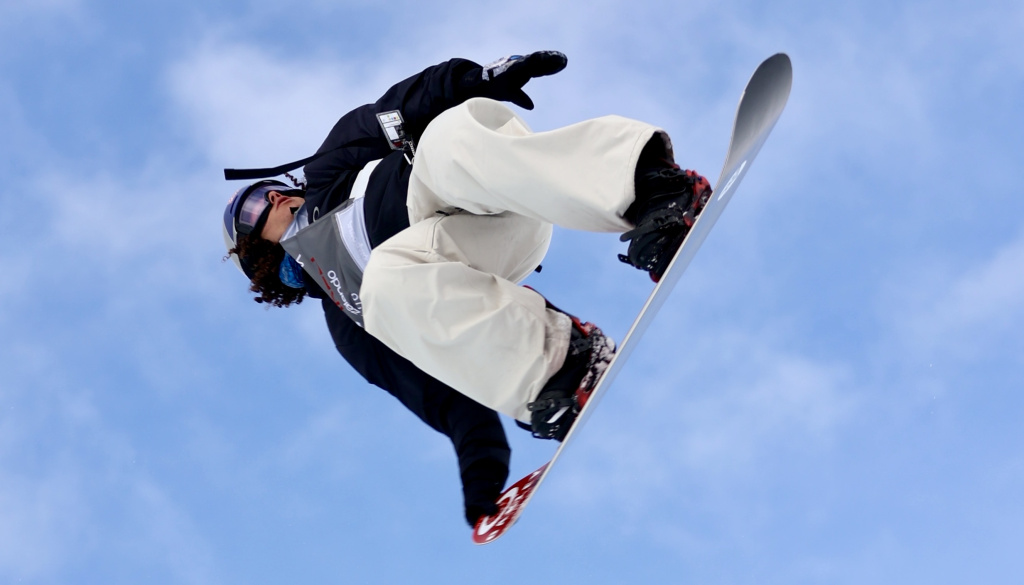 Valentino Gueseli took bronze in the men’s Halfpipe Snowboard World Cup in Laax, Switzerland earlier this year. Image: David Tributsch
Valentino Guseli (Snowboard Halfpipe – Saturday, February 14, 5.30am AEDT)
Australia’s young snowboard gun came back from a knee reconstruction this season and has quickly re-established himself as a halfpipe threat. He won a World Cup event at Calgary in Canada and finished third in the Swiss Laax Open, while simultaneously attempting to qualify for the big air and slopestyle events at the Olympics. If he survives his other events in one piece, he will give Australia two shots at glory in the halfpipe. Japan’s four-pronged attack, including defending Olympic champion Ayumu Hirano, despite injury concerns, shape as the biggest barrier to Australian success.
Bree Walker (Monobob – Sunday, February 15, 8pm AEDT)
The former 400m hurdler who watched Jana Pittman make the transition to bobsleigh in 2014 and decided to chance her luck running on ice. Walker has emerged as Australia’s best-ever bobsledder, particularly in the monobob discipline, where she pushes and drive the sled alone. Australia has never won a bobsleigh medal – Narracott’s Beijing medal was Australia’s first in any sliding sport. But Walker is determined to be the first. With three World Cup victories under her belt this season and five podiums in total, she has a strong chance of finishing on the podium, as she did in the test event on the Cortina track last November, where she took bronze.
Danielle Scott (Aerial Skiing – Wednesday, February 18, 9.30pm AEDT)
Australia’s medal contenders tend to come in twos, and so it is with the women’s aerials team where both Scott and Laura Peel have frequently graced the podium at both the World Cup and world championships over the past decade. They have struggled however to convert that success to Olympic medals. Scott won a World Cup event in Lake Placid last month and may be Australia’s best chance at her fourth Games after Peel was injured in training last week, but she will probably need to rollout the triple somersaults she has been working on to land on the podium.
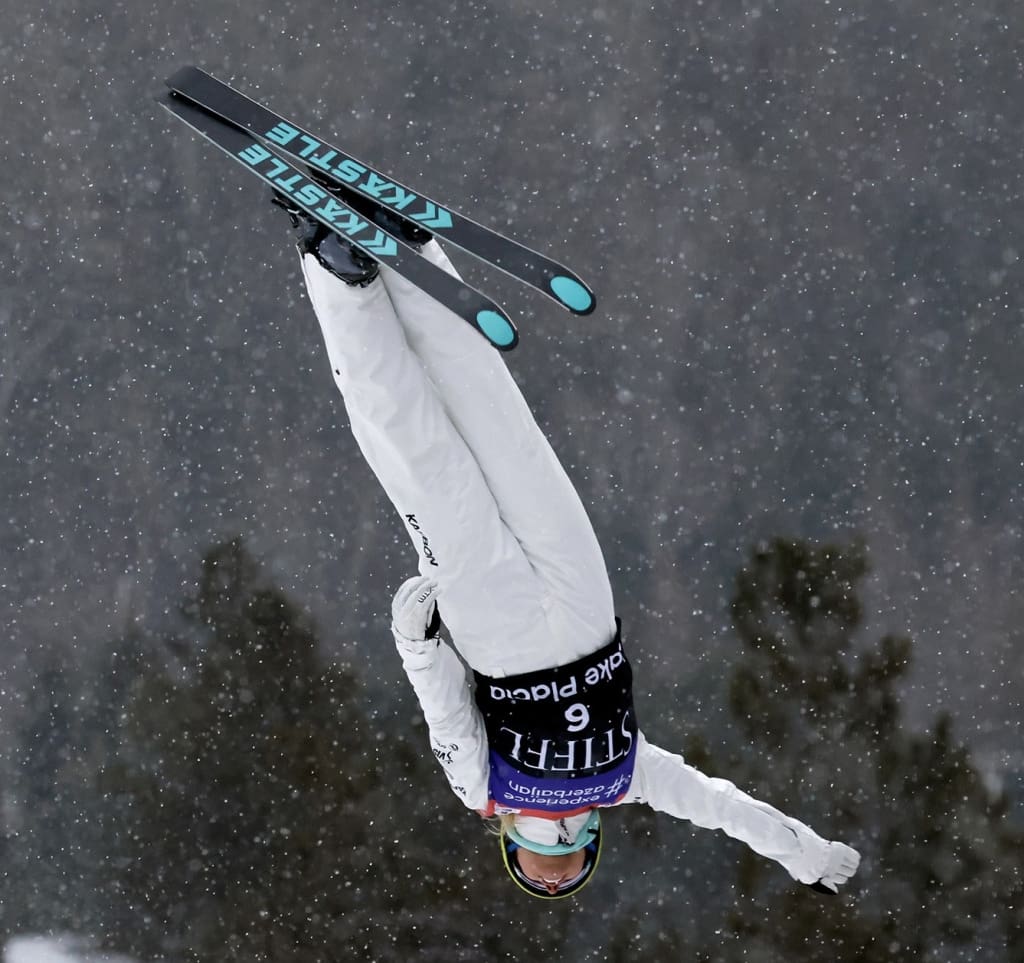 Danielle Scott wins bronze at the Aerial Skiing World Cup in Lake Placid. Image: Chris Hocking
Laura Peel (Aerial Skiing – Wednesday, February 18, 9.30pm AEDT)
A four-time Olympian, 36-year-old Peel has won two world titles (2015 and 2021) and been on the World Cup podium 29 times in her long career, but has yet to put all the pieces together at the Games. She has finished fifth at the last two Games, which has given her enough fuel to go again. With a stunning triple-twisting triple somersault in her repertoire, she has the degree of difficulty to win, but a knee injury in training last week has cast a shadow over her Olympic campaign.
Indra Brown (Freeski Halfpipe – Sunday, February 22, 5.30am AEDT)
Brown made her World Cup debut in freeski halfpipe at the tender age of 15 and less than two months ago. Until that day she was earmarked as one-to-watch for the future, but after grabbing the bronze medal in her first world-class competition and following-up with silver and gold in the next two World Cups, Brown has shown that the future is now. She has made the leap from junior to senior level so effortlessly that the next step to the Olympic podium seems entirely possible. If that eventuates, she will be the youngest Australian to win a Winter Olympic medal.
But wait, there’s more. Australia actually has another brilliant 16-year-old prospect making her Olympic debut in Italy. Big Air and Slopestyle competitor Ally Hickman has also appeared on the World Cup podium this year, winning bronze in Steamboat (USA) in Big Air. She may not be quite ready to win a medal at this level, but she’s another bright hope for 2028.