
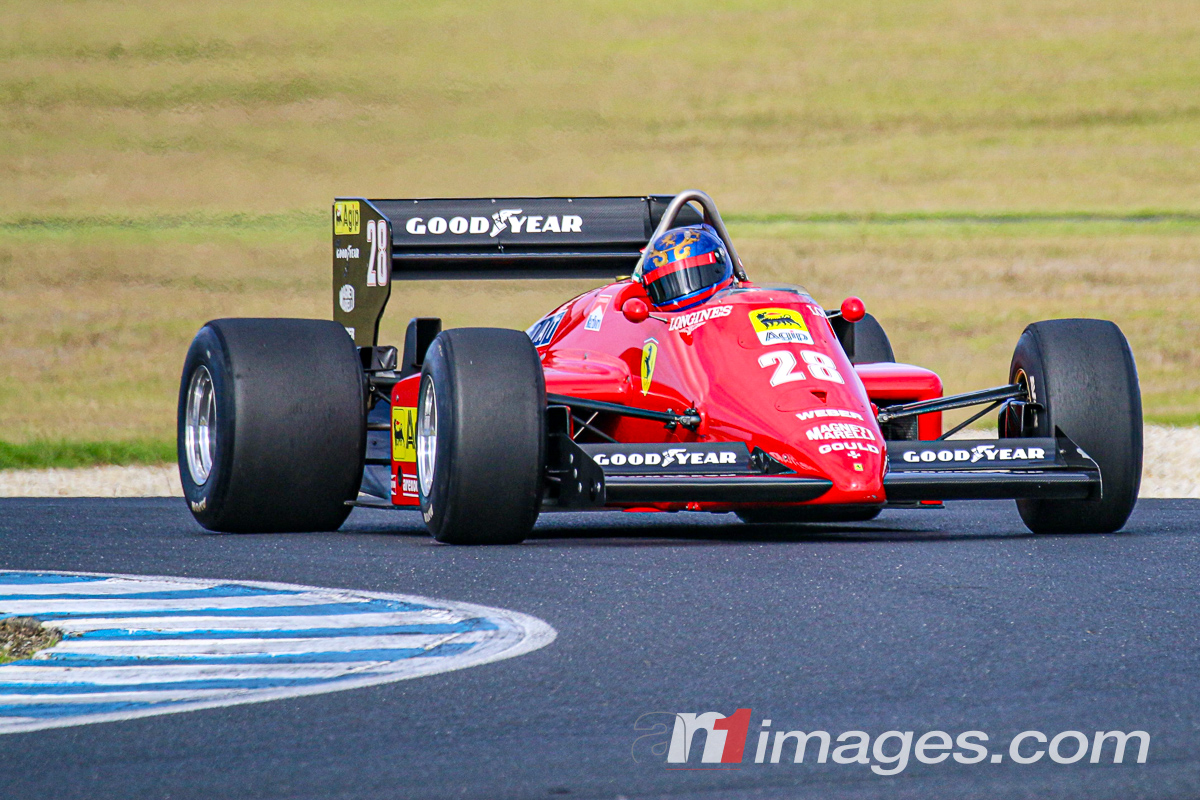
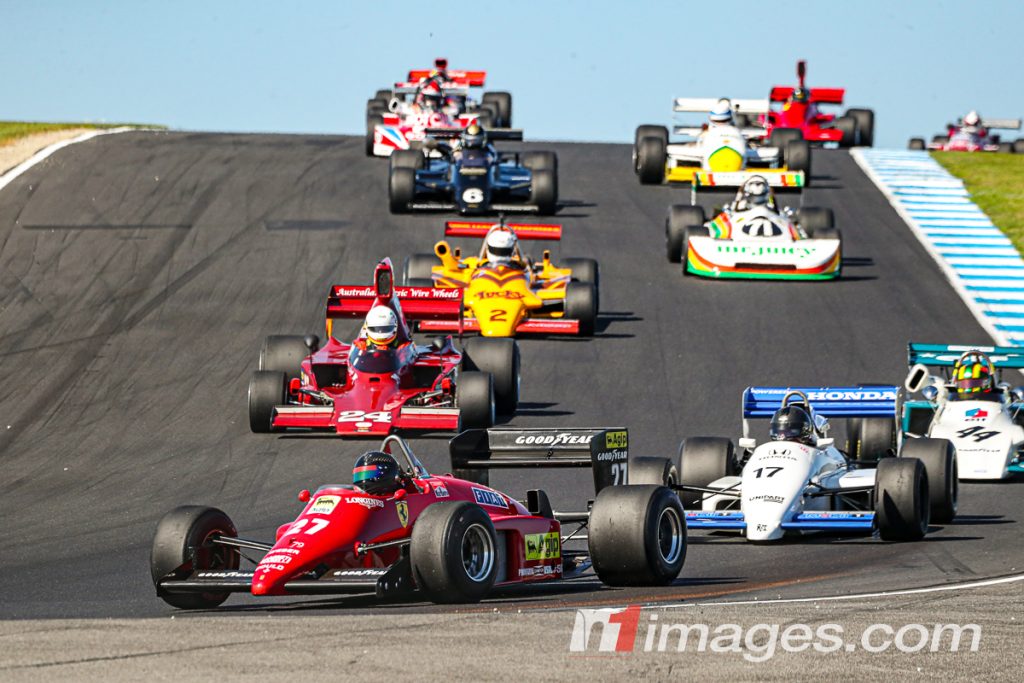
THE upcoming Phillip Island Penrite 100 Classic is set to feature massive fields from across the motorsport spectrum, including touring cars, sports cars and open wheelers.
Included in the mix are cars with worldwide competition credentials, including from Formula 1 circles, such as a brilliant Hesketh, which launched the small British team into the limelight.
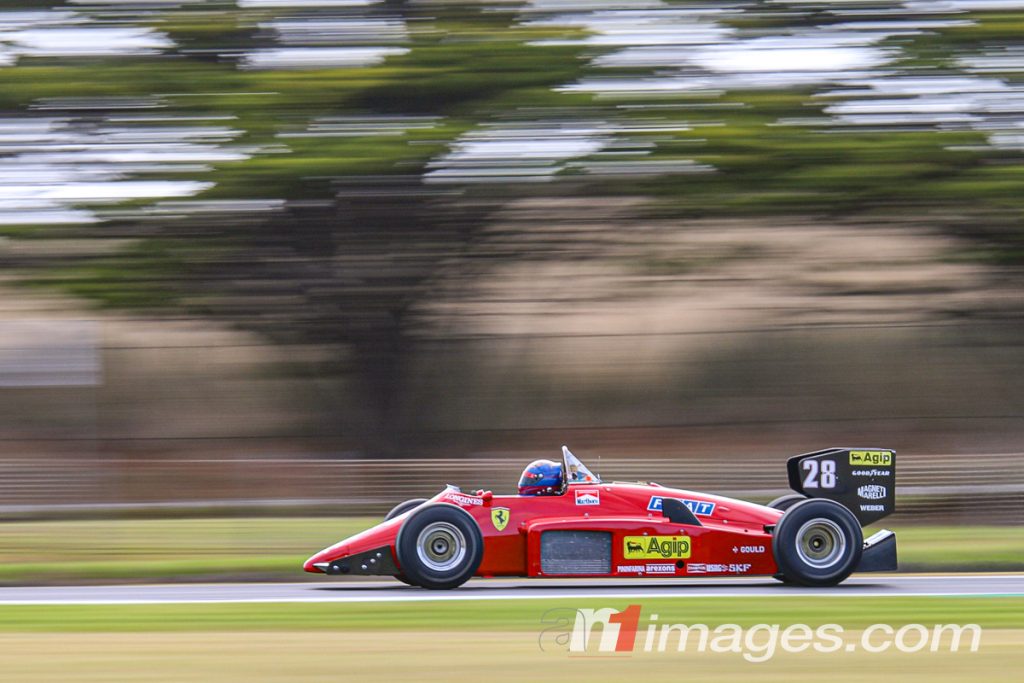
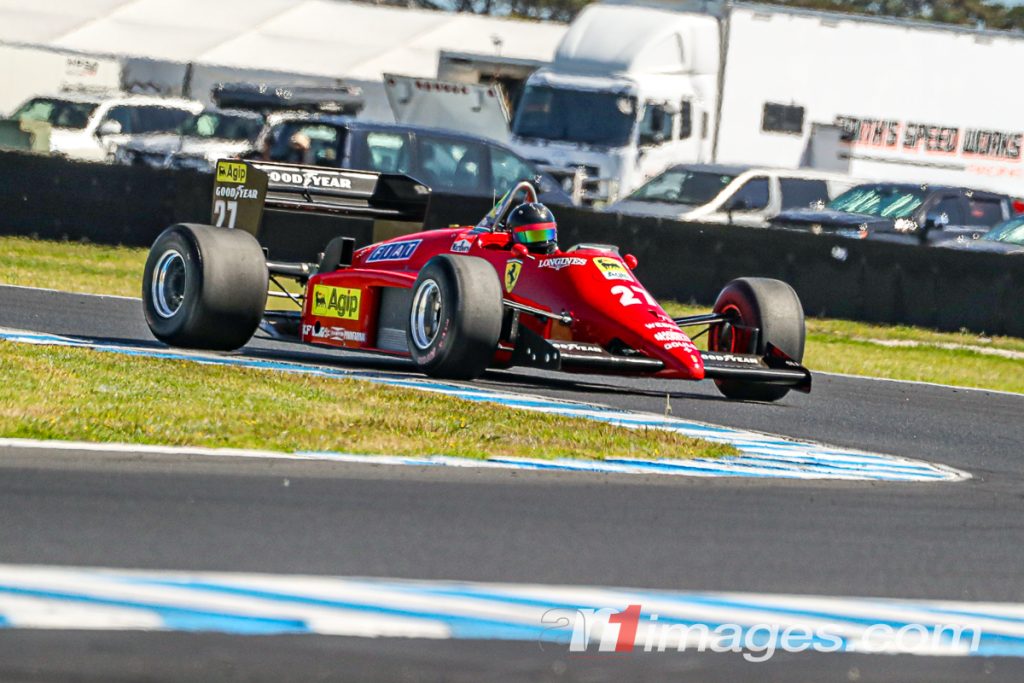
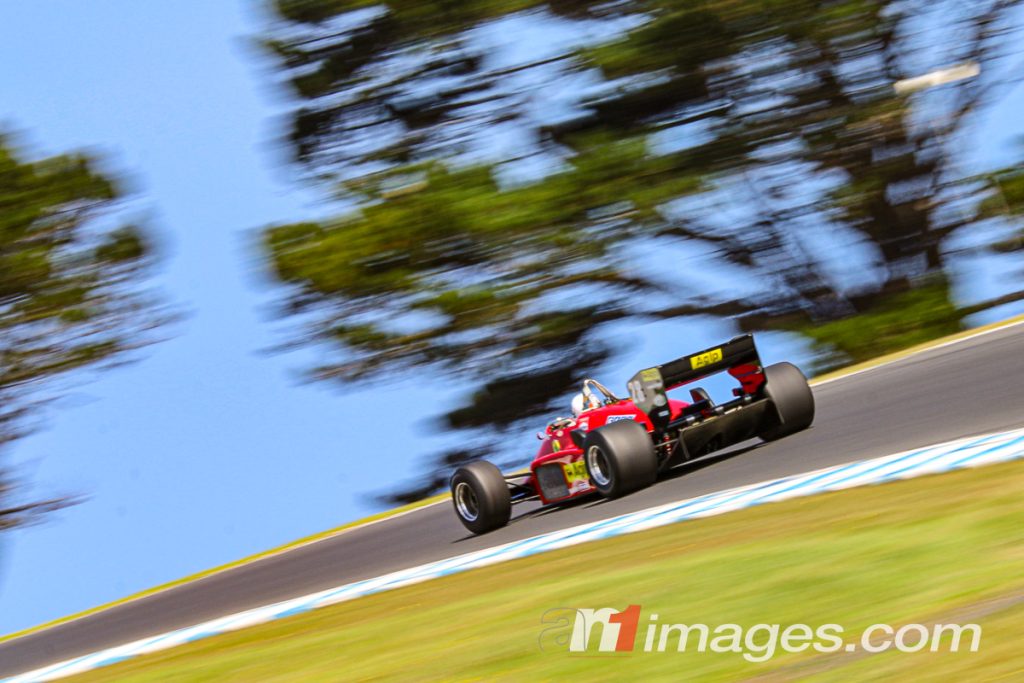
Amongst the perpetual crowd pleasers at the event in 2026 will be the Ferrari 156/85, as piloted by Guido Belgiorno-Nettis, the custodian of a pair of turbo F1 twins.
The history books show that it was a highly successful model for the Maranello marque, claiming second in the 1985 Constructors’ Championship to McLaren, with Michele Alboreto leading the Drivers’ title during the mid-part of the year before settling for second at season’s end, with teammate Stefan Johansson seventh in the final rundown.
In the mid-1980s, F1 featured a wide range of engine configurations, with the power arms race in full swing.
From the naturally aspirated 3 litre Ford Cosworth DFY V8, a configuration that was falling out of favour, to the inline four-cylinder turbos from BMW, Hart and Zakspeed, to Alfa Romeo’s turbo V8, the bulk of the field, including Honda, Motori-Moderni, Renault, TAG and Ferrari, opted for 1.5 litre V6 turbos.
After Renault pioneered F1 turbocharging, Ferrari jumped on the bandwagon in 1981, although the marque did experiment with a pressure-wave supercharger system and an inline-four turbo to no avail.
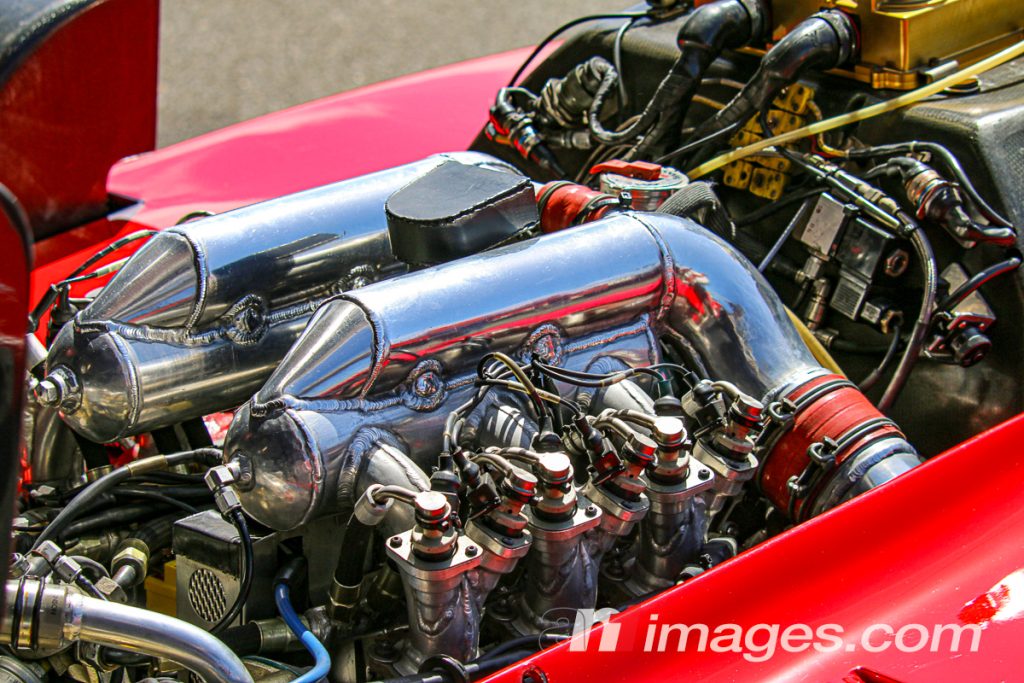
The heart of the engine was a 120-degree vee-angle and twin Kühnle, Kopp & Kausch brand turbos, which, for 1985, were mounted outside of the vee, and with the intake on the inside, keeping the engine profile low, allowing for sleek aerodynamic lines along the car’s tail.
In addition to the permutations of configurations tested during the season, a quad-turbo combination was sampled at Fiorano but never raced.
Overall, it was the highest revving engine in the field (alongside the McLaren’s TAG) at 12,000rpm, which, with 4.6 bar of boost in qualifying trim, pumped out 940hp, while 3.6 bar would provide 780hp in race trim.
With the FIA limiting fuel tanks to only 220 litres in 1985, boost had to be significantly wound back for Sundays in the name of fuel efficiency, let alone to give any chance of reliability.
With a background at March, Hesketh (an example of which will be at Phillip Island), Wolf, and Fittipaldi, Dr Harvey Postlethwaite joined the Scuderia Ferrari in early 1981, an outfit renowned for high-horsepower engines but a lack of chassis refinement.
Under his watch as Technical Director, the team claimed the Constructor’s Championship in the tumultuous 1982 season, successfully defended the title in ’83, and finished second in ’84.
That 1982 season’s 126C2 saw Ferrari introduce its first proper complete monocoque chassis, with the evolution continuing into 1985 with the application of a Kevlar and carbon fibre tub, a practice first introduced to Formula 1 by McLaren in 1981.
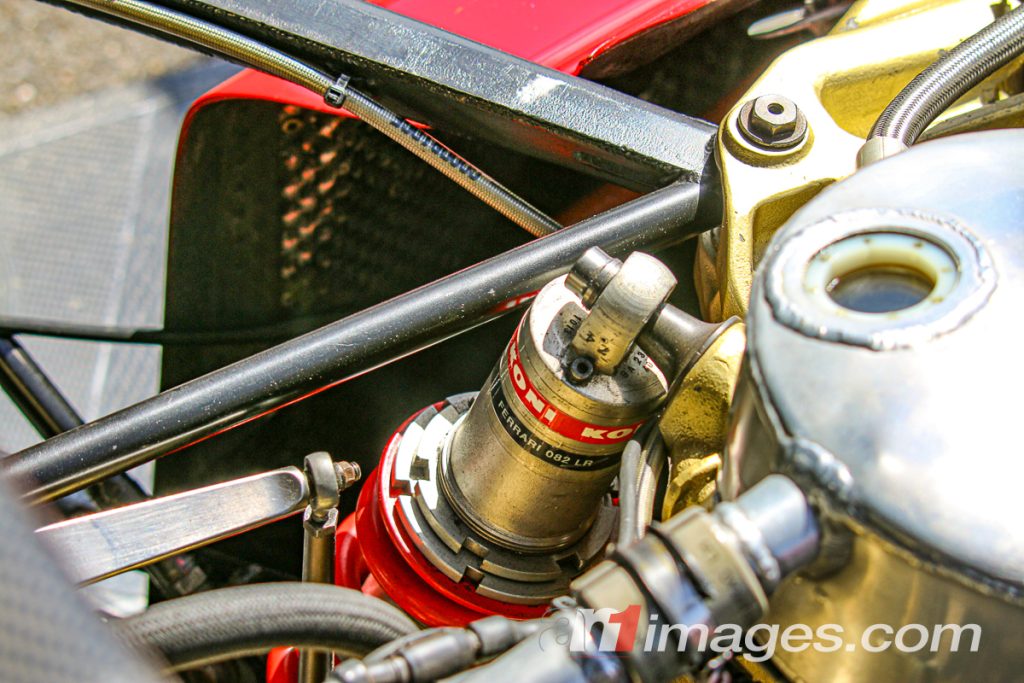
Suspension front and rear featured double wishbones, pull-rod coil springs fitted over Koni shocks and anti-roll bars.
The cars had a 2.6m wheelbase, roughly a full metre shorter than current-day F1 racers, and an overall length of 4.3m, 1.4m shorter than contemporary machines, with the drivers slotted very much forward in the design.
The 156/85 weighed 548kg (including oil and water), about 220kg lighter than the fresh generation of 2026-spec F1 machines.
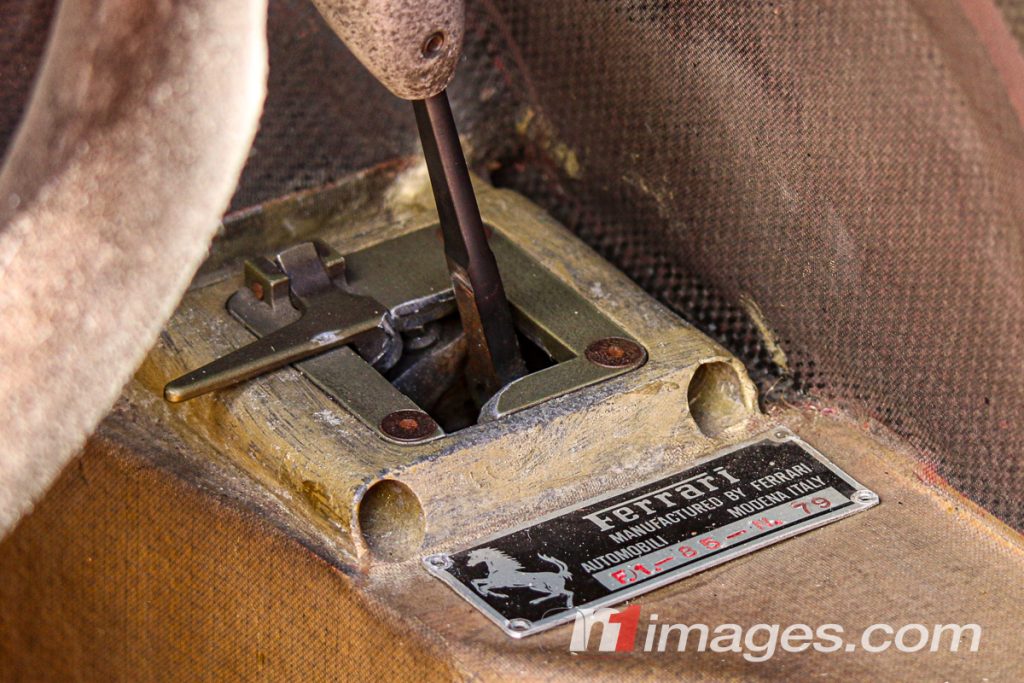
Notably, the 1985 model was the first Ferrari F1 car to be designed entirely using CAD/CAM software.
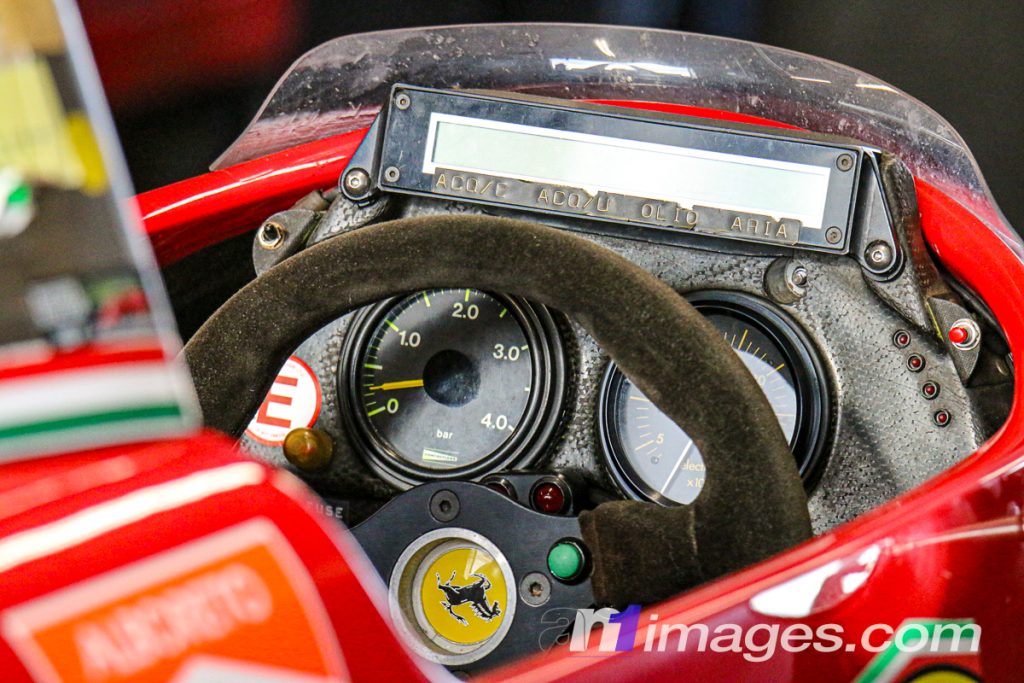
Behind the wheel, the controls of the 156/85 were sparse.
Instrument-wise, drivers could see an analogue turbo-boost gauge on the left, with engine revs on the right, while a small display above the wheel; full-electronic dashes wouldn’t be common until 1988.
The steering wheel only featured a radio button.
The drivers had at their disposal five gears fitted in a transverse-mounted transmission mated to a ZF limited-slip diff, with Ferrari moving to six-cogs for 1986, while stopping power was provided by four-pot Brembo callipers, SEP carbon rotors and titanium pads.
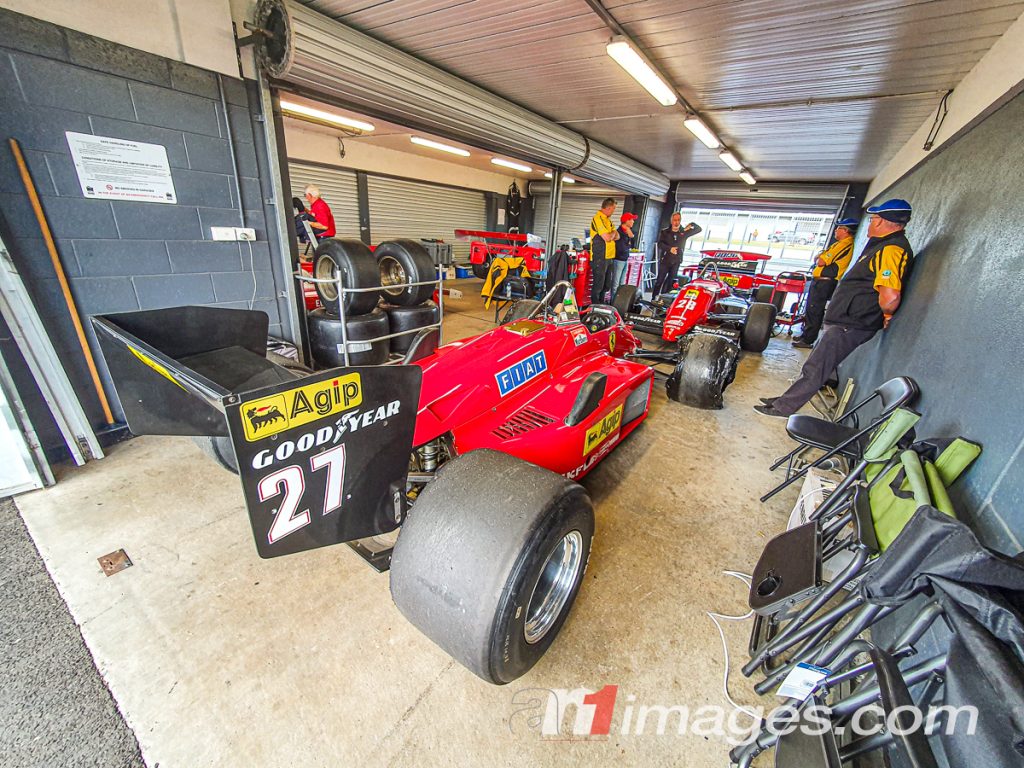
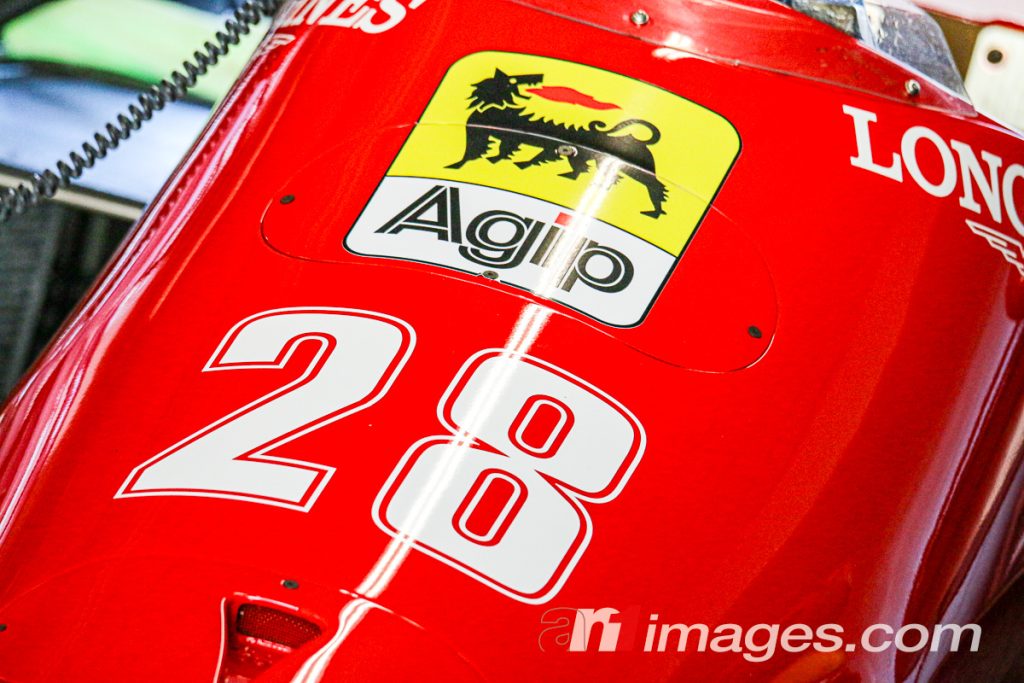
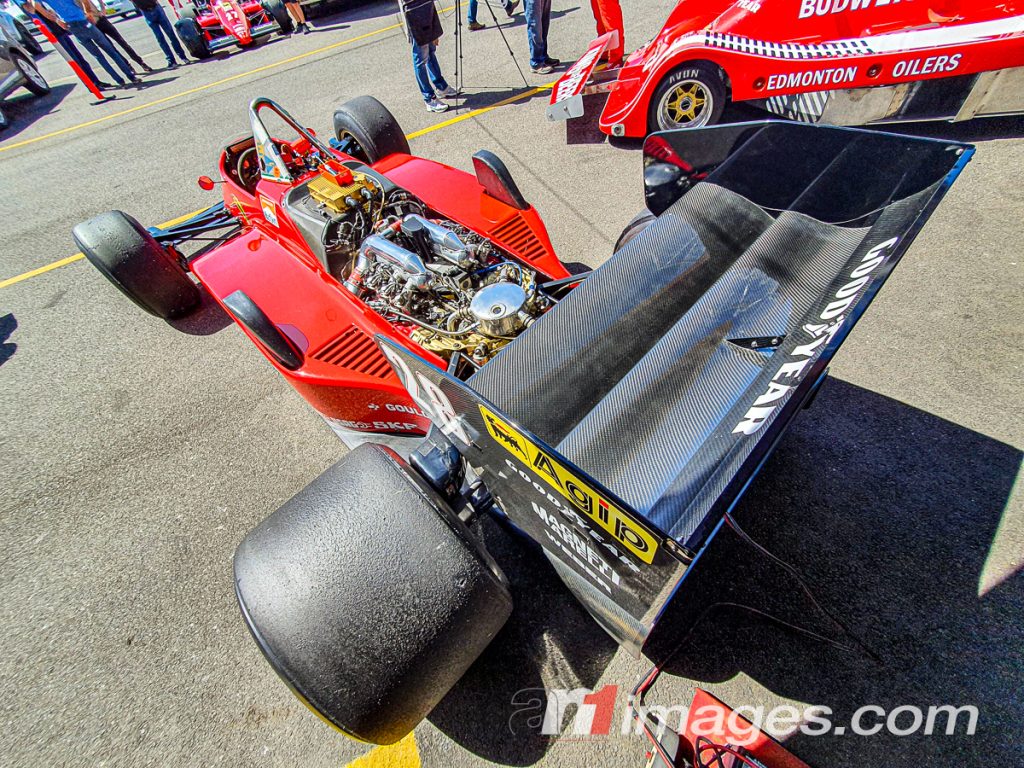
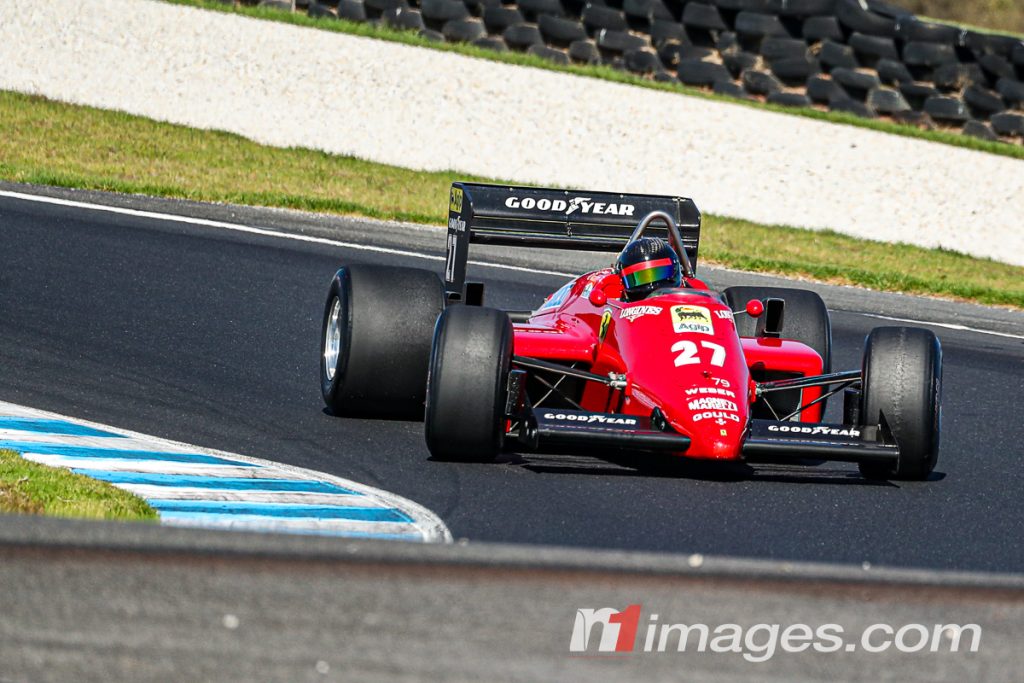
Ultimately, nine Ferrari 156/85 chassis were constructed; sources report that at least five were used in racing, and all but one still exist today.
Autocourse at the time noted that chassis numbers 079 through 082 were quite similar, while 083-087 were progressions, with the examples found in Australia being 079 and 082.
Chassis 079 was the first to land in Australia in 1996, acquired from the collection of Alboreto’s patron, Count Gughi Zanon di Valgiurata, who was gifted the car at the end of the ’85 season by Enzo Ferrari.
Count Zanon, in fact, had a behind-the-scenes role in the careers and fortunes of several Grand Prix identities, including Ronnie Peterson, Lella Lombardi, Frank Williams, Ken Tyrell, and Ayrton Senna, among others.
Alboreto utilised this particular chassis in a total of nine races of the 16 contested in ‘85, with a string of top results.
After Nigel Mansell’s Lotus won the start at the season-opening Brazilian Grand Prix, Alboreto led for a chunk of the early going before finishing second to McLaren’s Alain Prost.
Next up in Portugal, in sodden conditions, Ayrton Senna cleared out for a lights-to-flag win in his Lotus, the first of his career. Alboreto finished second in chassis 079, over a minute off the pace, although the only other car on the lead lap.
The podium run for the combination ended in the third round at San Marino, even though they were running second when electrical issues sent the car to the pits for service. Returning to the track with fresh Goodyears, Alboreto set the fastest lap of the race en route to sixth.
The chassis finally returned to top-four form in Austria in August.
The Italian was in the box seat to claim the Driver’s title following wins in Canada and Germany, until a string of five straight non-points paying results was rounded out by four consecutive non-finishes (caused by clutch failure, two turbo troubles and a transmission fault), eventually finishing second in the points to Prost.
Seeking spare parts, Belgiorno-Nettis purchased the complete chassis 082 in 2006, a machine that was only campaigned in limited events.
Car 28 was initially piloted by Rene Arnoux in ’85; however, he parted ways with the team under mysterious circumstances after a fourth-place finish in the season opener in Brazil.
From there, Swede Johansson took over the driving duties, including chassis 082, and later shared the podium with Alboreto in both Canada and Detroit.
Following on from the ‘85 model, Ferrari encountered a lean spell in the sport, being winless through to the penultimate round of the 1987 season in Japan, although on Australian shores, the locally-based F1 twins have proven to be potent at Phillip Island.
The Phillip Island Penrite 100 Classic will be held on March 13-15, with tickets now available for purchase, while the event will be live-streamed for the first time via Blend Line TV.
The VHRR is an advertising partner of V8 Sleuth
Neil Crompton takes the Supra Supercar for a spin!
Supercars Hall of Fame member Neil Crompton puts the new Toyota Supra Supercar through its paces.