
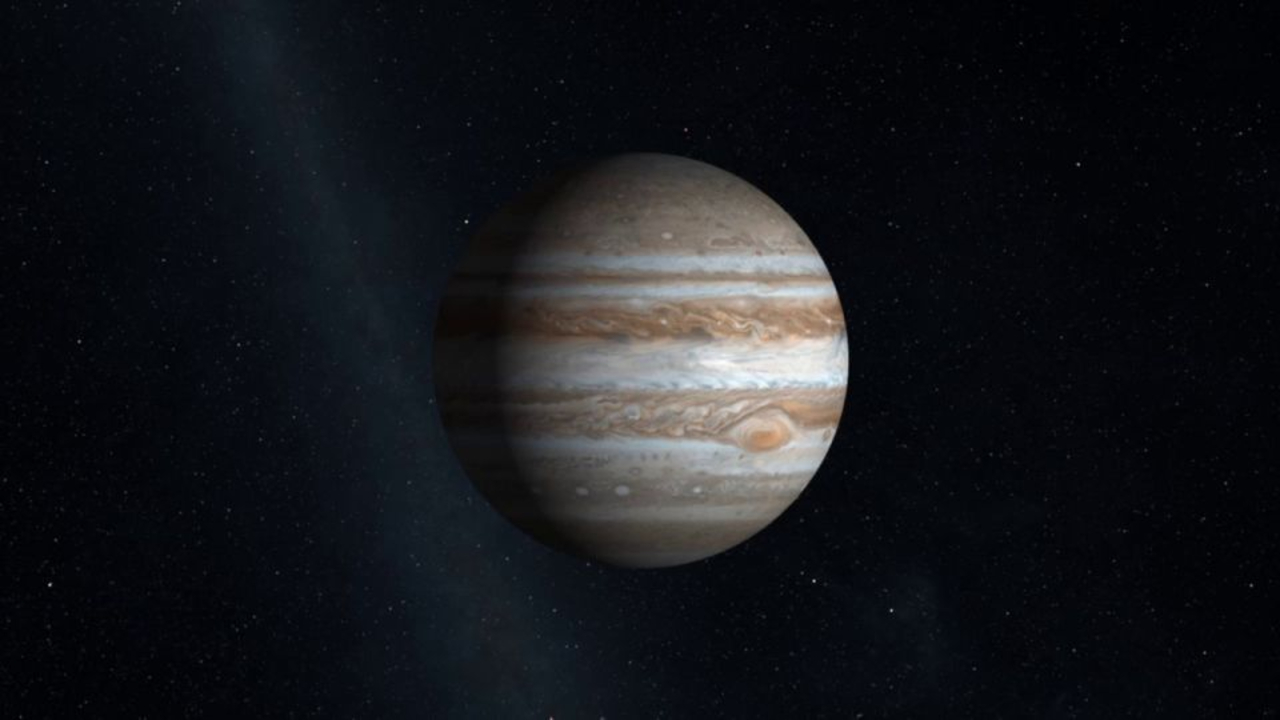
The largest planet in the Milky Way Galaxy, Jupiter, was just measured by the NASA Juno spacecraft, and its size calls for an adjustment to previous understanding. According to Yohai Kaspi of the Weizmann Institute in Israel, “Textbooks will need to be updated” after this new measurement reveals the actual size of the gas giant.
It Turns Out That Jupiter Is Actually Smaller Than We Thought
For years, we have known Jupiter as the largest planet in the Milky Way Galaxy, measuring 88,846 miles across its equator and 83,082 miles across its poles. However, this understanding is slightly flawed, a new measurement of the gas giant reveals.
The new measurement of this planet was made by the NASA Juno spacecraft that is currently orbiting the gas giant. While the measurement doesn’t erase the understanding that Jupiter is flatter at its poles than at its equator, it reveals new measurements for the gas giant.
To get the accurate measurement of the gas giant, Juno had to pass behind the planet from Earth’s view. While doing this, the spacecraft was concurrently beaming radio signals back to Earth, hence getting a more accurate model of Jupiter.
By doing this, Juno revealed that Jupiter measures 88,841 miles at its equator and 83,057 miles across its poles. Eli Galanti of the Weizmann Institute in Israel, and the researcher who led this research, says that “These few kilometres matter.”
Galantis adds that “Shifting the radius by just a little lets our models of Jupiter’s interior fit both the gravity data and atmospheric measurements much better.” This new understanding better fits the interior density of the gas planet and can now better help scientists in their study to understand similar planets.
What Changes With This New Understanding?
With this new understanding of the actual size of Jupiter, certain changes will be made to our study of the gas giant. One of such changes, as Yohai Kaspi quoted earlier, is a change to textbooks about Jupiter.
The reason for our previous misunderstanding of the actual size of Jupiter can be attributed to how previous measurements were performed. Previous measurements of the gas giant came from the NASA Pioneer 10 and 11 as well as the NASA Voyager 1 and 2 missions.
Measurements from these missions amounted to just six data points in comparison with the 32 data points measured by NASA Juno. Regardless of this new measurement, Jupiter remains the largest planet in the Milky Way galaxy.