
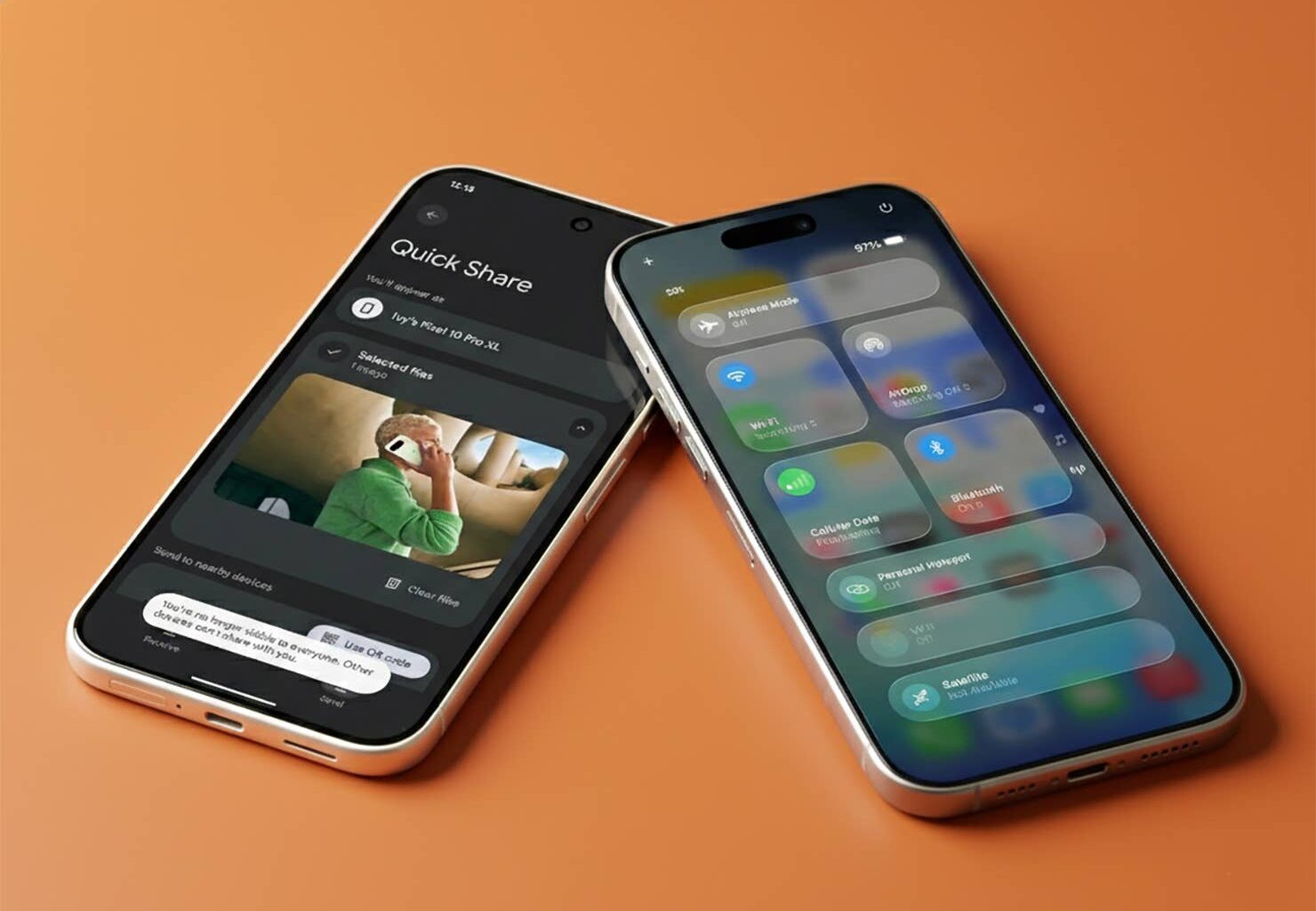
Google has confirmed that the Pixel’s most powerful tool—Quick Share with AirDrop compatibility—is finally coming to the rest of the Android world. Find out which phones are getting it first and how it changes everything.
Google gave Quick Share its biggest upgrade last year when it introduced cross‑platform interoperability with Apple’s AirDrop. Until now, the feature has been exclusive to the Pixel 10 series. While Google had hinted at broader availability, it has only recently confirmed that Quick Share will roll out to more Android devices beyond Pixel phones.
With this new capability, users can share files directly between Pixel and Apple devices. The process works much like Quick Share between two Android phones, with one key difference. The Apple device must set AirDrop to be discoverable to “Everyone nearby.” Conversely, Apple devices can also send files directly to a Pixel, making the experience seamless and practical.
During a Pixel Labs tour in Taipei (via Android Authority), Google’s Erick Kay announced that this added interoperability will soon be available on more Android devices. He further noted, “We’re working with our partners to expand it into the rest of the ecosystem, and you should see some exciting announcements coming very soon.”
Which Android Brands Will Support Quick Share With AirDrop?
Google has not yet specified which devices will receive this upgraded Quick Share capability, but it strongly hinted that announcements are imminent. It’s possible that details could be revealed at Samsung’s Unpacked event or during Mobile World Congress (MWC) this month. One likely scenario is that the upcoming Galaxy S26 will support the feature.
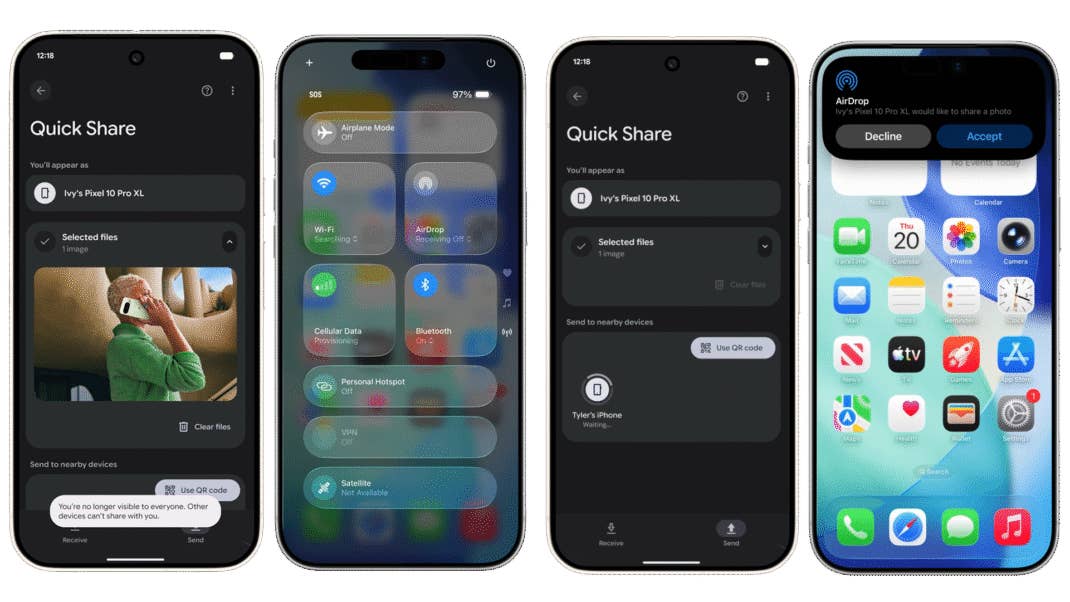 The AirDrop on iPhone is required to be discoverable before an Android device can send a file via Quick Share. Image source: Google
Beyond Samsung, Nothing has already suggested that it will bring the new Quick Share functionality to its phones. Xiaomi may also adopt it, given that some of its existing connectivity features already offer similar cross‑platform support.
A Bigger Picture: EU’s Digital Markets Act
The European Union’s Digital Markets Act is also pushing Apple and other major tech companies to open up their ecosystems. This means we could see not only broader file‑sharing interoperability but also additional cross‑platform features, such as seamless device switching, which Apple and Google are already exploring.
Which cross‑platform feature would you like to see supported next? Share your thoughts in the comments.
We mark partner links with this symbol. If you click on one of these links or buttons–or make a purchase through them–we may receive a small commission from the retailer. This doesn’t affect the price you pay, but it helps us keep nextpit free for everyone. Thanks for your support! Prices are based on the date of publication of this article and may be subject to change.