
“I shut down projects if they’re not breaking new ground for me personally.”
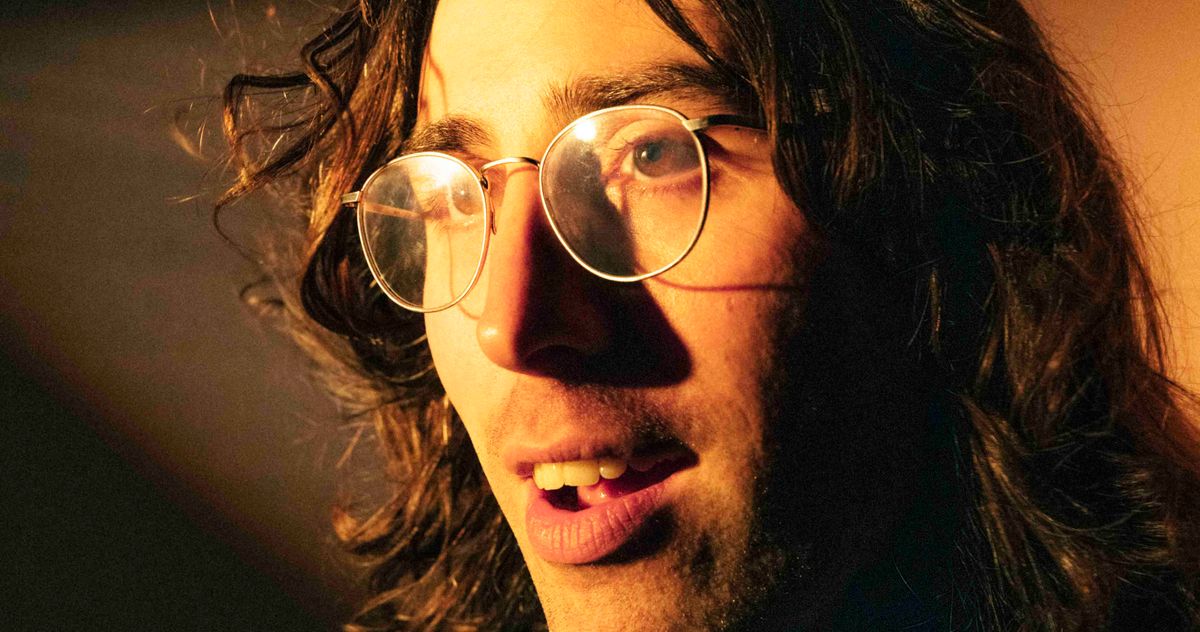
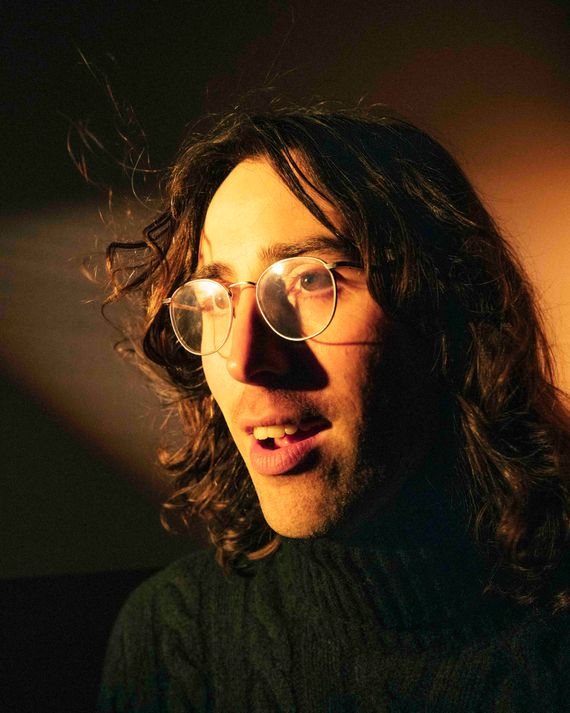
Photo: Sinna Nasseri
A. G. Cook founded the record label PC Music in 2013, ended it in 2023, and changed the shape of pop music along the way. The label is often credited as one of the originators of the hyperpop movement and became known for snarling, bubblegum, robotic music, with its signature tracks — like “Keri Baby,” “Party,” and “Supernatural” — eschewing the human in favor of self-created soundscapes. Alongside SOPHIE, who died in 2021, Cook became Charli XCX’s primary collaborator throughout the late 2010s and early 2020s, and together they created pop songs that were as indebted to noise music as they were to Britney Spears. Their work, including the acclaimed Pop 2 mixtape, Charli’s self-titled album, and her quarantine-developed How I’m Feeling Now, encroached on the mainstream throughout that time (Cook even took his sound to Beyoncé when he produced “All Up in Your Mind”), but never quite managed to dominate it.
Then the breakthrough arrived. In 2024, Charli’s album Brat, which Cook executive produced, became a cultural sensation and won them both a Grammy for Best Dance/Electronic Album. Now comes Charli’s mockumentary, The Moment, parodying her post-Brat summer freak-out. While he doesn’t have a physical presence in the film — it takes place during the creation of her tour, not her album — Cook looms large in the movie as its composer. It’s his first time scoring a film. To promote it, Cook attended the film’s Sundance Film Festival premiere, where he offered an overview of his work. As our latest “Music History” guest, Cook runs through his career beginnings with early PC Music, knocking on the door of the mainstream with Charli and their performance of “Bounce,” and what it was like to score The Moment.
I had this Smurfs compilation that was reworks of pop songs from the 1990s, like “Cotton Eye Joe,” with all the words basically replaced to be Smurf-related. “We like to Smurf it, Smurf it” —things like that. It’s pure nonsense, badly reproduced dance music. And it’s scary looking back on it now — like, Shit, did that influence me more than I thought it would?
All the early PC Music songs. I was really into working with friends of mine and their personalities and being like, Okay, this is what the ultimate Hannah Diamond song would be. I’d talk to Hannah and look at her photography and work very directly off things like that. Same with GFOTY, eventually working on QT with SOPHIE. These were really purposeful songs that could be written quite quickly, but with a visual goal in mind. It’s something I still treasure even now with scoring films and other work. I like to have a defined brief, defined limitations, and a really good end point in place. Even if you don’t know how you’re going to get there, it’s good to have an atmosphere at least.
When we put the Hannah Diamond track “Pink and Blue” online, that felt like we had reached the beginning of an era. Then we went on a trip to L.A., and people were like, Oh, we just listened to “Pink and Blue.” It was kind of weird, but we like it. It really traveled in ways that we didn’t expect it to. The song did a lot of very weird things, but did them very earnestly and very quickly with the aim for it to be catchy. In our idea, it was pop music, and other people were like, No, it isn’t. But for us, it was very pure.
It was almost certainly “BIPP.” I found her SoundCloud profile at the time, and it hit me like this laser beam. I remember the profile picture was this sort of pink shape, with some bio that just said “generation easyJet” or something. It felt very complete but very mysterious, like a lot of SOPHIE stuff. I emailed her at the time and shared a few of my songs, and we met quite soon after that. It is a very rare thing when you connect with someone’s music, and it hits you, and then they also find little things in what you’re doing. We’d both been making what we thought were pure pop songs, but they weren’t necessarily. We found ways of doing a kind of dance music that didn’t feel too cool or too bro-y or that just felt like a big diva vocal. It felt in between all these things, almost like we’d carved out these very specific references that we both immediately and intuitively got. Within five seconds of hearing “BIPP,” I was like, Okay, this is someone who I could get on with musically. It was really, really unusual.
The first things that felt like solid, intentional live shows stemmed out of the early PC Music showcases, like the Halloween Dead or Alive Stream. Those felt like a real statement on what this could be like when it’s live: a strange variety show with a lot of smoke and mirrors, but also a lot of really crazy music.
This Sundance trip makes me think of the first time we performed at SXSW. I’d been there once before, a very small trip with QT and SOPHIE. The year after, I came back with the entire PC Music label collective, and I felt like a teacher on a school trip responsible for so many things. I just remember it being very fun, very chaotic. And a lot of people ate really disgusting ribs and then became vegetarians.
It was quite fleeting. We had done a handful of sessions writing songs that haven’t been used. They’ve probably all been leaked. There was one called “Round and Round,” which was pretty fun. Even though it was fun working together, I feel like it was more dominated by general conversation. A couple of years after that, we locked into the mixtapes Number 1 Angel / Pop 2. That’s when it felt like, Okay, this is the level we are really going to work together. The mixtapes started our proper musical artistic collaboration, but we’d had a lot of conversations about music as a whole and these little bits of sessions that led to that.
Charli brings so much to the table as a songwriter, whether it’s melodically, lyrically, or the way she can perform things. I remember hearing Charli on some of the first collaborations she did with SOPHIE, some of which are on Vroom Vroom. There are a lot of people who had worked over SOPHIE instrumentals but hadn’t been able to embody them in the way that Charli could. It felt flawless and very easy for her to sing and write over these insane sounds. She understands things on a really deep musical level. I’m always accusing her of secretly being a music nerd. Honestly, for all her other X-factor-style abilities, she really actually cares about the musicality of things — for exact melodies and exact ideas of how tracks develop and the narratives around that.
It was definitely in the studio when Charli was in the booth recording it. That song was written so quickly, over a super-simple beat, and she just immediately had this stuff floating around her head. That was pretty much the take that was used. It’s funny. There are a few other bizarre little A. G. shout-outs in some of the other lyrics, but it is fun that that one has done the rounds now.
It was the “Bounce” performance on Jimmy Kimmel Live! Charli did a track that does and doesn’t exist, another Schrödinger’s track, and I was just lying down on the stage. It was when I was involved in Charli’s visual world a bit, as well as doing writing and production with her. It was sort of my idea to have this fuzzy stage; it was a funny visual reference I had. I remember it happening with the live audience in Hollywood, and hearing the track so loudly while lying down, and just feeling the intense and bizarre reality of it being captured on television.
The response was pretty negative. The track never came out. People thought that the live mix sounded bad. It’s one of those amazing, fun, canon events, and Charli is so good at this because she’ll always roll it into something interesting. “Bounce” is both this moment that didn’t work out at all with her label, but also this fan-favorite, cult, bizarre thing.
It would have been on some funny old forum or deep, deep on Reddit probably. But there was obviously the moment when it became a Spotify playlist, and there were a lot more eyes on it. These things are fun in a sense, but I’ve never enjoyed it as a genre name. No one really loves it, but you see it happen time and time again. Grunge is a very obvious example — I don’t think any grunge bands like being called grunge. But it’s useful, and there’s some fun push and pull with it. It could be worse. I prefer it to “bubblegum bass,” which is more limited.
Addison and I met at one of Charli’s parties. It was a Christmas thing. Charli was already excited about the track they had done, but my introduction to her was fully through Charli. And then Addison and I worked on a few things. Obviously, doing the “Von Dutch” remix was really fun. We worked on fragments of things. One of them became this warp track of mine called “Lucifer” on Britpop. It was fun hanging out with Addison. I could really feel that star power, even before many of the official releases.
I’d resisted making an A. G. Cook album for a very, very long time, and it was a big part of the ethos. I’d do a song every now and then, but flip it and make it weird — like “Superstar,” I’m singing it for no reason, or “Beautiful,” which is kind of ambiguous. After seven years of that, I saw a way to do an album without it being the obvious producer album. The idea was how I would collaborate with myself — not quite in third person, but there was a space for what an A. G. Cook album could be. Then I put out two albums in parallel: Apple, which is very short, and 7G, which is very long.
I think at the time, PC Music had a bit of a defined sound. I saw it much more as an ethos, but there are obviously some sound and stylistic things that I associate with PC, and I wanted to find a way to harness that but also go against it. When we were doing the Charli album How I’m Feeling Now, we had Crash in mind, and these two things can be more confident because they’re in opposition. Even this more recent album, Britpop, it’s in three parts, but they’re all doing different things. I like that contradiction and opposition. I find it very inspiring musically. I think music completely functions off that. Without any sense of contrast, or anything-could-happen, or paradox, music gets pretty boring.
A big part was thinking of it as an overtly perfect decade. So much happened between 2013 and 2023, including the invention of streaming and the complete change of how socials and the internet worked in relation to music. The core part of PC Music lasted pretty much exactly ten years. At the same time, PC still exists. There’s still a staff. We’re doing reissues and a lot of documentation.
I don’t really remember when, but it was still a few years before that decade point, I had this vision of, Actually, maybe there’s a way that PC could really hold its own and keep being a platform. I wanted to keep not just the catalogue but the visuals around it, and keep all these things in dialogue. I could have just run it to the ground, let it fade out, and see what happens. And to be fair, a lot of similar-size labels kind of end up doing that. They go from ten releases a year to five to two, to an anniversary, to whatever. But I had this vision where a lot of that culture could actually be reinforced, because we’re not spread so thin over how we compete with all these other indie labels on DSPs.
We still have annual Halloween parties where we bring certain artists together. The vision so far has actually worked out. But with link rot and early URLs and websites vanishing, there’s a lot of work to do in honoring that stuff. It’s been quite fun to have enough headspace to do that as well as be a music producer.
I’m constantly trying to find things that feel like they’re breaking new ground. I shut down projects if they’re not breaking new ground for me personally. Doing the score for The Moment felt like a very different kind of pace to me, even though it’s referring to a lot of music that I’ve done before. There are a couple other projects that I’m wrapping up now that I can’t talk about, but it’s my constant goal to not repeat myself if possible. And if I am repeating myself quite literally with some of The Moment callbacks and textures, the goal with that was to do it in this really intentional, confrontational way.
Related