
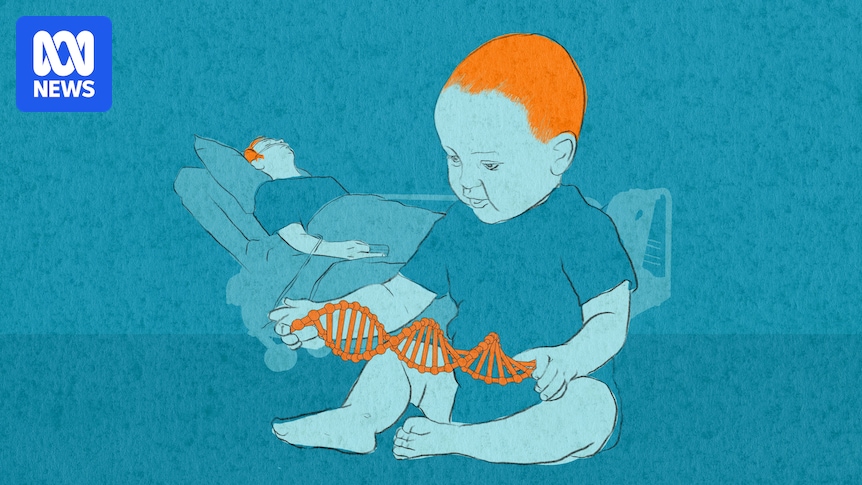
From rare cancers caught early to dementia foretold decades in advance, newborn genomic testing is a medical miracle – but it also raises unsettling questions
Imagine you could learn from birth that you carried a high genetic risk of developing a particularly aggressive cancer, dementia, or a rare disease that could significantly threaten your quality of life.
While the risk couldn’t be eliminated, lifestyle modifications and regular screening might improve your health and even your chances of survival.
On the other hand this knowledge might lead to the polar opposite. You might simply live for the day, rejecting long-term health goals, believing the future is uncertain.
Or perhaps this knowledge would leave you with lifelong anxiety — anticipating an illness that never arrives, turning you into a patient who may never even get sick.
Then there are the ethical questions. Every relationship you enter could become a moral minefield. Do you disclose your risk or keep secret something that may never develop anyway? Does your employer have a right to know? All this while your elevated risk means insurance premiums may skyrocket.
Such quandaries are no longer in the realm of science fiction.

For many decades all Australian-born babies have been offered a heel prick test that flags 32 manageable conditions benefiting from early diagnosis. The test is taken up by 99 per cent of parents and carried out within 72 hours of a child’s birth.
It identifies metabolic disorders like phenylketonuria and genetic conditions such as cystic fibrosis with five more conditions being added, and more under consideration.
While this heel prick test, officially known as the Newborn Bloodspot Screening, looks for biochemical markers and genetic signals in a baby’s blood, it does not sequence DNA.
But in July last year the federal government launched Genomics Australia, a national health body that will explore how to integrate DNA mapping into healthcare diagnosis and treatment.
Later this year 11 recommendations will be presented to all state health ministers and used to inform a future in which Australia might use genomics in newborn screening.
Unlike the existing heel prick test, genomics has potential to flag elevated genetic risk of less treatable conditions including cancer and dementia.
It’s the ultimate medical and personal conundrum: If you could find out from birth the profile of your disease risk, would you do it?
 ‘I’d rather not know’
When Juanita Hughes was diagnosed with dementia, her world instantly changed.
Even though she had been warned by a genetic counsellor a year earlier that her diagnosis of frontotemporal dementia was a case of “when and not if” the news, when it came, was “confronting”.
Her condition will cause changes in personality, behaviour and language, typically progressing to memory loss, difficulty with social interaction, movement and daily tasks. Most patients ultimately require full-time care.
“You rethink your life,” says Juanita, who is now 60. “Whatever your plans were, they’re now not going to work out the way you thought.”
Juanita was in her late 50s when she received this life-changing diagnosis but in the near future, it’s possible some of us will know about such health conditions from birth.
Juanita says she’s glad she didn’t know early in life the virtual inevitability of her dementia diagnosis.
“The only benefit to knowing as a younger person that you’re going to have a shorter life is that you absolutely have to make the best of what you’ve got available,” Juanita says.
She sees the advantage of knowing early on only if the disease is treatable, “so you can make lifestyle changes to postpone your eventual diagnosis.”
But this would be unlikely to have helped in Juanita’s case. “It just comes when it comes,” she says of her diagnosis.
 Tech miracles, ethical conundrums
Technological developments within the health sector are happening rapidly.
Genomics Australia will receive $30 million over four years to lead its investigation into how mapping the genome might be integrated into the health system. This could include the use of personalised cancer care as well as identifying the risks and benefits of providing new parents with a full mapping of their child’s genome, featuring a likely disease profile that lays out the lifetime risk of a range of life-threatening conditions.
But many are concerned that newborn screening has ethical as well as medical implications. What if risk profiles altered life insurance eligibility or raised questions of privacy and consent?
“We need to carefully consider what’s useful to share from an individual, family and healthcare perspective,” says Professor Zornitza Stark, a clinical geneticist and co-lead of BabyScreen+, one of six research studies being carried out by the Genomic Screening Consortium for Australian Newborns (GenSCAN).
BabyScreen+ investigates how genomic testing could be added to standard newborn screening. As part of this research BabyScreen+ already offers parents of newborns an optional test to screen for 500 additional treatable conditions. But it stops short of assessing genetic risk for diseases like cancer or dementia.
Research is also exploring whether a heel prick test at birth can flag risks linked to conditions including intellectual disability as well as autism, severe obesity and seizures. The goal is to offer treatments that may not be possible without early detection.
After 20 years of debate, Stark says a consensus has emerged that newborns should only be screened for severe, early childhood onset and treatable conditions.
“One model we’re exploring is going back to parents when the child is two-to-five years old, and offering further information that’s potentially actionable in late childhood and adolescence,” she says.
An example is familial hypercholesterolemia — a genetic predisposition to high cholesterol — that affects about 1 in 250 people and is a very strong risk factor for coronary heart disease for those in their 30s and 40s.
But Stark warns interventions for conditions like this need to be counterbalanced with ensuring nutritional deficiencies aren’t introduced by those modifying their diets.
“That could cause more harm,” she argues.
For Stark, a “very big concern” is that private medical providers may monetise the technology and could offer anxious parents a full genomic sequencing of their newborns outside official medical guidelines.
“Parents could receive results that haven’t been particularly well thought out or analysed,” she believes. “They’re then left without appropriate genetic counselling support. If they were provided with all the pros and cons, they may’ve come to a different decision.”
She calls upon the government to better plan for safeguards in this area, particularly as she predicts the price of genomic testing will plummet in the coming years.
It’s something that’s already problematic in countries like South Korea where parents can independently arrange “G-scanning” for their babies at a cost of about $500. The system has received criticism for not providing a standardised framework and risking social as well as economic ramifications.
Genetic testing recommended by a doctor and carried out later in life has increased in Australia in recent years. Between 2014 and 2023 Medicare-subsidised genetic tests grew by 50 per cent from 250,881 tests to about 376,140 tests. The tests screened for more than 110 conditions and diseases including genes that increase cancer risk to those implicating hearing loss and cardiac arrhythmias, representing a tripling of the total tests listed since 2019.
A genomic test is straightforward. Droplets of blood are obtained and tested in a lab. DNA is extracted and the data is compared to a control or reference genome and analysed using sophisticated software tools.
“We can now sequence a whole genome in just a few days,” Stark says.
Neurologist Suzanne O’Sullivan, author of The Age of Diagnosis, agrees with Stark that a cautious approach is necessary. She argues that intensive early cancer screening programs could have a detrimental effect such as unnecessary treatment.
“I don’t want to put off anyone having cancer screening, but there’s a distinct difference between a symptomatic cancer and a cancer found on screening,” she told Wired last year. “Quite a large percentage of cancers found on screening will either progress so slowly that they’ll never cause health problems, or not progress at all.”
She recommended, instead, “watchful waiting”.
Testing saved Freddie and Giselle
What does all this mean for Australia?
The ethical implications of these advancements have led to the creation of a “citizen’s jury”, led by the universities of Tasmania, Canberra and Sydney, to answer questions such as how do we use genomics in newborns and even should we use genomics in newborns? This citizens jury is one of GenSCAN’s six projects mentioned earlier.
A random 6,000 households were mailed an invitation to participate and 30 jury members were chosen. Those selected to take part represent a diversity of Australians across gender, age, ancestry, education, place of residence and parenting status.
The research will be examined by a further six working groups to explore how findings can be used to form policy that considers ethical, legal and social issues alongside economics, data analysis and technical platforms.
The story of British baby Freddie Underhay highlights the sort of good news story that might be possible if genomic testing of newborns takes off.
Within a decade the UK plans to offer DNA mapping to every baby born in Britain. The test would reveal their risk of hundreds of diseases including cancer and dementia — named last month as the leading cause of death for Australians, overtaking heart disease.
UK health secretary Wes Streeting says such gene technology has potential to transform healthcare from something that “diagnoses and treats ill-health to one that predicts and prevents it”.
Four weeks after Freddie’s birth his parents agreed to allow his genome to be mapped as part of an ongoing research study that aims complete DNA sequencing of 100,000 newborn babies looking for over 200 rare conditions.
Testing showed Freddie had hereditary retinoblastoma, a rare and aggressive eye cancer usually diagnosed in young children. Early detection is critical for preserving vision. However, when there’s no known family history — as in Freddie’s case — diagnosis often comes only once symptoms have progressed. Freddie had passed all standard newborn eye tests in the hospital. His cancer was only picked up by genome sequencing.
This finding led to Freddie quickly starting treatment and gave doctors the best chance to minimise the impact on his vision. Freddie received chemotherapy and laser treatment and will have regular eye screening until he is 16.
“When you sign up to research like this, you think it’ll never be you,” says Freddie’s mum Vicky. “But if we had thought ‘ignorance is bliss’ then the cancer would have spread down his optic nerve and into his body. We’re hopeful that this kind of testing will be readily available to any parent who wants it for their child in the future.”
Around 1 per cent of babies in the study that detected Freddie’s cancer are anticipated to have a condition flagged and then confirmed by follow-up testing.
A similar story recently emerged in Australia, as part of the government’s BabyScreen+ research study.
At seven weeks old, Giselle’s parents opted in to the study meaning she was tested for a further 500 conditions on top of the standard heel prick test. For 14-month-old Giselle, the test very likely saved her life.
The results showed she had familial hemophagocytic lymphohistiocytosis, a rare and life-threatening genetic disorder that causes the immune system to become dangerously overactive, damaging tissues and organs. Giselle needed a bone marrow transplant, which her mum was able to provide.
Dad Justin told the Murdoch Children’s Research Institute: “If BabyScreen+ didn’t exist we’d be coming from a standing start instead of running start. We were ahead of the game, which allowed her medical team to act quickly. Everyone’s family should have access to genomic screening.”
BabyScreen+ co-lead and clinical geneticist Professor Stark has looked after many infants with this condition. “Almost all of them died previously,” she says. “Without the newborn screening, we were too late spotting it.”
Benefits can emerge years later, too.
If a child has had their genome sequenced and falls sick when they’re older, stored genetic information can help both diagnose and treat them.
Public health pay-offs
Stories like these make it difficult to believe there could be any valid arguments against the widespread adoption of genomic testing at birth.
Yet the medical community remains divided with ethical concerns, flagged above, dominating.
All medical tests carry the small chance of an incorrect result as well as being diagnosed with a condition so rare, there’s little further information or treatment available. As Juanita highlighted — learning at birth you carry high risk for a devastating and untreatable condition such as frontotemporal dementia can be more of a burden than a benefit.
But ethical questions go further.
Dr Jane Tiller is an advisor on public health genomics at Monash University and strongly advocates against universal widescale newborn screening in Australia.
“We shouldn’t do it at this stage — for cost, ethical and public health reasons,” she argues, counting off a list of concerns.
Although costs are predicted to fall, genomic testing costs thousands of dollars per child, Tiller says, a figure that is expensive in a health policy context. The question is whether this cost will be returned in lower medical costs and better health outcomes.
Yet Tiller also holds ethical concerns: “Newborns are not consenting to this data being generated about them that they may not want to know, and that may have lifelong implications. And storage of this data is vulnerable to privacy attacks or exploitation in the future.”
She believes such risks outweigh benefits and at this stage there are not “any public health pay-offs”.
“A key screening principle for any new technologies should be that we test for the right things at the right time for the right reason,” she argues. “That will always bring us back to consent and appropriateness.”
Testing for Huntingdon’s disease, an inherited neurological disorder caused by a faulty gene inherited from a parent, is a good example.
A person with the gene has a 50 per cent chance of developing the fatal disease that causes nerve cells in the brain to break down. It affects movement, cognitive ability and emotions, typically leading to jerky movement, memory problems and depression. Onset is between 30 and 50 years of age.
While it’s possible to test for the faulty gene at birth, the National Health and Medical Research Council’s ethical principles strongly discourage newborn predictive genetic testing of symptom-free children for Huntingdon’s arguing the decision should fall to the individual once they’re old enough to consent. These guidelines apply even when a parent has the condition, meaning the child has a 50 per cent risk.
Tiller is also concerned that genomic testing too quickly could create confusion among new parents.
“The context in which this is done is post-birth, with a lot going on. People aren’t sitting down in their doctor’s office and having an hour-long chat with a clinician,” she argues. “As soon as you start introducing questions about which test, and pros and cons, and making families choose which one they prefer, this creates confusion and uncertainty and will almost certainly have people saying they’re not sure and they’d just like to wait.”
She fears this uncertainty could in turn adversely impact the uptake of the existing newborn screening program in Australia which has proven its value.
“If we make it widescale, concerns could deter people from opting in,” she says. “Losing participation in that program is a significant public health risk that we’d have trouble with coming back from.”
Tiller is not alone. The Australian Medical Association’s president Danielle McMullan says while the association believes genomic testing can “rapidly transform health care in Australia, potentially providing more cost-effective treatments and improving patient outcomes,” there are important caveats.
“The ethical, economic, and social issues associated with genomic testing must be addressed to remove any barriers and disincentives and allow equitable access to these services,” McMullen says. “Issues related to consent, the protection of genetic information, and the prohibition of genetic discrimination must also be addressed.”
A dilemma for First Nations people
In Australia, the potential impact on First Nations people is an area of significant concern.
Sarah Norris, an associate professor of health policy from the University of Sydney, says collecting biological samples without appropriate consent raises alarm. Two separate bodies have been set up — ALIGN, the Australian Alliance for Indigenous Genomics and the NCIG, the National Centre for Indigenous Genomics — to investigate how such testing can be safe and culturally appropriate.
One fear is the risk of widening health gaps rather than closing them, says Associate Professor Azure Hermes, a Gimuy Walubara Yidinji woman from Far North Queensland and the deputy director of NCIG.
Aboriginal and Torres Strait Islander communities have experienced significant trauma from hospitals, governments and researchers. Historically hospitals were sanctioned by governments to remove children from Aboriginal mothers and parents, Hermes says. It’s a legacy that continues to trigger strong fear in some communities concerned the practice remains active and that something is found to be “wrong” with a baby or child the child will be removed from its Indigenous parents.
“Indigenous governance is vital to enabling and facilitating Indigenous data sovereignty rights, and the right to control how biological data is used, now and into the future,” she says. “Otherwise we risk repeating past mistakes.”
How will insurance companies respond?
Another concern that impacts all Australians is how life and health insurance companies respond. Will individuals with health risks flagged in testing be denied access or charged larger premiums?
Professor Norris — who leads an Australian research study on the legal and ethical issues of genomic newborn screening — says a voluntary moratorium by the insurance companies to avoid discriminating based on adverse predictive genetic test results has now lapsed.
“The government had to legislate to ban it, but that hasn’t happened yet,” she says. “So there are currently very few legal protections in Australia.”
The government plans to introduce legislation this year that will ban the use of adverse genetic test results in life insurance underwriting, effectively ending the industry’s ability to discriminate against consumers based on these results.
However the legislation only covers life insurance and does not extend to health insurance, which is community rated not risk rated. Health insurers can’t deny coverage or increase premiums based on genetic information or any other health information.
Yet the potential for newborn testing to lead to over-diagnosis remains of concern.
Genomic tests could detect genetic changes that don’t end up causing disease. As such, prevention could be more costly than a cure: The system could create patients who aren’t actually sick.
“Over-diagnosis leads to over-monitoring and over-treatment — it creates patients-in-waiting” Norris says.
She urges caution.
“The more we look into genetic variants, the more we see prevention costs spiralling,” she says. “Genome sequencing could lead to people receiving procedures and treatments they might not need. There are other ways of achieving good preventative healthcare other than sequencing the genome of all newborns.”
Norris advocates for healthy eating, exercise and access to health services.
“If we do this wrong, we can’t unscramble the egg. We have to be careful, and not run before we can walk,” she says. “The more DNA you sequence, the more it amplifies ethical, legal, ideological and social issues.”
These issues could include whether you’ll be discriminated against by romantic partners or future employers about any genetic diseases you know you’re likely to get, and the moral conundrum about when or whether to disclose such intimate information.
But Norris acknowledges the potential for positive outcomes is also huge.
“We’d get much better at picking up rare conditions,” she says. “The total numbers may be small, but they’d be hugely valuable to those families.”
The opportunity to revolutionise healthcare can’t be underestimated.
‘I’m a doctor. These changes are welcome’
Dr Swaroopini Thangarajah, a women’s health specialist and GP from Melbourne, says she often sees conditions that could have been prevented with optimal early advice and care.
“Newborn genome testing could have prevented a lot of complications and emergency department visits,” she believes. “There’s so much preventable illness in Australia which affects our life-span, quality of life and mental health. If identified earlier, we could shape the course of a person’s life for the better with preventative medical care optimised to the fullest.”
Thangarajah points to some of her patients for whom newborn testing could have been game-changing.
“One has cardiovascular disease — if they’d known from birth, they may’ve chosen a more proactive life,” she says.
Another of her patients has fatty liver disease, which has a strong hereditary component. “That’s definitely modifiable by lifestyle,” she says. “If they’d have known all along, they could’ve reduced things like red meat and alcohol in their diet. Introducing this — if all caveats are heeded — could be amazing,” she says.
Yet when it comes to those caveats, Thangarajah believes Australia’s medical community has a way to go.
“They need to know what the consequences are of this. And I honestly don’t think the medical community has any inkling, unless they’ve done medical ethics as a legal subject.”
For Juanita, however, there’s an element of gratitude in not knowing the cards dealt her until she absolutely needed to.
“You don’t want that hanging over your head your entire life,” she says of dementia.
Clinical geneticist Professor Stark, however, is confident most people won’t have to deal with information this heavy till much later in life. “I don’t think anyone is seriously considering screening newborns (or indeed healthy adults) for genetic risk of dementia,” she says of public health’s current approach.
She believes the Australian citizen’s jury will continue a longstanding focus on testing for mainly rare, actionable diseases in newborns. It’s what makes most sense — ethically and medically she says: “We should be letting adults make their own choices”.
Catch up on our latest Long ReadsCredits
Words: Gary Nunn
Editing: Catherine Taylor
Illustrations: Lindsay Dunbar