
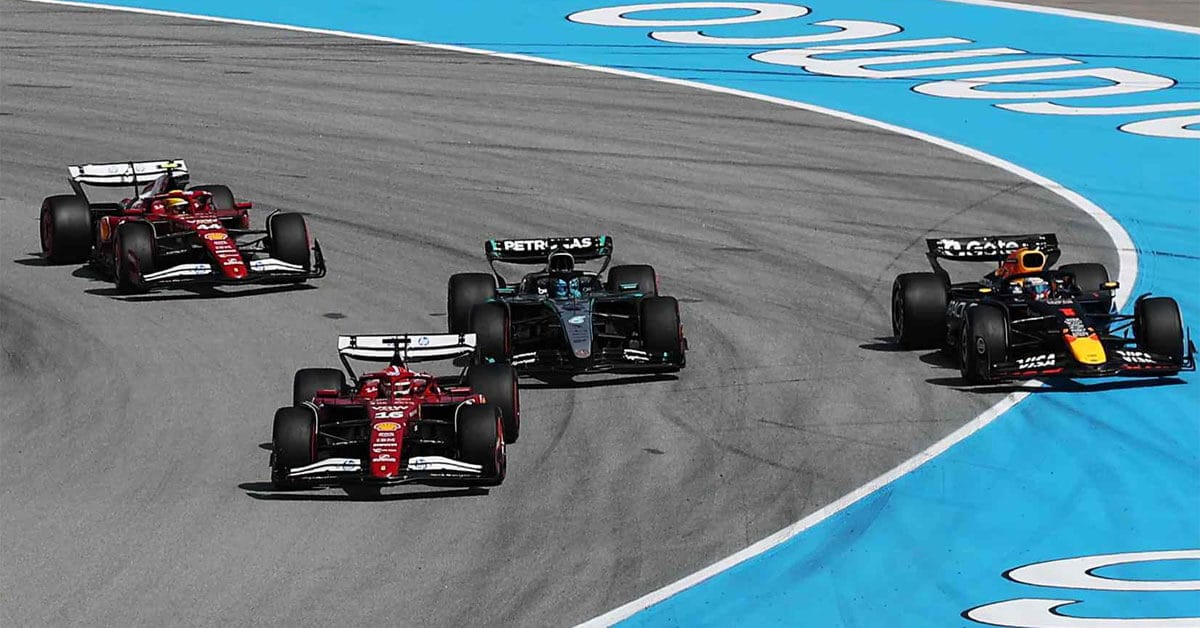
FIA single-seater director Nikolas Tombazis believes that the initial hierarchies created by the new Formula 1 power units could change far more easily than they did in the past.
Formula 1 on the brink of a revolution
During the Montmeló shakedown, the new-generation Formula 1 cars took to the track for the first time all together, or almost all together, offering an initial point of reference. Even if the picture remains very partial, it has nevertheless delivered encouraging signs for Mercedes.
While it is true that only the teams themselves know their exact run plans and therefore the correct weight to assign to lap times, reliability does not lie. From this perspective, the Brackley-based team stood out clearly, completing around 500 laps, more than any other competitor over the course of the test.
The extensive mileage accumulated by George Russell and Kimi Antonelli represents a valuable advantage that Mercedes will carry into the Bahrain tests, scheduled for 11–13 February and 18–20 February. This is further reinforced by paddock rumours surrounding the strength of the power unit developed in Brixworth, which has been the subject of controversy throughout the winter due to the variable compression ratio discussion.
At the same time, the concern among fans of rival teams has been the possibility of a repeat of the so-called “2014 scenario”, the season in which the hybrid power units were introduced and Mercedes began a period of dominance that only came to an end seven years later.
The words of Tombazis
According to FIA single-seater director Nikolas Tombazis, however, there is no real risk of history repeating itself. “We have simplified the rules (for example, the MGU-H has been removed, editor’s note), and this will mean that performance variations will be reduced. Moreover, in 2014 the simulation capabilities were different, and some people got it very wrong. I believe it will not be like that this year,” he said in comments reported by RacingNews365.
“Finally, we have regulations within the budget cap that give those who are behind a little more time to develop,” Nikolas Tombazis added. This also refers to the ADUO, a system of concessions designed to help engine manufacturers that find themselves in difficulty.
He then addressed expectations for the start of the season directly. “Do we expect everyone to be at similar engine levels in the first race? Of course not. Some will be in a very good situation, others will struggle a bit, but we have put together all the ingredients so that they can recover the gap as quickly as possible,” Nikolas Tombazis concluded.
As the 2026 season approaches, the focus remains on whether these regulatory safeguards will successfully maintain a level playing field. While one manufacturer might find a temporary edge in the early rounds, the combination of simplified architecture and development concessions suggests that the days of a decade-long engine monopoly are likely behind us. The true test of Tombazis’ confidence will come when the lights go out in Melbourne and the real chase for the championship begins.
Feb 7, 2026David Carter
Let other Scuderia Fans know about us


