
Photographers Roger Garwood and Trish Ainslie travelled to Western Australia’s remote Goldfields in 1989 to capture prospectors who had been to war for a long-planned magazine feature.
It was a different era; the gold price was sitting at a comparatively modest $US350 an ounce, well short of the $5,000 it reached late last month.
But their search proved more difficult than expected.
“We started to scour the area … met a lot of different prospectors, incredible characters,” Mrs Ainslie said.
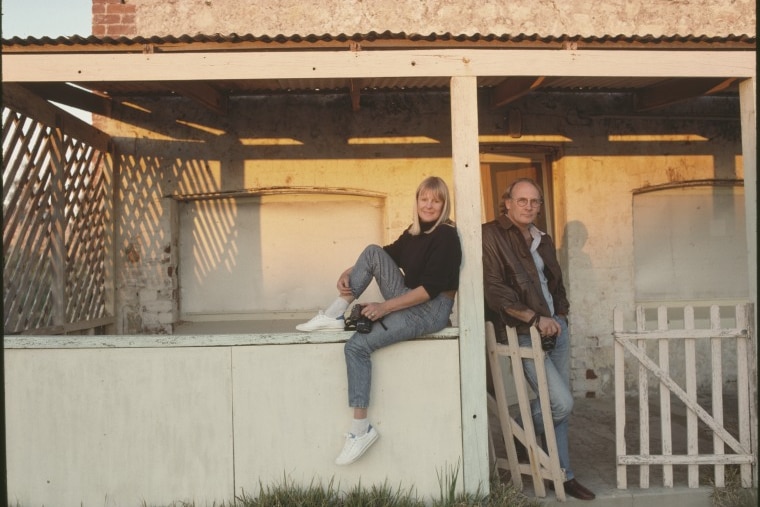
Trish Ainslie and Roger Garwood travelled to the Goldfields together in 1989. (Supplied: The State Library of Western Australia)
There were a lot of prospectors, but none who had been to war.
On their final day, they stumbled upon prospector Hector Pelham.
He was sitting on his verandah at the old station house in Broad Arrow, 40 kilometres north of Kalgoorlie.
With a patch over one eye and a slouch hat held together by wire, he was a pretty singular figure.
He had enlisted in 1939, the day World War II broke out.
After taking Mr Pelham’s photo, Mrs Ainslie asked him whether there were any other prospectors left who had fought in the war.
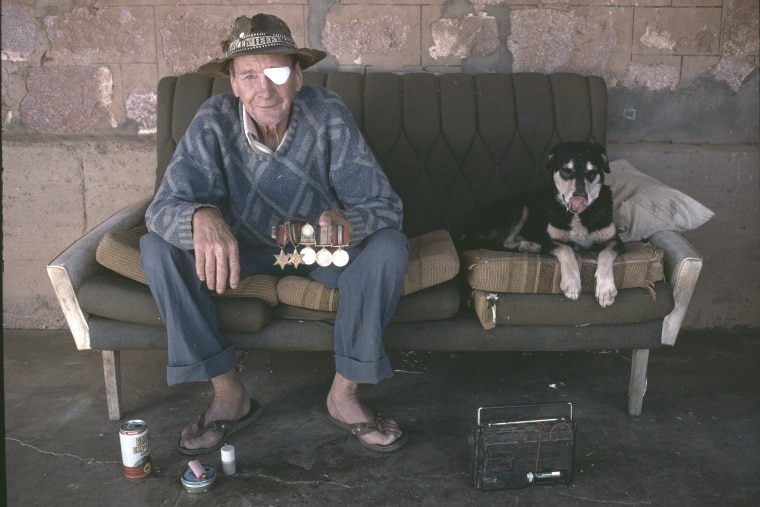
Hector Pelham holds his medals from World War II. (Supplied: Roger Garwood and Trish Ainslie)
“He said, ‘Nah — dropping off like flies,'” she said.
“And that’s where the title of the book came from.”Passed from one prospector to another
It was not until after meeting Mr Pelham, and returning to Fremantle, that the idea for a book began to come together.
Mrs Ainslie said the reaction of friends and family to her tales of the Goldfields inspired her.
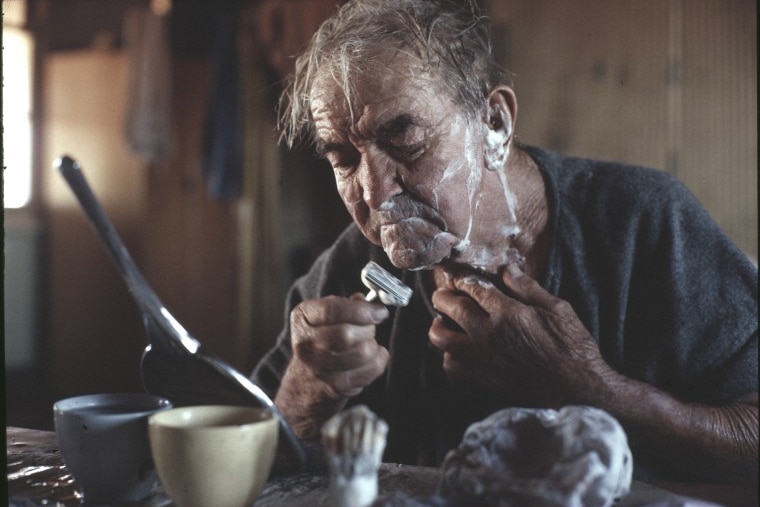
Bill Bright has a shave in Kookyine. (Supplied: Roger Garwood and Trish Ainslie)
Mr Garwood said there were plenty of interested rock kickers to be found once word of the project got out.
“Even though they lived hundreds of miles apart … they all somehow kept in touch with each other,” he said.
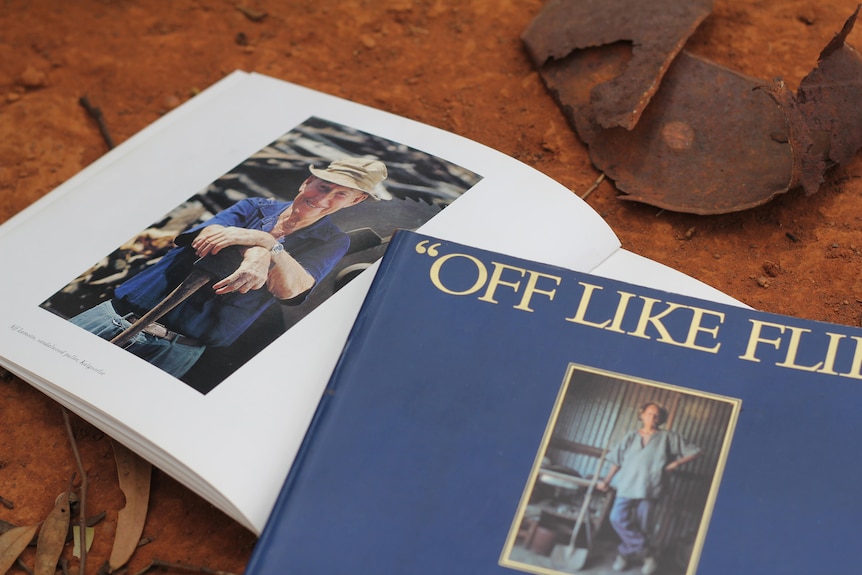
The pair published Off Like Flies in 1990. (ABC Goldfields: Macey Turner)
Their first book, Off Like Flies, was published in November of 1990 to great acclaim.
Capturing a bygone era
Mrs Ainslie said they had been lucky to capture the end of an era.
By 1989, most of Western Australia’s state batteries, used by generations of prospectors to crush gold-bearing ore, had been shut down.
Mrs Ainslie said many prospectors felt the closure of the batteries spelt a change for their way of life.
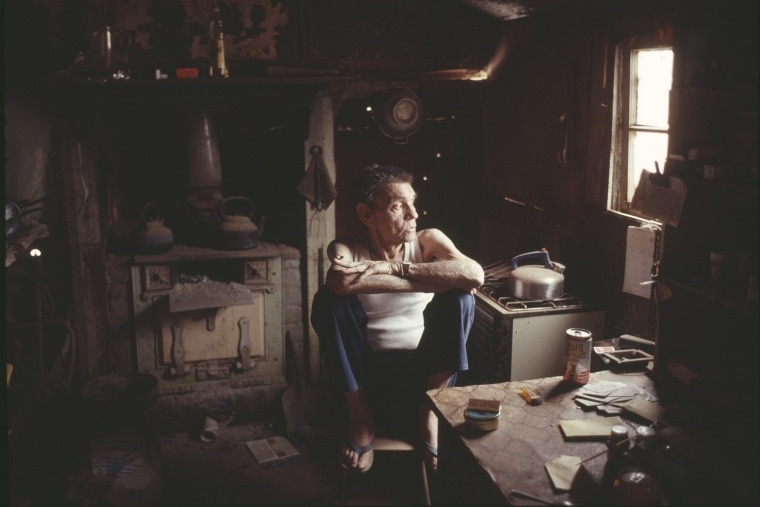
Jimmy “Banjo” McKenzie sits in his house in Gwalia. (Supplied: Roger Garwood and Trish Ainslie)
“A few of the prospectors said, ‘This is the end, this is it,'” she said.
Additionally, many of the prospectors they photographed — who still used traditional picks, shovels and sieves — were at an advanced age.
“There were so few of them … they already knew that was the way,” Mrs Ainslie said.
Extraordinary stories
Almost four decades since that first journey, Mrs Ainslie said she remembered the effect the Goldfields had on her.
“It [was] the most extraordinary thing I’ve ever seen … these people out there still panning for gold,” she said.
“I loved it, it was peaceful, the sunsets and sunrises.”
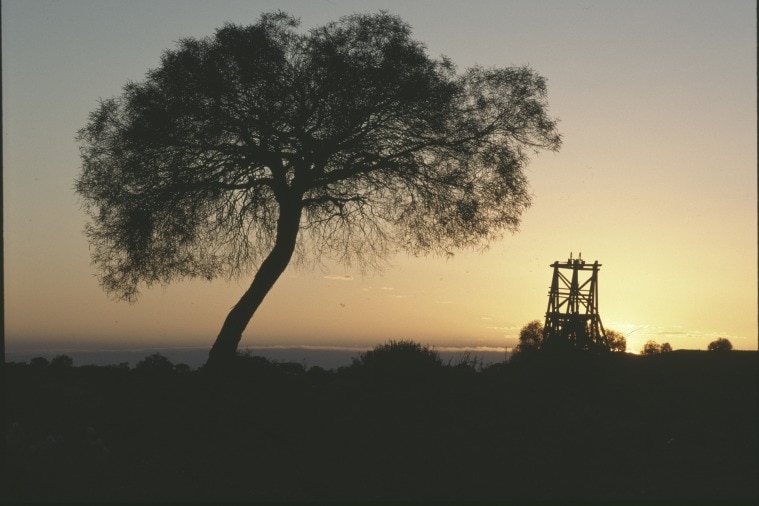
Mrs Ainslie says she loved the sunrises and sunsets. (Supplied: Roger Garwood and Trish Ainslie)
The effect was even starker for Mr Garwood, who first travelled to the Goldfields in the 1970s on holiday from his native England.
“It really was like a geography lesson coming to life,” he said.
“It was just totally flat and barren — I couldn’t believe it — this was real desert country.”Gold nuggets under the bed
Though the environment was awe inspiring, it was the prospectors themselves who stuck in Mr Garwood’s mind.
“There was that incredible solidarity amongst these people, and camaraderie like you’ve never met,” he said.
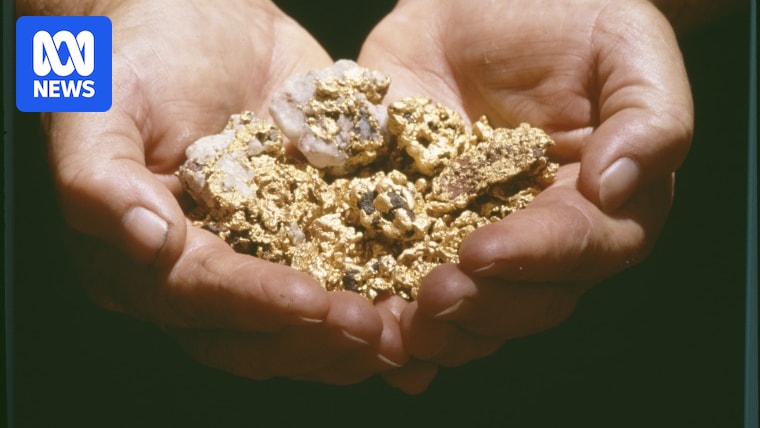
“If anyone was in trouble financially … a few of them would come together … and give this bloke a handful of nuggets — just to help him through.”
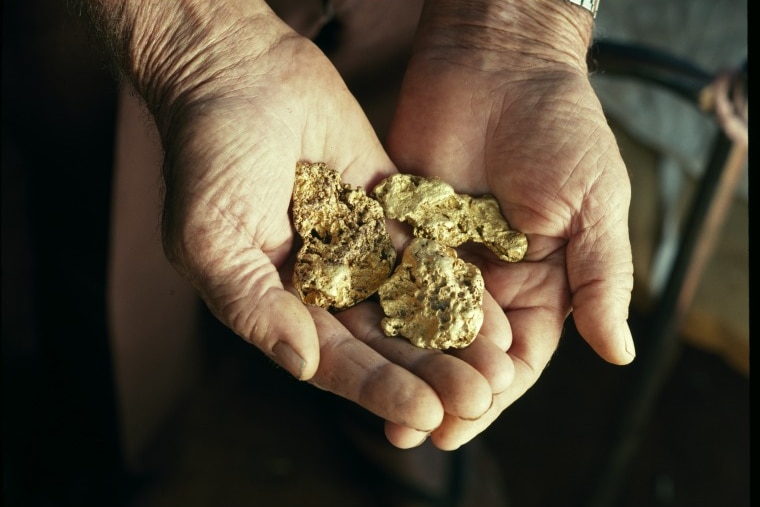
A prospector holds gold nuggets. (Supplied: Roger Garwood and Trish Ainslie)
He remembered the overriding “contentment” of the prospectors they met, many of whom lived in tin shacks with dirt floors and a gas stove in the corner.
Mr Garwood recalled a specific character named “Kingy”, ” whom he met in Meekatharra.
Kingy had invited Mr Garwood into his home and asked if he wanted to see some gold, before pulling a metal trunk from under the bed.
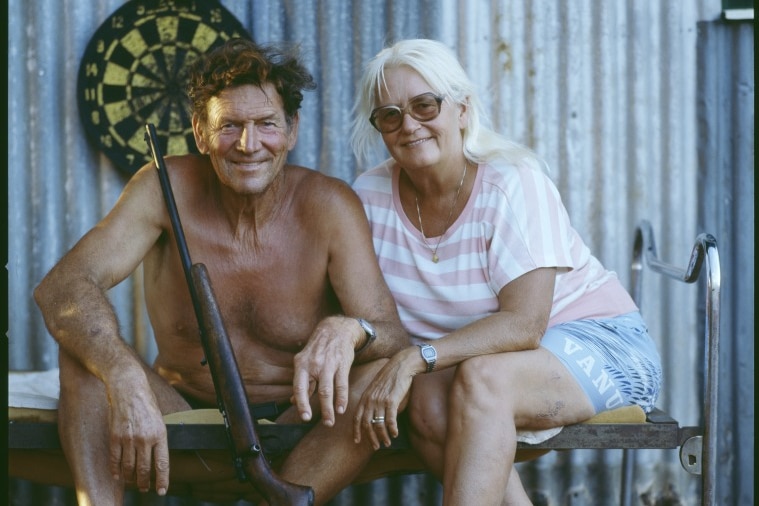
“Kingy” and “Floss” had a camp near Meekatharra. (Supplied: Roger Garwood and Trish Ainslie)
“He opened it up and it was literally full of gold nuggets,” Mr Garwood said.
“I said, ‘Jeez Kingy — what the hell are you doing with this stuff here? Why don’t you get it in the bank?'”
“He said, ‘Look, I’ve got half a million bucks in the bank — what do I need any more for?'”