
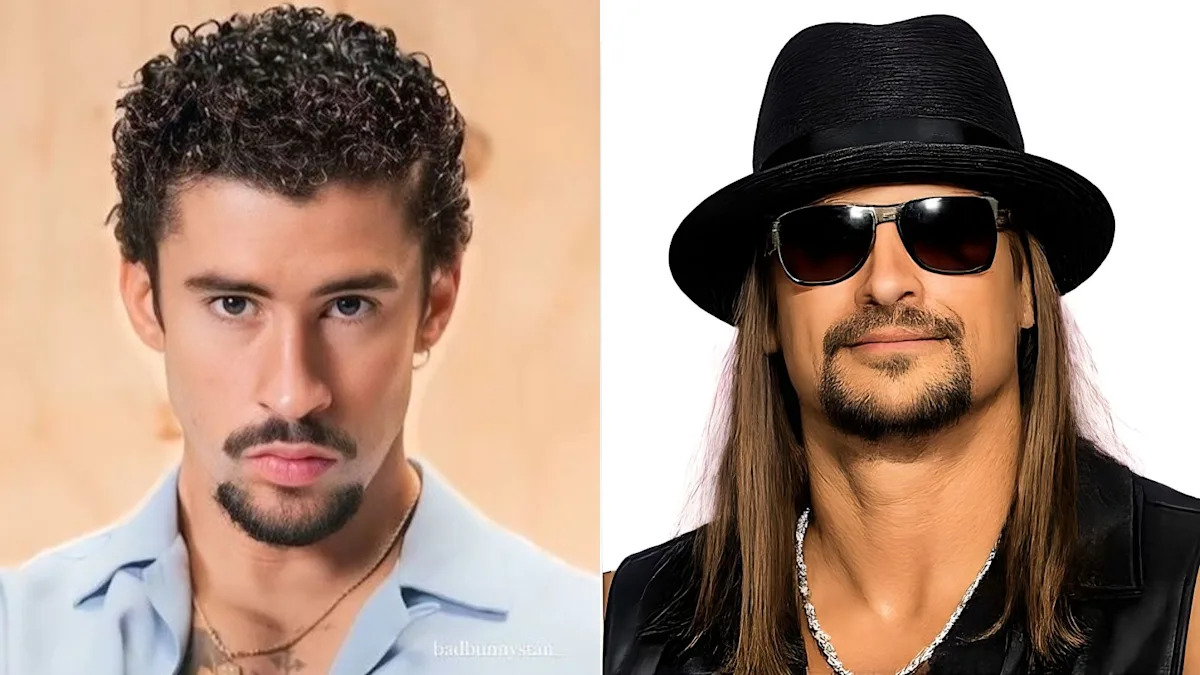
Bad Bunny’s selection as the Super Bowl LX Halftime Show headliner has sparked loud reactions, especially among critics who argue the global superstar does not represent “traditional” Super Bowl entertainment. That backlash quickly turned into action when Turning Point USA announced a competing event branded as the “All-American Halftime Show.”
The conservative organization positioned its event as an alternative to the NFL’s official performance, setting up a cultural and political contrast that immediately drew attention online and across entertainment media.
TPUSA’s Counterprogramming Strategy
Turning Point USA’s halftime lineup features Kid Rock as the headliner, joined by Brantley Gilbert, Lee Brice, and Gabby Barrett. While each artist has an established fan base within country and rock circles, the announcement was met with renewed scrutiny.
Kid Rock, in particular, has been at the center of controversy following the resurfacing of past song lyrics that reference underage girls. That attention has added another layer of debate around the event, complicating TPUSA’s attempt to frame the show as a unifying or patriotic alternative.
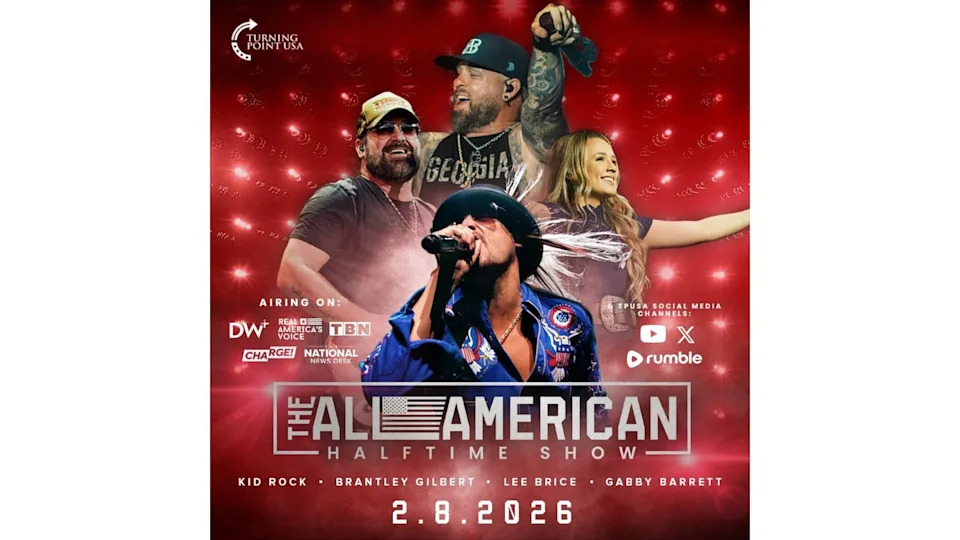
Image credit: @TPUSA/X
Spotify Numbers Reveal a Major Gap
When it comes to predicting which halftime show will dominate public attention, streaming data offers a clear and measurable signal. Spotify’s monthly listener counts provide a snapshot of each performer’s current cultural reach, and the comparison is stark.
According to figures cited by Parade Magazine, Bad Bunny currently commands approximately 85.3 million monthly listeners on Spotify. That number alone dwarfs the combined audience of every artist booked for the TPUSA event.
All four TPUSA performers combined bring in fewer than 17 million monthly Spotify listeners. Kid Rock leads the group with about 5.2 million listeners, followed closely by Lee Brice at 4.9 million. Gabby Barrett accounts for roughly 3.9 million listeners, while Brantley Gilbert trails with around 2.9 million.
Put together, the entire TPUSA lineup reaches less than one-fifth of Bad Bunny’s Spotify audience. From a pure popularity and engagement standpoint, the difference is not subtle or debatable.
Scale Matters in a Halftime Battle
The listener gap highlights a larger issue for TPUSA’s counterprogramming effort. Bad Bunny’s appeal is not limited to one genre, region, or demographic. His audience spans continents, age groups, and languages, making him one of the most consumed artists in the world today.
By contrast, the TPUSA lineup caters to a narrower audience with overlapping fan bases. Even among viewers sympathetic to the organization’s message, the pull of a globally dominant artist during the Super Bowl remains a formidable obstacle.
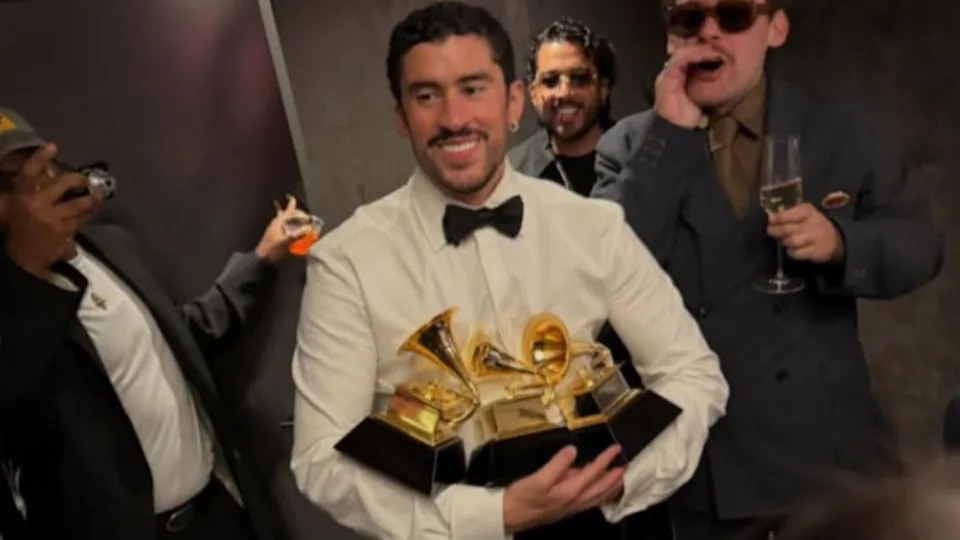
Bad Bunny posts a photo from Grammys night. Source: Bad Bunny (@badbunnypr) on Instagram.
Platform Advantage Favors the NFL
Beyond popularity, distribution also plays a critical role. Bad Bunny’s halftime performance will air on the same broadcast platforms as the Super Bowl itself, meaning viewers will not need to leave the game to watch him perform.
TPUSA’s event requires audiences to actively step away from the main broadcast. That extra friction, combined with the disparity in star power, further tilts the odds toward the NFL’s official show commanding the lion’s share of attention.
None of this means the TPUSA halftime show will be ignored entirely. It will attract viewers, generate conversation, and serve its intended audience. But when measured against Bad Bunny’s reach, influence, and built-in global fan base, the uphill battle becomes clear.
With streaming data showing Bad Bunny holding roughly five times the Spotify audience of TPUSA’s entire lineup combined, the numbers suggest that this halftime showdown is less of a competition and more of a demonstration of modern pop culture scale.
But that’s what the numbers say, what do you say?
Do you think Bad Bunny’s streaming numbers will make him edge TPUSA’s Kid Rock?