Share
Tweet
Share
Share
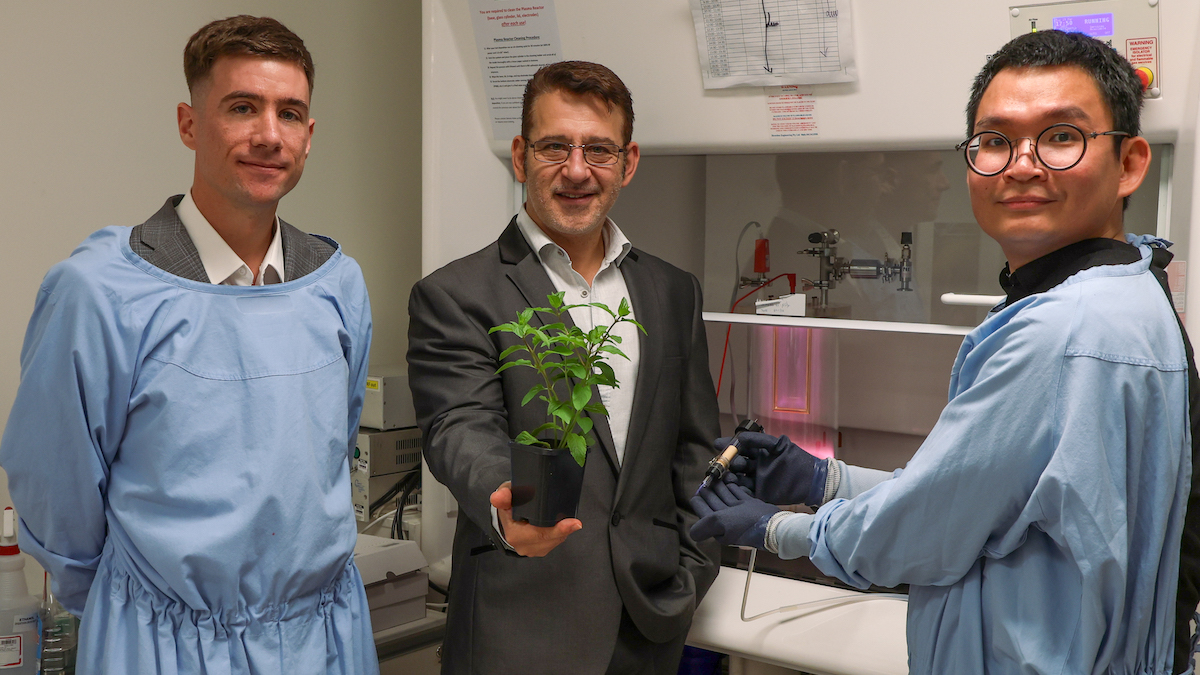
Pictured: Dr Andrew Hayles, Professor Vasilev and PhD candidate, Trong Quan Luu
Australian researchers have developed an innovative peppermint oil coating that could revolutionise how medical devices are protected against infections and inflammations. Led by Matthew Flinders Professor Krasimir Vasilev, the team from Flinders University has introduced a new method using plasma technology to apply a peppermint oil-based nanoscale film on medical devices, which staves off infections while remaining friendly to human tissue.
The origins of this innovative idea trace back to a personal experience of Professor Vasilev, who noticed significant relief from a sore throat after consuming peppermint leaves. This pushed him to investigate peppermint’s bioactive potential in medical applications through his two-decade-long research into plasma technology. The result is a high-performance coating crafted from peppermint essential oil, capable of forming a strong, ultra-thin film that adheres tightly to various medical surfaces.
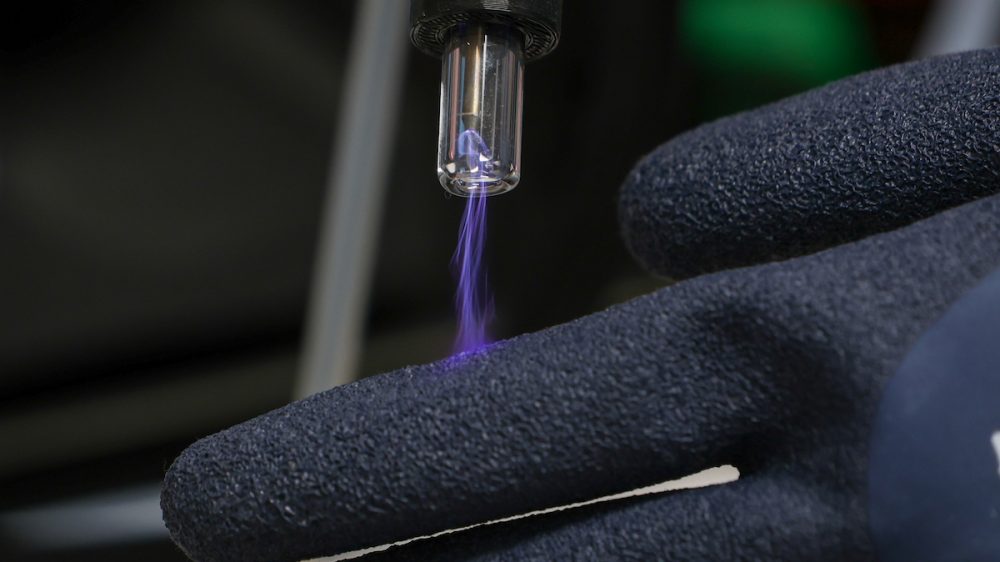 Peppermint Essential Oil Plasma
By using atmospheric pressure plasma, the method transforms the essential oil into a protective film without the need for heating or harmful chemicals. “This process does not require heating or harmful chemicals and preserves many of the biologically active groups within the oil,” says Professor Vasilev, “Importantly, it is environmentally friendly since the energy required to run the process can be entirely sourced from renewable sources.”
In a test, researchers applied the new coating to urinary catheters, which are often linked with patient infections and discomfort. Associate Professor Truong from the College of Medicine and Public Health. noted that the peppermint coating effectively removed up to 90 per cent of harmful reactive oxygen species, which are known to cause tissue damage and irritation. “Catheter-associated urinary tract infections are among the most common hospital-acquired infections and significantly contribute to patient discomfort, extended hospital stays, greater treatment costs and increased mortality,” says Associate Professor Truong. “The plasma coating demonstrated strong antibacterial action against key pathogens such as E. coli and Pseudomonas aeruginosa, killing bacteria on contact without releasing drugs into the body.”
Another significant finding from the study was the increased bacterial sensitivity to antibiotics such as colistin and levofloxacin, observed in the presence of the peppermint oil coating. “We found that the coating reduces pro-inflammatory signals and increases anti-inflammatory signals, shifting immune cells toward a healing-associated phenotype rather than an aggressive one,” says Dr Andrew Hayes. “This response may help the body tolerate the presence of medical devices more comfortably.”
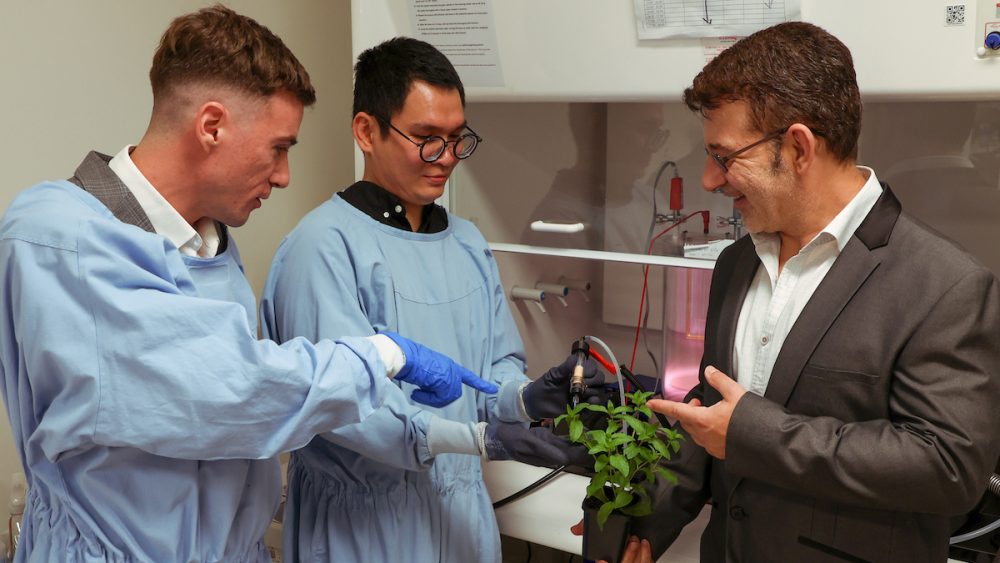
Lab tests further demonstrated that human cells could grow normally on the coated surfaces while maintaining healthy metabolic function, confirming the coating’s safety for direct contact with human tissue. Given its broad-spectrum efficacy, the potential applications of this coating extend beyond urinary catheters to other critical medical devices used in orthopaedic surgery and long-term clinical care.
As the team looks forward to advancing this technology, they are actively seeking partnerships to help bring their innovative coating to the market, with the hope that it will set the stage for the next generation of medical device coatings. They believe that natural compounds like peppermint oil can play a pivotal role in enhancing patient comfort while effectively reducing the risks of infection.
~
Check out the original article: ‘A Multifunctional Bioactive Nanoscale Coating Deposited by Atmospheric Pressure Plasma Polymerization of Peppermint Essential Oil,’ by Trong Quan Luu, Xuan Duy Do, Tuyet Pham, Ngoc Huu Nguyen, Richard Bright, Wenshao Li, Xiangyang Guo (RMIT University,Melbourne), Vi Khanh Truong , Andrew Hayles and Krasimir Vasilev was published in Small journal. DOI: 10.1002/smll.202510552