
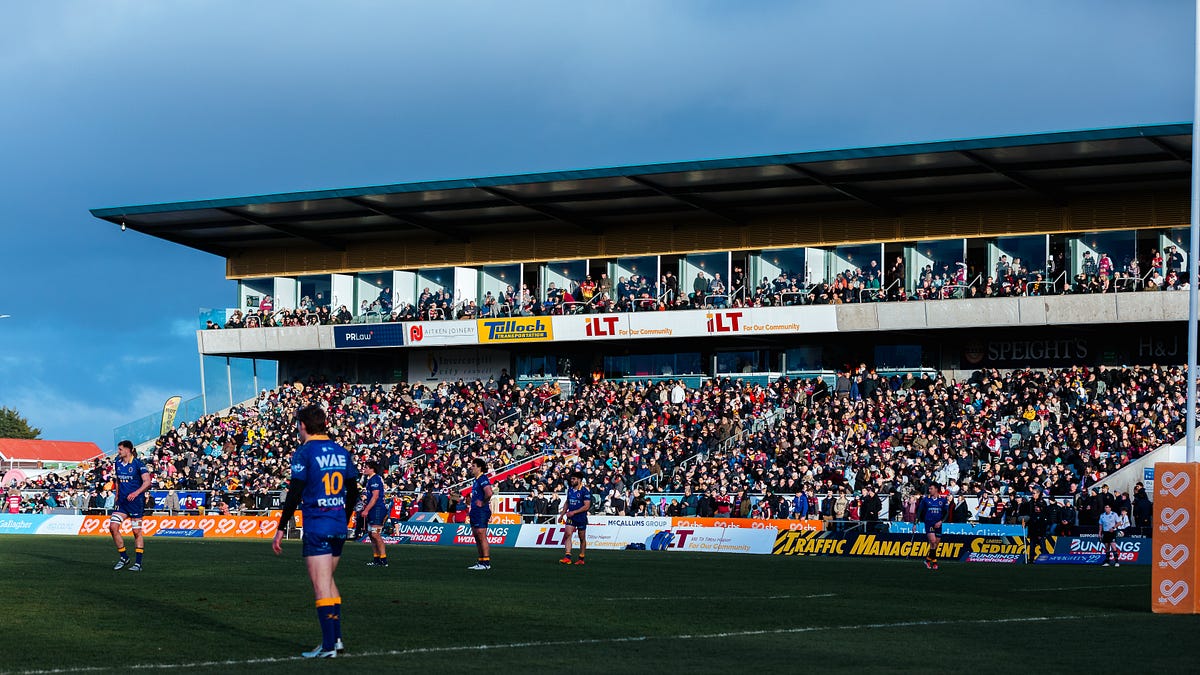
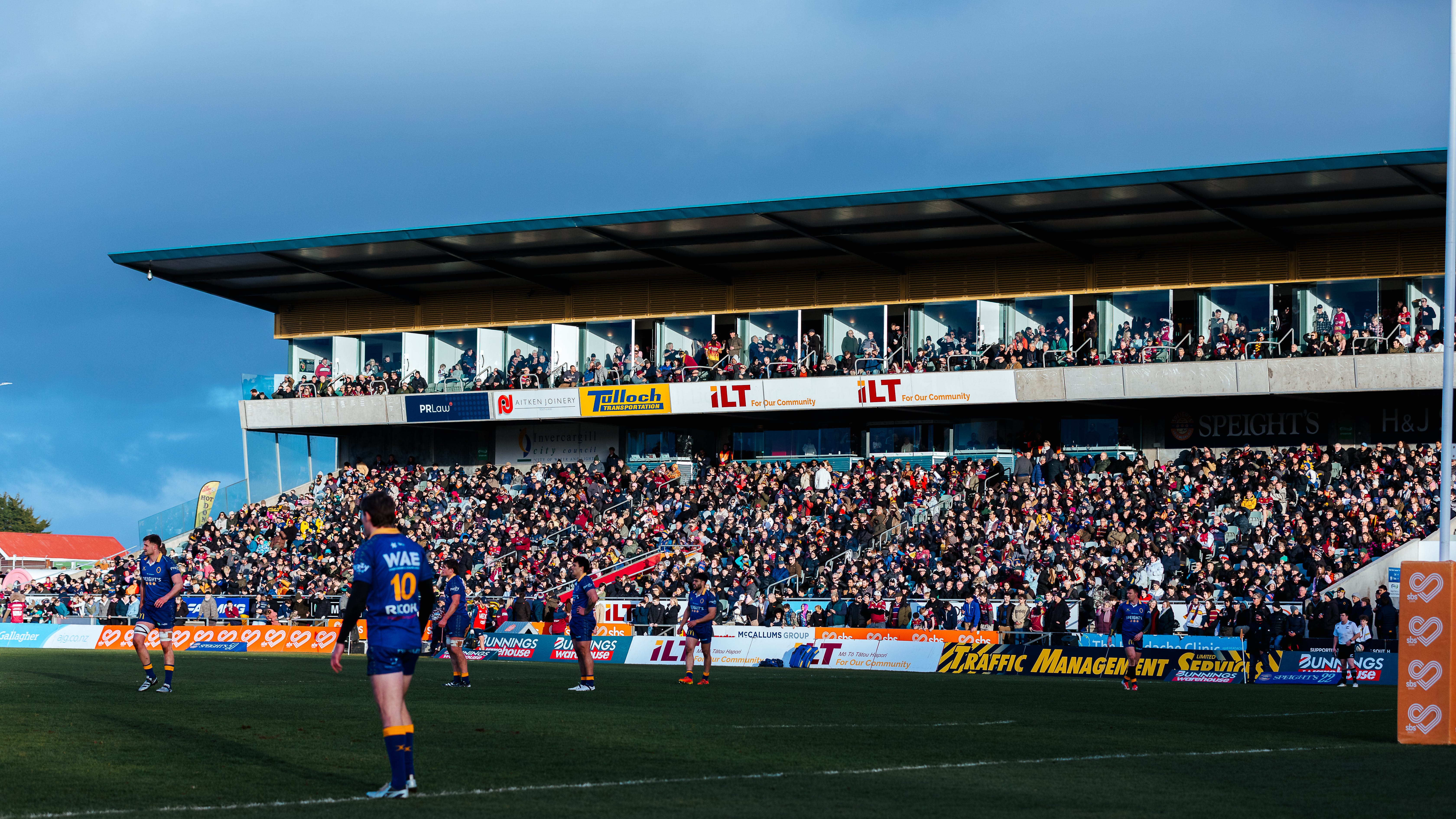
 Rugby Park needs $13.3m spent on it to bring it up to speed after years of deferred maintenance.
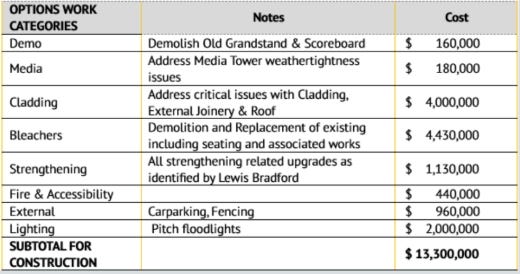
The cost to repair Rugby Park and bring it up to speed for the next 30 to 50 years has been estimated at $13.3m.
Invercargill City Council spaces and places group manager Rex Capil has compiled an extensive report on Rugby Park.
It has laid bare the current state of the venue and the need for a decision to be made after years of deferred maintenance.
Capil’s work included enlisting consultancy firm WT to put together an appraisal of the cost of repairing Rugby Park versus a complete rebuild.
That estimated cost for required repairs and renewals came in at $13.3m.
Capil’s report points to 25 years of a lack of maintenance as to why the venue is in the state it is and needs an $18m capital investment budget to sort it out.
The $18 m budget has been recommended to allow for contingency, as well as an increase in cost from $13m when work would start from 2027.
Last week, Capil presented his findings at a briefing for councillors and various other representatives of the ILT, Community Trust South, Rugby Southland, and Active Southland.
The Rugby Park repairs and renewals estimates:
The important question the region’s leaders and the wider Southland community need to first answer is whether it wants, and needs, a regional outdoor stadium venue capable of hosting national-type competition fixtures.
Capil’s report says the opportunity cost of not investing, and in turn having no regional outdoor stadium venue, needs to be recognised.
“The ripple effects and impact on city economic activity – hospitality, accommodation, regional identity etc.”
If Southland chose not to invest in Rugby Park and the venue came to the end of its life, Invercargill would become the only city of its size in New Zealand that did not have an outdoor stadium with the capability of hosting the likes of NPC games.
The analysis report delves into case studies of cities such as Palmerston North, Napier, New Plymouth, and Whangarei, and their stadiums.
 Rex Capil.
So, what are the potential options in front of the community?
If it is decided that Invercargill does not need, or cannot afford, an outdoor regional stadium, one option would be to demolish Rugby Park.
The most notable impact would be the need for Rugby Southland to find an alternative venue capable of hosting NPC games.
Capil’s report went as far as throwing up the prospect of the Southland Stags playing its home games in Queenstown.
It’s hard to see that realistically happening with the ILT being a significant funder behind Rugby Southland and the Stags.
But the point is, without Rugby Park, Southland does not have a venue capable of hosting NPC fixtures.
Those who aren’t all that interested in rugby will say, “so be it”.
Those who are interested will point out that the Stags last year drew in the biggest crowd for a single-day event in the city, and there are economic benefits that come from that.
Not to mention a bit of provincial pride, for many, that comes with it.
Another option thrown up is to demolish Rugby Park, sell the land, and build a new “boutique” outdoor stadium elsewhere. Maybe at Surrey Park.
The thought from some is that the sale of the Rugby Park land would go towards that new, smaller stadium elsewhere.
Although the Capil’s report points to that being an unrealistic option.
The cost to demolish Rugby Park has been estimated at $6.6m, while the market value for the Rugby Park land has been estimated at $2.6m.
That would mean a $4m loss in choosing to demolish Rugby Park, and there would be no money from a land sale to put towards another venue.
On top of that, the estimated cost of building a new stadium elsewhere is $150m to $180m – significantly more than the $18m budget suggested to repair Rugby Park as it is.
The report says, “[It] leads to the current site being the only (realistic) viable option for the location of an outdoor stadium/venue of this nature in Invercargill.”
Rugby Park’s central location has also been identified as an advantage, with it being easily accessible for those living in south Invercargill, as well as those in the north.
Another potential option would be to demolish Rugby Park and go about a complete rebuild on the current site.
But again, that would come with the $6.6m demolition cost, as well as an estimated $90m to $110m rebuild.
It appears to be a simple choice between 1. Investing $18m into renewal, repairs, and maintenance (over 2 financial years), or 2. Not proceeding with an outdoor venue and investing $6.5m into demolishing it (over 1 financial year).
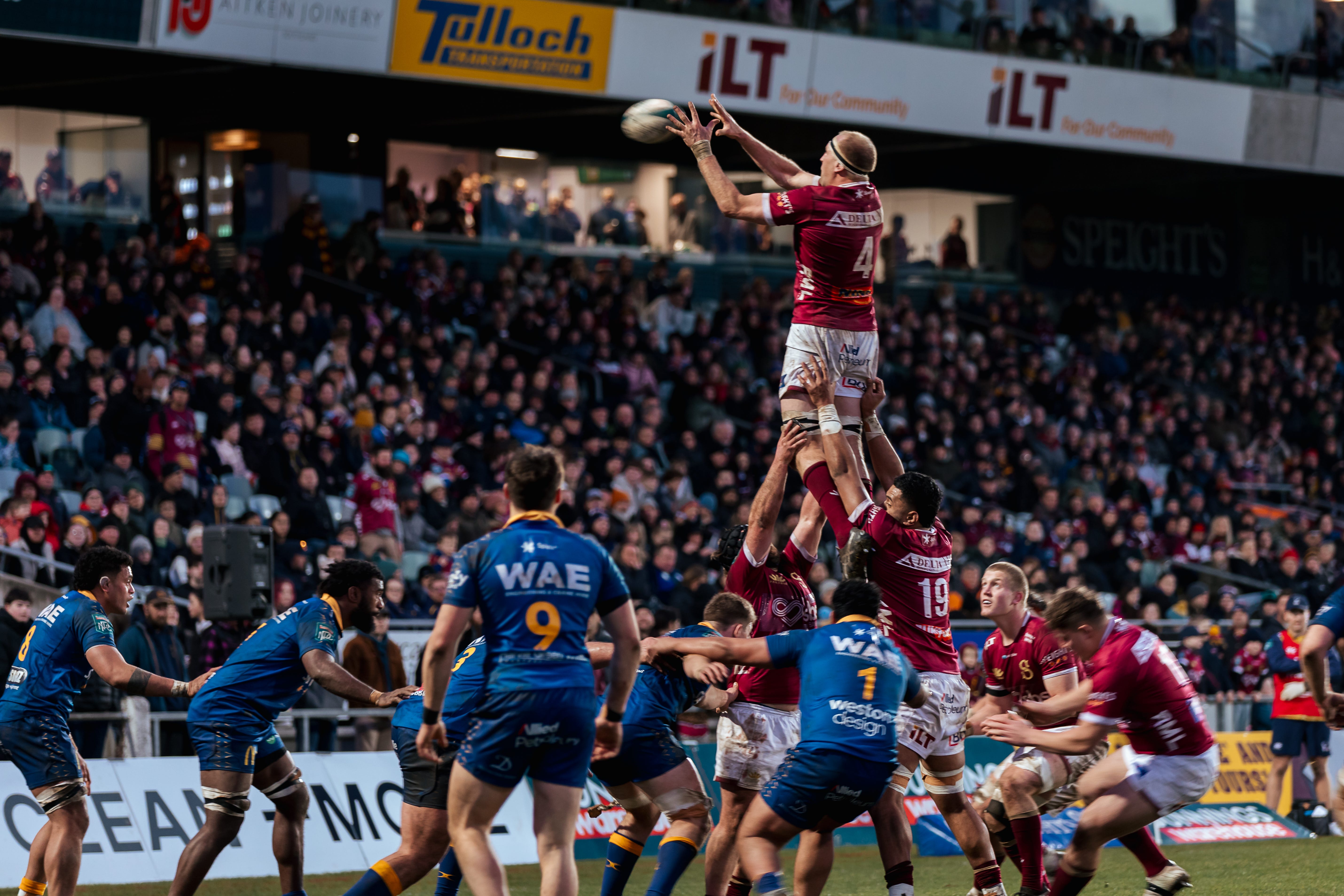 Where would the Southland Stags play if Rugby Park was no longer? Photo: DEBBIE FAHEY
Rugby Park has predominantly been used for rugby, with the odd other event being staged there each year.
There has been plenty of talk during the past decade or longer about the need to turn Rugby Park into a more multipurpose venue.
Rugby Southland has welcomed that push. It also increased its own use of Rugby Park in 2025 to ensure the venue was being utilised.
But despite the council’s hope for Rugby Park to get more use from other users, the reality is it hasn’t eventuated.
Capil’s report says that if the $18m in capital spend is invested into Rugby Park, the council must also commit to an operational investment.
He wrote MUST in capital letters, highlighting just how important Capil believed that point was.
Capil pointed to the staffing resource that stadiums in the likes of Napier and Whangarei had attached to them, whereas in Invercargill, there was no dedicated staff trying to increase the use of Rugby Park.
The point is that there will be very few event organisers knocking on the door unprompted, saying they want to use the venue.
Someone needs the job to promote the venue and increase its use.
Capil has thrown up an idea to increase the resource attached to Rugby Park – and other council venues – without lumping further burden on ratepayers.
It would see the council pull $400,000 of its Great South funding and put that money into specific opportunities at its own council venues.
Capil points to changes in the Great South Statement of Intent from 2024-2027 to 2025– 2028 with the exclusion, or deletion, of “deliver and support major events”. The reduction is in the vicinity of $185,000 to $200,000 per annum in regional event delivery expenditure.
“It appears this has left a significant investment gap in the events sector that needs to be retrieved and targeted directly for future benefits and assistance for usage of ICC venues,” Capil wrote.
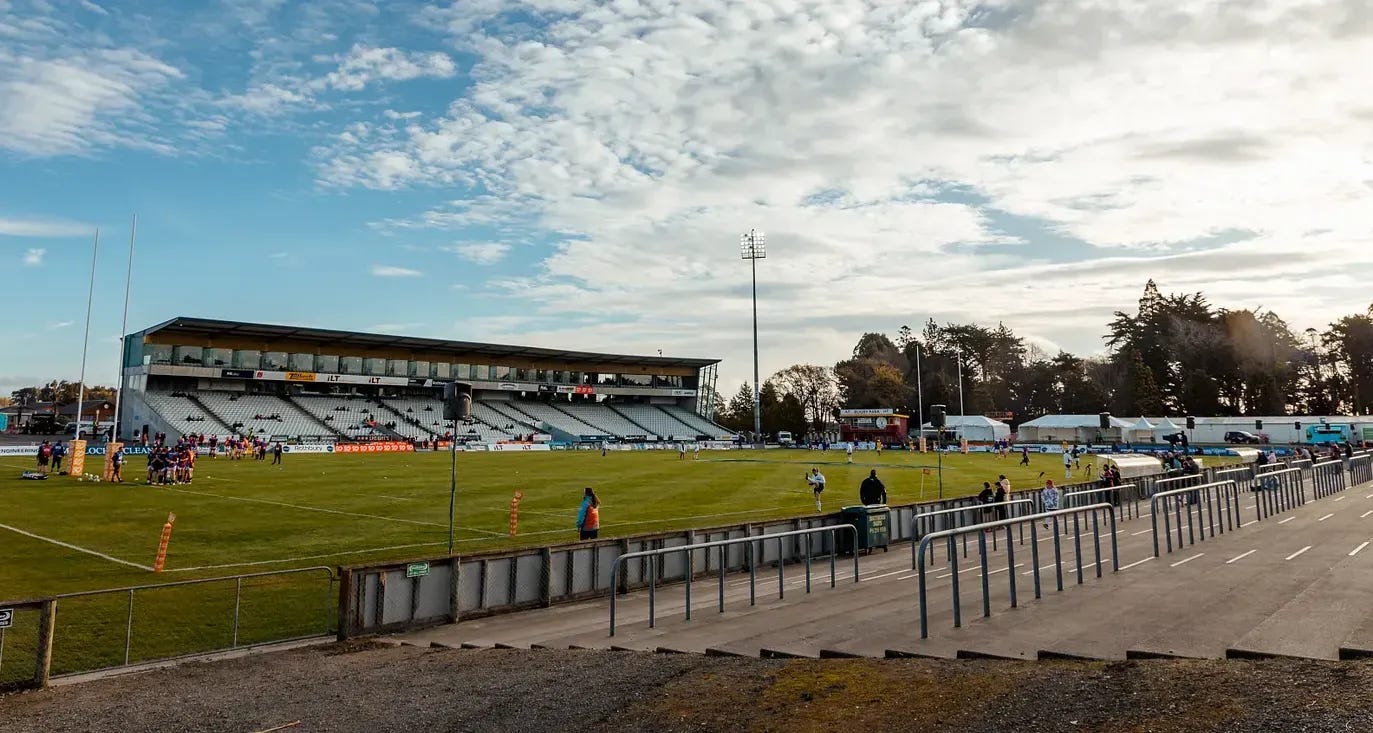 Does Invercargill and Southland need and want an outdoor stadium venue? That’s a key question the community needs to answer. Photo: DEBBIE FAHEY
While the Rugby Park name has history, it appears most recognise that a name change is inevitable for a couple of reasons.
One is to help change the perception that the venue is for rugby only, and ensure there is a focus on it as an events and functions venue. Much like ILT Stadium Southland is a venue for basketball, netball, cycling, and other activities.
There is also a potential revenue opportunity to partner with a commercial naming rights sponsor.
In Palmerston North, a 10-year naming rights partnership was formed with Central Energy Trust, at $2.2m, for its main outdoor regional stadium venue in Manawatu.
The current naming rights market is said to be $120k to $180k per annum.
There is a feeling among some that Invercargill ratepayers are left to do the heavy-lifting when it comes to important regional facilities, such as Rugby Park and ILT Stadium Southland.
That’s despite the users of those venues coming from throughout Southland.
Capil’s Rugby Park report recommends that the council initiate a discussion on a regional funding model.
Amongst the case studies, it highlights the “unique and successful” model in Taranaki for the Taranaki Stadium in New Plymouth.
“While it has been a moving feast over the past decade, in simple terms the Taranaki Regional Council has led the capital development works required, and the New Plymouth District Council has the responsibility for operating the Stadium.”
The Taranaki Regional Council struck a targeted rate for 10 years for $10m capital development works.
Based on the analysis, the ratios to repay the $10m was 78% from those in the New Plymouth District Council, 17% from South Taranaki District Council ratepayers, and 5% from Stratford District Council.
Capil suggests there is an opportunity for the Invercargill council to test the appetite (again) of neighbouring councils, regional and local funding agencies, and the community in general around a regional rating approach for important regional facilities.
Capil’s extensive Rugby Park assessment report cannot be another of the many reports on Rugby Park that have been filed away over the years and not acted on.
There is a feeling that if the Invercargill City Council had acted on the Otium Report tabled in 2021, the matter might have already gone a long way towards being sorted, and probably at a cost less than the $18m budget now being suggested.
There’s been a suggestion that city leaders have previously put it in the too-hard basket and waited for someone else to address it, hence why the facility has been shown little love for close to 25 years now.
Capil’s findings and recommendations will now go to a council meeting on Tuesday, February 17.
If the recommendations – including the $18m capital investment – are supported, the project will be linked into the council’s 2027-2037 Long-Term Plan process.
It will be during the consultation period when the public will get to have their say on the topic.