
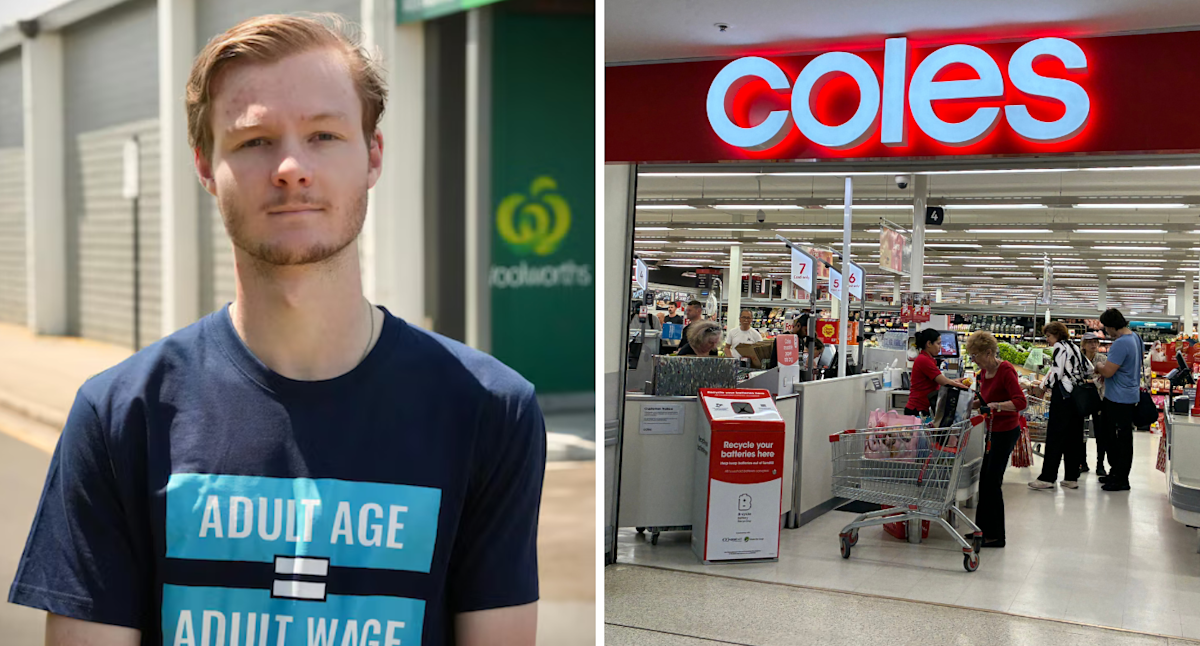
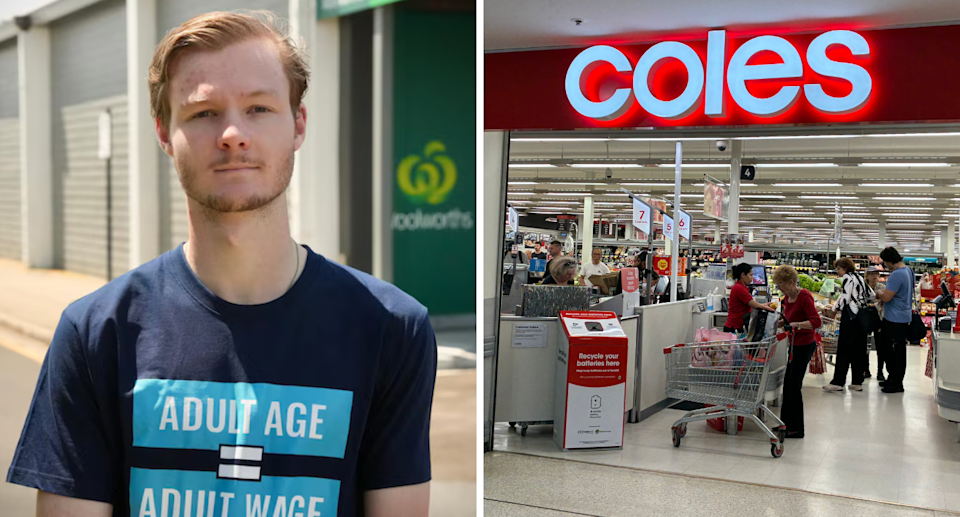
 Woolworths worker Ben Walker is paid less than his older colleagues due to his age. (Source: ABC News/Yahoo Finance)
Millions of young Australian workers could receive a pay boost if a key wage case rules to abolish junior rates. Big businesses like Coles, Woolworths and McDonald’s are often a stepping stone to full-time employment for young people, but businesses have warned the proposed changes could have dire consequences for a generation of young workers.
Junior pay rates apply to workers aged under 21 in agreements covering the retail, fast food and pharmacy sectors. The current rules mean 18-year-olds are paid 70 per cent of the award rate, 19-year-olds receive 80 per cent, and 20-year-olds get 90 per cent.
Australian Industry Group chief executive Innes Willox has warned changes to junior pay rates will make it harder for young people to get jobs.
RELATED
“If there are substantial changes, that makes it incredibly difficult for employers to hire young people,” he told ABC News.
“Young people won’t be hired for jobs, and that will be to the detriment of them … the workforce and the economy as a whole.”
Willox said junior pay rates reflected the output, contribution to the workplace, and the fact that workers are new to the workforce and learning new skills.
Do you have a story to share? Contact tamika.seeto@yahooinc.com
The Australian Retailers Association (ARA), who represents some of Australia’s biggest supermarkets like Coles and Woolworths, has also argued changes to junior rates would “undoubtedly” make it harder for young Aussies to enter the workforce and lead employers to favour more experienced applicants.
The ARA, which has since merged with the National Retail Association to become the Australian Retail Council, noted retail was the single biggest employer of young Aussies, employing more than 500,000 workers under 24.
The Shop, Distributive and Allied Employees Association (SDA) has applied to the Fair Work Commission to scrap junior rates for employees who are 18 years or older who work in retail, fast food and pharmacies so they can be paid adult wages.
The Fair Work Commission’s full bench heard evidence in the case in October and November. If successful, junior wages would be charged by workers covered by the three awards in question.
There are around 70 other awards that allow employers to pay younger people less, so the decision could also mean these are challenged and changed.
Twenty-year-old Ben Walker has been working at Woolworths for the past four years, but is paid junior rates. He says he has responsibilities, so should be paid adult wages.
While he understands why he was paid a lower wage when he started out at 16, he told Yahoo Finance it was “unfair” that the rules meant he was paid less compared to older colleagues who actually had less experience.
“My bosses think I’m responsible enough to run the store, report the day’s cash receipts and the registers and shut the store, but I’m not being paid as much as a person who happens to be 21,” he lamented.
 Walker says the ‘unfair’ rule means he is paid less than his colleagues, even when he has more experience than them. (Source: Supplied/Getty)
The Australian Council of Trade Unions (ACTU) has backed the push, arguing employer groups have got it wrong when they claim changing junior rates would cost young workers their jobs.
“Employers argue adult pay for 18-year-olds will kill jobs. We’ve heard it before. They said equal pay for women would kill jobs. It didn’t,” ACTU President Michele O’Neill said.
“They said cutting penalty rates would create jobs. It didn’t. Fair pay doesn’t kill jobs, but ill-founded employer scare campaigns can and do.
“Other countries have fixed this already. In New Zealand, young workers move to full pay after six months. In most Canadian provinces, youth rates don’t exist. Australia is behind, and young workers are paying for it in every shift.”
The Fair Work decision is still pending and no date has been set for when it will hand down its ruling.
Get the latest Yahoo Finance news – follow us on Facebook, LinkedIn and Instagram.