
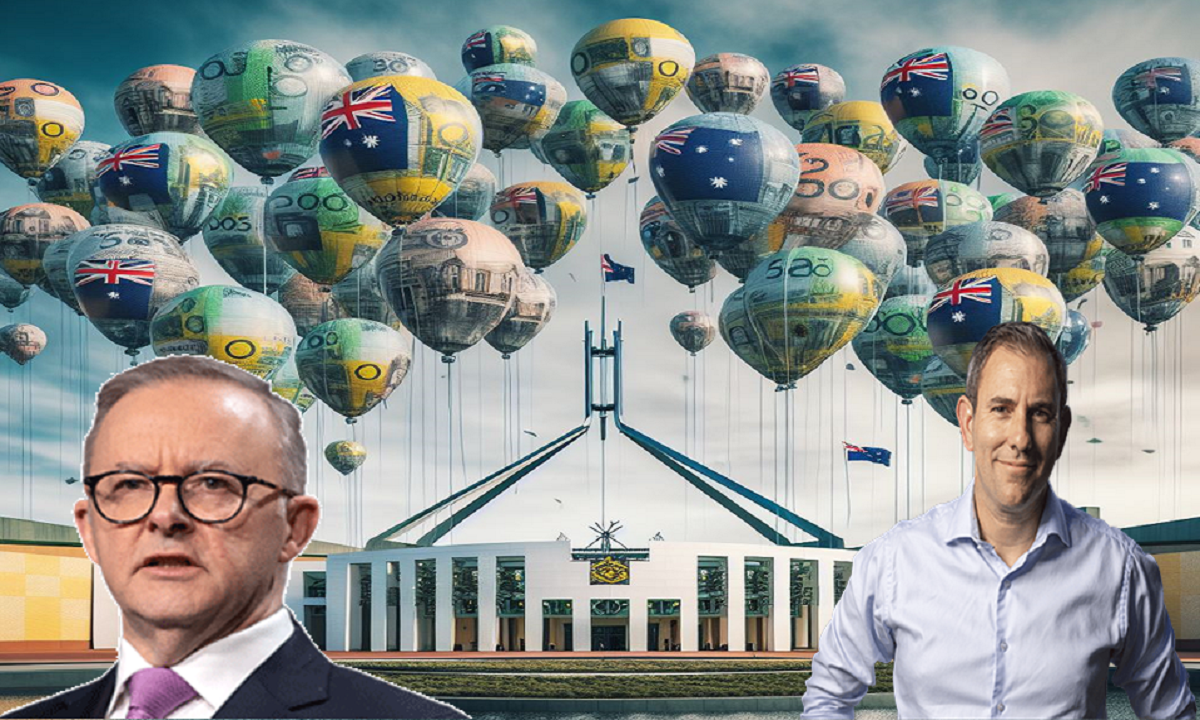
Last week, following the Reserve Bank of Australia’s (RBA) decision to lift the official cash rate (OCR) by 0.25%, Treasurer Jim Chalmers claimed that excessive private sector demand was behind Australia’s high inflation.
In a media release directly following the RBA’s decision, Treasurer Chalmers said “the Board’s statement today does not mention government spending. It makes it very clear the pressure on inflation is coming from private demand”.
Treasurer Chalmers doubled down on these claims in subsequent media appearances, claiming that government spending was “not a factor in the decision that they (RBA) took”.
Several private-sector economists have ridiculed the Treasurer’s claims, noting that near-record-high government spending has driven up aggregate demand into a supply-constrained economy, thereby fueling Australia’s inflation, which is now among the highest in the advanced world.
Advertisement
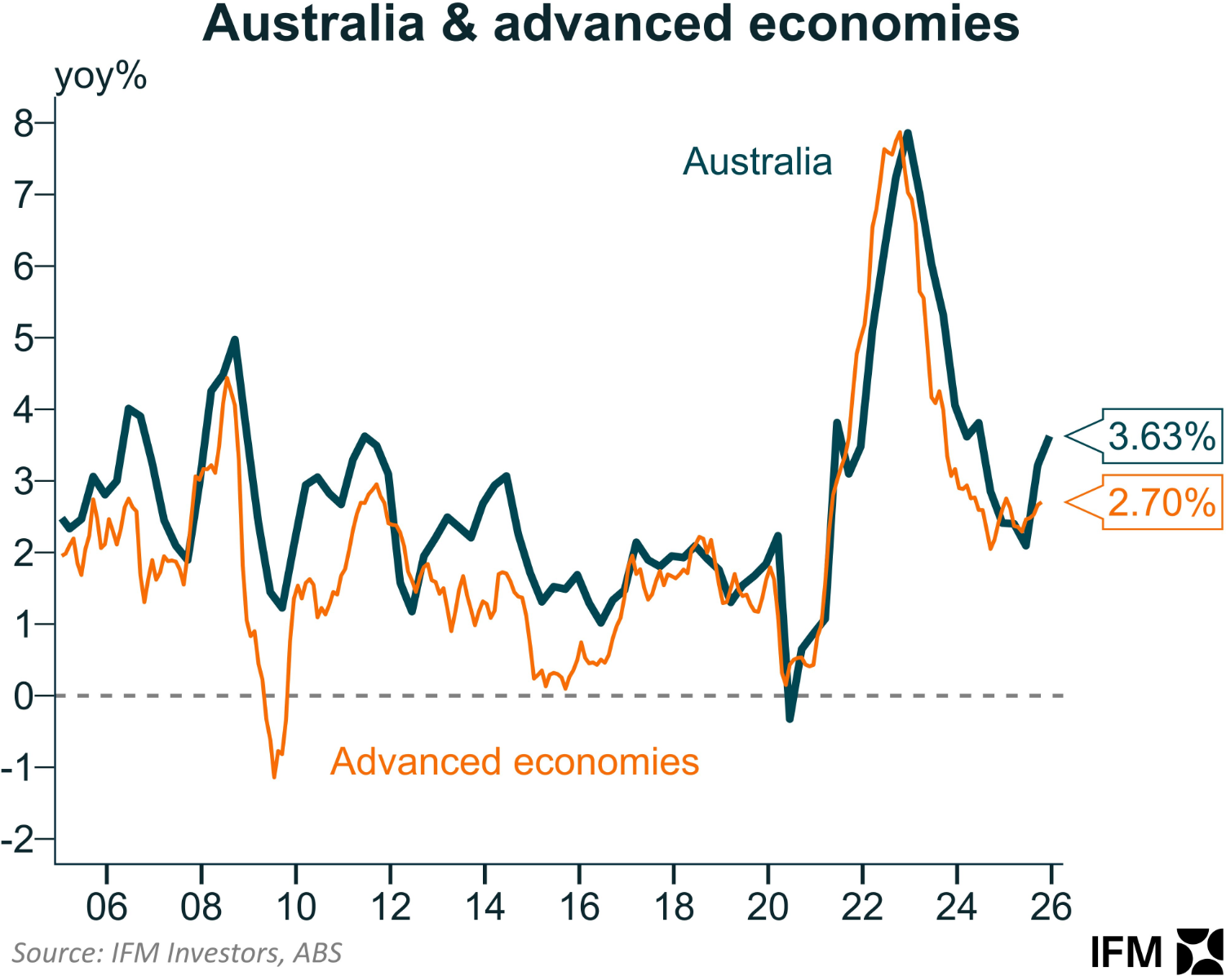
Chart by Alex Joiner at IFM Investors
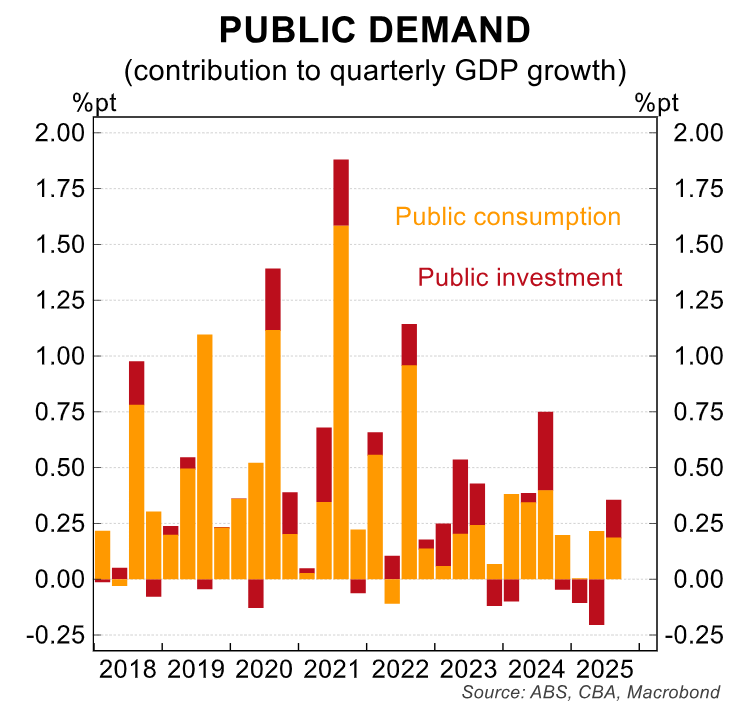
Former head of Australian economics at CBA, Gareth Aird, noted that government spending has “played a big role because up until quite recently, it was really growth in public demand which was driving growth in GDP. Private demand growth was pretty weak”.
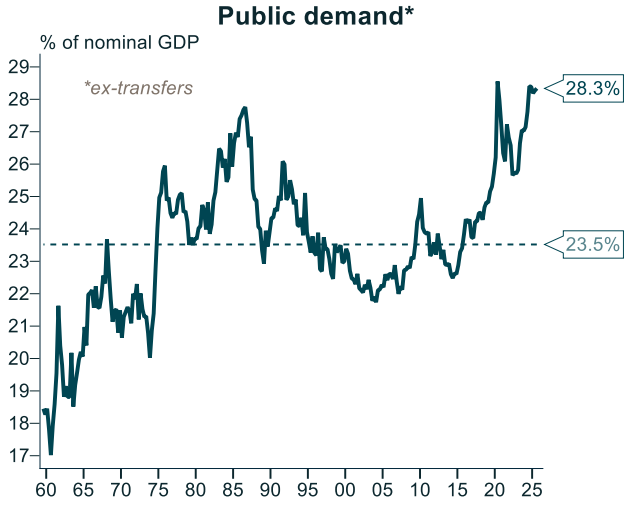
Chart by Alex Joiner at IFM Investors
Advertisement
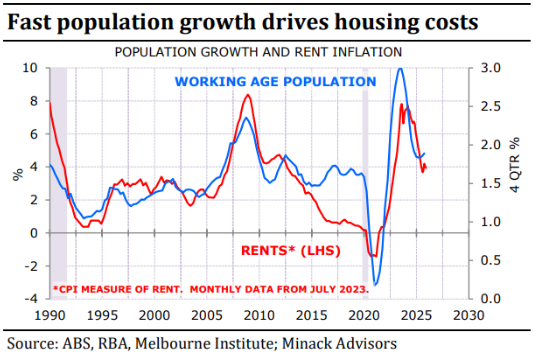
Aird added that the government’s high immigration intake has helped to drive up housing inflation (around 20% of the CPI basket), whereas energy policies have also contributed to inflation.
AMP’s chief economist Shane Oliver said that with the economy experiencing supply constraints, “the best thing government can do to help alleviate this is to lower the level of public spending”.
Advertisement
Former RBA board member Roger Corbett told Sky News that the public service has “dramatically increased”, driving up aggregate demand and inflation.
“They’re spending vast money on renewables. This is a big spending government and you can’t have a big spending government and a growing economy, because aggregate demand exceeds supply and interest rates have to go up”, he said.
However, the biggest criticism of Treasurer Chalmers’ claim was from RBA governor Michelle Bullock herself, who told the House Standing Committee on Economics that public spending feeds demand in the same way as private spending does.
Advertisement
“Well, it does, as does private. It’s part of aggregate demand”, Governor Bullock said.
“It does, because as you say there’s some public demand and then there’s transfers and taxes which also flow into that”.
“It’s factual, it is not an opinion, it’s not a judgement, it is a fact. That’s all it is”.
“Public demand expenditure and private sector, all of that adds to demand”, she said.
As always, the data settles the debate around the role that excessive government spending is playing in driving inflation and interest rates up.
Advertisement
As CBA illustrates below, the majority of recent economic activity has come from government spending. By comparison, private demand has been soft, outside of the December 2025 quarter:
Independent economist Chris Richardson illustrated the point nicely on Twitter (X), noting that “in the past three-and-a-bit years, private spending is up 22.5%, while public spending is up 27.5%”:
Advertisement
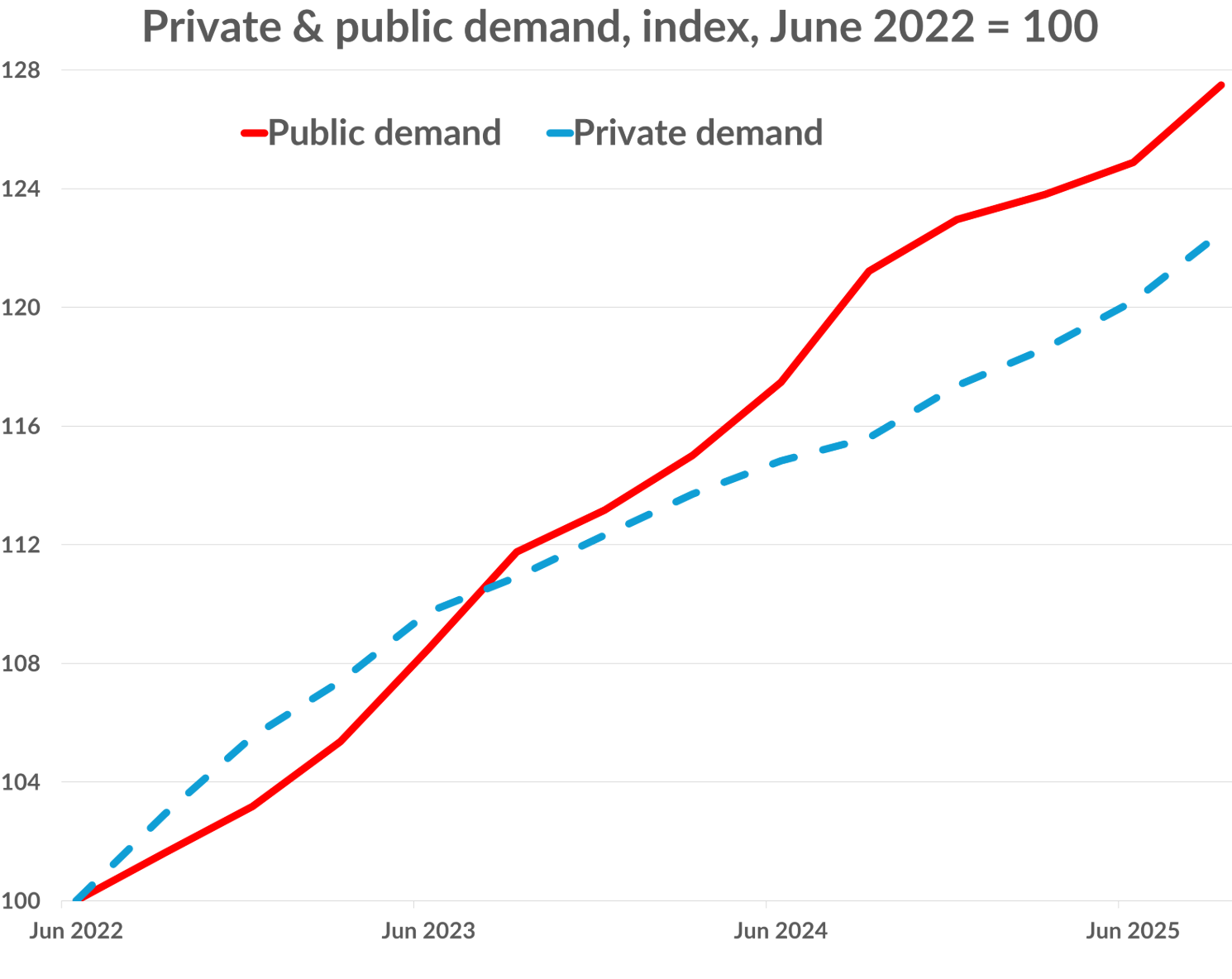
Source: Chris Richardson
However, Richardson notes that “things such as taxpayer subsidies for electricity or for child care don’t count as public spending (those dollars do get spent, but they get spent by families, so they show up as higher private spending)”.
Therefore, government spending decisions are likely having an even bigger impact on demand.
Advertisement
The labour market shows similar trends, with the non-market sector (i.e., public services, healthcare & social assistance, and education), which is primarily government funded, creating 69% of the nation’s jobs between Q1 2023 and Q3 2025:
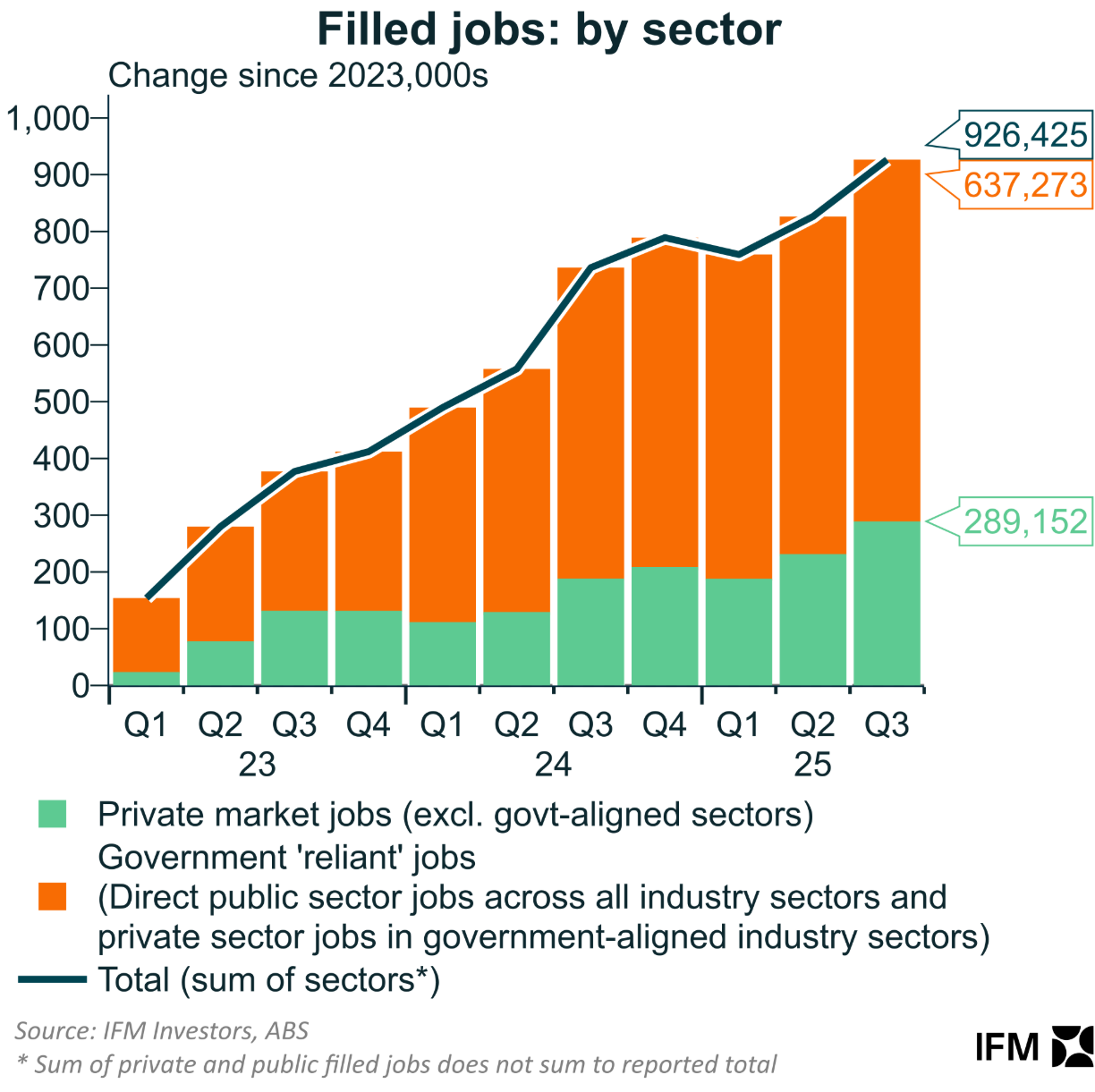
These are statistical facts that show that public spending has driven recent economic activity (demand) and job growth.
Advertisement
Moreover, decisions made by governments and regulators have helped drive up inflation.
Administered prices, like essential utilities (e.g., electricity, water, and gas), council rates, and public transport fares, grew by 7.55% last calendar year, well above the broader inflation rate:
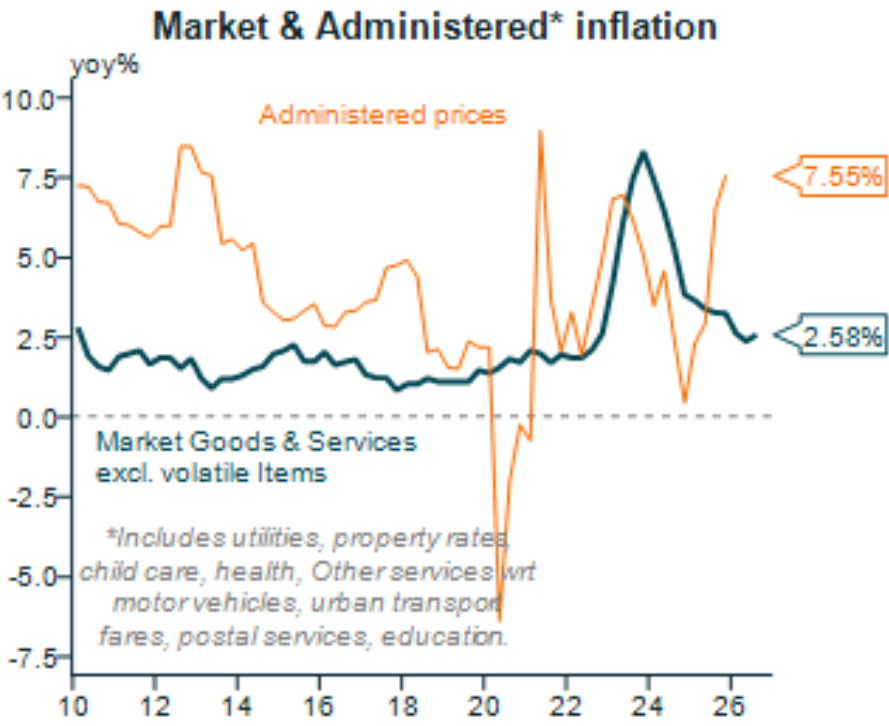
Chart by Alex Joiner at IFM Investors
Advertisement
As noted earlier, excessive levels of immigration have helped to drive up rents and housing inflation, while policies around gas and electricity have pushed up energy inflation.
Ultimately, Australia’s governments must help the RBA fight inflation by eliminating policies that push up prices and crimp the nation’s productivity growth and supply potential, including:
Excessive and poorly targeted immigration Excessive and wasteful fiscal spending Gas and electricity market failures
Advertisement
The RBA should also be far more proactive in holding our governments to account. They are supposed to be independent from government. Therefore, they should be free to comment on policies that undermine price stability, productivity, and the broader economy.