
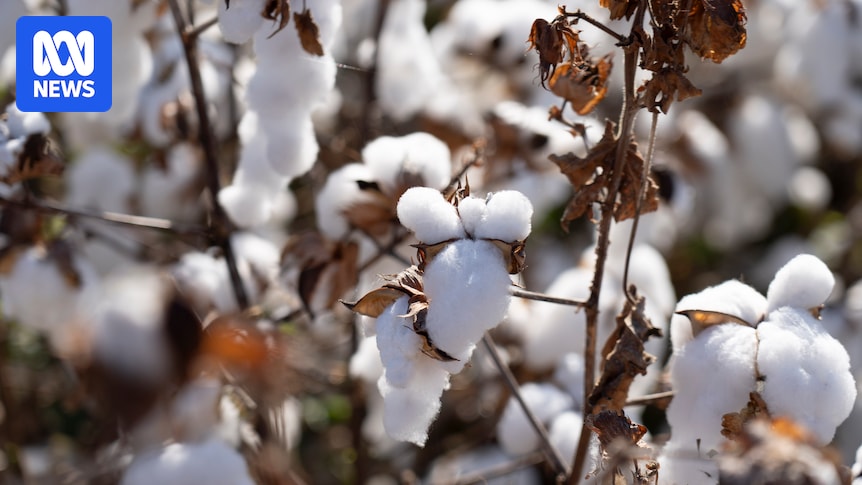
Western Australia’s newest cotton gin has completed its first operational season, with the final modules moving through the facility last week.
Designed to process cotton from the Ord Valley, the Kimberley Cotton Gin opened in Kununurra about 3,000 kilometres north-east of Perth in August 2025.
The region’s growers planted a record-breaking 10,000 hectares of cotton in preparation, up from 2,200 hectares the previous year.
New era for the Ord
Kimberley Cotton Company (KCC) chair Jim Engelke said the facility processed more than 81,000 bales in its inaugural season.
“It’s a good feeling to get to the end,” he said.
“An excellent outcome with a lot of effort from a lot of people to make that all happen, and overall, [I’m] very pleased with where we’ve got to.”
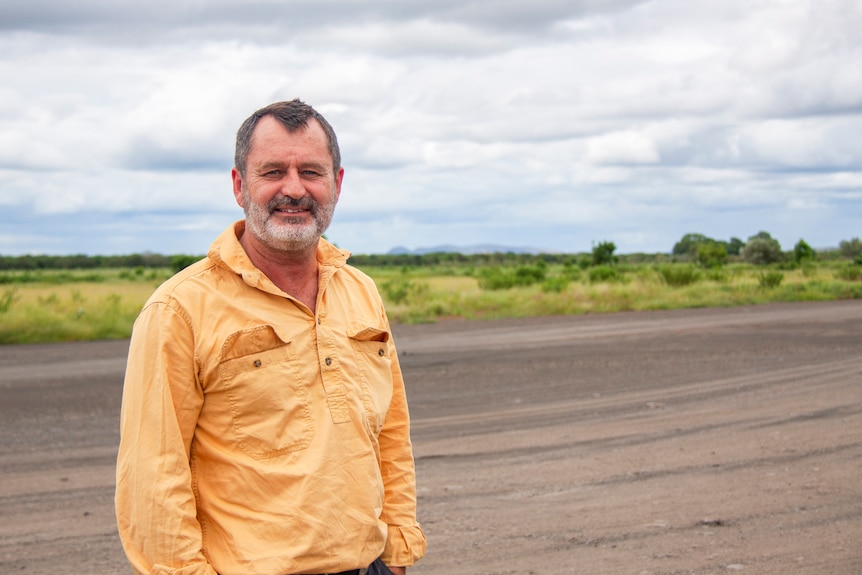
Jim Engelke says the Kimberley Cotton Gin processed 81,000 bales in its first season. (ABC News: Jess Baker)
The KCC, supported by Kimberley Agricultural Investment, Ord River District Cooperative, and Miriuwung Gajerrong Corporation, was formed in 2021 to lead the construction and operation of the gin.
Previously, growers had to send their cotton interstate, up to 3,500km, to be processed.
Lessons learned
Second-generation Ord farmer and KCC investor Christian Bloecker said getting the gin off the ground was not easy, but the effort would ultimately pay off.
“It keeps everything local. The jobs local, the processing and the money that comes from that local,” he said.
“It’s a way better option than sending cotton by road to Katherine or Queensland like we used to.”
Although 2025 was not Mr Bloecker’s first year producing cotton, it was his biggest — in terms of area — by more than double.
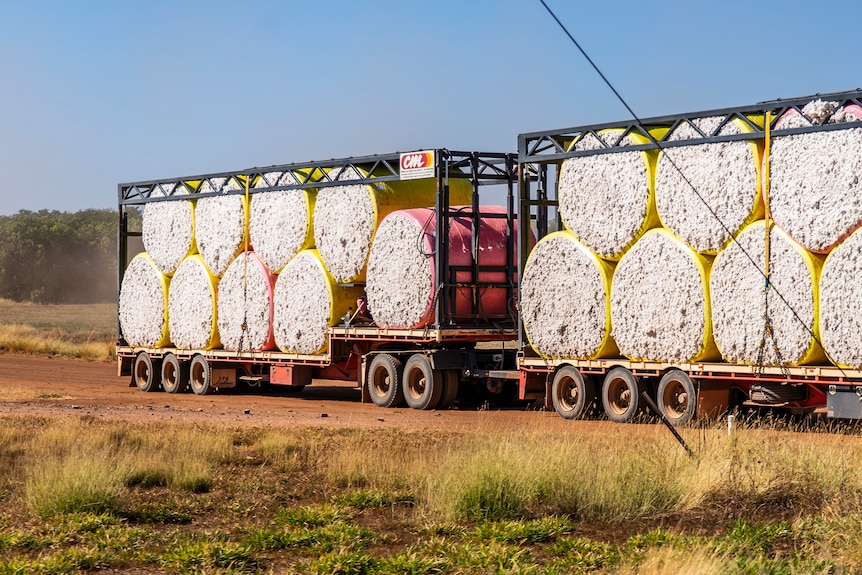
Kimberley growers no longer have to send their cotton interstate to get processed. (ABC News: Kelsey Reid)
He said he learned plenty about the crop and how to grow it well.
“Definitely the aim for this year is grow shorter cotton,” Mr Bloecker said.
“But there’s lots of things in terms of nutrition and irrigation, and from a supply chain point of view, how we make things work.”
Looking ahead
There was already cotton in the ground at Mr Bloecker’s Ord Valley farm this time last year.
He delayed planting for the 2026 season due to wet weather, and hopes a deferred start might produce a shorter crop.
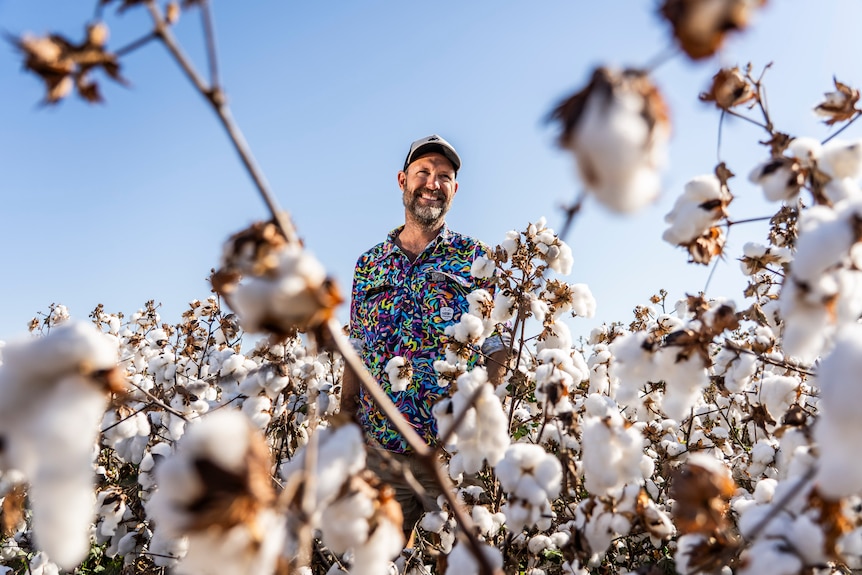
Christian Bloecker says he is waiting for the rain to subside before planting again. (ABC News: Kelsey Reid)
Other growers began planting for the coming season before the final modules from 2025 had been processed through the Kununurra gin.
Mr Engelke said Kimberley Agricultural Investment planted its first fields for the season in January.
“Our anticipated plant area is very similar to last year, which is around about the 4,000-odd hectares,” he said.
“For the region, I don’t exactly know, but we’re expecting somewhere around about 10,000 hectares, possibly a bit more.”
Prices stagnant
As producers in the north navigate the formation of their cotton industry, international cotton prices remain subdued.
Cotton Australia northern manager Simone Cameron said the price of raw cotton lint was “not ideal”.
“Prices have been holding around that mid-$500 per bale price for about 12-18 months,” she said.
“Historically, it sits at around $600.”
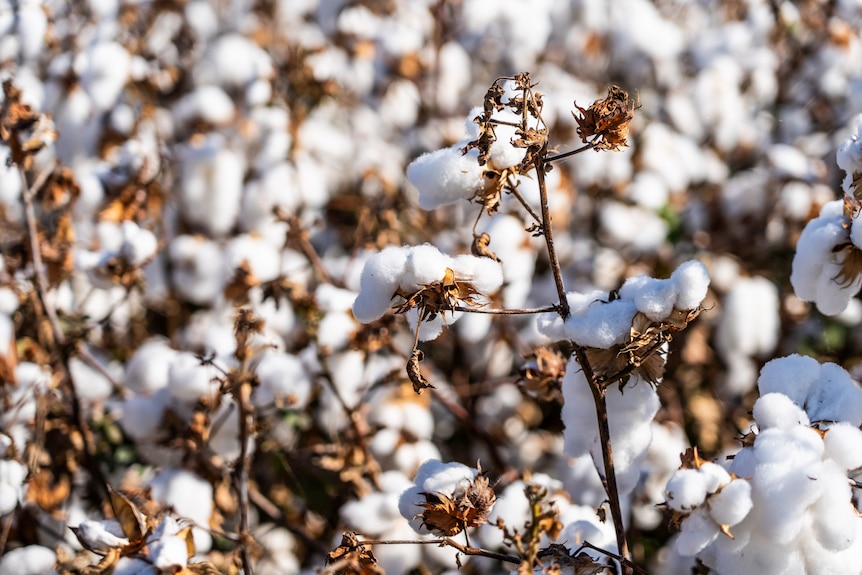
Last season, Australia produced about 5.4 million bales of cotton, collectively worth about $3.7 billion. (ABC News: Kelsey Reid)
Ms Cameron said the cotton industry was up against the synthetic fibre industry, which was “very good” at marketing itself as cleaner and greener than natural fibres.
“We do have some work to do there to help really drive that natural fibres are much better for the planet than a synthetic fibre,” she said.
The decline of global cotton prices over the past year has impacted the profitability of the crop, but Mr Bloecker said it was still viable in the Kimberley.
“That’s the thing about selling it on the world market, there are going to be these cycles where the price is lower,” he said.
“I’d love the price to be higher, but even at $500 a bale, an industry can grow off that.”
Wyndham port gateway to the world
Meanwhile, growers in the Ord eagerly await the Port of Wyndham, located 100 kilometres north-west of Kununurra, gaining First Point of Entry (FPOE) status.
Prime Minister Anthony Albanese granted FPOE status last year, but the change will not come into effect until the port has the infrastructure to manage biosecurity threats.
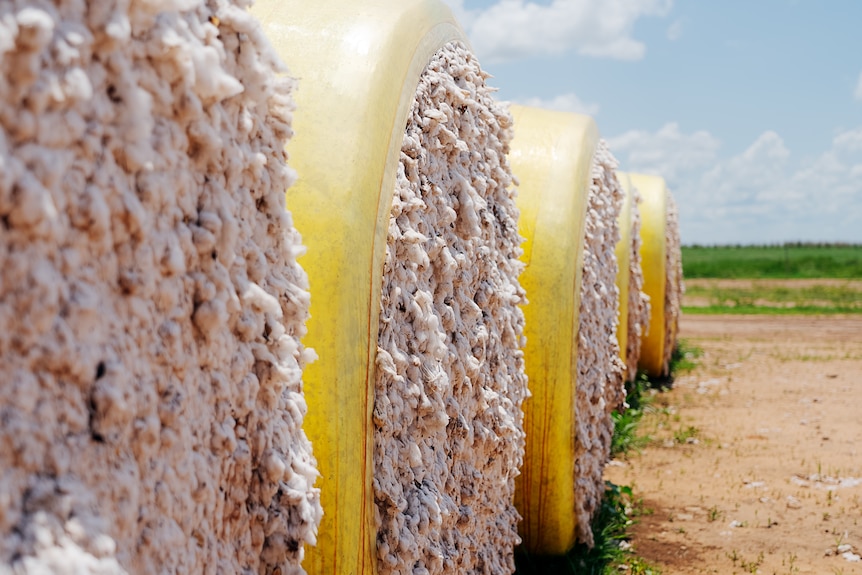
The Kimberley Cotton Gin has the capacity to process more than 100,000 bales annually. (ABC News: Michael Franchi)
The first shipment of locally grown cotton was exported from Wyndham in October, consisting of about 60 containers, each carrying about 104 bales of cotton.
Having FPOE status will allow the port to receive empty containers for immediate export and enable direct international shipping for the Kimberley cotton industry.