
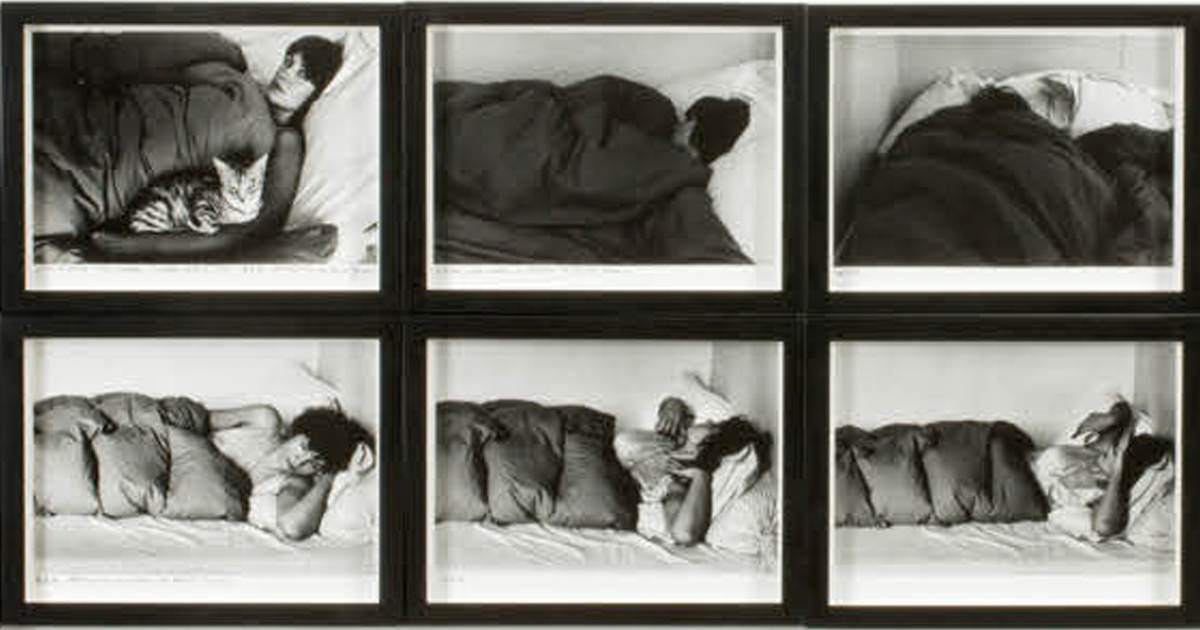
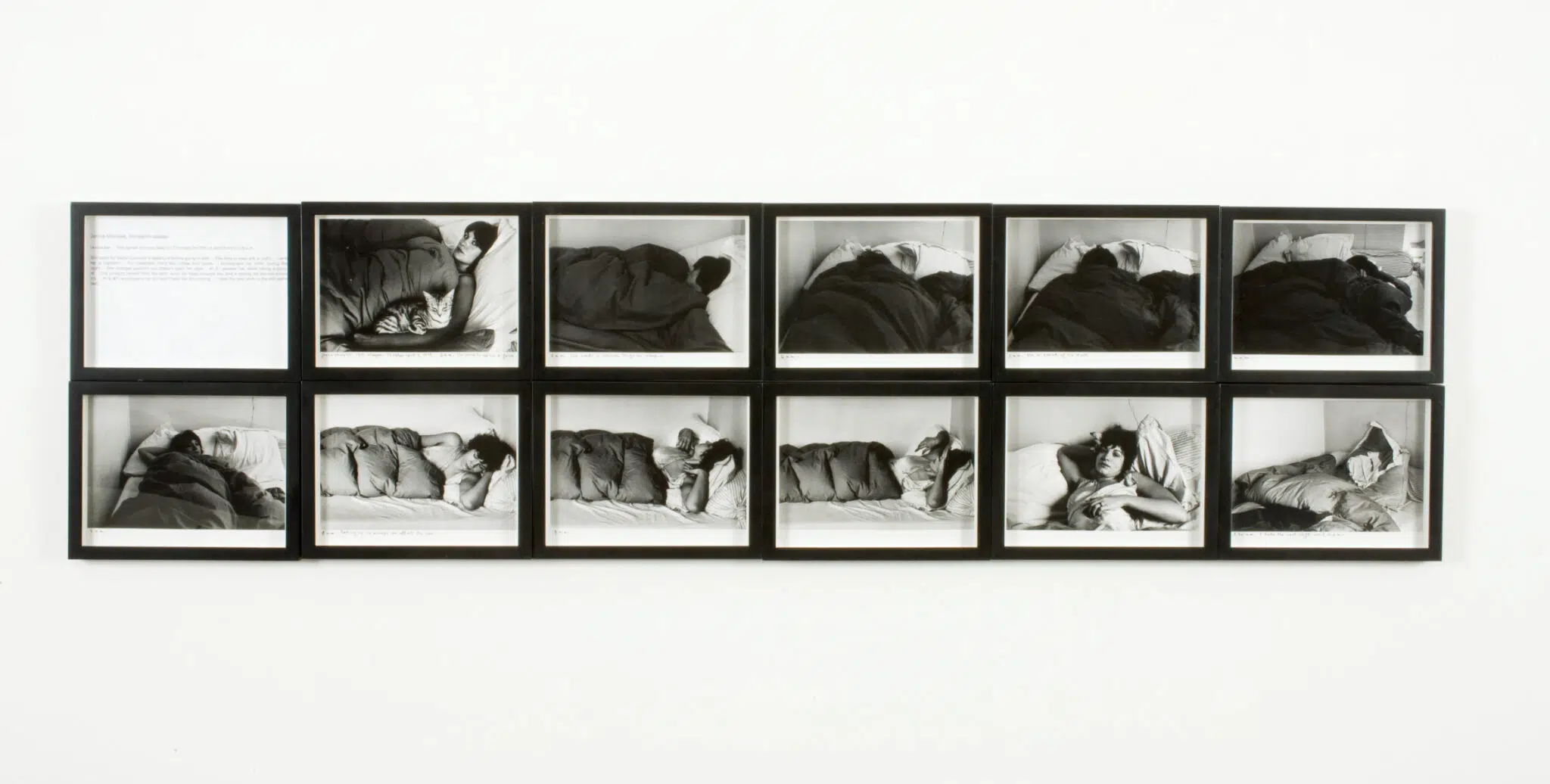
‘The Sleepers (Gennie Michelet, thirteenth sleeper),’ 1979. 11 black and white photographs, 1 text. (Photo: Adam Reich, courtesy of the artist and Paula Cooper Gallery)
Perhaps no one better embodies conceptual art than Sophie Calle. Throughout her decades-long career, the French artist has merged everything from photography and film to text and performance, exploring how love, trust, power, death, and storytelling all inform one another. Now, a groundbreaking exhibition charting the full range of Calle’s practice has landed at UC Irvine’s Langson Museum.
Most recently on view at the Walker Art Center in Minneapolis, Sophie Calle: Overshare is, as its title suggests, not only intimate but deeply provocative. Since the 1970s, Calle has eroded her own privacy in the service of artistic expression and public engagement, meditating upon interpersonal dynamics, visibility, and the self. Calle typically achieves this effect by pairing photographs and text, exposing incidents in her own private life that, by virtue of their intrigue or strangeness, implicate the viewer. Once we encounter her work, it’s nearly impossible to look away.
Suite vénitienne, from 1980, illustrates this point perfectly. For the project, Calle followed an unsuspecting man from Paris to Venice, recording his movements through a furtive collection of images and written reflections. The Hotel, from 1981, is similar in its voyeurism, seeing Calle work as a temporary housekeeper. During the brief stint, she secretly photographed guests’ belongings while cleaning their rooms, conjuring stories about what these objects revealed about their lives. Like Suite vénitienne, The Hotel emphasizes the gap between public perception and private reality. But at the same time, the work also wonders whether Calle’s own projections and assumptions about the guests are equally meaningful, complicating the ethics of her surveillance and intrusion.
“Calle’s work explores the complexity of human relationships, be it a family member, lover, or friend,” Courtenay Finn, Langson Museum’s chief curator, said. “Foreshadowing the current moment where so many of these relationships are performed and played out publicly online for all to see, Calle’s work is a poignant and timely reflection on what it means to be human today.”
At the heart of the exhibition are Calle’s Autobiographies, an ongoing series that she began in the late 1980s. These two-park works feature a framed photograph alongside a framed descriptive text, offering short vignettes that chronicle episodes from Calle’s life. In this series, as well as her True Stories collection, the artist insists on sharing—or oversharing—parts of herself, raising questions about the sacrifices involved in leading a creative and often public life. Still, as viewers, we wonder if we’re missing something, considering Calle’s secretive and at times unusual tendencies.
“People think they know my life, in fact they know nothing because I share a great deal about one moment, one situation, but at the same time, I don’t say anything about my life,” Calle said in a 2024 interview with The Art Newspaper. “It’s overshare and at the same time, hide everything!”
That paradox is Calle’s guiding principle—and it’s made abundantly clear in Overshare. We’re listening, and being listened to; we’re following, and being followed; and we’re welcomed inside, while also watching through a glass window. Except in Calle’s mind, there’s nothing better than that.
“Each idea has its own limit. Is it interesting, poetic enough? Or is it just provocative? Even then, it depends,” Calle continued. “Sometimes I like a little provocation because in the end it works.”
Sophie Calle: Overshare is on view at UC Irvine’s Langson Museum through May 24, 2026.
A groundbreaking survey of Sophie Calle’s conceptual and multidisciplinary practice has just landed at UC Irvine’s Langson Museum, charting some 50 years of work.
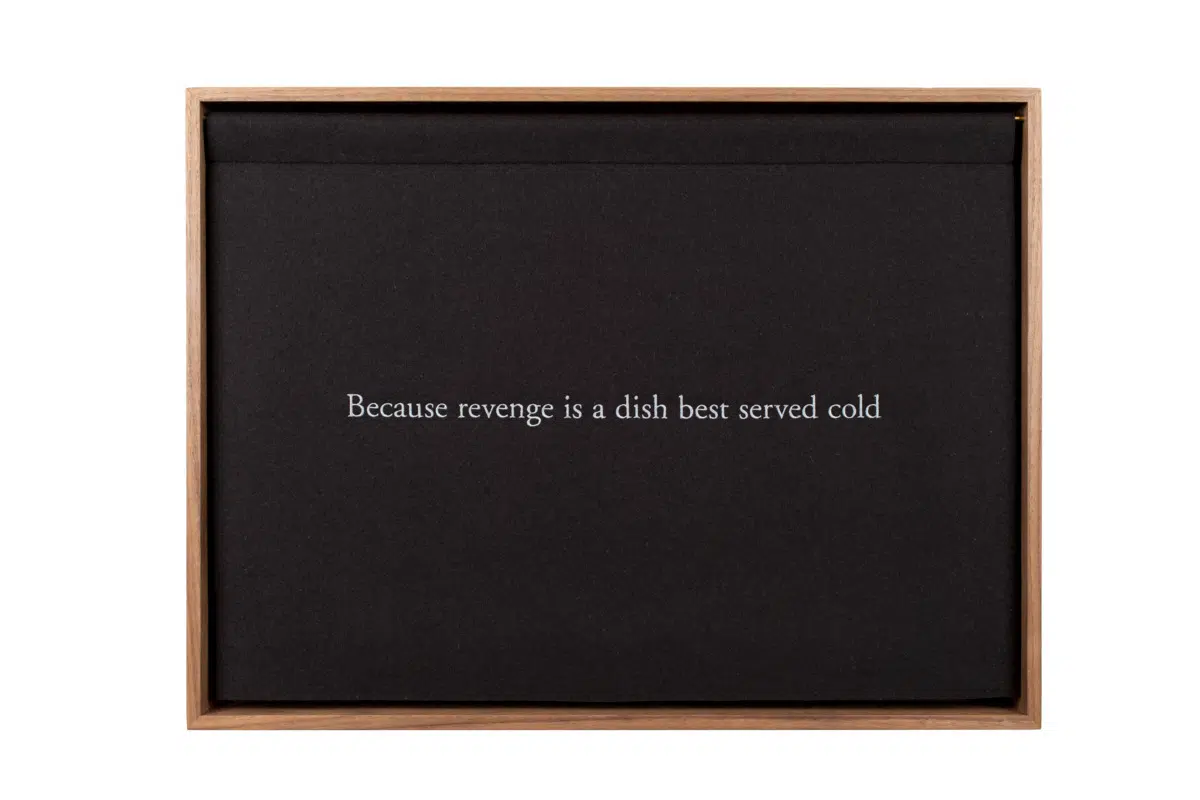
‘Mother-Father,’ 2018. Pigment print, embroidered woolen cloth, wooden box. (Courtesy of the artist and Fraenkel Gallery)
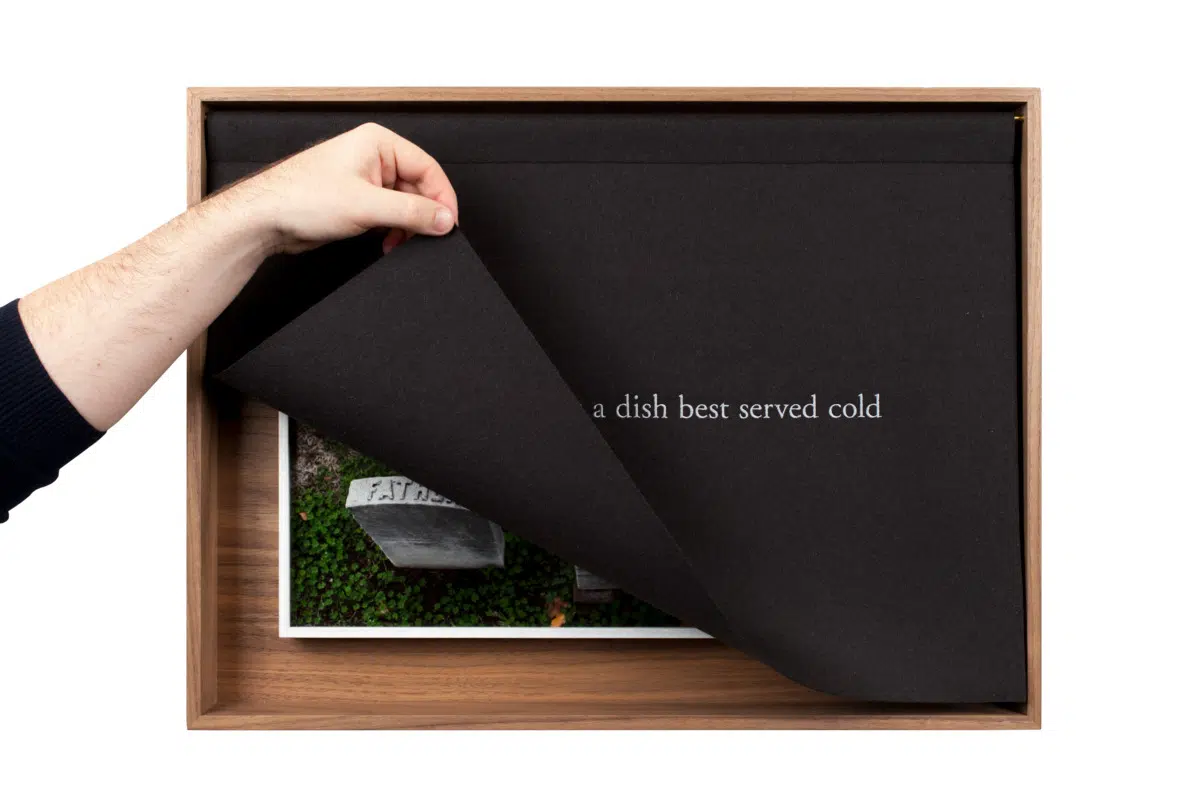
‘Mother-Father,’ 2018. Pigment print, embroidered woolen cloth, wooden box. (Courtesy of the artist and Fraenkel Gallery)
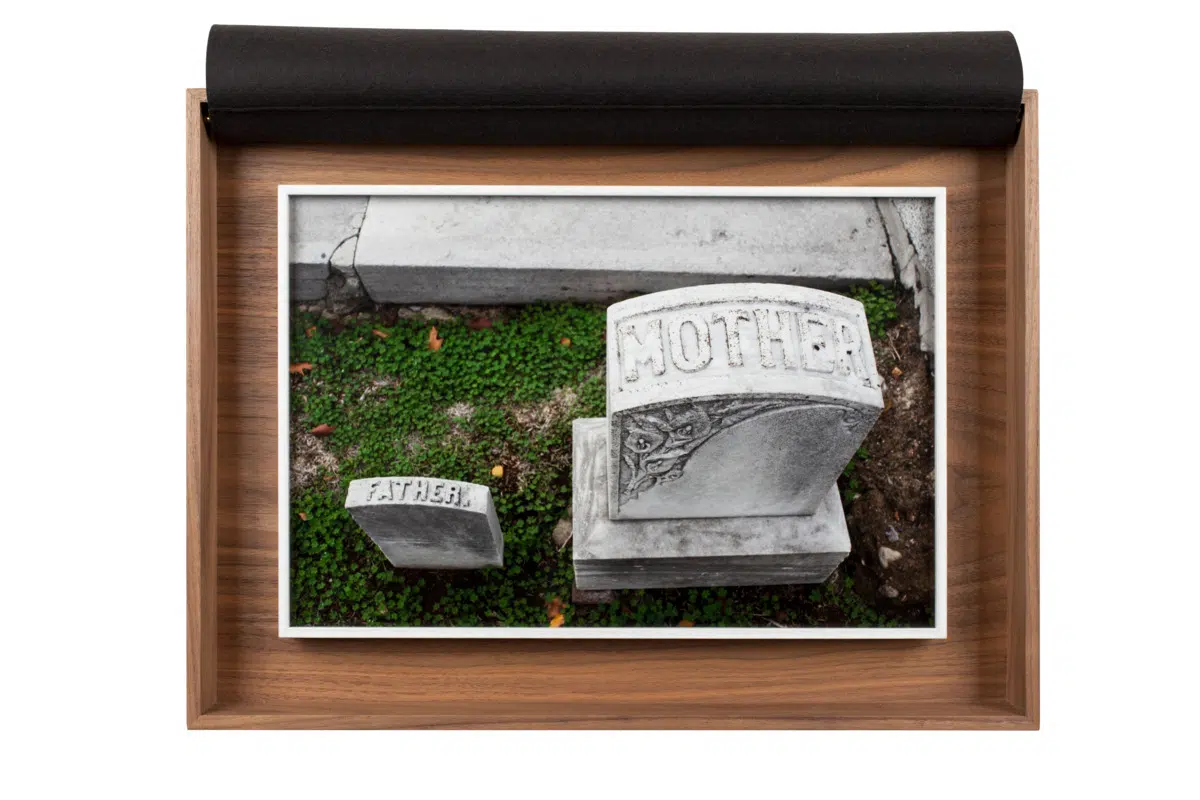
‘Mother-Father,’ 2018. Pigment print, embroidered woolen cloth, wooden box. (Courtesy of the artist and Fraenkel Gallery)
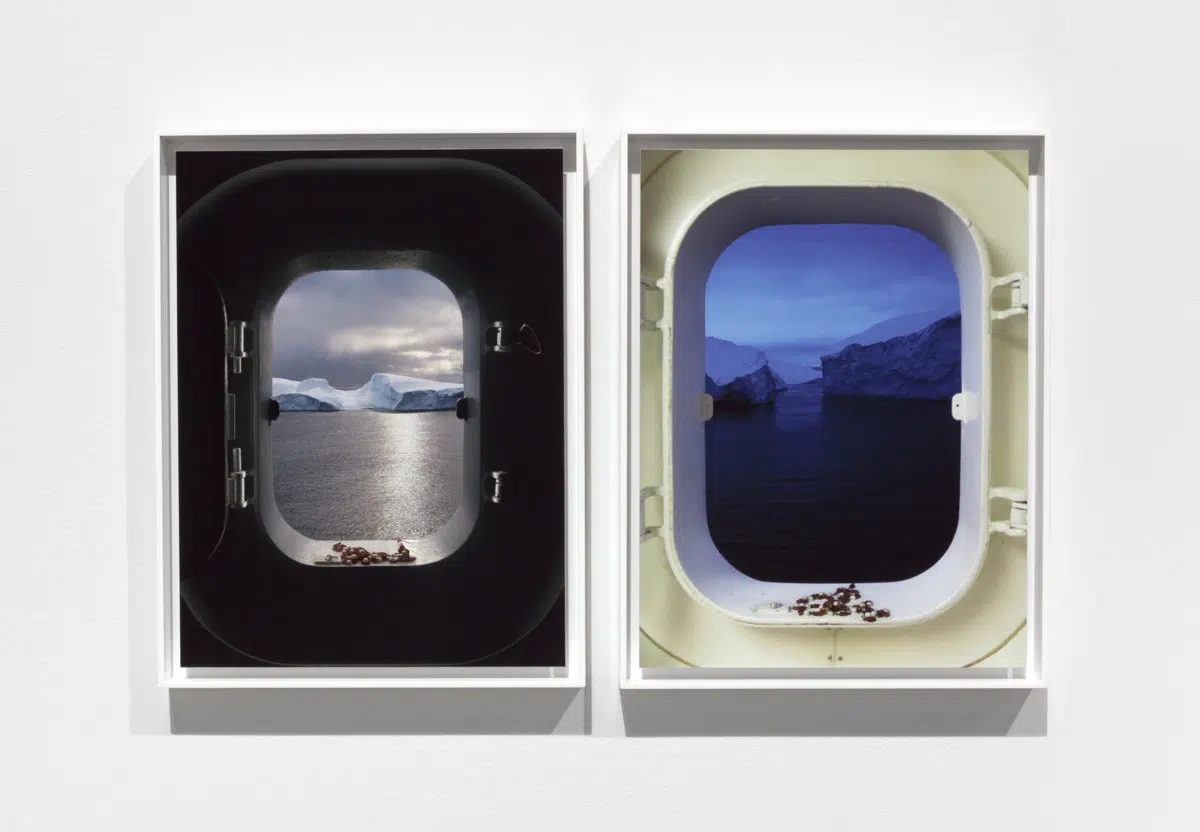
‘Night Pole’ (detail), 2009. Light box, sandblasted porcelain plaque, video, screen, color photograph, and frame. (Photo: Steven Probert, courtesy of the artist and Paula Cooper Gallery)
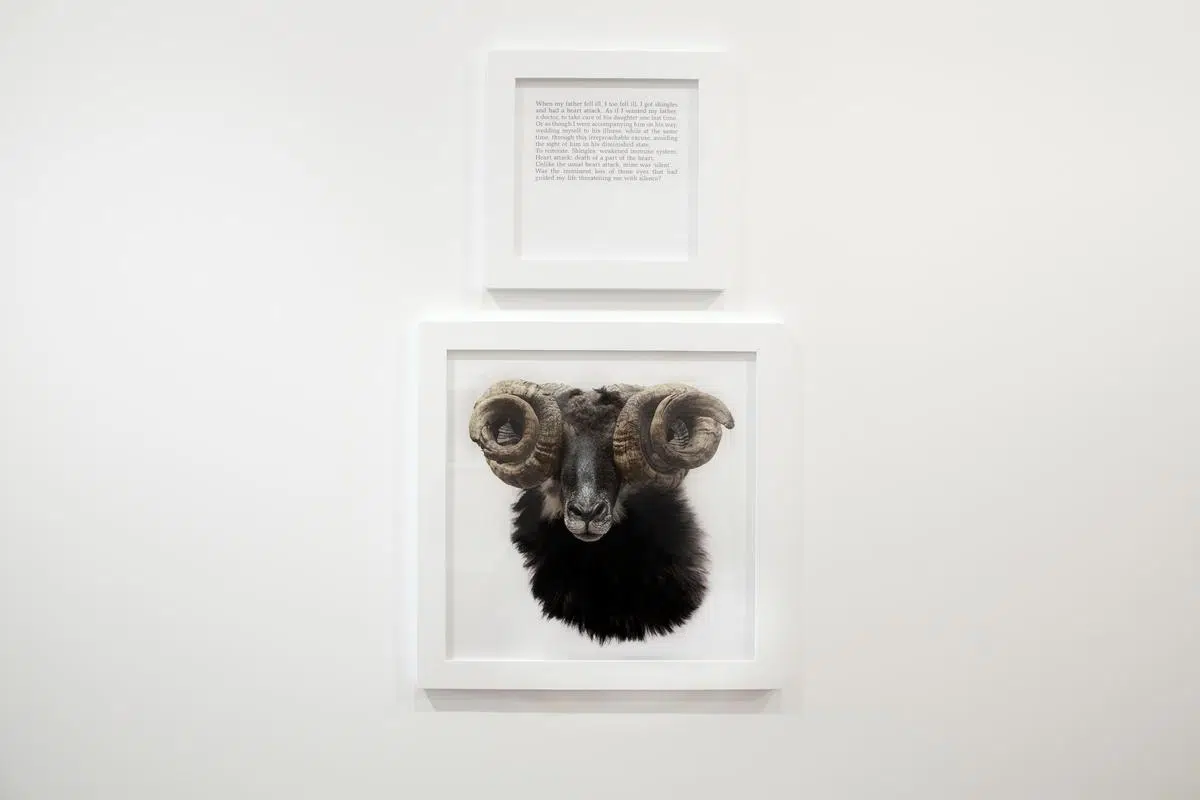
‘Silent Heart Attack,’ 2017. Digital print with text panel. (Courtesy of the artist and Perrotin)
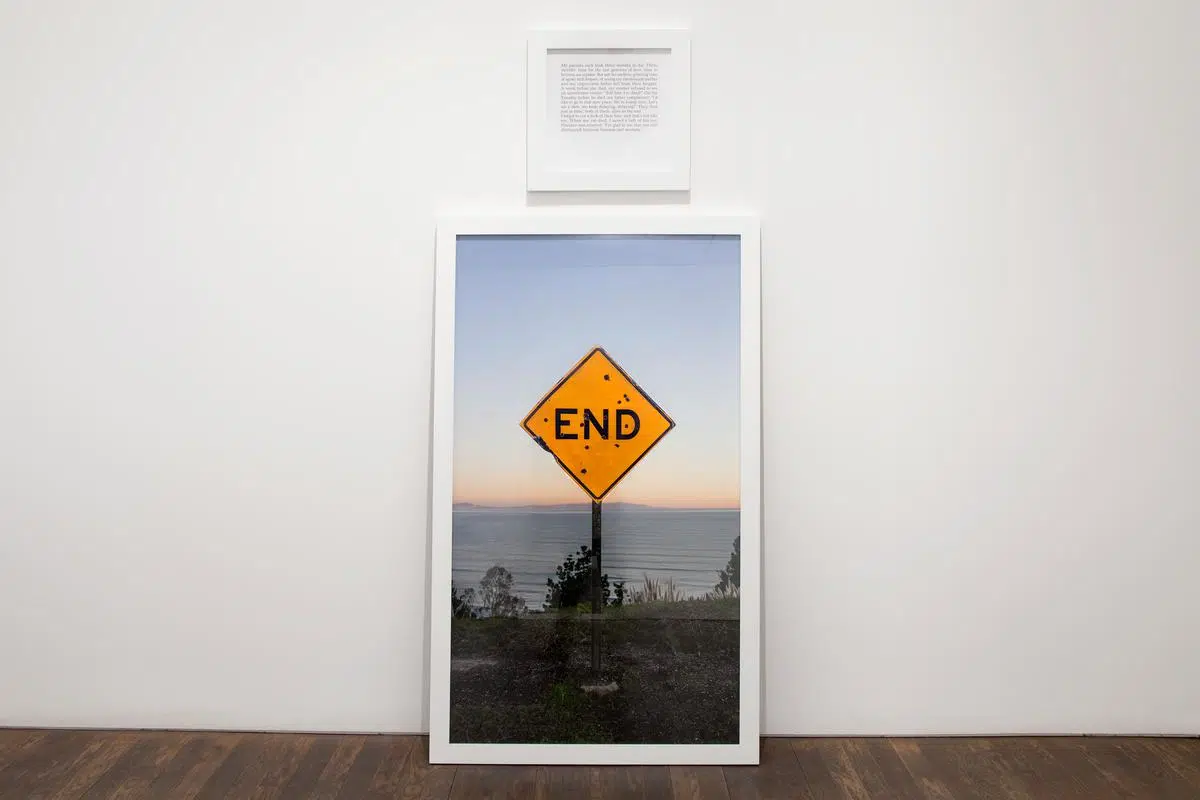
‘My Mother, My Cat, My Father,’ 2017. Digital photograph, aluminum, text, and wooden frames. (Courtesy of the artist and Perrotin)
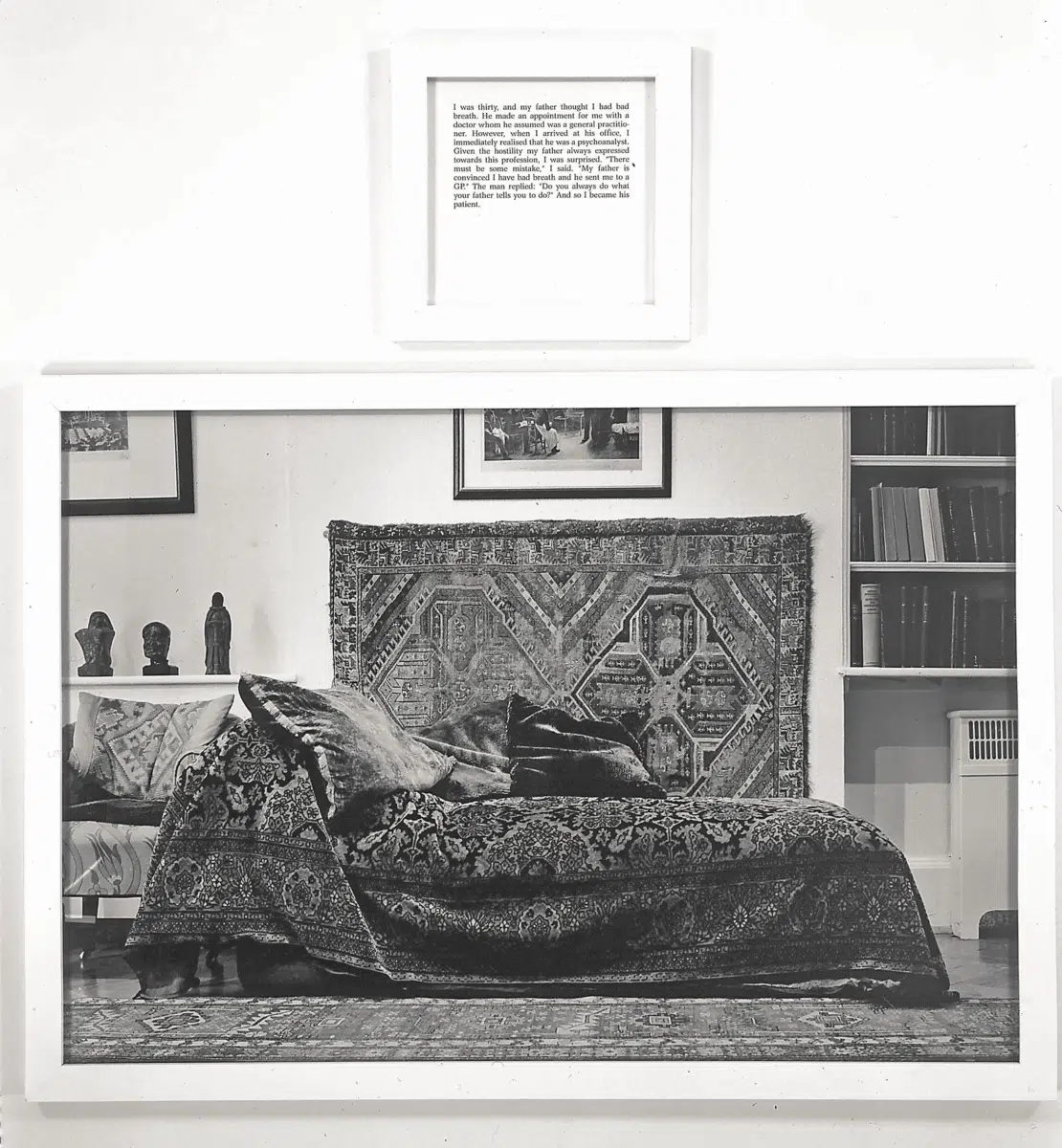
‘Autobiographies (The Bad Breath),’ 1994. Gelatin silver prints and framed text panels. (Courtesy of the artist and Paula Cooper Gallery)
Sophie Calle: Overshare will be on view through May 24, 2026.
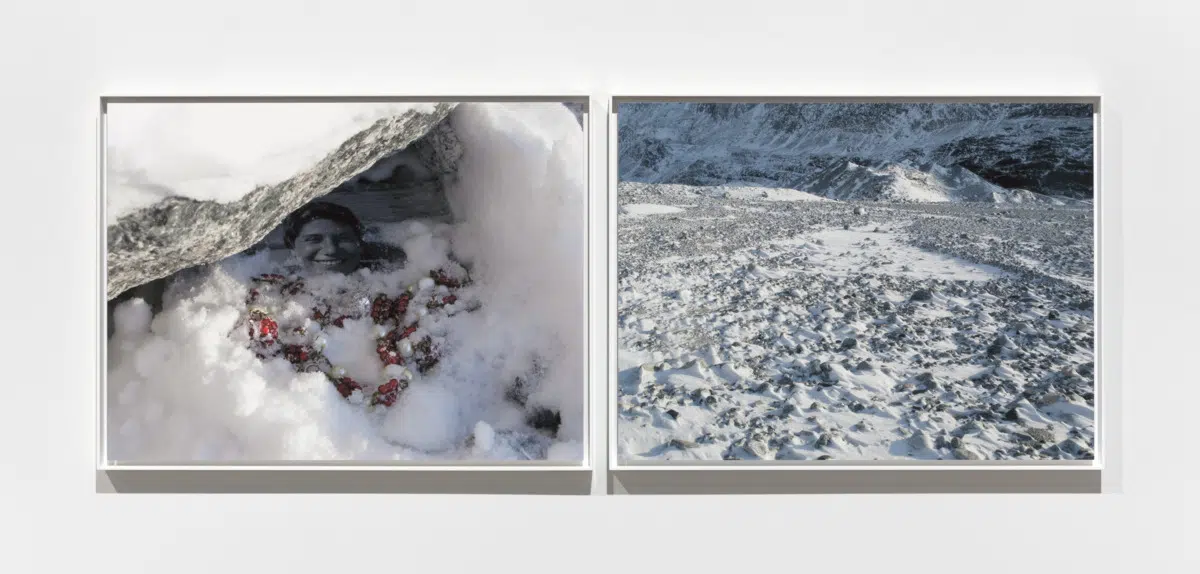
‘Night Pole’ (detail), 2009. Light box, sandblasted porcelain plaque, video, screen, color photograph, and frame. (Photo: Steven Probert, courtesy of the artist and Paula Cooper Gallery)
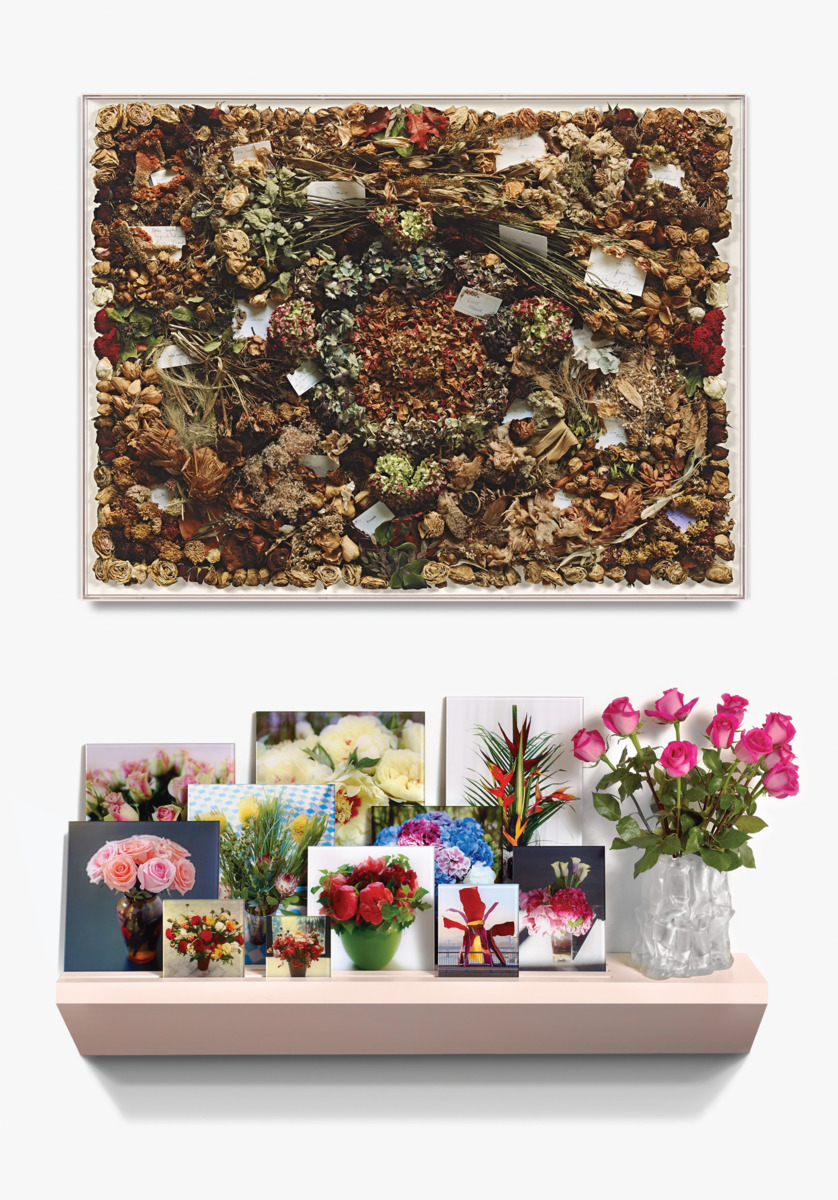
‘In Memory of Frank Gehry’s Flowers,’ 2014. Edition of 25. (Courtesy of the artist and Gemini G.E.L.)
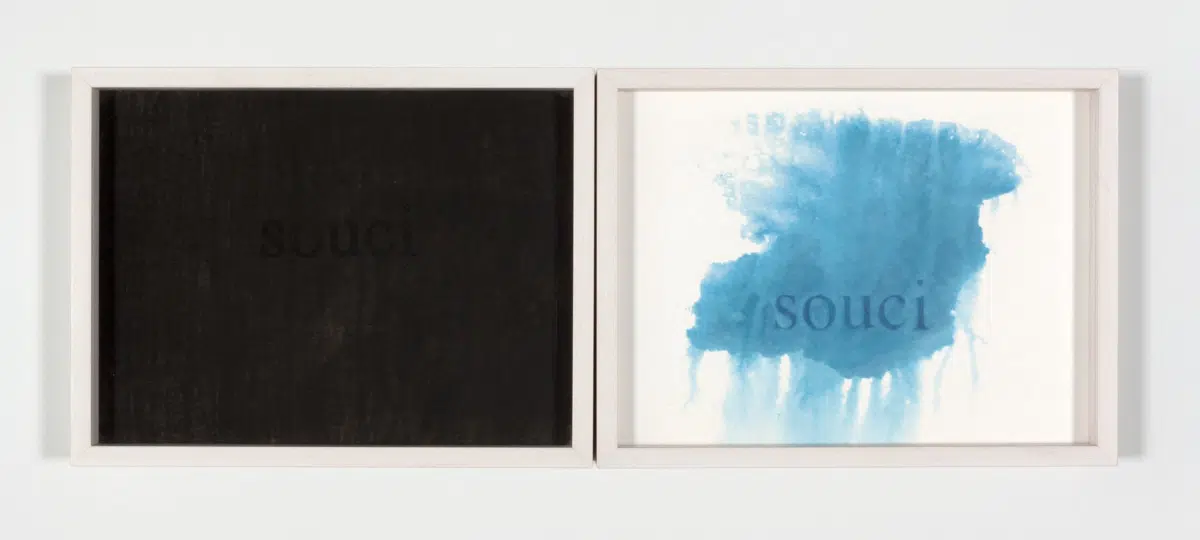
‘Souci (diptych),’ 2013. Cyanotype and carbon print. (Photo: Steven Probert, courtesy of the artist and Paula Cooper Gallery)
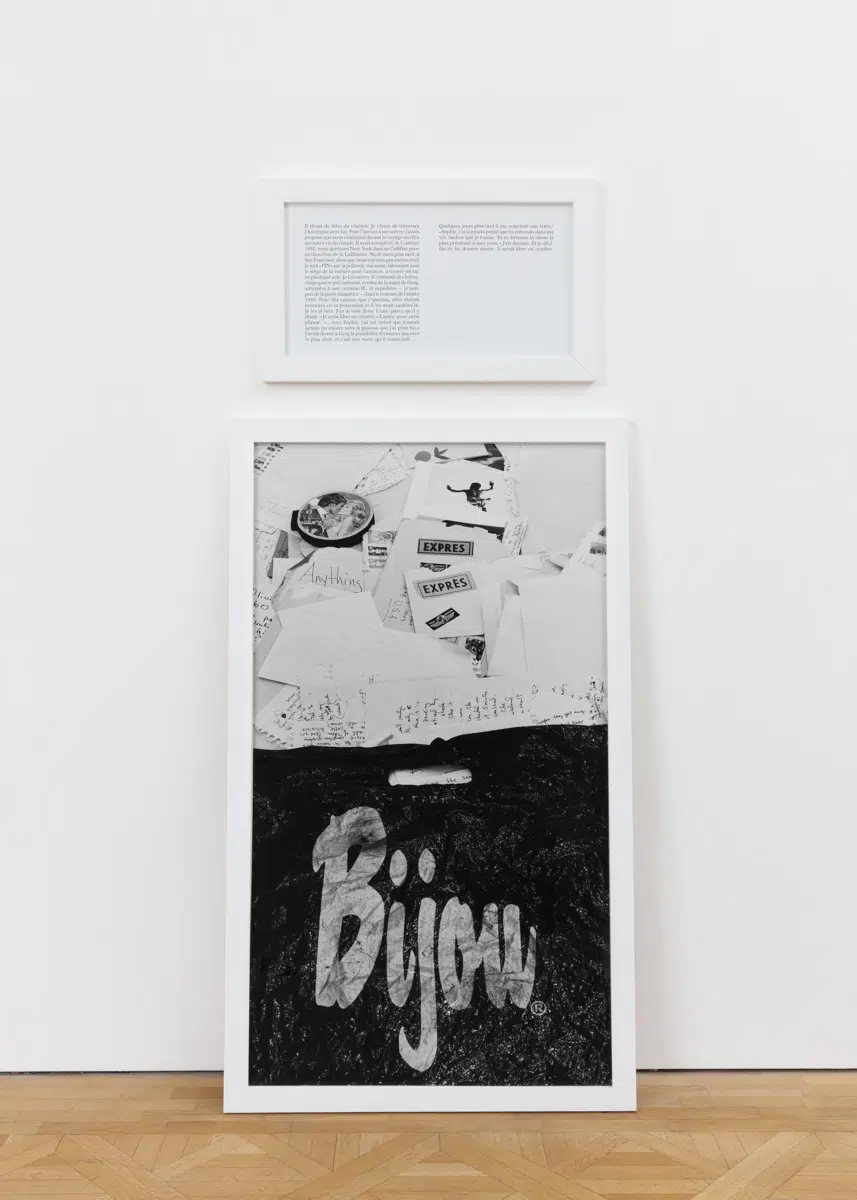
‘The Breakup,’ 1992. Gelatin silver print and text panel. (Courtesy of the artist and Perrotin)
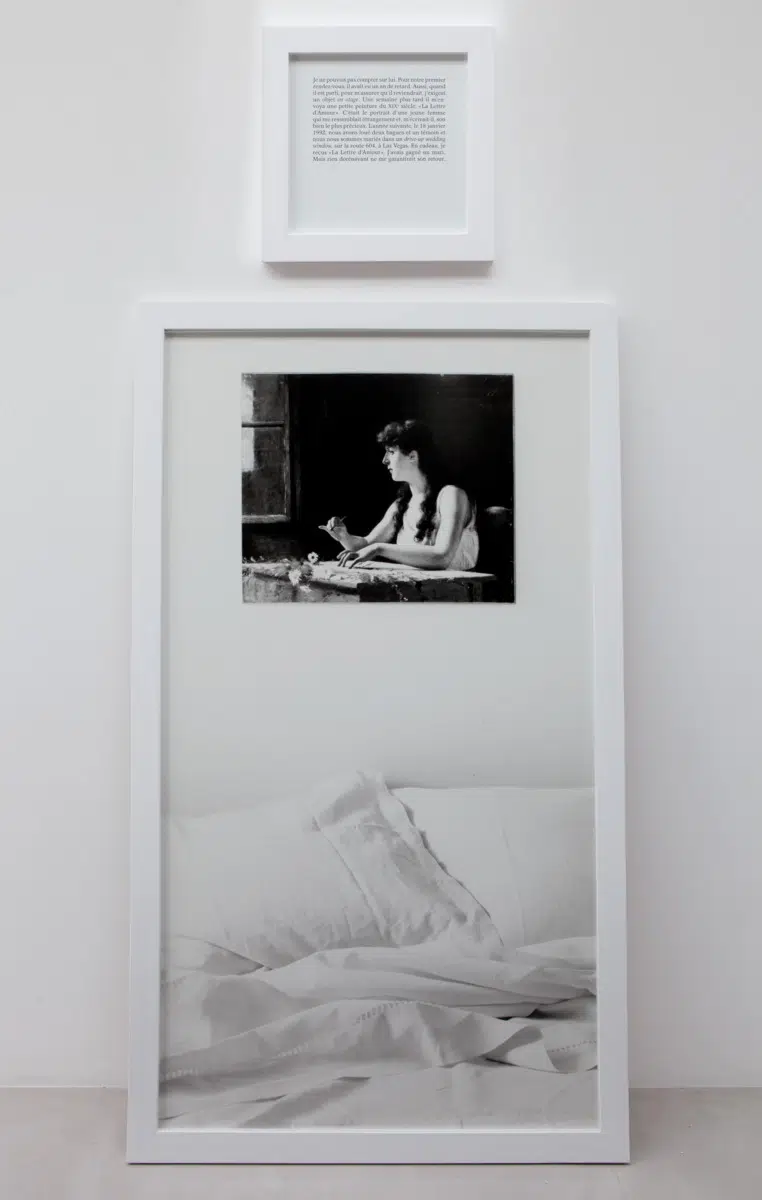
‘The Hostage,’ 1992. Gelatin silver print and text panel. (Courtesy of the artist and Perrotin)
Exhibition Information:
Sophie Calle
Overshare
January 31–May 24, 2026
UC Irvine Langson Museum
18881 Von Karman Ave #100, Irvine, CA 92612
UC Irvine Langson Museum: Website | Instagram
My Modern Met granted permission to feature photos by EJS Media.
Related Articles:
Expansive Surrealist Exhibition Lands in the U.S. To Celebrate the Art Movement’s Centenary
New Exhibition Contends With Black Heritage Through Layered, Evocative Textile Art
Exhibition Meditates Upon How Women and Nature Converge Through Painting and Sculpture