
An aggressive push was made by Converge FiberXers in the hopes of finally breaking through the semifinals barrier in the PBA Season 50 Commissioner’s Cup.
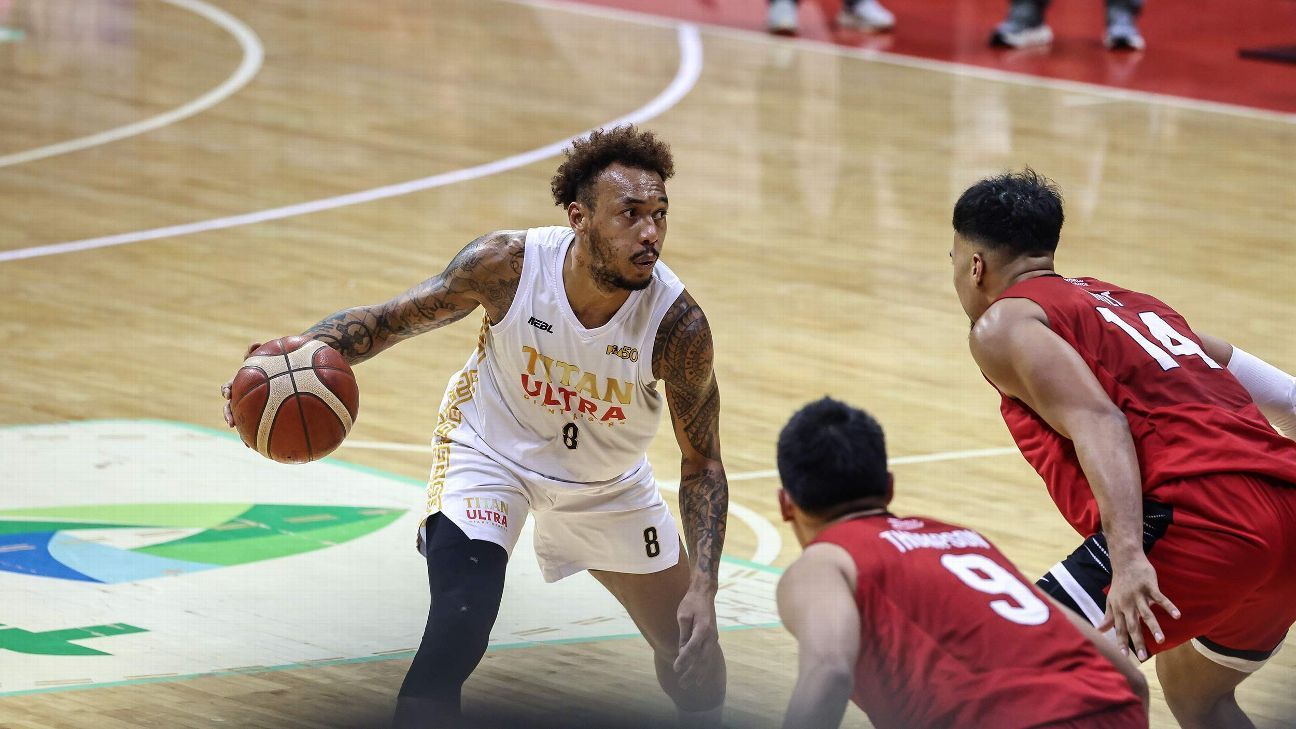
Amid swirling rumors of a roster shake-up after their quarterfinal exit in the Philippine Cup against Barangay Ginebra, that move materialized with the acquisition of Calvin Abueva from Titan Ultra Giant Risers in exchange for King Caralipio, Mark Omega, and Rey Suerte.
The trade ended Abueva’s brief one-conference stint with the league’s newest franchise and brought him to a familiar place — back with the organization formerly known as the Alaska Aces — now Converge — and reunited with his godfather and head coach, Delta Pineda.
Editor’s Picks
2 Related
With Abueva now in the fold, the focus shifts to how he fits alongside Converge’s already solid core and what he brings to the table on both ends of the floor.
Abueva’s versatility to Converge’s frontcourt
There’s no denying that the FiberXers can roll out one of the league’s better starting units — anchored by super rookie Juan Gómez de Liaño, twin towers Justin Arana and Justine Baltazar, with Alec Stockton and Schonny Winston rotating on the wings.
The concern, however, shows up deeper into games and especially come playoff time.
Converge’s bench production lagged behind the rest of the field, finishing the conference with the lowest output at just 35.9 points per game — a gap that failed the team to keep great starts.
That issue became even clearer in the frontcourt.
Arana and Baltazar logged heavy minutes, and finding dependable relief behind them proved difficult. Larry Muyang gave solid effort as a backup center, averaging 6.4 points and 4.5 rebounds in the eliminations, but his impact dipped sharply in the quarterfinals to just 1.5 points and four rebounds.
With Abueva entering the picture, Converge gains a flexible option at the four — an energy big who can spell either starter while injecting pace, physicality, and a different offensive look.
Abueva’s production last conference showed he can still command attention offensively, leading all scorers at 23.6 points per game. Operating frequently from the top of the key, he was asked to initiate offense as a big, pulling defenders out and opening driving lanes.
That role fueled his downhill attacks, making him the league’s second most frequent visitor to the free throw line at 8.5 attempts per game. That aggressiveness matters for a Converge team that struggled to generate rim pressure, ranking third lowest in free throw attempts at 23.5 per game.
His presence also unlocks more lineup versatility.
Sliding Abueva to the four allows Converge to go small without sacrificing toughness, keeping only one of Arana or Baltazar at center while maintaining floor spacing. In those units, Abueva can screen, attack closeouts, and run in transition — forcing defenses to react rather than sit in the paint.
It’s a wrinkle that not only preserves the legs of Converge’s big men, but also gives the FiberXers a more dynamic, playoff-ready frontcourt look.
Can Abueva adjust quickly to a specified role?
Unlike his previous stop in Titan Ultra where he was asked to carry the scoring load, Abueva won’t walk into Converge as the first option. According to RealGM, the 38-year old veteran had the highest usage rate in the Philippine Cup at 35.3%.
But the reality is that Converge will most likely run “fist” involving Gómez de Liaño orchestrating the high ball screen and dump it in the post to Arana or Baltazar to create advantages and score on efficient shots.
In a defined role, Abueva’s value shows up in the connective plays: setting hard screens, crashing the offensive glass, pushing the ball in transition, and bringing edge on the defensive end.
Just as important is his instinctive off-ball movement through timely cuts, rim runs, and relocating into open space — allowing him to be effective without having sets called for him. He doesn’t need heavy touches to influence games, and Converge doesn’t need him to score 20 a night for the move to pay off.
What the FiberXers need is someone who stabilizes lineups, raises the team’s physicality, and keeps the energy high when the second unit is on the floor.
For a young Converge squad still learning how to win deep in the postseason, Abueva can serve as the glue guy or the veteran who bridges talent with toughness. If he embraces that role, satisfaction won’t be measured by points, but by how often he swings momentum, cleans up possessions, and gives structure to a developing team.
In that context, Abueva doesn’t have to be the star; he just has to make everyone around him better.