

Atop the mountain Cerro Armazones in Chile, construction is underway on the Extremely Large Telescope (ELT), which will usher in a new era of astronomy when it’s completed. The ELT will be the world’s largest telescope, with a primary mirror that measures 128 feet (39 meters) across.
For more than six decades, this environment has made Chile the global center of ground-based astronomy. The European Southern Observatory (ESO) operates all of its observatories here, including the Very Large Telescope (VLT) at Cerro Paranal and, soon, the ELT. Together, these facilities represent humanity’s ongoing effort to understand the cosmos, from nearby exoplanets to the earliest galaxies.
You may like
Where is it?
The ELT is under construction atop Cerro Armazones, which is a mountain in Chile’s Atacama Desert.
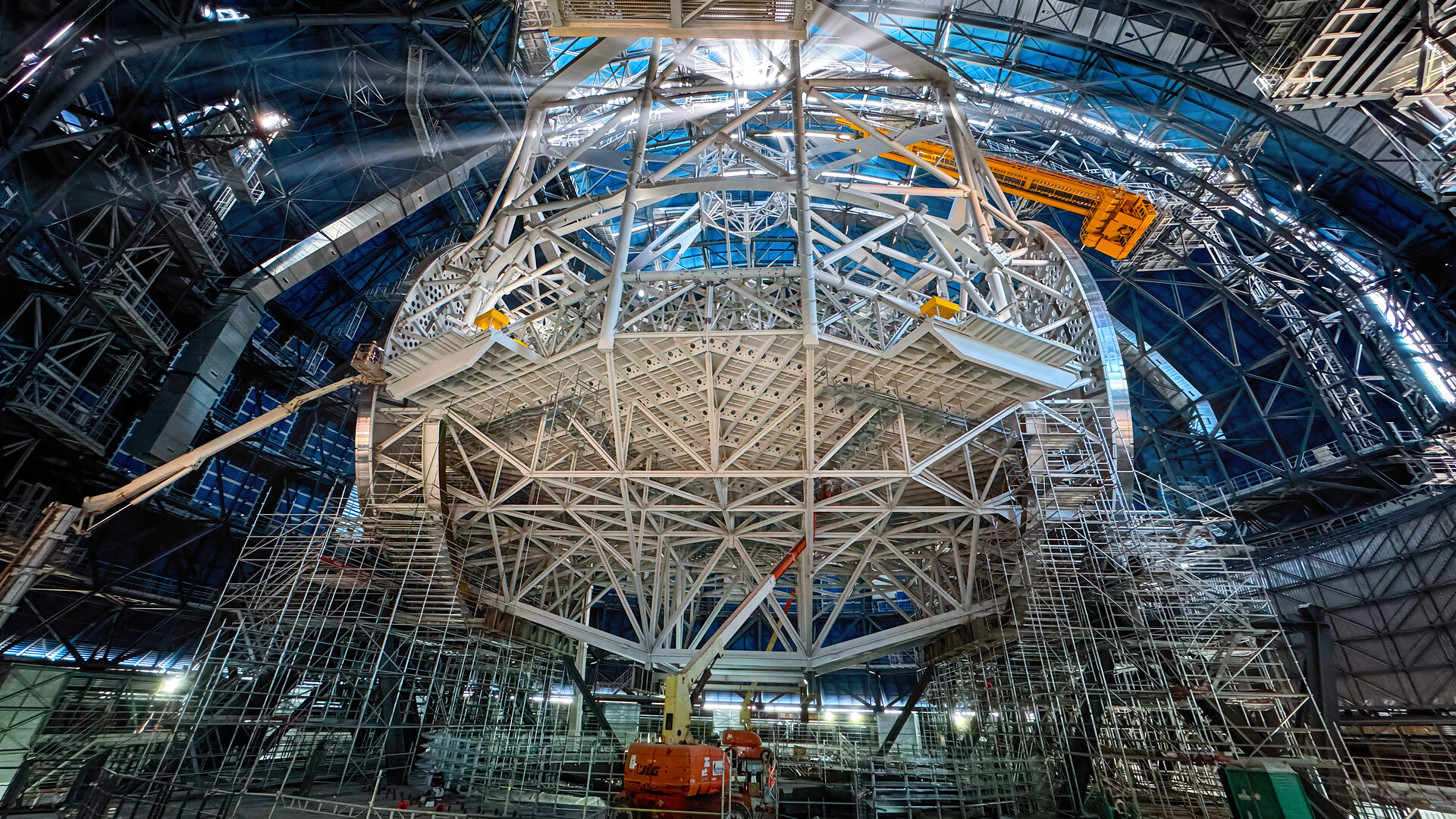
The bottom part of the ELT structure shows the area where the primary mirror will be installed. The tube above connects the main mirror structure with the top ring, the spider structure that holds the secondary mirrors. (Image credit: ESO/J. C. Muñoz-Mateos)Why is it amazing?
Scientifically, the ELT represents a transformative leap. With its massive mirror and advanced instruments, it will be able to directly image exoplanets, analyze their atmospheres for signs of habitability, study the formation of stars and galaxies, and probe the nature of dark matter and dark energy. The proximity of ELT and VLT reflects continuity in scientific progress, with each new generation of telescopes building upon the legacy of the last.
Want to learn more?
You can learn more about the Extremely Large Telescope and other ground-based telescopes.