
Opinion
 Lee TullochTravel columnist
February 10, 2026 — 5:00am
February 10, 2026 — 5:00am
Save
You have reached your maximum number of saved items.
Remove items from your saved list to add more.
Save this article for later
Add articles to your saved list and come back to them anytime.
Got it
AAA
If Tourism Australia isn’t already preparing an extensive international advertising campaign called “The Australia Effect” I’d be very surprised.
The Australia Effect is a phenomenon, and we should be promoting the heck out of it.
It all began last year when a few young Brits on working holidays started to notice a physical transformation after spending several months in Australia.
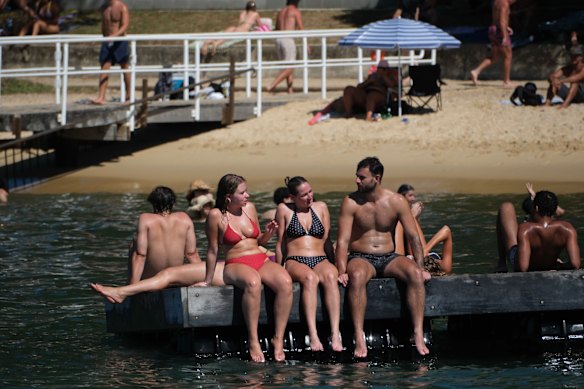 It’s an Australian thing … sun, surf and an instant glow-up.Oscar Colman
The girls stopped wearing truckloads of make-up, torturing their hair and indulging in cosmetic interventions such as fillers. Instead, they’d gone all “natural”, glowing with golden highlights and letting their freckles shine through.
The guys, amazingly, were no longer pasty and flabby. They were tanned, more muscular and had sprouted mullets and mos.
Sign up for the Traveller newsletter
The latest travel news, tips and inspiration delivered to your inbox. Sign up now.
Soon, hundreds of 20-somethings, visiting Australia from all around the world (it wasn’t just Brits), took to social media to proclaim how miraculous it all was. They posted reels, videos and photos of the transformations before and after, many using the song American Pie as soundtrack.
The New York Times even picked up the story in a substantial article published last month, asking “are they hot or is it the Australia Effect?”
“These working vacations often involve physical labor … the glow-ups frequently come with muscles and tans,” reporter Janet Manley wrote. “But many attribute the effect to the more laid-back lifestyle and a sense of working to live, not the other way around.”
In other words, there’s nothing miraculous about it. It’s called sun. It’s called going outdoors and doing physical work. And, by the look of it, lots of partying as well.
Seriously, though, it’s nice to know elements of our lifestyle have had a positive effect on visitors (although I do worry about sunburn). I am so glad they love it here. And they have gifted Tourism Australia with a great opportunity.
Why pay a fortune to Robert Irwin, star of the successful “Come and Say G’Day” campaign, which launched last year, when this amateur talent is already promoting Australia for free?
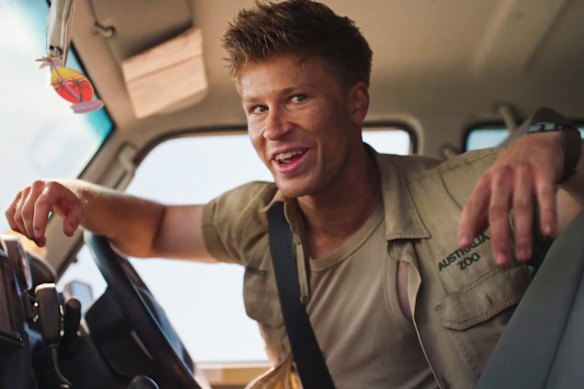 Robert Irwin in the Come and Say G’Day campaign by Tourism Australia.
Splice these selfies and TikToks with leftover “Where the bloody hell are you?” footage, and it could be the sexiest tourism campaign on the planet.
The current campaign doesn’t pack any surprises (except one). Australia is a rough outback land with crazy animals, mates, pubs (for Americans), the world’s oldest culture (for the Japanese), a foodie paradise of pavs and prawns (for Brits and Europeans) and a romantic destination for young Chinese.
We continue to have an animated kangaroo as our mascot.
It’s always amusing to see the way we are promoted overseas. These campaigns can’t be subtle. They need to work against our disadvantages as a tourist destination, such as the high cost of living and the time and length of travel required to get here.
Australia is not a cheap place to be, even for those of us who live here. For most visitors, it’s a once-in-a-lifetime destination.
There are also those scary sharks, snakes and spiders – the sum of what all American kids know about us.
The campaigns are broad strokes, and they’re not meant for us. They have a long and proud history of being cringe-making.
Related Article
Attempts to promote our sophisticated cultural offerings and coffee culture probably fall on deaf ears. A vast bulk of international tourists aren’t interested in coming here for a cup of coffee when they have them at home. Even when they’re not nearly as good as ours. You can have pavs and prawns in London, too.
I find that many people who have visited Australia do rave about our food, culture and lifestyle, but you need to lure them here first so they can discover it for themselves.
And let’s face it, those young people on working holidays aren’t promoting Australia as a sophisticated destination, either. They’re partying hard. They spend all their waking time at the beach and in bars.
The girls are wearing bikinis and miniskirts; the guys are bare-chested, showing off newly acquired abs. They’re all working on getting a tan and figuring out what filter to use on their phone. Some claim they have even started liking Vegemite.
Few of them are going to the opera or writers’ festivals.
The Australia Effect is all about “hotness”. It’s only sunburn-deep. It’s about shedding the dreary old Geordie Shore-you and becoming Margot Robbie.
But if Australia can work this voodoo on hundreds if not thousands of young people, that’s a great storyline for an ad campaign. Or a horror movie.
Save
You have reached your maximum number of saved items.
Remove items from your saved list to add more.
 Lee Tulloch – Lee is a best-selling novelist, columnist, editor and writer. Her distinguished career stretches back more than three decades, and includes 12 years based between New York and Paris. Lee specialises in sustainable and thoughtful travel.Connect via email.From our partners