
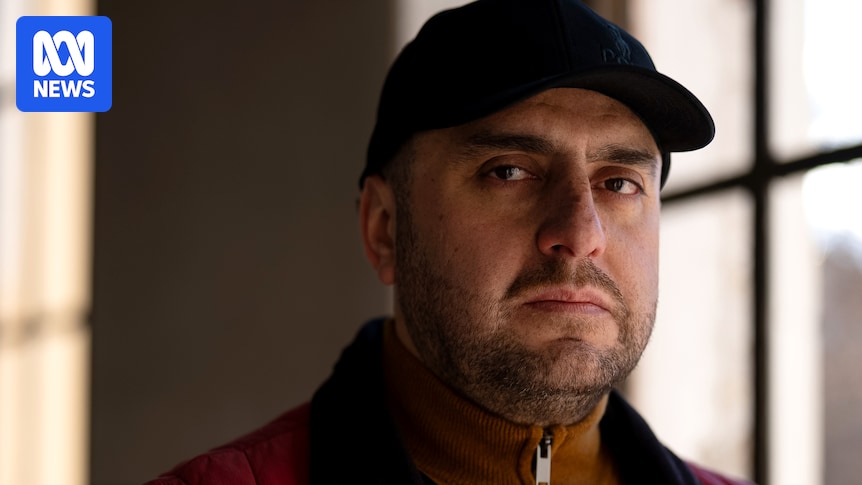
A former undercover agent has made explosive claims that he shared intelligence with Australia’s spy agency, ASIO, about gunman Naveed Akram’s terrorist associations and alleged radicalisation, six years before the Bondi Beach attack.
ASIO investigated the information in 2019 but said it could not substantiate it, concluding Akram, then a teenager, did not present a terrorism threat or subscribe to violent extremist ideology.
Four Corners has traced the interactions of Naveed Akram and his father, Sajid, with Australian authorities and Islamic State (IS) extremists in the years before they killed 15 people at a Hanukkah celebration on December 14.
A former undercover agent, codenamed Marcus, has told the program he is willing to give evidence to the royal commission that he reported to ASIO in 2019 that both Naveed and Sajid Akram supported IS.
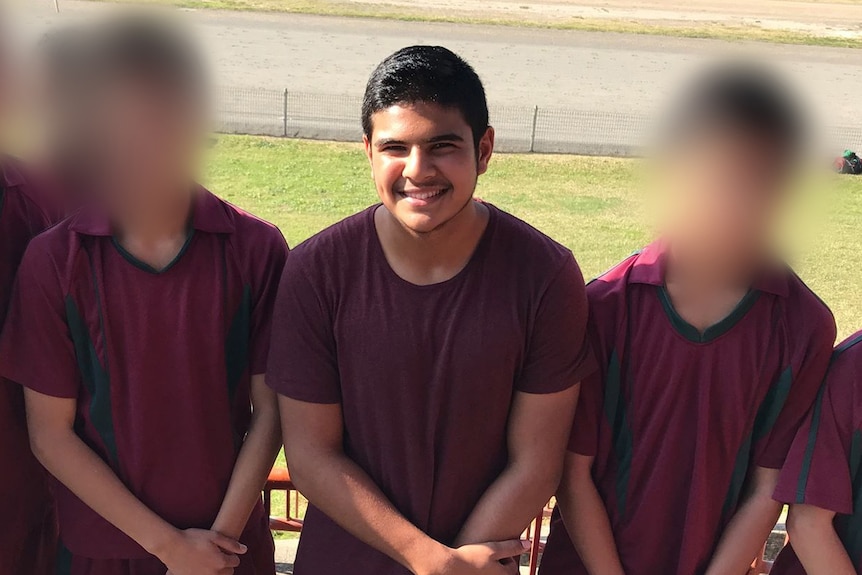
Naveed Akram before he dropped out of Cabramatta High School and joined a crew of street preachers.
ASIO interviewed both father and son as part of a six-month investigation into Naveed Akram, which assessed the teenager was not a terrorist threat or IS supporter.
The agency also found no evidence that Sajid Akram was radicalised, according to comments from Prime Minister Anthony Albanese in December.
Sajid Akram was later granted a firearms licence and the pair travelled to a former Islamic State hotspot in the Philippines, without triggering an alert, in the lead-up to the attack.
The former spy reveals astonishing new information about the Akrams tonight on Four Corners. Watch from 8:30 on ABC TV and ABC iview.
From the age of 17, Naveed Akram associated with members of a terror cell and acolytes of radical cleric Wisam Haddad, a spiritual leader of Australia’s pro-IS network.
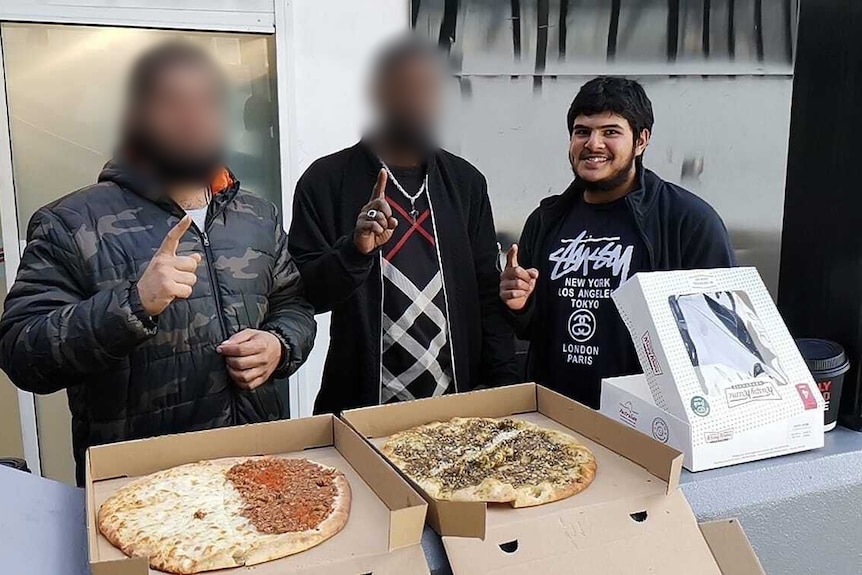
Naveed Akram’s (right) involvement with a street preaching group drew him closer to members of an IS terror cell.
Naveed was in contact with several men who were later convicted of terrorism offences, including the self-declared commander of IS in Australia, Isaac El Matari, and IS youth recruiter Youssef Uweinat.
The terrorists were monitored by Marcus, who posed as their imam and teacher.
Marcus told Four Corners he reported to ASIO that El Matari discussed his plans with Naveed to carry out attacks in Sydney.
“What happened on Bondi Beach was a result of a set of errors and a disregard for information,” Marcus said.
“How [could] someone like this [have] fled out of ASIO and Australian authorities’ radar?”
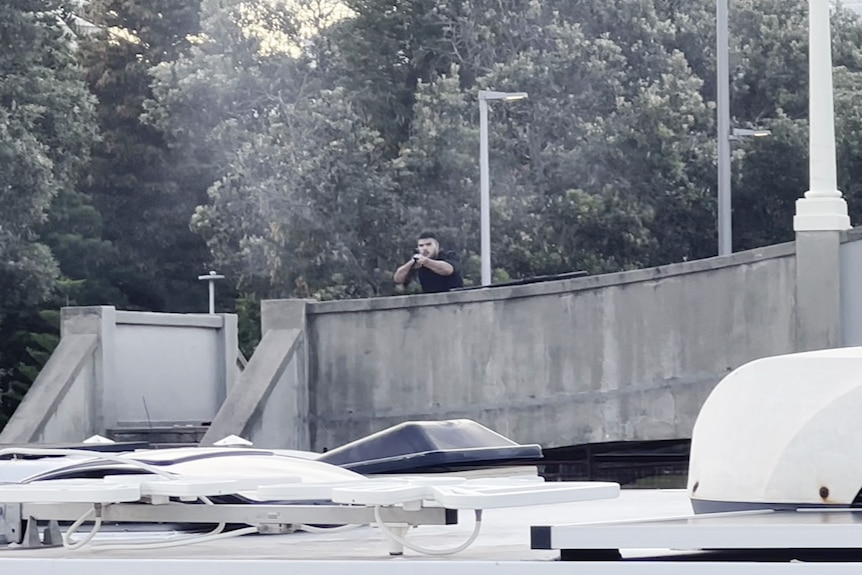
The Bondi terror attack left 15 people dead and 40 injured. (Supplied: Nick Castellaro)
ASIO told Four Corners the claims were investigated and “found to be unsubstantiated”.
It said Marcus “misidentified Naveed Akram”.
“ASIO investigated Naveed Akram in 2019, using our most sensitive capabilities,” ASIO said in a statement.
“We assessed he did not adhere to or intend to engage in violent extremism at that time.
“Having reviewed all available intelligence, we stand by our assessment at that point in time.
“The source claimed Naveed Akram said and did things that were actually said and done by an entirely different person … Therefore, the associated claims are untrue.”
Marcus described ASIO’s claim as “false and unsubstantiated”.
“I strongly deny ASIO’s allegation that I ever misidentified Naveed Akram, someone I met on a regular, face-to-face basis over many years.”
ASIO declined to respond to further questions and requests for clarification.
It said it was constrained by an ongoing investigation, court case and the royal commission.
Naveed Akram has been charged with 59 offences, including terrorism and murder. Sajid Akram was shot dead by police.
The ‘brainwashing’ of Naveed Akram
Marcus is revealing what he knew about the Akrams, after first warning Four Corners eight months before the Bondi attack that Australia was dangerously exposed to an IS network he had infiltrated.
ASIO recruited him from his home country in the Middle East and paid him as a human source, officially defined as an “agent”, to monitor Sydney’s IS network between 2017 and 2023.
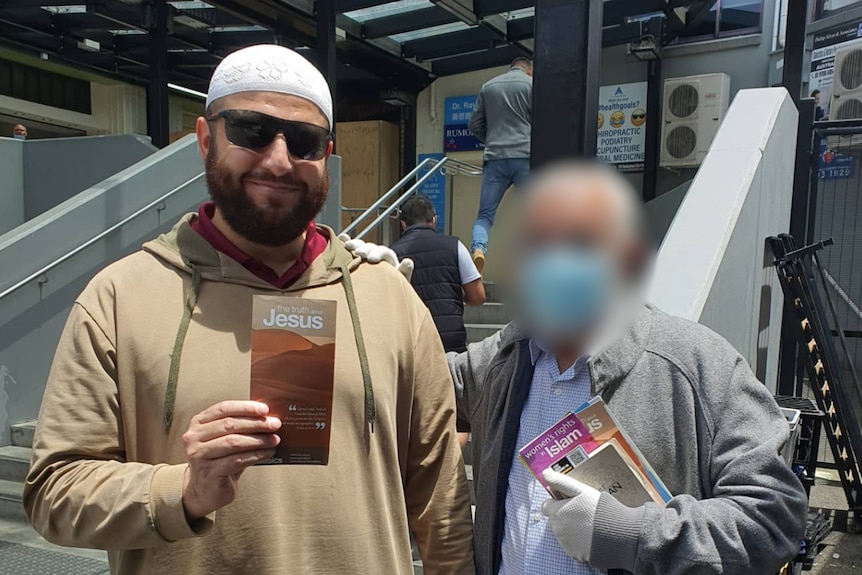
Marcus (left) posed as a radical imam to infiltrate a group of extremist preachers.
He told Four Corners he first reported Naveed Akram to ASIO after attending itikaf, a 10-night religious retreat for Ramadan, with the 17-year-old and a small group of IS supporters including Isaac El Matari.
Marcus alleged that during itikaf at Sydney’s Othman Bin Affan Mosque, El Matari shared with Naveed his plans to attempt to smuggle firearms from Lebanon for terrorist attacks in Sydney.
Marcus claimed the group tried to brainwash Naveed with graphic IS videos, calling for attacks in Australia.
He claimed he reported this in confidential meetings with his ASIO handlers.
“They (ASIO) became interested because it’s a very serious matter,” he said. “They asked me to put an eye on him (Naveed).”
Four Corners has not been able to independently verify the substance of Marcus’s conversations with ASIO or of Naveed’s interactions with the El Matari group.
Multiple sources have confirmed Marcus, Naveed Akram and El Matari were at the mosque.
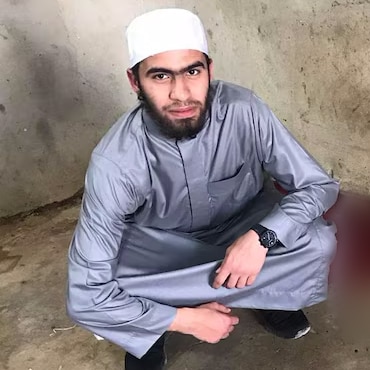
Isaac El Matari was later jailed for planning terrorist attacks.
Othman Bin Affan Mosque told Four Corners that during itikaf, Naveed Akram was engaging with a small group of men, including El Matari, who were later expelled from the mosque because of their “hostile, confrontational” behaviour.
The mosque’s president said the men had no link to the mosque and “do not represent us in any way”.
“Othman Bin Affan Mosque stands firmly against extremism and hate. We don’t tolerate it,” he said in a statement.
“If we had known there was any link to extremism or any threat to safety, we would have reported it.”
El Matari was arrested a month after itikaf and later jailed for seven years for planning terrorist attacks and attempting to travel to Afghanistan to join IS.
Court documents show police secretly recorded El Matari in the weeks before and after itikaf, as he attempted to recruit fellow IS supporters for an insurgency in Sydney and the Blue Mountains.
In one conversation — just days before itikaf and more than six years before the Bondi attack — El Matari plotted to spend “half a decade” building a network of IS fighters in the bush and the city.
“We keep brothers as sleepers … brothers that are trusted with sending them on missions, brothers that send money … brothers that plan the attacks, brothers that bomb places of political significance,” he said on May 22, 2019.
“These are all places they are open to the public. There’s no security protecting them.”
In separate conversations, he plotted to obtain firearms and explosive devices to emulate a 2017 ISIS uprising that took place in the southern Philippines.
El Matari’s arrest in 2019 prompted an ASIO investigation into his associates, including Naveed Akram.
Associations with Wisam Haddad’s right-hand man
Naveed Akram had been drawn into a circle of IS sympathisers by Mr Haddad’s right-hand man, Ye Ye.
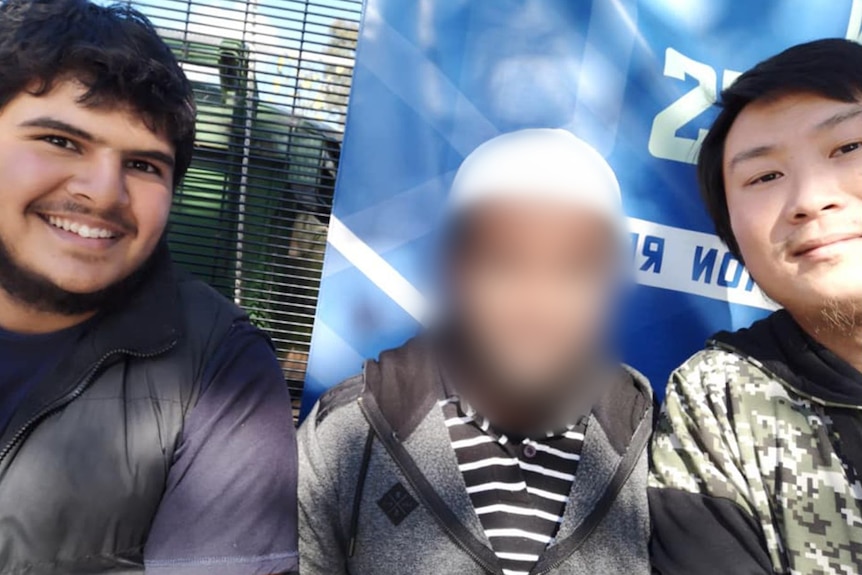
A photo posted to social media of Naveed Akram (left) and Ye Ye (right) street preaching.
Ye Ye told Four Corners he invited the 17-year-old to join the group for itikaf and later brought him to Mr Haddad’s radical prayer hall, Al Madina Dawah Centre.
Ye Ye had earlier introduced Naveed to a street-preaching crew, Bankstown Street Dawah, where extremists attempted to convert teenagers and draw them into Islamic State.
Four Corners has traced Ye Ye’s involvement in jihadist preaching groups, linked to Mr Haddad and closely monitored by authorities, back to at least 2012.
It was within that scene that Naveed Akram first encountered members of the El Matari cell, including IS recruiter Youssef Uweinat, a youth leader at Mr Haddad’s centre.
While ASIO was investigating Naveed Akram, police arrested Uweinat, uncovering messages urging boys to become “soldiers of the Australian Wilayah (province)”.
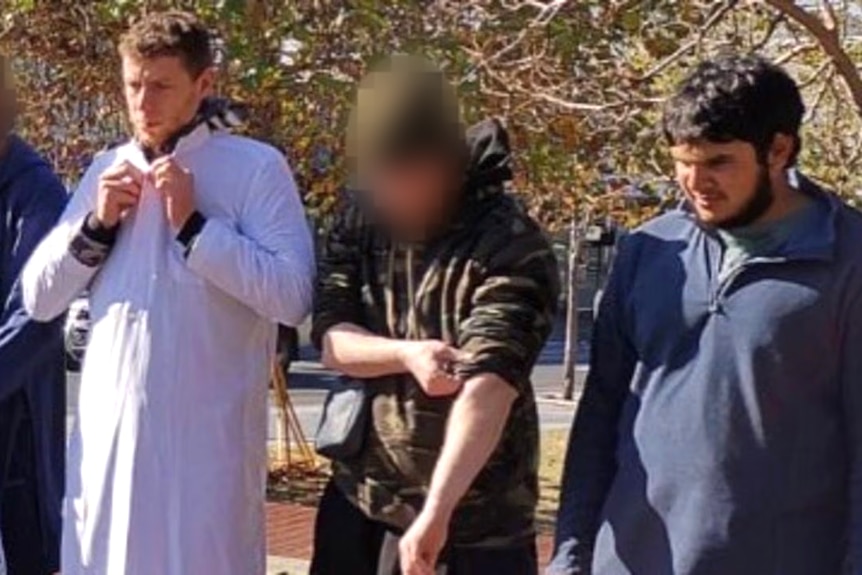
IS recruiter Youssef Uweinat (in white) and Naveed Akram (right).
Court documents showed he flooded the teenagers with violent propaganda, encouraged them to carry out suicide attacks and coached them to radicalise other minors through preaching.
Naveed Akram was filmed trying to convert teenagers as part of Street Dawah at the time he was associating with Uweinat.
Authorities have not said whether Uweinat and Naveed communicated privately.
Ye Ye told Four Corners he had nothing to do with the Bondi attack and no recent contact with the Akrams.
“I don’t agree with them killing innocent people, especially that little girl,” he said.
“If I had anything to do with it, authorities would arrest me.”
Mr Haddad has denied any knowledge of, or involvement in, the Bondi attack and the ABC does not suggest otherwise.
In the aftermath of the Bondi attack, he said there was no evidence showing any “personal, organisational or instructional link” with Naveed Akram.
Uweinat did not respond to questions from Four Corners.
Threat assessments
Counterterrorism sources have confirmed ASIO shared its 2020 assessment of Naveed Akram with the Joint Counter Terrorism Team (JCTT) in an attempt to limit the risk that he could become a terrorist.
They said NSW Police interviewed the teenager and added him to an intelligence database, the Known Entity Management System (KEMS), which tracks people who could go on to become terrorists.
As part of the KEMS, authorities can prevent potential extremists from travelling abroad, including through passport and visa cancellations, according to the National Counter-Terrorism Plan.
Naveed Akram was no longer on the KEMS watchlist by the time of the Bondi attack.
NSW Police, ASIO and the AFP did not respond to questions about when he was removed from the list.
They said they were unable to respond to specific questions because of the investigation into the Bondi attack, Naveed Akram’s court case and the royal commission.
Former New Scotland Yard counterterrorism commander Richard Walton said Australian inquiries were likely to scrutinise whether the 2020 assessment of Naveed Akram was accurate.
“It’s very significant that an undercover operative tasked by ASIO has come forward to give us information,” he said.
“I’m sure that ASIO will assess and reassess … intelligence that [was] provided to make sure that their assessment was the right one and what lessons could be learned.”
He said authorities should have reassessed Naveed Akram regularly to prevent a terrorist attack.
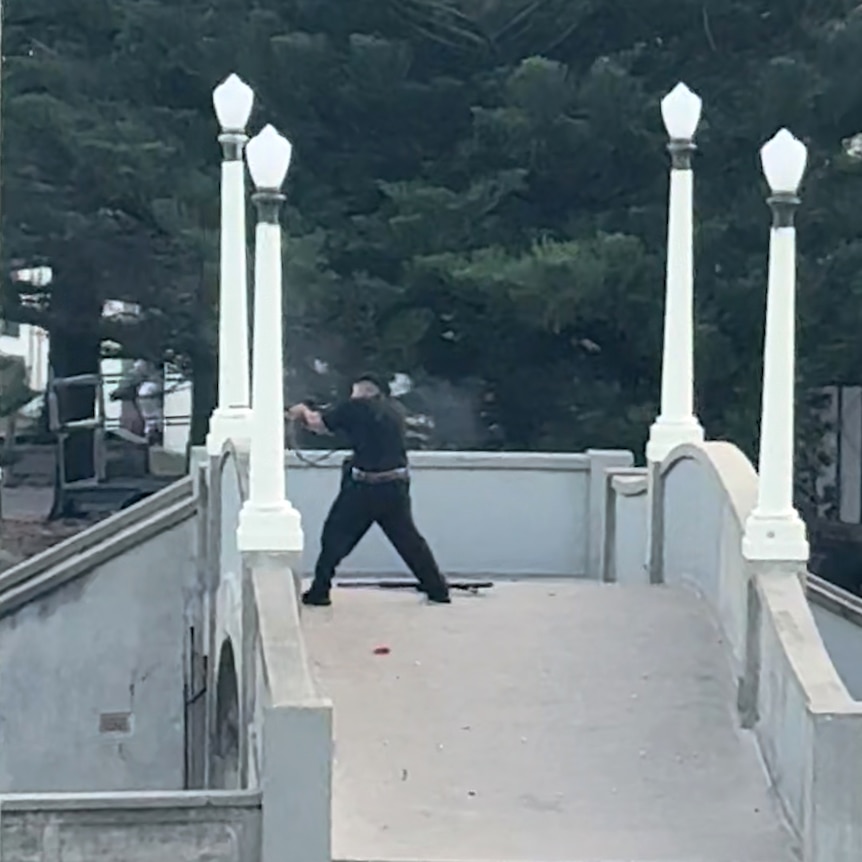
Naveed Akram was no longer on the KEMS watchlist by the time of the Bondi attack. (Supplied)
ASIO said “tragically” it did not know what the Akrams were planning to do at Bondi, “or indeed that they were planning anything”.
“This is a matter of grave regret. It weighs on us heavily. But that does not mean additional resourcing would have prevented the attack or there was intelligence that was not acted on or that our officers made mistakes,” it said in a statement.
It said it worked closely with federal, state and territory law enforcement partners “and we routinely share intelligence through the Joint Counter Terrorism teams”.
“This is one reason why there have been 28 major terrorism disruptions since September 2014,” it said.
“Ultimately, the royal commission will make its own assessment about intelligence sharing based on all the evidence, rather than selective claims.”
Relationship breakdown
Marcus’s relationship with ASIO fell apart.
He was charged in 2022 with multiple accounts of assault and stalking, which were later withdrawn and dismissed.
His cover was also blown and he took out a restraining order, telling a Sydney court that extremists threatened to harm him because they discovered his work with ASIO.
ASIO withdrew its support for his permanent residency and he left the country in 2023.
In its statement to Four Corners, ASIO described Marcus as “unreliable and disgruntled”.
Marcus denied those claims, saying, “I stand by my whistleblowing”.
“I am disappointed that ASIO has chosen to denigrate me … My whistleblowing is in the public interest,” he said.
“The allegation I am unreliable does not withstand scrutiny.
“If I were … ASIO would not have tasked me with infiltrating dangerous local and international terror networks and gathering important intelligence on their members.”
He said his intelligence resulted in “successful prosecutions of terrorists and prevention of a number of … terrorist attacks”.
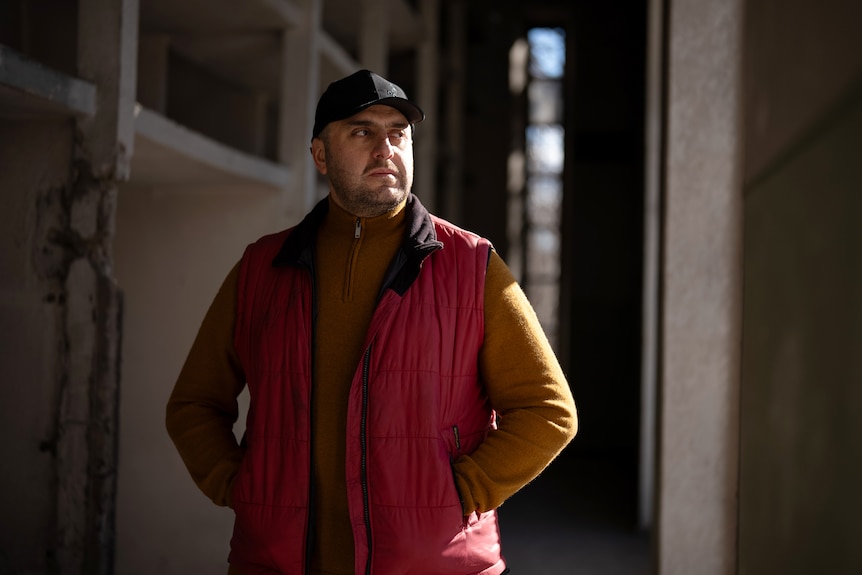
Marcus warned Four Corners last year that Australia was dangerously exposed to Islamic State terrorism. (Four Corners: Sissy Reyes)
Marcus is now seeking assistance from Australia for protection and resettlement, after receiving death threats for speaking out against the Haddad network.
“People [at Bondi] were killed brutally, were murdered,” said Marcus, who is protecting himself in a safe location overseas.
“[The] public need to understand and to see what led to this horrible terror attack.”
Additional reporting by Daryna Zadvirna, Rory Callinan and Kirsten Robb
Watch Four Corners’ full investigation Bondi: Path to Terror tonight from 8:30pm on ABC TV and ABC iview.