
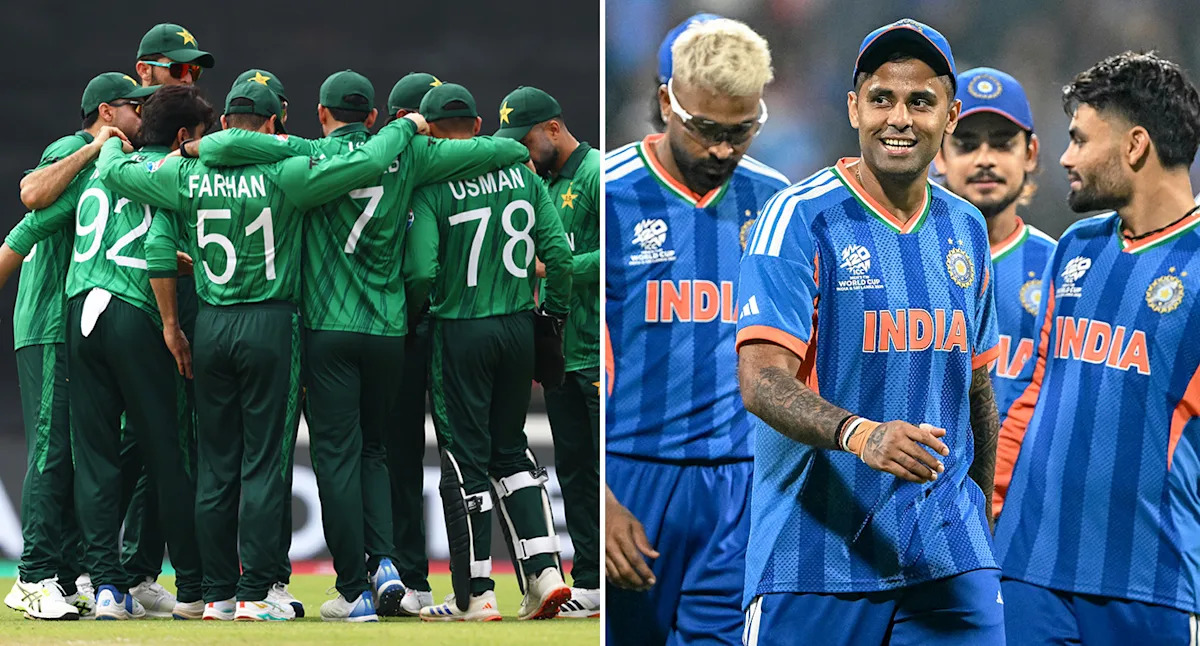
Pakistan has reversed the decision to boycott its T20 World Cup match against India after the country’s government reached an agreement with the International Cricket Council (ICC). The boycott threatened to have major ramifications on a $4.4 billion broadcast deal India signed in the understanding they would meet Pakistan at least once in the tournament.
With a full house expected in the stands for the clash between the fierce rivals and hundreds of millions watching around the world, the fixture is one of the biggest money-spinners for Indian broadcasters and the ICC. And there could have been major financial repercussions for the tournament if it didn’t go ahead.
Pakistan has reversed its decision to boycott the T20 Cricket World Cup game against India in a massive relief to tournament organisers and broadcasters. Pic: Getty
Pakistan sided with Bangladesh after their geographical neighbours were replaced by Scotland in the World Cup, having refused to play in India. Bangladesh demanded their group matches be played solely in Sri Lanka, which is co-hosting the tournament.
That stance came in response to a decision from India’s powerful cricket board which ordered the Kolkata Knight Riders to release the only Bangladeshi player signed to play in the IPL. Mustafizur Rahman was let go by the IPL franchise due to the political tensions between the two countries.
But the Bangladesh Cricket Board (BCB) asked Pakistan to reverse its boycott after a meeting with the ICC. “We are deeply moved by Pakistan’s efforts to go above and beyond in supporting Bangladesh during this period… I request Pakistan to play the game on 15 February against India for the benefit of the entire cricket ecosystem,” BCB president Mohammad Aminul Islam said.
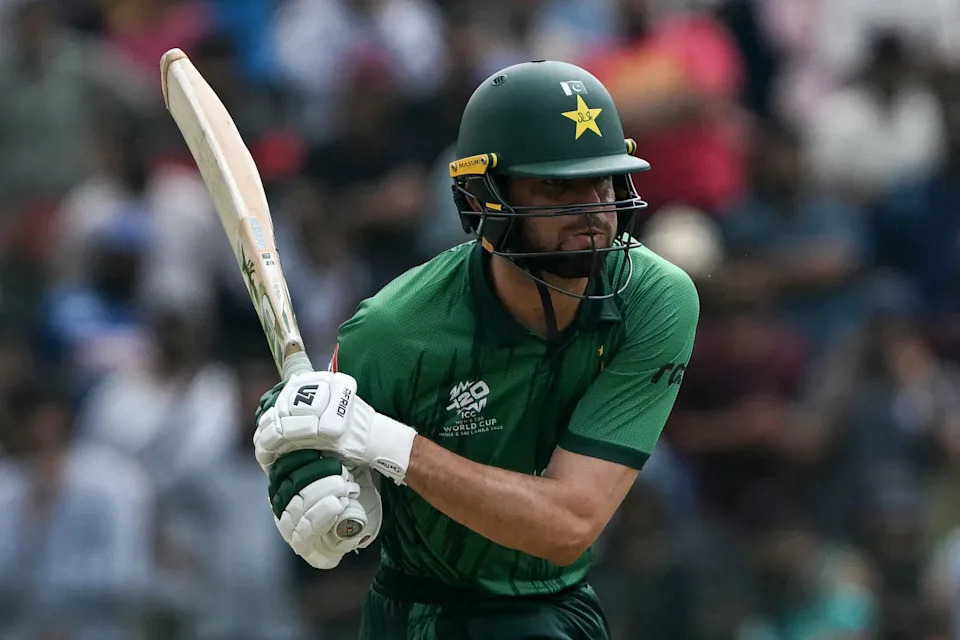
Pakistan’s Shaheen Shah Afridi bats during his side’s opening T20 Cricket World Cup group match against the Netherlands. Pic: Getty
(ISHARA S. KODIKARA via Getty Images)ICC welcomes Pakistan’s decision to reverse India boycott
A short time after that statement was released, Pakistan’s boycott was called off, with the ICC hailing the development. The governing body said: “The dialogue between ICC and PCB took place as part of a broader engagement with both parties recognising the need for constructive dealings and being united, committed and purposeful in their aspirations to serve the best interests of the game with integrity, neutrality and cooperation.
“In that prevailing spirit, it was agreed that all members will respect their commitments as per the terms of participation for ICC events and do all that is necessary to ensure that the ongoing edition of the ICC Men’s T20 World Cup is a success.”
The decision will come as a relief Cricket Australia and the other national governing bodies, who share a slice of the vast revenue that the T20 World Cup generates. India and Pakistan are set to go head-to-head on February 16 in Colombo, with both teams having scored wins in their opening group games.
The Pakistan government announced via social media that the match against India would go ahead “in view of the outcomes achieved as well as the request of friendly countries”. Both teams have played one game each in the tournament so far, with Pakistan beating the Netherlands and India downing the United States.
During the meeting, the ICC also agreed not to impose any sporting, financial or administrative penalty on Bangladesh for their refusal to play in India. It was also announced Bangladesh would host an ICC event prior to the 50-over World Cup of 2031, which is set to be co-hosted by India and Bangladesh.