
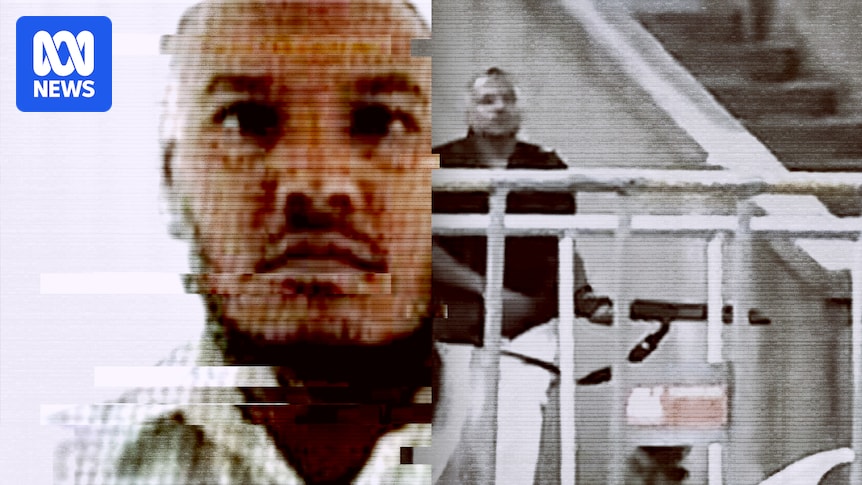
Bondi Beach terrorist Sajid Akram voiced support for Islamic State (IS) in 2019 and expressed admiration for a leading Al Qaeda propagandist, according to accounts from two men who moved in the same extremist circles.
That same year, Australia’s intelligence agency, ASIO, found it could not substantiate intelligence alleging Akram and his then-18-year-old son, Naveed, had embraced violent extremism.
Sajid Akram was shot dead and Naveed was charged with terrorism and murder, after they killed 15 people in an IS-inspired attack on a Hanukkah celebration in December.
A Four Corners investigation has revealed claims that in 2019, an undercover agent shared intelligence with ASIO that he said showed the Akrams were radicalised.
The ASIO agent, codenamed “Marcus”, also says he provided information about Naveed Akram’s associations with members of a terrorism cell connected to notorious pro-IS preacher Wisam Haddad.
The agency interviewed both men in 2019 as part of an investigation into Naveed Akram’s links to the IS cell.
ASIO said that after a six-month investigation, conducted using its “most sensitive capabilities”, it assessed Naveed Akram “did not adhere to or intend to engage in violent extremism”.
Do you know more?Contact Sean Rubinsztein-Dunlop on Signal: @seanrdunlop01 and on Protonmail: seanrdunlop@protonmail.comPlease use this form to get in contact with the ABC Investigations team, or if you require more secure communication, please choose an option on the confidential tips page
In the wake of the Bondi attack, Prime Minister Anthony Albanese said Sajid Akram had shown “no indication of any radicalisation” during his 2019 interview with ASIO.
A Commonwealth security official told Four Corners that Sajid Akram gave assurances during the investigation that his then-18-year-old son would cut ties with IS sympathisers.
But investigators, examining the attack, now believe Sajid Akram may have already been radicalised when he met with ASIO about his son, according to a senior counterterrorism official with close knowledge of the investigation.
The revelations have raised new questions about possible intelligence failures that allowed Sajid Akram to legally acquire firearms and travel with his son to a former Islamic State hotspot in the Philippines without triggering an alert — matters now under examination by a royal commission.
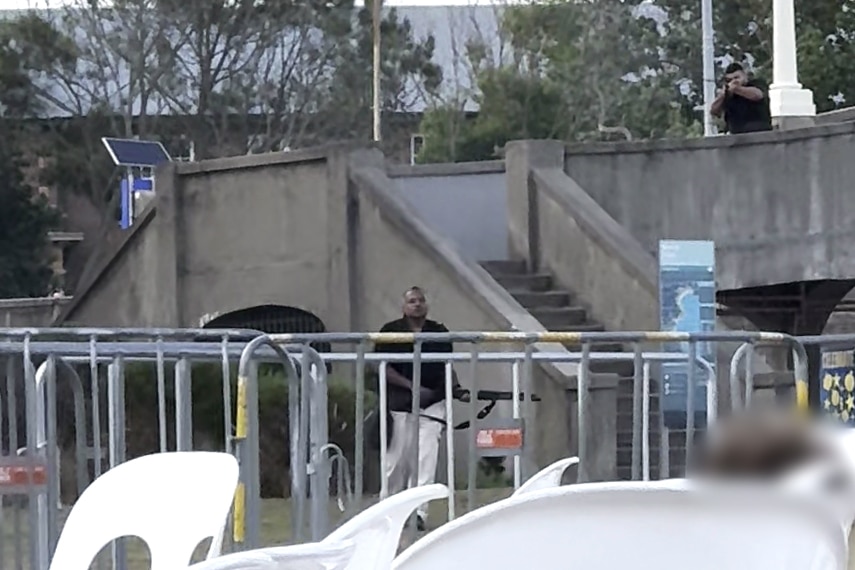
Sajid Akram and his son Naveed during their attack at Bondi Beach on December 14. (Supplied: Jessica Rozen)
A shared appreciation for Al Qaeda cleric
Before he was shot dead by police at Bondi Beach, Sajid Akram was a mystery to some who knew him.
He arrived in Australia from India on a student visa in 1998, married a non-Muslim woman and reportedly became estranged from his Indian family.
By his 40s, he worked in fruit shops and attended a Sydney mosque, where he met Ye Ye, a vocal preacher in Australia’s pro-IS network.
Ye Ye told Four Corners he bonded with Sajid Akram over their interest in the early lectures of Anwar al-Awlaki, the US-born Al Qaeda cleric killed in a US drone strike in 2011.
Ye Ye is the right-hand man to Wisam Haddad, a spiritual leader in Australia’s pro-IS network.
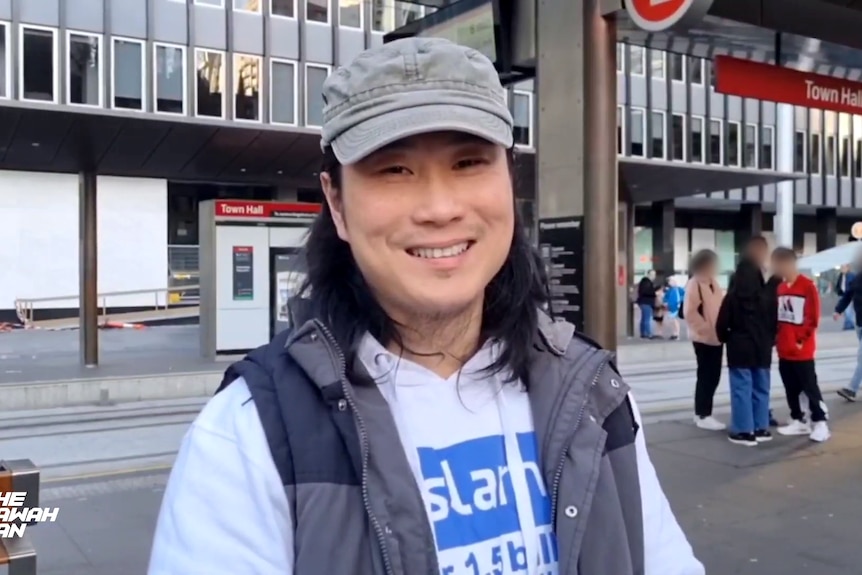
Ye Ye, a preacher in Australia’s pro-IS network, said he met Sajid Akram at a Sydney mosque. (The Dawah Van)
From at least 2012, Ye Ye was active in street-preaching groups that recruited young Australians into terrorism and were monitored by authorities.
Ye Ye told the ABC that he introduced Naveed to one such group, Bankstown Street Dawah, after meeting his father.
ASIO’s undercover agent, Marcus, was operating inside the group at the time, posing as a radical cleric.
In late May 2019, Ye Ye invited Marcus and Naveed to attend itikaf, a 10-night religious retreat for Ramadan, at Sydney’s Othman Bin Affan Mosque with members of an IS cell.
Marcus claimed he reported to ASIO that the IS sympathisers tried to brainwash Naveed with propaganda videos and discussed plans for terrorist attacks in Sydney.
The mosque’s president said Sajid Akram also attended itikaf.
He said Naveed was engaging with a “hostile, confrontational” group of men that was ultimately told to leave and “never to come back”.
Among the group was Isaac El Matari, the self-declared leader of Islamic State in Australia.
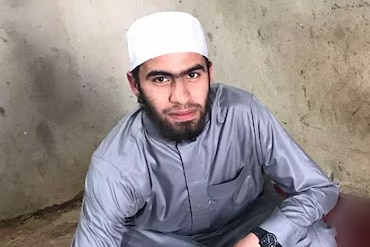
Isaac El Matari attended the same religious retreat Sajid and Naveed Akram attended in May 2019.
“Sajid and Naveed had attended the mosque regularly,” the mosque’s president said in a statement.
“After spending time with that group during itikaf, they stopped attending altogether.
“If we had known there was any link to extremism or any threat to safety, we would have reported it.”
He said the mosque “stands firmly against extremism and hate”.
‘I thought Sajid was more extremist than his son’
ASIO began investigating associates of El Matari after he was arrested in July 2019 for planning terrorist attacks and attempting to travel to Afghanistan to join IS.
Marcus claimed that the investigation infuriated Sajid.
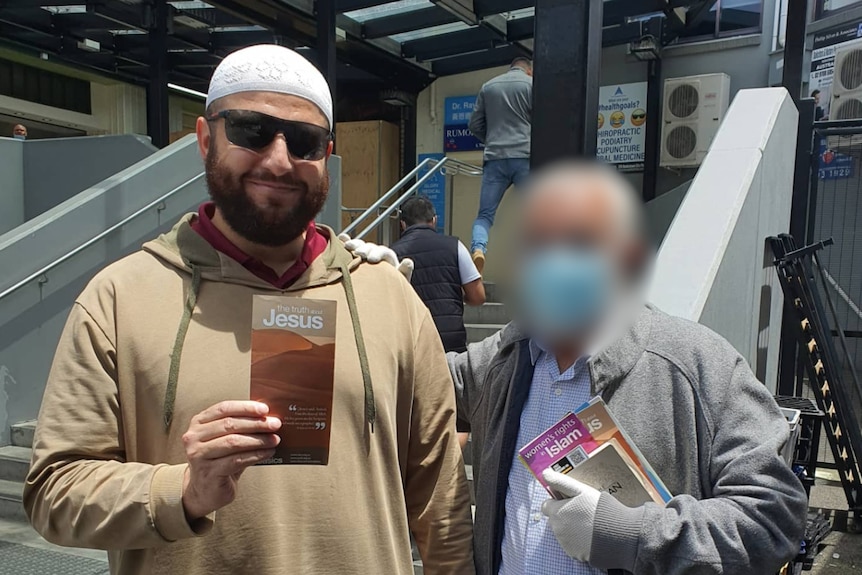
Marcus (left) posed as a radical cleric to gather intelligence on Islamic extremists for ASIO.
Marcus claimed Sajid Akram arrived at Street Dawah later that year with Naveed, angry that his son had come to ASIO’s attention.
Marcus told Four Corners that Sajid expressed his support for IS, for El Matari and for his foiled plans for terror attacks in Sydney.
“He [Sajid] justified his [Isaac El Matari’s] plans as it’s required from us as Muslims — to support the Islamic State, to fight on behalf of them,” he said.
“And if we couldn’t do that, we have to do hijrah — emigrate to join them.”
Marcus said it was rare to hear such openness in a community where people were typically wary of surveillance.
“After this conversation, I thought Sajid was more extremist than his son,” said Marcus, who is offering to provide his evidence to the royal commission.
ASIO told of Bondi shooter’s terror links years ago, ex-spy claims
Marcus said he reported to ASIO that he believed both Akrams were IS supporters.
Four Corners has not independently verified the substance of Marcus’s specific conversations with ASIO or the Akrams.
Multiple sources have confirmed Marcus attended itikaf with Naveed Akram and Ye Ye. Social media videos showed them participating in Street Dawah at the same time.
Marcus claimed the Akrams attended Wisam Haddad’s radical prayer hall, Al Madina Dawah Centre, over several years.
ASIO did not respond to questions about whether it received intelligence about that.
Investigation could not substantiate Marcus’s claims: ASIO
In a statement, the agency said it investigated Marcus’s claims but found them to be “unsubstantiated”.
“The ABC’s source … claimed Naveed Akram said and did things that were actually said and done by an entirely different person,” ASIO said.
“Therefore the associated claims are untrue.”
Marcus rejected that.
“I strongly deny ASIO’s allegation that I ever misidentified Naveed Akram, someone I met on a regular, face-to-face basis over many years,” he said in a statement.
ASIO declined to respond to further questions about when and how the misidentification occurred or which claims it disputed.
Neil Fergus, a respected intelligence consultant who has a complaint against ASIO over a separate matter, said that if Marcus’s suspicions were true at the time, the case had the “hallmarks” of an intelligence failure.
“If that assertion is true and that information was reported clearly to ASIO, then there was certainly prima facie a basis for further actions,” he said.
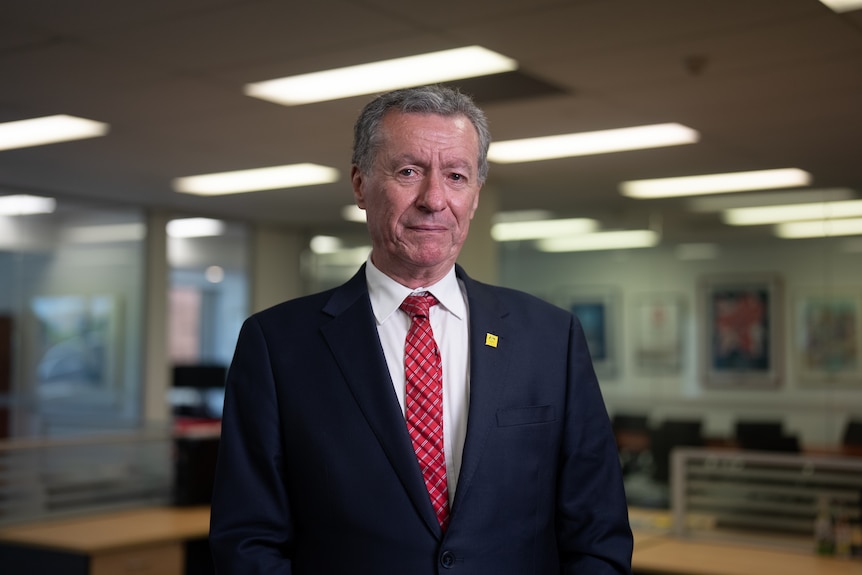
Neil Fergus says if Marcus’s suspicions were true, the case has the “hallmarks” of an intelligence failure. (Four Corners: Sissy Reyes)
He said the royal commission and the review of law enforcement and intelligence by former ASIO head Dennis Richardson would “undoubtedly” need to look into the evidence.
Marcus’s relationship with ASIO began to fall apart in 2022.
He was charged that year with multiple accounts of assault and stalking, which were later withdrawn and dismissed.
His cover was also blown, and he took out a restraining order, telling a Sydney court that extremists threatened to harm him because they discovered his work with ASIO.
ASIO withdrew its support for his permanent residency, and he left the country in 2023.
Marcus is now in hiding overseas, protecting himself after receiving death threats and offering to provide evidence to the royal commission.
He is seeking Australia’s assistance with protection and resettlement.
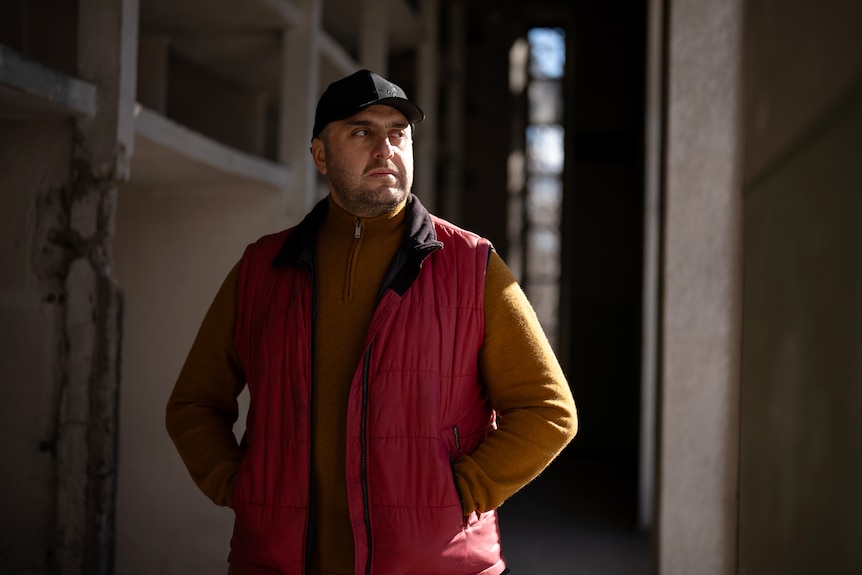
Marcus says his intelligence helped prevent terror attacks and secure the prosecutions of terrorists. (Four Corners: Sissy Reyes)
Marcus previously warned Australians were dangerously exposed to IS extremism in a Four Corners interview eight months before the Bondi attack.
In its statement to Four Corners, ASIO described him as “unreliable and disgruntled”.
Marcus denied those claims.
“The allegation I am unreliable does not withstand scrutiny,” he said.
“If I were … ASIO would not have tasked me with infiltrating dangerous local and international terror networks and gathering important intelligence on their members.”
He said his intelligence resulted in “successful prosecutions of terrorists and prevention of a number of … terrorist attacks”.
Additional reporting by Rory Callinan, Daryna Zadvirna and Kirsten Robb
Watch Four Corners’ full investigation Bondi: Path to Terror on ABC iview.